It can be frustrating when your stick welder’s arc suddenly stops. For many beginners, figuring out why the Stick Welder Arc Cutting Out? Fix Fast problem happens can feel tough.
Don’t worry, though! This guide will show you simple steps to get your welder working smoothly again. We’ll go over the most common reasons and how to fix them easily, so you can get back to your projects without delay.
Let’s figure out what’s going on.
Key Takeaways
- You will learn the most common reasons why a stick welder’s arc cuts out.
- You will discover simple troubleshooting steps you can do yourself.
- You will understand how to check your welding leads and connections.
- You will know how to adjust your machine settings for better arc stability.
- You will be able to identify and fix issues with your electrode or workpiece.
Why Your Stick Welder Arc Might Cut Out
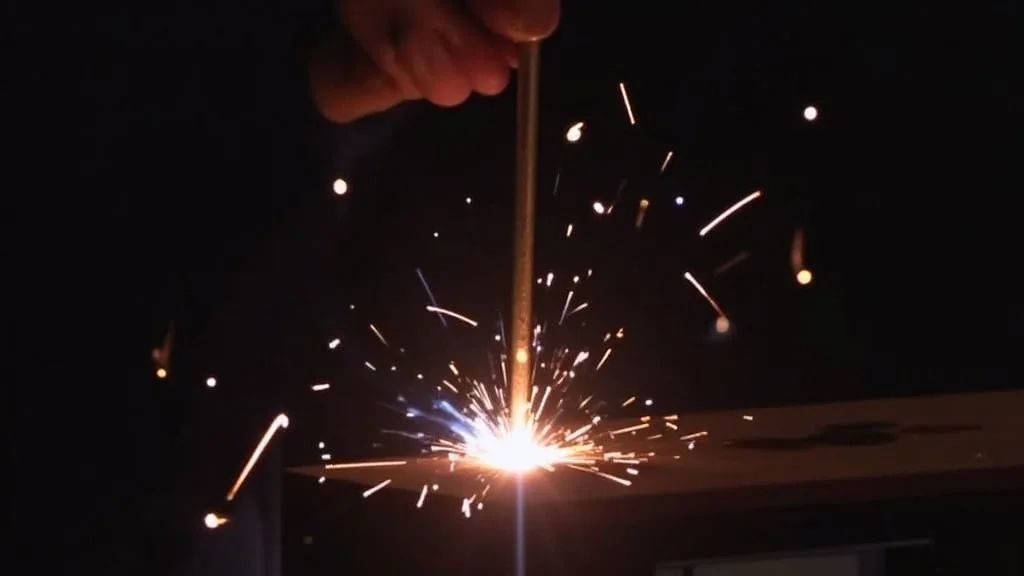
Your stick welder is a useful tool for many jobs. When the arc suddenly stops, it’s called “arc cutting out.” This means the welding arc, which is the spark that melts metal, just dies. It’s a common problem, especially for people new to stick welding.
It can happen for many reasons, and knowing them helps you fix it quickly.
The Basics of a Stick Welding Arc
Before we talk about problems, let’s quickly look at how a stick welding arc works. You have a power source, usually a transformer or inverter welder. This source sends electricity through a cable to a welding electrode holder.
The electrode, often called a “stick,” is a metal rod coated with flux. When you bring the electrode close to a metal workpiece, the electricity jumps across the gap, creating a very hot arc. This arc melts both the electrode and the workpiece, allowing them to join together.
The arc needs a few things to stay lit: a good electrical connection, the right voltage and amperage, and clean surfaces to connect to. If any of these are off, the arc can struggle or cut out.
Common Causes for Arc Cutting Out
Several things can cause your arc to go out. We’ll look at the most frequent culprits first. These are often the easiest to fix.
1. Poor Electrical Connections
Electricity needs a clear path to flow. If any part of the path is loose or dirty, the electricity can’t get through properly. This is a huge reason for arc issues.
Welding Leads (Cables)
Your welding leads are the thick cables that connect your welder to the electrode holder and the workpiece clamp. Make sure these are securely plugged into your welder. Wiggle them a bit to see if they are loose.
A loose connection here means less power can reach the arc.
Check the ends of the cables where they connect to the holder and clamp. Are they clean? Are the clamps tight around the cable?
Sometimes, the metal connectors inside the welding machine can get dirty or corroded. You might need to unplug them (with the welder off!) and clean them with a wire brush.
Workpiece Clamp
The clamp that attaches to the metal you’re welding is called the ground clamp. This is super important. It needs to make a good, solid connection to the metal.
If the clamp is loose, dirty, or only touching paint or rust, it won’t conduct electricity well. This will make your arc unstable or stop it altogether.
Always attach the ground clamp directly to clean, bare metal. Scrape off any paint, rust, or dirt where the clamp will go. Make sure the clamp is tight and has a good grip on the metal.
2. Incorrect Amperage Setting
Amperage controls the heat of your welding arc. Too little amperage and the arc might be weak and cut out. Too much amperage can make the arc unstable and hard to control, also leading to it cutting out.
The right amperage depends on the type and diameter of your welding electrode, and the thickness of the metal you are welding. Electrode manufacturers usually provide recommended amperage ranges on their packaging. Start within that range and adjust as needed.
For example, if you are using a 1/8 inch (3.2 mm) E6013 electrode, you might start around 80-120 amps. If your arc is cutting out, try increasing the amperage slightly. If it’s sputtering too much or blowing holes, you might need to decrease it.
3. Wrong Electrode or Electrode Condition
The welding electrode itself plays a big role. Using the wrong type or size, or an electrode that’s in bad shape, will cause problems.
Electrode Type
Different electrodes are designed for different types of welding and metals. Some electrodes need AC power, others DC. Some are better for all-position welding, others for flat welds.
If you’re using an electrode that’s not suited for your project or welder’s output (AC/DC), it can lead to arc instability. For example, trying to run a DC-only electrode on an AC machine will cause issues.
Electrode Diameter
The diameter of the electrode affects how much amperage it needs. Larger diameter electrodes need more amperage. If you’re trying to use a large electrode with too little amperage, the arc will struggle to stay lit.
Electrode Condition
Electrodes can go bad. If they get damp or wet, the flux coating can degrade. This makes them hard to strike an arc with and can cause the arc to be uneven and cut out.
Always store electrodes in a dry place, preferably in their original sealed container or a rod oven.
Also, look at the tip of the electrode. If it’s badly burned back or misshapen, it might be hard to get a consistent arc. Sometimes, just trying a fresh electrode from a new packet can solve the problem.
4. Issues with the Workpiece
The metal you are welding on also matters. It needs to be a good conductor for the electricity.
Surface Contamination
As mentioned with the ground clamp, dirt, paint, rust, oil, or grease on the workpiece can block the electrical current. This prevents a solid connection for the arc and will cause it to cut out.
Always clean the welding area and where you attach the ground clamp. A wire brush or grinder can quickly remove surface contaminants.
Material Thickness
If the metal is too thin for the amperage you’re using, you might burn through it, which can disrupt the arc. Conversely, if the metal is very thick and you don’t have enough amperage, the arc might not be hot enough to melt it properly and can cut out.
5. Welder Output Issues (Less Common for Beginners)
Sometimes, the problem isn’t with your setup but with the welder itself. These are less common reasons for beginners to encounter, but worth knowing.
Overheating Protection
Most welders have a thermal overload protection. If the welder gets too hot from continuous use, it will shut itself off to prevent damage. The power light might change color, or a warning light might come on.
You’ll need to let the welder cool down for a while before it works again.
Internal Problems
Rarely, there might be an internal fault within the welder. This could be a loose wire inside, a faulty circuit board, or a damaged component. If you’ve checked everything else and the problem persists, it might be time to have the welder serviced by a professional.
Troubleshooting Steps: Your Quick Fix Guide
When your arc cuts out, don’t panic. Follow these steps systematically. Most of the time, you can fix it yourself very quickly.
Step 1: Check Your Connections
This is always the first thing to check.
- Make sure the welding leads are pushed in firmly to the welder.
- Inspect the electrode holder and ground clamp. Are they clean and tight?
- Wipe down the metal surface where the ground clamp attaches and attach it securely.
- Ensure the electrode is inserted correctly and making good contact in the holder.
Step 2: Verify Electrode and Settings
Next, look at your consumables and machine settings.
- Are you using the correct type and diameter of electrode for your project?
- Is the electrode dry and in good condition? Try a new electrode if you’re unsure.
- Check your amperage setting. Is it appropriate for the electrode and material thickness? Refer to the electrode packaging for recommendations.
- If you’re using a DC welder, ensure you have the polarity correct for your electrode. Most electrodes have recommended polarity (DCEN, DCEP, or AC).
Step 3: Examine the Arc Itself
When you try to strike an arc, what happens?
- Does it even try to spark? If not, it strongly points to a connection issue.
- Does it spark but then immediately die? This could be too little amperage, a dirty surface, or a damp electrode.
- Does it sputter and cut out quickly? This might be a combination of settings, electrode condition, or connection problems.
Step 4: Test on a Known Good Setup
If you have another welder, or can easily access one, try your electrode and leads on it. If it works there, the issue is likely with your welder. If it still cuts out, the problem is probably with the electrode or your technique/setup.
Specific Scenarios and Solutions
Let’s think about some common situations where the arc cuts out and how to handle them.
Scenario: Arc Sparks but Dies Instantly
This often means the electrical circuit isn’t complete or strong enough.
- Ground Clamp: Make sure the ground clamp is on clean, bare metal and is firmly attached.
- Amperage: Try increasing the amperage slightly.
- Electrode: Try a brand-new, dry electrode. Damp electrodes are notorious for this.
- Welding Leads: Check for any damage or kinks in your welding leads.
Scenario: Arc is Unstable, Sputters, and Cuts Out
This can be caused by several things working together.
- Amperage: You might be too high or too low. For many common electrodes, a sweet spot exists. Experiment by going up and down a few amps.
- Electrode Stick-Out: The length of the electrode sticking out from the holder is important. Too long a stick-out can make the arc unstable. Try to keep it shorter, usually about the diameter of the electrode.
- Arc Length: Similar to stick-out, the distance between the electrode tip and the workpiece is your arc length. Too long an arc is unstable; too short can cause sticking and cutting out. Aim for a consistent, short arc length.
- Dirty Metal: Even if the ground is good, if the spot you’re trying to weld is dirty, the arc will struggle.
Scenario: Arc Cuts Out After a Few Seconds of Welding
This could be a sign of intermittent connections or the welder starting to overheat.
- Connections: Wiggle your leads and check your ground clamp again. A connection that seems good might be loose under vibration.
- Overheating: Is your welder hot to the touch? Does the power light look different? Let it cool down completely.
- Electrode: Try a different electrode, especially if the current one looks unusual or the flux seems damaged.
Using Your Welder Safely
Remember that welding involves electricity and heat. Always follow safety precautions.
- Wear appropriate personal protective equipment (PPE): a welding helmet with the correct shade lens, gloves, a welding jacket or apron, and sturdy boots.
- Ensure good ventilation in your work area.
- Keep your work area clean and free of flammable materials.
- Never touch the electrode or workpiece with bare skin while the welder is on.
- If you are unsure about any part of the process, consult your welder’s manual or an experienced welder.
Frequently Asked Questions
Question: My stick welder arc keeps cutting out. What’s the very first thing I should check?
Answer: The very first thing you should always check is your electrical connections. Make sure the welding leads are plugged in securely to the machine and that your ground clamp is attached tightly to clean, bare metal on your workpiece.
Question: Can the type of welding electrode cause the arc to cut out?
Answer: Yes, definitely. Using the wrong type of electrode for your machine’s output (AC/DC) or for the material you’re welding can cause arc instability and lead to it cutting out. Also, damp or old electrodes can cause problems.
Question: How does the amperage setting affect the arc cutting out?
Answer: If your amperage is too low, the arc may not be hot enough to stay stable and will cut out. If it’s too high, the arc can become erratic and difficult to control, which can also lead to it cutting out or sputtering excessively.
Question: Is it okay to have rust or paint on the metal when I’m welding?
Answer: No, it’s not ideal. Rust, paint, oil, or other contaminants on the metal can interfere with the electrical connection. This makes it harder for the arc to form and stay stable, often causing it to cut out.
Always clean the welding area and the ground clamp connection point.
Question: My welder seems to cut out after I weld for a little while. What could be wrong?
Answer: This could be a sign that your welder is overheating. Most machines have a thermal overload protection that will shut them down to cool off. Let the welder rest for at least 15-30 minutes, and ensure it has good airflow around it.
If it keeps happening, there might be an issue with its cooling system or it’s being pushed beyond its duty cycle.
Final Thoughts
Getting your stick welder’s arc to cut out less is all about checking the simple things first. Bad connections, wrong settings, or poor electrode condition are the usual suspects. Always start with your ground clamp and leads.
Then, look at your amperage and the electrode itself. Keep your work surfaces clean, and your electrodes dry. Most arc cutting out issues can be fixed with these basic checks.
With a little practice and attention to these details, you’ll spend less time troubleshooting and more time welding.