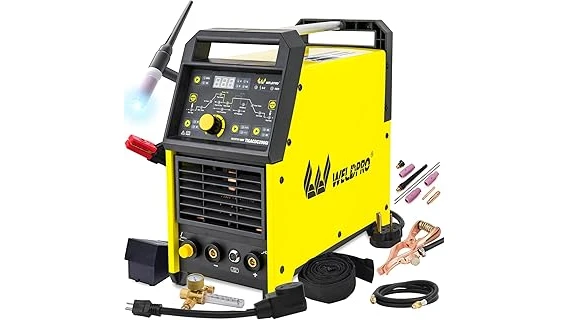
It can be frustrating when your TIG welder doesn’t seem to have enough power. Many beginners face this, wondering if it’s a big problem. But often, the answer to “TIG Welder Low Output?
Easy Fix” is much simpler than you think. We’ll walk through common reasons and show you straightforward steps to get your welder working its best again. Get ready to solve those output issues with simple solutions.
Key Takeaways
- You will learn common causes for low TIG welder output.
- We will show simple checks you can do yourself.
- You will discover how settings impact welding power.
- We’ll cover easy fixes for power cord and connection issues.
- You’ll understand basic maintenance that boosts performance.
- This guide helps you get back to smooth, effective welding.
Why Your TIG Welder Might Have Low Output
Sometimes, your TIG welder doesn’t put out the power you expect. This can make it hard to get a good weld. You might see a weak arc, or it could feel like the metal isn’t melting properly. For folks new to TIG welding, this can seem like a big, tricky problem. But usually, it’s something small that’s easy to sort out. Let’s look at why this happens and how to fix it.
Checking the Basics First
Before you try anything complicated, let’s check the simple things. Many output issues come from easy-to-spot problems.
Power Source and Connections
Your welder needs good power to work right.
Is It Plugged In Properly?
This sounds obvious, but make sure the power cord is firmly plugged into the wall outlet and the welder. Sometimes, a loose connection is all it takes.
The Right Outlet and Breaker
TIG welders use a lot of power. Check if your welder is plugged into an outlet that can handle its demands. Also, ensure the circuit breaker hasn’t tripped.
If it has, try resetting it. If it trips again right away, you might have a problem with the outlet, the wiring, or the welder itself, and you should get it checked.
Extension Cords: Use With Caution
If you use an extension cord, make sure it’s rated for the amperage your TIG welder needs. A cord that’s too thin or too long can cause voltage drop. This means less power reaches the welder, resulting in low output.
It’s always best to plug your welder directly into the wall if possible.
The Ground Clamp Connection
A good ground connection is super important for any welding.
Clean and Secure Clamp
Your ground clamp needs to be clean and tightly attached to your workpiece. Rust, paint, or dirt on the metal can stop the current from flowing properly. Scrape off any dirt or rust where the clamp connects.
Make sure the clamp itself is squeezing the metal tightly.
Location of the Ground Clamp
Try to attach the ground clamp as close to where you are welding as possible. The further away it is, the more resistance there is, and the less power you’ll get.
Understanding Your TIG Welder Settings
The way you set up your TIG welder has a huge effect on its output. If these are wrong, you’ll get weak welds.
Amperage Settings
This is the most direct control over how much power your welder uses.
Too Low Amperage
If you set the amperage too low for the material you’re welding, the arc will be weak, and the metal won’t melt. Always refer to a welding chart or your welder’s manual for recommended amperage ranges based on material thickness and type.
Amperage Control Pedal or Torch Button
If your welder has an amperage control pedal or a torch button, make sure it’s working correctly. If the pedal isn’t being pressed all the way or the button isn’t making good contact, you won’t get full power. Try cleaning the pedal or checking the switch on the torch.
AC Balance and Frequency (for AC Welders)
These settings are mainly for aluminum welding. If they are off, they can affect arc stability and heat input.
AC Balance
This setting controls how much cleaning action versus penetration you get when welding aluminum. If the balance is too far towards cleaning, you might not get enough heat into the metal.
Frequency
Frequency affects the arc’s focus. A higher frequency can make the arc tighter and more focused, which can help with penetration. If it’s set too low, the arc can be wider and softer, leading to less effective heat transfer.
Pulse Settings
Using pulse can help manage heat, but incorrect pulse settings can sometimes make it seem like you have low output.
Pulse Frequency and Width
If your pulse frequency is too high, or the pulse width (peak time) is too short, the arc might not have enough time to melt the metal effectively between pulses. Experiment with slower pulse frequencies and wider pulse widths to see if that helps.
Checking Your TIG Torch and Consumables
The parts of your TIG torch that touch the arc can wear out or get dirty, affecting performance.
The Tungsten Electrode
The tungsten electrode is what creates the arc.
Tungsten Type and Grind
Different types of tungsten work best for different metals. For DC welding, pure or Zirconiated tungsten is not ideal; Lanthanated or Ceriated are better. For AC welding on aluminum, pure or Zirconiated are sometimes used, but Lanthanated or Ceriated are often preferred for a more stable arc.
Make sure your tungsten is properly ground to a sharp point for DC welding to help focus the arc. A dull or blunted tungsten will give a weak, wandering arc.
Tungsten Stickout
How much tungsten sticks out of the collet is important. Too much stickout can lead to a wider, less focused arc, and it can also cause tungsten to contaminate the weld. Too little stickout can make it hard to see where you’re welding and can also cause problems.
A good rule of thumb for DC is about 1/4 to 1/2 inch (6-12mm) stickout. For AC, it might be a bit less.
The Gas Lens and Collet
These parts direct the shielding gas.
Gas Lens Setup
A gas lens helps protect the tungsten and the weld puddle from air. If the gas lens is not assembled correctly, or if the mesh screen is damaged, it won’t flow gas properly. This leads to poor shielding, which can make your weld look bad and feel like it has low power.
Proper Collet Size
Make sure you are using the correct size collet for your tungsten. A collet that’s too large won’t grip the tungsten tightly, and a collet that’s too small might not fit. A loose tungsten can cause arc instability.
Shielding Gas Issues
The gas you use (usually Argon for TIG) shields the weld.
Is the Gas Flow Rate Correct?
Check your gas flow meter. The recommended flow rate is usually between 10-25 cubic feet per hour (CFH), but it depends on your setup and conditions. Too little gas means poor shielding.
Too much gas can cause turbulence, which also hurts shielding and can lead to weld contamination.
Is the Gas Cylinder Empty or Low?
It sounds simple, but sometimes the gas cylinder is just running low. Check the pressure gauge on your cylinder. If it’s low, you’ll need to get it refilled or replaced.
Leaky Gas Connections
Check all the connections in your gas line, from the cylinder to the regulator, to the hose, and to the torch. Even a small leak can reduce the amount of gas reaching your weld.
Maintenance for Optimal Output
Just like any tool, your TIG welder needs a little care to keep it running at its best.
Cleaning the Welder
Dirt and dust can cause problems.
Keep it Clean Inside and Out
Periodically, you should clean the dust and debris out of your welder’s case. Use compressed air to blow out the vents and internal components. This helps with cooling and prevents buildup that can interfere with electronics.
Checking Cables and Hoses
Your welding cables and hoses connect everything.
Inspect for Damage
Look over your power cables, ground cable, and gas hose. Check for any cuts, abrasions, or kinks. Damaged cables can have resistance issues, and damaged hoses can leak gas.
Secure Connections
Make sure all the connections on your cables and hoses are tight and secure. This includes the connection to the welder, the ground clamp, and the torch assembly.
Troubleshooting Specific Scenarios
Let’s look at a couple of common situations that might seem like low output.
Arc Starts Weakly
Sometimes the arc just doesn’t want to start strong.
High-Frequency Start Issues
If you use a high-frequency start, make sure the HF setting is turned on and at an appropriate power level. If it’s too low, the arc might struggle to initiate. Also, ensure the HF points inside the torch or machine are clean and properly gapped.
Lift Arc vs. HF Start
If you’re using lift arc, you need to make sure you’re lifting the tungsten off the workpiece correctly. A good, quick lift is needed for a strong start. If you drag it too much or lift too slowly, it can feel like low power.
Weld Puddle Isn’t Getting Hot Enough
You might see the arc, but the metal isn’t flowing.
Material Thickness vs. Amperage
This is a very common issue. You might simply not be using enough amperage for the thickness of the metal you’re trying to weld. Thicker metals require significantly more heat.
Material Contamination
If the metal is dirty, oily, or has paint on it, it won’t heat up properly. Clean the material thoroughly before you start welding. Contaminants on the surface create a barrier that resists heat transfer.
Frequently Asked Questions
Question: My TIG welder arc is weak and sputters, what could be wrong?
Answer: A weak, sputtering arc often means you have a poor ground connection. Make sure your ground clamp is clean, tight, and attached to bare metal. Also, check that your tungsten electrode is properly ground and not contaminated.
Question: I’m welding steel and the metal isn’t melting well, even at higher settings. What’s up?
Answer: If the metal isn’t melting, first double-check your amperage setting to ensure it’s high enough for the material thickness. Also, verify that your shielding gas is flowing correctly and that your ground clamp is making good contact.
Question: My TIG welder feels like it has less power than it used to. Did it break?
Answer: It’s unlikely to have “broken” suddenly without a clear reason. Start by checking the simple things: power cord, breaker, ground connection, and gas flow. Worn consumables like a dull tungsten can also reduce perceived power.
Question: Can a dirty tungsten electrode cause low output?
Answer: Yes, a dirty or balled-up tungsten electrode can cause an unstable and weak arc. The arc might not be focused, and it won’t transfer heat effectively to the workpiece, making it seem like low output.
Question: I’m using an extension cord, and my welder seems weak. Is the cord the problem?
Answer: An undersized or overly long extension cord is a very common cause of reduced welding power. The cord can’t deliver enough amperage to the welder, leading to voltage drop and low output. Try plugging directly into the wall if possible.
Final Thoughts
Most problems with your TIG welder not producing enough power are straightforward to fix. Often, it’s a simple issue like a dirty ground clamp, a loose plug, or the wrong settings. By checking these basic things first, you can usually get back to welding quickly.
Remember to keep your equipment clean and maintain your consumables. With a little attention, your TIG welder will perform as it should. Keep practicing, and you’ll be making great welds in no time.