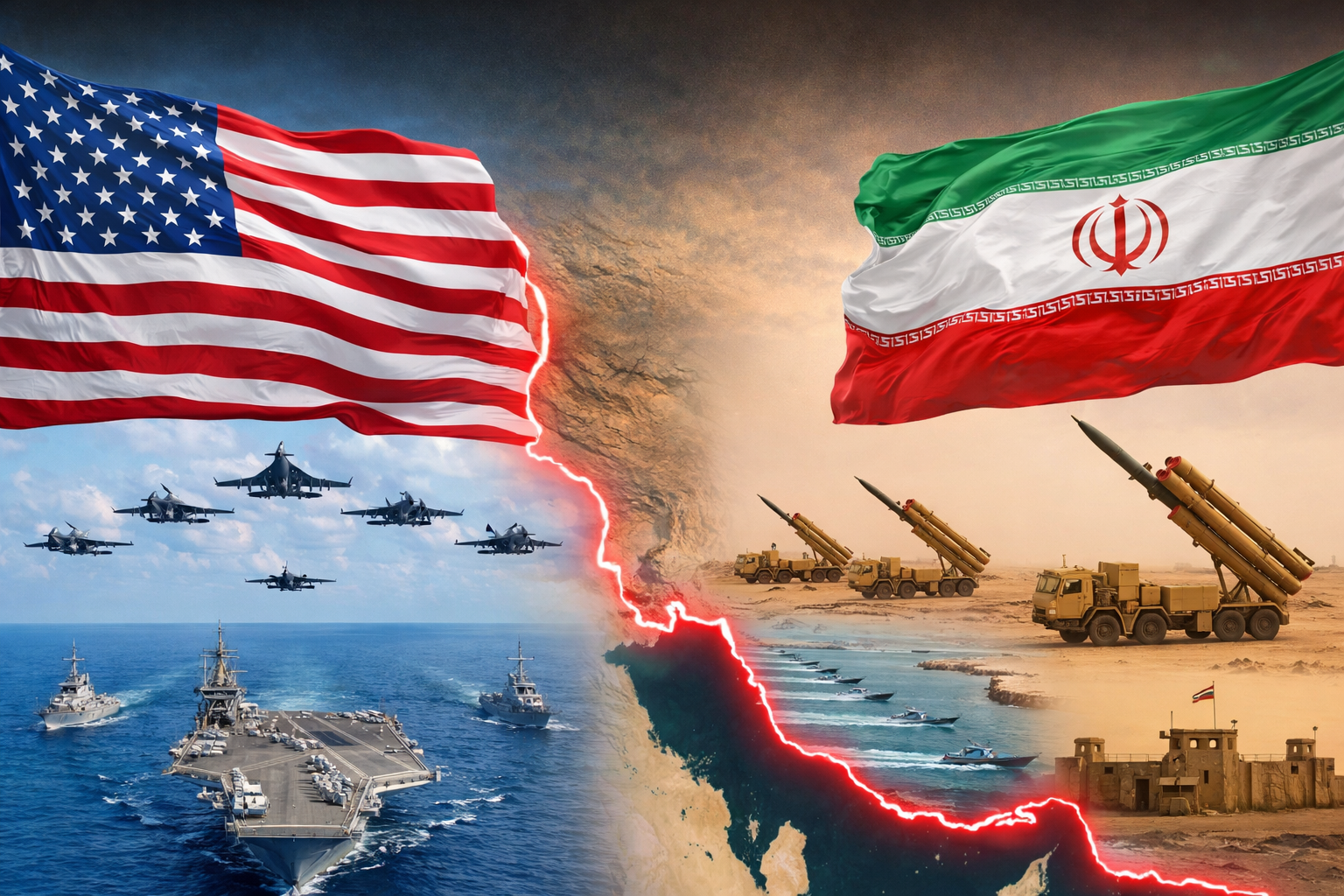
The Iran war is reshaping U.S. politics as the conflict increasingly becomes connected to the economy, energy prices, national security, President Donald Trump’s political standing, and the 2026 U.S. midterm elections. What began as a major foreign-policy and military crisis has developed into a domestic political issue that could influence how Americans vote in November.
The timing is particularly important. The United States is approaching the 2026 midterm elections, and Republicans are defending their congressional position while Democrats are attempting to regain power. At the same time, the continuing conflict with Iran has contributed to higher oil prices, increased gasoline costs, inflation concerns, and growing debate over how long the United States should remain involved in the war.
President Trump has continued to defend the military campaign, arguing that confronting Iran is necessary for U.S. national security. However, the longer the conflict continues, the more political attention is shifting toward its domestic consequences.
Recent reporting indicates that oil prices have risen above $100 per barrel amid the conflict and disruptions involving important energy routes. Trump has also said that oil prices could remain elevated until after the midterm elections.
This creates a difficult political situation for Republicans. If the administration can demonstrate a clear military or diplomatic success, the Iran war could strengthen Trump’s national-security argument. But if the conflict continues while Americans face higher gasoline and living costs, voters could instead view the war as a major economic burden.
Why the Iran War Matters to U.S. Politics
Foreign policy does not always determine American elections. Voters frequently focus more on jobs, inflation, housing, taxes, healthcare, and everyday expenses.
The Iran conflict is different because it connects foreign policy directly to those domestic issues.
When an international conflict affects oil supplies, gasoline prices can increase. Higher fuel costs can then influence transportation, food prices, airline tickets, shipping costs, and household budgets.
That means voters who may not closely follow Middle Eastern politics can still feel the consequences of the Iran war when they visit a gas station or pay their monthly bills.
This connection between Iran war, oil prices, inflation, and the 2026 election is becoming one of the most important political stories of the year.
Analysts and political observers are particularly focused on whether voters will treat the conflict as a national-security issue or as an economic issue. The answer could have a significant effect on congressional races.
Iran War and the 2026 Midterm Elections
The 2026 U.S. midterm elections are scheduled for November 3, 2026, and the Iran conflict is emerging as one of the major unexpected factors in the campaign.
The midterms will determine control of Congress and provide voters with an opportunity to evaluate the first part of Trump’s second presidential term.
Republicans want voters to focus on national security, border policy, economic policy, and Trump’s broader political agenda. Democrats are likely to emphasize affordability, the cost of living, war spending, and the consequences of the conflict.
The Iran war therefore creates a political divide.
Republican candidates can argue that strong action against Iran protects American interests and prevents Iran from developing dangerous military capabilities.
Democratic candidates can argue that the administration needs a clear exit strategy and that Americans should not be forced to pay higher prices because of a prolonged overseas conflict.
The political impact may ultimately depend on what happens between now and Election Day.
If the war moves toward a diplomatic settlement, Republicans could argue that Trump’s pressure campaign worked.
If the conflict becomes longer, more expensive, or more dangerous, Democrats could use the situation as evidence that the administration lacks a sustainable strategy.
Trump and the Iran War
Donald Trump is at the center of the political debate surrounding the Iran conflict.
Trump has repeatedly defended the war and presented it as an important part of his national-security agenda. He has also argued that Iran is attempting to influence the U.S. midterm elections.
In September, Trump said the war could end shortly after the midterm elections and linked the conflict’s continuation to the political calendar.
That statement creates an unusual political dynamic.
For voters, the question becomes whether the war is being managed primarily according to military and diplomatic considerations or whether the election has become part of the strategic calculation.
Trump’s supporters are likely to view his approach as evidence of strength. They may argue that Iran must face sustained pressure before negotiations can produce meaningful results.
Critics, however, may argue that the administration needs clearer objectives and a more convincing path toward ending the conflict.
The longer the war continues, the more important that distinction becomes.
The Biggest Political Risk: Gas Prices
One of the biggest reasons the Iran war could reshape U.S. politics is simple: gasoline prices.
Americans experience fuel prices directly. Unlike complicated foreign-policy debates, gasoline prices are visible every time consumers fill their vehicles.
The conflict has disrupted energy markets and contributed to a major increase in oil prices. Brent crude moved above $100 per barrel in September as fighting and concerns surrounding regional supply routes intensified.
Trump has acknowledged that oil prices may not fall until after the midterms.
That creates a political problem for Republicans because the administration can be held responsible by voters for conditions that affect household budgets.
The Atlantic recently reported that gasoline prices were significantly higher than the previous year and argued that rising fuel costs could threaten Republican prospects in the midterms.
Gas prices are especially politically important because they can affect voters who do not normally think of themselves as highly political.
A voter may support Trump’s foreign policy but become frustrated if the cost of driving to work increases.
That is why the economic consequences of the Iran war could be more politically powerful than the military details of the conflict.
Iran War and Inflation
The second major domestic issue is inflation.
Energy prices influence many parts of the economy. Businesses that transport products need fuel. Airlines need jet fuel. Manufacturers depend on energy and transportation. Farmers rely on fuel for machinery and logistics.
When energy costs rise, businesses can face higher operating expenses.
Some businesses may absorb those costs. Others may pass them on to consumers.
That creates another political problem for the White House.
If inflation accelerates while the Iran war continues, Democrats could argue that Trump’s foreign-policy decisions are contributing to the cost-of-living problem.
Republicans, on the other hand, could argue that energy disruptions are temporary and that allowing Iran to control important regional energy routes would create an even greater long-term threat.
The political debate will therefore not simply be about whether the war is justified.
It will also be about who pays the economic price of the war.
The Strait of Hormuz and U.S. Politics
The Strait of Hormuz has become an important part of the political and economic conversation surrounding the Iran conflict.
The waterway is critical to global energy transportation. Any prolonged disruption can affect oil and gas markets far beyond the Middle East.
The conflict has already disrupted energy flows and increased uncertainty across international markets. Reuters reported in September that the war had caused significant disruption to LNG flows and contributed to sharp price increases in Asian markets.
For American politicians, this creates two competing arguments.
The administration can say that maintaining freedom of navigation and protecting energy routes is a vital U.S. strategic interest.
Opponents can argue that the United States is paying an enormous price for maintaining a military confrontation.
The outcome of that debate could influence voters in energy-sensitive states as well as suburban and rural communities where driving is essential.
Republicans Face a Difficult Political Choice
The Iran war creates a strategic challenge for Republican candidates.
Many Republican voters strongly support Trump and his national-security policies. Republican candidates therefore risk alienating the party’s core supporters if they openly criticize the president.
At the same time, candidates running in competitive districts cannot ignore local concerns about gasoline prices, inflation, and the cost of living.
This creates a balancing act.
A Republican candidate may support Trump’s decision to confront Iran while simultaneously emphasizing domestic energy production and policies designed to reduce household costs.
Some candidates may also attempt to make their campaigns more local by focusing on taxes, jobs, healthcare, and infrastructure.
However, the national political environment can be difficult to escape.
The Republican midterm convention in Dallas demonstrated how closely the party remains tied to Trump. Reuters reported that Trump used the event to promote his agenda, including a proposed $5,000 dividend for Americans if Republicans retain congressional control.
That strategy could energize Trump’s strongest supporters.
But it also means Republican candidates may be closely associated with every major decision made by the administration, including the Iran war.
Democrats See an Opportunity
For Democrats, the Iran war provides another opportunity to challenge Republicans on the economy and presidential leadership.
Democratic candidates can argue that voters should evaluate the administration based on real-world results.
Their message could focus on:
- Higher gasoline prices
- Inflation concerns
- War spending
- Military casualties
- Federal budget pressures
- Lack of a clear exit strategy
- Impact on American families
- Energy security
- Diplomatic alternatives
The challenge for Democrats is that they also need to present a credible alternative.
Simply opposing the war may not be enough.
Voters may ask what Democrats would do differently.
A stronger Democratic strategy would combine criticism of the administration with a clear plan for diplomacy, energy security, economic stability, and national defense.
Could the Iran War Change Swing States?
The political impact of the Iran war is unlikely to be evenly distributed across the United States.
Competitive states and congressional districts could be especially important.
In areas where voters drive long distances, gasoline prices can become a major political issue.
Rural and suburban voters may be particularly sensitive to fuel costs because commuting and transportation are often essential parts of daily life.
That makes the economic consequences of the war potentially important in swing districts.
Pennsylvania, Michigan, Wisconsin, Arizona, Nevada, Georgia, and other competitive political areas could receive significant attention from both parties.
However, the impact will depend on the specific candidates, local economic conditions, and how voters interpret the conflict.
National trends do not automatically determine individual congressional races.
National Security vs. Cost of Living
At the heart of the political debate is a fundamental question:
What matters more to voters — national security or the cost of living?
Republicans are likely to emphasize national security.
They can argue that preventing Iran from becoming a greater threat requires difficult decisions.
Democrats may emphasize affordability.
They can argue that a government cannot claim economic success if families are paying substantially more for basic necessities.
Neither argument is guaranteed to win.
American voters can care about both issues at the same time.
A voter might believe that Iran represents a serious security threat but still oppose a prolonged war.
Another voter might accept higher gasoline prices if they believe military action is necessary.
This is why the political impact of the conflict is difficult to predict.
War Fatigue Could Become a Political Issue
Another major concern is war fatigue.
The longer a conflict continues, the more difficult it can become for governments to maintain public support.
Americans may initially support military action because of national-security concerns.
But as the conflict continues, voters may begin asking:
How long will it last?
How much will it cost?
What is the objective?
When will American troops come home?
What happens after the fighting ends?
These questions can become increasingly important as the months pass.
Recent analysis has highlighted the political difficulties created by a conflict that has lasted substantially longer than many Americans may have expected.
If the administration cannot clearly answer these questions, opponents may gain political momentum.
Defense Spending and Congress
The Iran war also affects Congress through defense spending.
Military operations require funding, equipment, personnel, logistics, intelligence, and long-term planning.
A prolonged conflict can therefore create pressure for additional defense spending.
Some lawmakers may support increased military funding because they believe national security must remain the priority.
Others may demand limits, oversight, or a clear exit strategy.
This debate could become especially important if Republicans and Democrats are closely divided in Congress.
Control of congressional committees could determine how aggressively lawmakers investigate military strategy, spending, and executive authority.
The Iran war could therefore influence not only who wins elections but also what Congress does after the elections.
The National Debt Question
War spending can also bring the national debt back into the political conversation.
The United States already faces long-term fiscal challenges.
Additional military spending can increase pressure on the federal budget, particularly if the conflict becomes prolonged.
This creates another political divide.
Republicans traditionally emphasize national defense while also discussing fiscal discipline.
Democrats also face internal divisions between those who prioritize defense spending and those who want greater spending on domestic programs.
The political question becomes whether voters believe additional military spending is necessary or whether resources should be directed toward domestic priorities.
Iran War and the U.S. Economy
The relationship between war and the U.S. economy is more complicated than gasoline prices alone.
A major geopolitical conflict can affect:
- Oil prices
- Natural gas prices
- Inflation
- Interest rates
- Consumer spending
- Business investment
- Stock markets
- Government spending
- Shipping costs
- Airline costs
- Manufacturing
- International trade
Recent market volatility has demonstrated how energy disruptions can spread into financial markets. U.S. borrowing costs have also come under pressure amid a broader bond-market sell-off and rising oil prices.
If higher energy prices remain temporary, the economic impact could eventually fade.
If they persist for months, however, the political consequences could become much larger.
Stock Market and Political Confidence

Financial markets also respond to geopolitical uncertainty.
Investors generally dislike uncertainty because it makes future earnings, inflation, interest rates, and economic growth harder to predict.
An extended Iran conflict could therefore create periods of volatility in stocks, bonds, currencies, and commodities.
This matters politically because Americans increasingly follow retirement accounts and investment markets.
If stock markets fall significantly, political opponents can use the decline as evidence of poor economic management.
If markets remain resilient, the administration can argue that the U.S. economy is strong enough to absorb geopolitical shocks.
Therefore, financial-market performance could influence the political narrative even if most voters do not directly connect their investment accounts to the Iran conflict.
Oil Companies and the Political Debate
The energy sector is another major part of the story.
Higher oil prices can benefit some energy producers while increasing costs for consumers and businesses.
This creates an unusual political situation.
An energy company may benefit from higher crude prices while ordinary consumers pay more at the pump.
Politicians can therefore face pressure to explain whether energy policy is designed primarily to support producers or reduce consumer costs.
The administration may emphasize increased domestic production and energy independence.
Critics may argue that domestic production cannot immediately eliminate the impact of global oil prices.
The difference between these arguments could become a major part of the 2026 election debate.
Trump’s Political Strategy
Trump has historically relied heavily on direct communication with voters.
The Iran conflict gives him an opportunity to present himself as a strong leader willing to confront international threats.
His supporters can see the war as evidence that the United States is once again asserting military power.
Trump can also argue that previous administrations failed to adequately confront Iran.
However, this strategy carries significant risks.
If the conflict becomes associated with high gasoline prices, inflation, or military casualties, the same issue that demonstrates strength could become a political weakness.
This is the central dilemma for Trump’s political strategy.
The Iran war can be both a national-security asset and an economic liability.
Can Trump Turn the Iran War Into an Election Advantage?
Trump’s political success may depend on how the public views the outcome.
If there is a major diplomatic agreement before the election, Trump could claim that military pressure forced Iran to negotiate.
If Iran significantly reduces its military capabilities, Republicans could point to that as evidence of successful policy.
If American troops return home and oil prices decline, the political damage from the conflict could also decrease.
But the opposite is possible.
If the war continues, energy prices remain high, and there is no clear diplomatic settlement, voters may become more critical.
This makes the next several weeks politically important.
Why the 2026 Midterms Could Become a Referendum on Trump
Midterm elections often function as a referendum on the president.
Voters who are satisfied with the administration may support its party.
Voters who are dissatisfied may use congressional elections to express opposition.
The Iran war could therefore become part of a larger judgment on Trump’s second-term presidency.
Republicans will want voters to consider the administration’s broader achievements.
Democrats will want voters to focus on dissatisfaction with the president’s policies.
The economy, inflation, war, immigration, healthcare, taxes, and political institutions could all compete for attention.
The Iran conflict may not be the only issue that matters.
But because it affects both national security and household finances, it could become unusually influential.
The Role of Voter Sentiment
Voter sentiment is often more important than individual policy details.
People may not know the exact history of the Iran conflict.
They may not understand the strategic importance of the Strait of Hormuz.
They may not follow negotiations between Washington and Tehran.
But they understand when gasoline becomes more expensive.
They understand when airline tickets rise.
They understand when groceries cost more.
They understand when their household budget becomes harder to manage.
That is why the economic effects of the war could determine its political impact.
The question for Republicans is whether voters will blame the administration for higher prices.
The question for Democrats is whether they can convince voters that their alternative policies would produce better results.
The Iran War and Independent Voters
Independent voters could become particularly important.
Strong Republicans are more likely to support Trump.
Strong Democrats are more likely to oppose him.
Independent voters can be more sensitive to changing economic and political conditions.
If independents see the Iran war primarily as a national-security necessity, Republicans may benefit.
If they see it as an unnecessary conflict that has increased household costs, Democrats may benefit.
This makes independent voters an important target for both parties.
Political campaigns are likely to focus on explaining the conflict in ways that connect with everyday concerns.
Social Media and the Iran War
Social media will also play a major role.
Political arguments about the Iran war are already spreading across platforms such as X, Facebook, YouTube, TikTok, and other social networks.
Supporters and opponents can present completely different versions of the same event.
One side may highlight military achievements.
Another may focus on civilian consequences, costs, or casualties.
This creates an information environment where political narratives can change quickly.
Misinformation and AI-generated content may make the situation even more complicated.
Election officials are already preparing for misinformation, cybersex threats, and other challenges surrounding the 2026 elections. Reuters reported that officials across the United States are increasing preparations for possible political interference and election-related disruptions.
The Iran war could therefore become part of a much larger information battle during the election season.
The Risk of Political Polarization
The conflict could also deepen political polarization.
Republicans may argue that Democrats are weak on national security.
Democrats may argue that Republicans are reckless with military power.
Both sides could accuse the other of putting politics ahead of the national interest.
This type of polarization makes compromise more difficult.
It can also make public debate less focused on policy details and more focused on political identity.
That could have consequences beyond the 2026 election.
U.S. Allies and Domestic Politics
The war also affects America’s relationships with its allies.
European and Asian countries are closely watching energy markets and U.S. military policy.
Allies may support American efforts to contain Iran while simultaneously worrying about economic consequences.
If the conflict disrupts global energy supplies for an extended period, international pressure on Washington could increase.
American voters may also care about whether allies are sharing the burden.
This raises another domestic political question:
Is the United States carrying too much of the military and economic cost?
Republicans and Democrats may offer different answers.
What Happens If the War Ends Before the Election?
If the Iran war ends before November, the political situation could change quickly.
Oil prices could decline if markets believe energy supplies will stabilize.
The administration could claim a major foreign-policy victory.
Republicans could argue that Trump’s strategy succeeded.
Democrats could still criticize the cost of the war, but their ability to use the conflict as an active campaign issue could decline.
However, the end of fighting would not automatically end the political debate.
Congress could still investigate the war.
Lawmakers could debate reconstruction, sanctions, diplomacy, and military spending.
The economic effects could also remain for some time.
What Happens If the War Continues?
If the conflict continues into the election period, its political importance could increase dramatically.
Every additional week could bring new questions about military casualties, oil prices, government spending, and diplomatic negotiations.
Republican candidates may be forced to defend the administration’s strategy.
Democratic candidates may make the conflict central to their campaigns.
The war could then become one of the defining issues of the 2026 midterms.
Recent reporting already describes the Iran conflict as a major political challenge for Republicans as the election approaches.
Three Possible Political Scenarios
Scenario 1: Diplomatic Breakthrough
In the first scenario, the United States and Iran reach a meaningful diplomatic agreement.
Energy markets stabilize.
Oil prices decline.
Military operations decrease.
Trump claims that his pressure strategy forced Iran to negotiate.
This could reduce the political risk for Republicans.
Scenario 2: Prolonged Conflict
In the second scenario, fighting continues through the election.
Oil prices remain elevated.
Gasoline remains expensive.
Voters become increasingly concerned about war fatigue and economic pressure.
This could create a significant political challenge for Republicans.
Scenario 3: Major Escalation
The most dangerous scenario would involve a significant expansion of the conflict.
An attack on American forces, a major disruption of energy supplies, or broader regional involvement could dramatically change the political environment.
In such a situation, national security could become the dominant election issue.
Republicans might benefit if voters rally around the president during a crisis.
But if the escalation is viewed as the result of poor policy decisions, the political consequences could move in the opposite direction.
What Voters Should Watch Before the Election
Anyone following the 2026 U.S. election and Iran war should watch several indicators.
1. Oil Prices
Oil prices are one of the clearest indicators of the conflict’s economic impact.
2. Gasoline Prices
Retail fuel prices directly affect voters and can influence consumer confidence.
3. Military Casualties
American casualties could significantly change public opinion.
4. Diplomatic Negotiations
Successful negotiations could reduce political pressure on Trump.
5. Congressional Approval
Congressional support or opposition could determine how sustainable the administration’s strategy becomes.
6. Inflation
If energy prices push inflation higher, the political debate could become more intense.
7. Polling
Changes in presidential approval and congressional preferences could reveal whether voters are blaming or rewarding the administration.
8. Swing-State Sentiment
Competitive states may provide the clearest evidence of whether the Iran war is changing voting behavior.
How the Iran War Could Reshape U.S. Foreign Policy
The consequences may continue beyond the 2026 election.
If Trump succeeds, future presidents may become more willing to use military and economic pressure against Iran.
If the conflict becomes politically damaging, future administrations may become more cautious about large-scale military interventions in the Middle East.
The war could also influence America’s broader relationship with the Persian Gulf.
Strategic competition with China and Russia could be affected as Washington allocates military resources to the region.
The long-term consequences therefore extend far beyond the November election.
Iran War and America’s Global Position
The conflict is also changing international perceptions of American power.
A prolonged war can demonstrate American military capabilities.
But it can also raise questions about the limits of military power.
Chat ham House recently argued that the conflict could reshape the Persian Gulf and potentially weaken America’s regional predominance while creating opportunities for China.
That means U.S. policymakers are facing both immediate and long-term strategic questions.
The United States must balance its commitments in the Middle East with challenges from other parts of the world.
Why the Iran War Could Become an Economic Election
One of the most important developments is the transformation of the Iran conflict from a foreign-policy story into an economic election issue.
The political conversation is no longer only:
“Should America confront Iran?”
It is increasingly:
“How much should Americans pay for that confrontation?”
That question can be politically powerful.
If Americans believe the costs are necessary, the administration may maintain support.
If they believe the costs are excessive, political pressure could increase rapidly.
This is why Iran war and U.S. economy are becoming closely connected search and news topics.
The Bigger 2026 Election Picture
The Iran conflict will not exist in isolation.
Voters will also care about:
- Inflation
- Housing affordability
- Healthcare
- Immigration
- Taxes
- Jobs
- Interest rates
- Government spending
- National debt
- Trade policy
- Energy policy
- Education
- Crime
- Election rules
The party that successfully connects the Iran war to these broader concerns could gain a political advantage.
For Republicans, the message is likely to emphasize strength, security, energy production, and leadership.
For Democrats, the message is likely to emphasize affordability, accountability, diplomacy, and the cost of prolonged military involvement.
The effectiveness of each message will depend on what voters experience in their daily lives.
Conclusion: Iran War Could Reshape U.S. Politics
The Iran war is reshaping U.S. politics because it touches almost every major political concern in America: national security, energy, inflation, government spending, presidential leadership, congressional power, and the 2026 midterm elections.
The conflict has created a difficult political challenge for Donald Trump and Republicans.
A successful military or diplomatic outcome could strengthen Trump’s argument that confronting Iran was necessary.
But a prolonged conflict accompanied by high oil and gasoline prices could create significant political pressure.
For Democrats, the war provides an opportunity to challenge Republicans over affordability and foreign policy. But Democrats will also need to explain what they would do differently and how they would protect American security.
Ultimately, the political impact of the Iran war may be determined less by the battlefield itself than by what Americans experience at home.
If gasoline prices fall, diplomacy advances, and the conflict moves toward a resolution, the political damage may be limited.
If energy prices remain high, inflation increases, and the war continues without a clear end, the conflict could become one of the defining issues of the 2026 U.S. midterm elections.
The central question for American voters is therefore not simply whether the United States should confront Iran.
It is whether the strategy is producing enough security and long-term benefits to justify its economic, military, and political costs.
As Election Day approaches, that question could determine how voters judge Trump’s presidency, the Republican Party, and the future direction of U.S. foreign policy.
For that reason, Iran War Reshapes U.S. Politics is more than a foreign-policy story. It is becoming an important story about America’s economy, elections, energy prices, national security, and the political future of the United States.
For more information about this A rtical Click Here
For more information Click Here