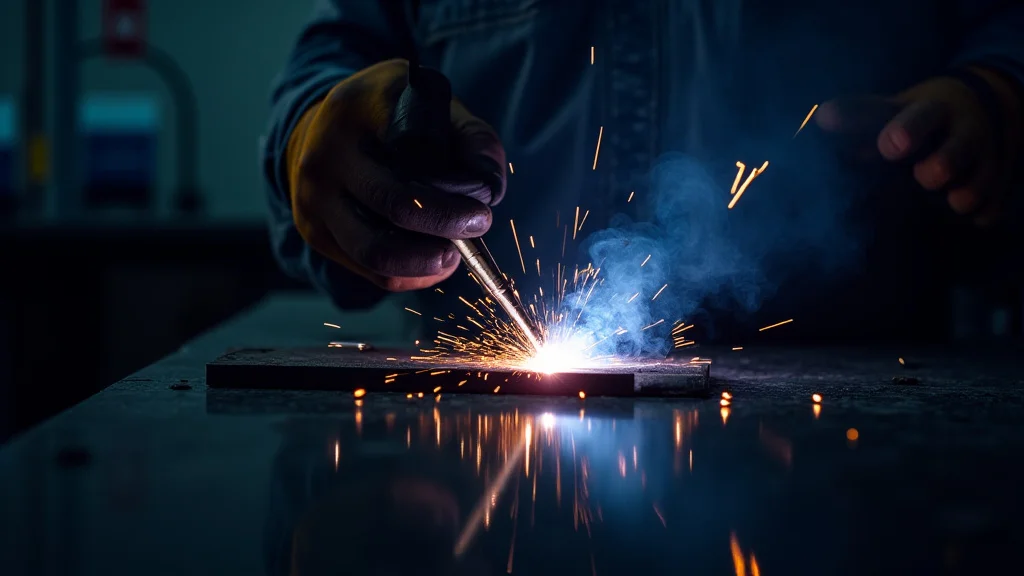
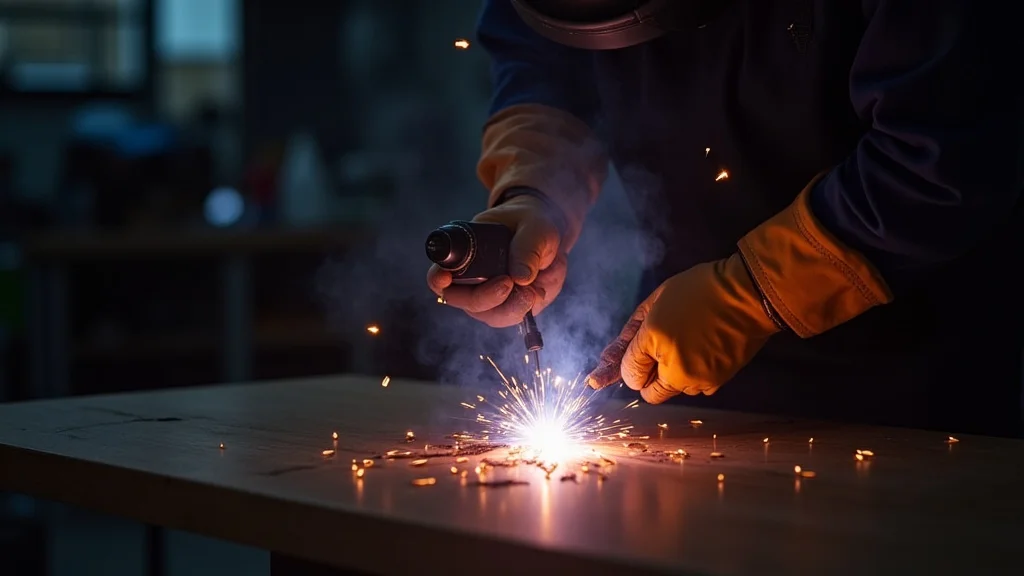
It’s frustrating when your MIG welder won’t spark! Many new welders run into this problem, making them feel stuck. Don’t worry, though.
This guide will show you simple fixes, step-by-step. Get ready to learn how to get your welder working again.
Key Takeaways
- You will learn common reasons why a MIG welder might not produce an arc.
- This post will guide you through simple checks to diagnose the issue.
- We will cover essential settings and connections that need to be correct.
- You will find out how to troubleshoot wire feed and power problems.
- Solutions for common MIG welding arc issues are provided in an easy-to-follow format.
- This guide aims to get you back to welding smoothly and confidently.
Why Your MIG Welder Isn’t Making an Arc
When you pull the trigger on your MIG welder and get nothing but a whirring sound or silence instead of that satisfying spark, it can stop your project dead in its tracks. This is a very common hiccup, especially for people just starting out with MIG welding. The troubleshooting process for a MIG Welder Not Producing Arc?
Solutions Inside can seem tricky at first because there are a few different things that could be wrong. But don’t let it discourage you. Most of the time, the fix is quite simple and just involves checking a few key areas.
We’re going to walk through these potential problems one by one so you can figure out what’s happening and get back to making good welds.
Understanding the MIG Welding Arc
Before we fix it, let’s quickly think about what’s supposed to happen. A MIG welder works by feeding a wire electrode through a gun. When you pull the trigger, this wire touches the metal you want to weld, completing an electrical circuit.
This creates a continuous arc of electricity between the wire and the metal. This arc melts both the wire and the metal, allowing them to join together. If anything stops this circuit from completing or maintaining itself, you won’t get an arc.
Common Reasons for No Arc
There are several common culprits when a MIG welder fails to produce an arc. These issues range from simple settings errors to more mechanical problems with the equipment.
Power Supply Issues
The most basic reason for no arc is that the welder isn’t getting power or isn’t connected properly.
Is It Plugged In?
It sounds obvious, but double-check that the welder is plugged into a working outlet. Make sure the power cord is fully seated in the socket. If you’re using an extension cord, ensure it’s heavy-duty enough for your welder’s power draw and is in good condition.
Overloaded or damaged extension cords can prevent proper power delivery.
Circuit Breaker Tripped
Welders draw a lot of power. If the circuit breaker for the outlet you’re using has tripped, the welder won’t receive power. Reset the breaker.
If it trips again immediately, you might have a problem with the outlet, the circuit, or the welder itself drawing too much current.
Incorrect Voltage Setting
Most MIG welders have voltage settings. If this is set too low or is incompatible with the wire speed, it can affect the arc. While this might not stop an arc completely, it can make it unstable or difficult to start.
Wire Feed Problems
The wire feed system is crucial. If the wire isn’t moving, it can’t make contact to start the arc.
No Wire Feeding
When you pull the trigger, do you hear the motor trying to spin? If not, the motor might not be getting power, or there’s a problem with the switch. If you hear the motor but the wire isn’t moving, the issue could be with the drive rollers or the liner.
Drive Rollers Not Gripping
The drive rollers are what push the welding wire. Check if they are clean and have the correct size groove for your wire. If they’re worn or the tension is too loose, they won’t grip the wire properly.
Increase the tension slightly. Make sure the rollers are aligned correctly with the wire path.
Kinked or Tangled Wire
A kinked wire or a tangle inside the spool can prevent it from feeding smoothly. Unspool a few feet of wire to check for any snags or damage. If the wire is damaged, you might need to cut it off and start with a fresh section.
Obstruction in the Liner
The liner is a plastic or metal tube inside the welding gun cable that the wire travels through. If this gets clogged with debris or is kinked, the wire can’t pass through. You might need to remove the liner and clean it or replace it.
Contact Tip Issues
The contact tip is the small part at the end of the welding gun that the wire passes through and makes electrical contact with the workpiece. If the contact tip is worn out or has too much spatter built up inside, it can restrict wire flow or prevent good electrical contact.
- Check the Contact Tip: Ensure the contact tip is clean and free of spatter. If it’s clogged, use a tip cleaner tool to clear it.
- Is it the Right Size?: Make sure the contact tip is the correct size for the welding wire you are using. A tip that’s too small or too large will cause feeding problems.
- Tighten the Tip: The contact tip should be securely screwed into the gun. A loose tip can cause electrical resistance and prevent a good arc.
Ground Clamp Connection
A proper ground connection is absolutely essential for completing the electrical circuit needed for welding.
Is the Ground Clamp Attached?
This might seem basic, but ensure your ground clamp is securely attached to the workpiece or the welding table. A loose or missing ground clamp means no circuit, and therefore, no arc.
Clean Contact Surfaces
The metal surfaces where the ground clamp makes contact must be clean. Rust, paint, grease, or dirt create resistance and can prevent a good electrical connection. Scrape away any obstructions to expose clean metal.
Secure Clamping
Make sure the clamp itself is gripping the metal firmly. A weak grip means a weak connection.
Gas Flow Issues
For MIG welding, shielding gas is used to protect the molten weld pool from atmospheric contamination. While not always the cause of no arc, incorrect gas flow can lead to arc initiation problems.
Is the Gas Cylinder Open?
Check that your shielding gas cylinder valve is fully open. If you’re using a dual-gauge regulator, check the pressure. The tank should not be empty.
Regulator Settings
Ensure your gas regulator is set to the correct flow rate for your welding process. Too little or too much gas can cause issues, though typically this affects weld quality more than preventing an arc altogether.
Check for Leaks
A leak in the gas line, regulator, or connections can mean no gas reaches the gun. You can often detect leaks by listening for hissing sounds or using soapy water on connections.
Check the Gas Solenoid (Internal Component)
Inside the welder, there’s a solenoid that controls gas flow. If this is faulty, it won’t open to let gas out, which can indirectly affect arc initiation. This is a more complex issue that might require professional help.
Welder Settings and Controls
Incorrect settings on the welder itself are a very frequent cause of no arc.
Wire Speed and Voltage Too Low
If your wire speed is set extremely low, the wire might barely advance. If your voltage is too low, the arc might not be strong enough to sustain itself. Ensure these are set within a reasonable range for the material thickness you’re welding.
Incorrect Polarity
Most MIG welding uses DC (Direct Current) with the electrode positive (DCEP). Some machines might have polarity switches. Ensure yours is set correctly for MIG welding.
Refer to your welder’s manual if you’re unsure.
Thermal Overload Protection
Many welders have a thermal overload protection feature. If the welder has been used for an extended period at high power, it might shut down to prevent overheating. Look for an indicator light.
If it’s on, let the welder cool down for at least 15-30 minutes.
Gun and Cable Issues
The welding gun and its cable are the conduits for wire, gas, and electricity. Problems here can stop an arc before it even starts.
Damaged Gun Cable
Inspect the welding gun cable for any cuts, burns, or damage. A damaged cable can short out or interrupt the electrical connection. Ensure all connections at the gun and the welder are tight.
Internal Wire Breakage
Sometimes, the wire can break inside the gun cable, especially near the handle or where the cable bends. This prevents the wire from reaching the contact tip. You might need to disassemble the gun to find and remove the broken section.
Trigger Switch Malfunction
The trigger switch in the gun activates both the wire feed motor and the gas solenoid. If the switch is broken or has a faulty connection, it won’t send the signal to start the welding process.
Troubleshooting Steps: A Quick Guide
When your MIG welder isn’t producing an arc, follow these steps systematically to find the cause.
- Check Power: Ensure the welder is plugged in and the circuit breaker hasn’t tripped.
- Verify Ground Clamp: Make sure the ground clamp is securely attached to clean metal.
- Inspect Wire Feed: Listen for the motor. Check drive rollers, wire for kinks, and the contact tip for obstructions.
- Examine Gas Flow: Confirm the gas cylinder is open and the regulator is set correctly.
- Review Welder Settings: Double-check wire speed, voltage, and polarity settings.
- Inspect Gun and Cable: Look for visible damage and ensure connections are tight.
When to Seek Professional Help
If you’ve gone through all these checks and still can’t get an arc, it might be time to contact the manufacturer or a qualified welding equipment repair technician. Issues with internal components like the main circuit board, relays, or the gas solenoid might require specialized knowledge and tools to diagnose and fix. Trying to repair these yourself without proper expertise could lead to further damage or safety hazards.
Frequently Asked Questions
Question: Why is my MIG welder making noise but not arcing?
Answer: This often means the wire is feeding, but the electrical circuit isn’t completing. Check your ground clamp connection first. Also, ensure the contact tip is clean, properly sized, and tight.
Make sure there isn’t a kink or blockage in the gun liner preventing the wire from reaching the tip.
Question: Can a bad wire spool cause no arc?
Answer: Yes, a poorly wound or tangled wire spool can prevent the wire from feeding. If the wire is twisted or has a tight spot, it won’t move through the gun. This will stop the wire from reaching the contact tip to start the arc.
Question: What if my MIG welder sparks but doesn’t create a steady arc?
Answer: This suggests a problem with maintaining the arc, not starting it. Issues like incorrect gas flow, a worn or dirty contact tip, wrong voltage settings, or a poor ground connection can cause this instability. Ensure your shielding gas is flowing properly and your ground connection is solid and clean.
Question: How do I know if my MIG welder is overheating?
Answer: Most welders have an indicator light that comes on when the thermal overload protection has been activated. If you’ve been welding for a while, especially on thicker materials, the machine might shut off automatically. Let it cool down completely, usually for at least 15-30 minutes, before trying to weld again.
Question: My MIG welder won’t feed wire at all. What could it be?
Answer: If the wire feed motor isn’t running when you pull the trigger, check the welder’s power supply and ensure it’s not in thermal overload. If the motor runs but the wire doesn’t move, check the drive rollers for correct tension and groove size, and look for any obstructions in the gun liner or at the contact tip.
Final Thoughts
When your MIG welder fails to produce an arc, it’s usually due to a few common and easily fixable issues. By systematically checking your power supply, ground connection, wire feed system, gas flow, and welder settings, you can often get back to welding quickly. Most problems stem from simple things like loose connections, dirty contact tips, or incorrect settings.
Wrap Up
A MIG welder not producing an arc is a common problem, but the solutions are usually straightforward. You’ve learned about checking power, ground, wire feed, gas, and settings. Follow these steps, and you’ll likely fix your welder and get back to making great welds.
Keep practicing, and soon these little hiccups will be a distant memory.