Choosing the best multi-process welder can be difficult because today’s welding machines offer an impressive combination of MIG, TIGER, stick, and flux-cored capabilities in a single package. Instead of purchasing separate machines for every welding process, a multi-process welder lets you handle a wide variety of fabrication, repair, automotive, farm, DIE, and workshop projects with one power source.
For many home welders and small fabrication shops, that flexibility can make a multi-process machine a much better investment than buying several dedicated welders. However, not every multi-process welder is designed for the same type of work. Some are optimized for MIG fabrication, some offer excellent portability, while others provide advanced AC/DC TIGER capabilities for aluminum.
The right machine depends on what you weld, how often you weld, the material thickness you normally work with, your available electrical supply, and how much you are willing to spend.
In this guide, we’ll explain what a multi-process welder is, how the major welding processes differ, which features matter most, what specifications to compare, and which types of machines are best for beginners, DIE users, professional fabricators, and aluminum welding.
What Is a Multi-Process Welder?
A multi-process welder is a single welding machine designed to perform two or more welding processes.
Depending on the model, a multi-process machine may support:
- MIG welding
- Flux-cored welding
- Stick welding
- TIGER welding
- Spool-gun MIG
- Pulsed MIG
- DC TIGER
- AC TIGER
- Pulsed TIGER
The exact capabilities vary considerably from one machine to another.
This is an important point because manufacturers sometimes advertise a machine as a “multi-process welder” even though its TIGER functionality is relatively basic.
For example, one machine might offer MIG, stick, and lift-TIGER. Another may provide MIG, stick, high-frequency DC TIGER, and AC TIGER with advanced controls.
Those machines are both multi-process welders, but they are designed for very different users.
If you only need occasional TIGER capability for stainless steel, basic DC TIGER may be sufficient. If you want to weld aluminum regularly with TIGER, AC TIGER capability becomes much more important.
Why Buy a Multi-Process Welder?
The biggest advantage is versatility.
A single machine can allow you to switch between different welding processes depending on the job.
You might use MIG to fabricate a steel table, stick to repair outdoor equipment, and TIGER to create a clean stainless-steel weld.
Instead of purchasing three separate machines, one multi-process welder can perform all of these jobs.
Save Workshop Space
A garage or small workshop can quickly become crowded with welding equipment.
Separate MIG, TIGER, and stick machines require additional storage, cables, torches, and accessories.
A multi-process welder can significantly reduce the amount of equipment you need to keep around.
This is particularly useful for hobbyists who have limited workshop space.
Reduce Equipment Costs
Buying one versatile machine can sometimes cost less than buying several dedicated machines.
However, don’t compare only the advertised purchase price.
Consider the accessories required to use every process.
A machine may include a MIG gun and electrode holder but require you to purchase a TIGER torch, regulator, foot pedal, or spool gun separately.
Always calculate the total cost of the setup.
Handle Different Materials
Different welding processes have different strengths.
MIG is fast and practical for general fabrication.
Stick is useful for outdoor repair and heavier steel.
TIGER provides excellent control for precision welding.
AC TIGER is particularly useful when aluminum TIGER welding is required.
Having multiple processes available means you don’t have to force one welding process to do every job.
Useful for Mobile Welding
A portable multi-process welder can be especially valuable for mobile repair work.
Dual-voltage models can provide additional flexibility when you encounter different electrical supplies at home, in a workshop, or at a job site.
Miller’s current Ultimate lineup, for example, includes models with 120/240V input and different combinations of MIG, flux-cored, stick, and TIGER capabilities.
MIG vs TIGER vs Stick: Which Processes Do You Need?
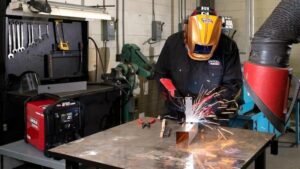
Before buying a multi-process welder, understand what each process is best at.
MIG Welding
MIG welding is often the primary process on a multi-process machine.
It uses a continuously fed wire electrode and shielding gas when using solid wire.
MIG is popular because it is relatively fast and easy to learn.
It works well for:
- Mild steel
- Stainless steel
- Aluminum
- Automotive fabrication
- Trailer repair
- Farm equipment
- DIE projects
- General fabrication
MIG is usually the best choice when productivity and ease of use are important.
Flux-Cored Welding
Flux-cored welding uses a tubular wire containing flux.
Depending on the wire and machine setup, flux-cored welding can be performed with or without external shielding gas.
Flux core is useful for:
- Outdoor welding
- Heavy fabrication
- Repair work
- Farm equipment
- Construction
- Dirty or less-than-ideal environments
However, flux-cored wires can produce more smoke and slag than standard solid-wire MIG.
Stick Welding
Stick welding uses a consumable electrode coated with flux.
It remains one of the most useful welding processes for outdoor and repair applications.
Stick is excellent for:
- Heavy steel
- Outdoor work
- Farm repairs
- Machinery repair
- Construction
- Structural applications where the appropriate procedure permits it
One of its biggest advantages is that you don’t need an external shielding-gas cylinder.
TIGER Welding
TIGER welding uses a non-consumable tungsten electrode and a separate filler rod when filler is required.
TIGER offers excellent control and can produce very clean welds.
It is particularly useful for:
- Stainless steel
- Aluminum
- Thin materials
- Precision fabrication
- Decorative welding
- Automotive customization
- High-quality visible welds
The trade-off is speed. TIGER generally requires more skill and is slower than MIG.
What Makes the Best Multi-Process Welder?
There isn’t one machine that is perfect for every welder.
The best multi-process welder should provide the right combination of:
- Welding processes
- Amperage
- Duty cycle
- Input voltage
- TIGER capability
- MIG performance
- Portability
- Controls
- Accessories
- Warranty
- Manufacturer support
- Price
Let’s examine each factor.
1. Welding Processes
Start with the processes you actually need.
If you only weld mild steel, you may not need a premium AC/DC TIGER machine.
If you fabricate steel but occasionally repair outdoor equipment, MIG + stick may be enough.
If you work with stainless steel, DC TIGER can be useful.
If aluminum is a major part of your work, look closely at both spool-gun MIG and AC TIGER capabilities.
Don’t pay extra for features you will never use.
At the same time, don’t buy a machine that lacks a process you’ll need six months from now.
A little planning before purchasing can prevent an expensive upgrade later.
2. MIG Welding Capability
For most multi-process welders, MIG capability is one of the most important specifications.
Look for:
- Maximum amperage
- Minimum amperage
- Wire-feed speed range
- Compatible wire diameters
- Solid-wire capability
- Flux-core capability
- Spool-gun support
- Digital controls
- Synergism or automatic setup
- Duty cycle
A good MIG system should provide consistent wire feeding and stable arc performance.
If you regularly weld thin sheet metal, pay attention to the machine’s low-amperage capability.
If you fabricate heavier steel, maximum output and duty cycle become more important.
3. TIGER Capability
This is where multi-process welders can differ dramatically.
A machine described as “TIGER capable” doesn’t necessarily provide full-featured TIGER performance.
Check whether it offers:
- Lift TIGER
- High-frequency TIGER
- DC TIGER
- AC TIGER
- Pulse TIGER
- Adjustable per-flow
- Adjustable post-flow
- Foot-pedal compatibility
- Torch controls
- Gas solenoid
- Adjustable amperage
- Balance control
- Frequency control
For mild steel and stainless steel, DC TIGER may be all you need.
For serious aluminum TIGER welding, AC TIGER is highly desirable.
Miller’s Ultimate 220 AC/DC is an example of a machine that combines MIG, flux-cored, stick, DC TIGER, and AC TIGER. Miller lists a 30–230A overall amperage range and 120/240V input capability for the machine.
That makes it fundamentally different from a machine that offers only basic DC lift-TIGER.
4. AC TIGER for Aluminum
If you plan to TIGER weld aluminum, carefully investigate whether the machine provides AC TIGER.
Aluminum naturally forms an oxide layer that behaves differently from the underlying metal.
AC TIGER is commonly used because alternating current allows the welder to manage the oxide layer while controlling the weld.
This is why AC/DC multi-process welders are attractive to automotive fabricators, custom shops, and advanced hobbyists.
However, AC TIGER isn’t necessary for everyone.
If you mainly weld steel and stainless steel, a DC TIGER machine may be perfectly adequate.
5. Spool-Gun MIG for Aluminum
Another option for aluminum is MIG welding with a compatible spool gun.
A spool gun places the wire spool near the welding gun, reducing the distance the soft aluminum wire has to travel through the conventional MIG liner.
This can make aluminum MIG feeding more reliable.
Spool-gun MIG is attractive when you want to weld aluminum relatively quickly.
AC TIGER is generally more focused on precision and control.
Therefore:
Choose spool-gun MIG when productivity matters.
Choose AC TIGER when precision aluminum welding matters.
If you regularly perform both, an AC/DC multi-process machine with aluminum MIG capability can provide the greatest versatility.
6. Stick Welding Capability
Stick capability can make a multi-process machine much more useful for repair work.
Check the machine’s recommended electrode compatibility and operating range.
Some machines are particularly good at starting and maintaining an arc with difficult electrodes.
Miller’s Ultimate 220 AC/DC documentation, for example, specifically lists stick performance including E6010 capability.
For farmers, repair technicians, and people who frequently weld outdoors, stick capability can be more valuable than advanced MIG features.
7. Amperage Range
Amperage tells you how much welding current the machine can produce.
But maximum amperage alone doesn’t determine whether a welder is good.
A 200-amp machine can be more useful than a 250-amp machine if it offers better low-end control, higher duty cycle at your working amperage, and better process capabilities.
For many home and hobby projects, a machine in roughly the 200-230A class can provide substantial versatility.
Professional fabrication may require more.
Thin sheet metal requires excellent low-amperage control.
Always consider both the minimum and maximum output.
Miller currently lists the Ultimate 220 AC/DC at 30–230A overall, with different ranges and rated outputs depending on process and input voltage.
8. Duty Cycle
Duty cycle is one of the most important specifications for serious welders.
It tells you how long the machine can operate at a specified output within a defined period before thermal protection becomes necessary.
For example, a 60% duty cycle at a specified output generally means six minutes of welding within a ten-minute period, followed by four minutes of cooling.
However, don’t compare duty-cycle percentages without checking the amperage at which they were measured.
A machine might have:
- Excellent duty cycle at 150A
- Moderate duty cycle at 200A
- Low duty cycle at maximum output
For occasional DIE welding, this may not matter much.
For production work, it matters a lot.
9. 120V vs 240V Input
Dual-voltage capability is one of the most useful features on a multi-process welder.
120V
Advantages include:
- Easy access to household-style power
- Convenient for home garages
- Useful for light-duty work
- Good portability
240V
Advantages include:
- Higher available welding output
- Better suited to heavier work
- More useful for high-amperage welding
- Often better for longer welding sessions
If you want maximum flexibility, a 120/240V machine is attractive.
Miller’s current Ultimate comparison lists 120/240V input for the 215 PRO and 220 AC/DC, while higher-end models use different electrical requirements.
Always verify the required circuit, plug, breaker, and installation requirements before connecting a welder.
10. Portability
A multi-process welder may be used in several locations.
For mobile work, look for:
- Low machine weight
- Strong carrying handle
- Compact dimensions
- Cable storage
- Easy-to-access controls
- Optional cart
- Dual-voltage input
For example, Miller lists the Ultimate 220 AC/DC at 56 pounds with a handle and optional running gear.
If the machine will never leave your workshop, weight may matter much less.
11. Digital Controls
Digital controls can make a multi-process machine easier to configure.
A good interface should allow you to quickly select:
- Process
- Material
- Wire diameter
- Gas
- Welding mode
- Amperage
- Voltage
- Wire-feed speed
Some machines provide automatic or synergy setup.
These features are particularly helpful for beginners.
Experienced welders may prefer manual control because it provides more flexibility.
12. However, Synergism MIG.
Synergism MIG automatically coordinates related welding parameters based on information such as wire type, wire diameter, material, and selected settings.
This can reduce setup time.
For a beginner, it can make the learning curve easier.
For an experienced welder, it can serve as a useful starting point.
But automatic settings don’t replace welding technique.
You still need to understand:
- Travel speed
- Gun angle
- Stick-out
- Joint design
- Material preparation
- Shielding gas
- Heat control
Top Multi-Process Welder Categories
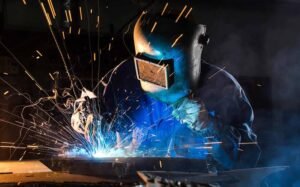
Instead of declaring one machine universally superior, it makes more sense to choose according to the type of welding you do.
Best Premium AC/DC Option: Miller Ultimate 220 AC/DC
The Miller Ultimate 220 AC/DC is a strong choice for welders who want maximum versatility in a relatively compact machine.
It supports:
- MIG
- Flux core
- Stick
- DC TIGER
- AC TIGER
Miller lists it as a 120/240V single-phase machine with a 30–230A range and a 56-pound net weight. Its published material capability includes mild steel, stainless steel, and aluminum.
Its biggest advantage is AC/DC TIGER capability.
If aluminum TIGER is part of your long-term plans, this can be much more useful than a machine that provides only DC TIGER.
The trade-off is that premium versatility usually comes at a higher purchase price.
Best General-Purpose Category: Lincoln Electric POWER MIG 215 Mp
Lincoln Electrics POWER MIG 215 Mp is aimed at users who want a broad range of welding processes in one machine.
Current market guides place it among multi-process options for repair shops and general fabrication.
For users who prioritize MIG fabrication while still wanting stick and TIGER capability, this type of machine can be an attractive middle ground.
Before purchasing, verify the exact package and included accessories because product bundles can differ.
If aluminum TIGER is a major requirement, compare its TIGER capabilities directly against AC/DC machines rather than assuming that all multi-process machines provide equivalent aluminum performance.
Best Portable Category: ES-AB Rebel Series
ES-AB’s Rebel family is well known for compact multi-process welding equipment.
The Rebel concept emphasizes portability and multi-process flexibility.
Current 2026 market guides continue to list the Rebel EMPIRE series among notable multi-process options.
For contractors and mobile welders, portability can be just as important as raw output.
When comparing Rebel models, pay attention to the exact model number because capabilities can vary significantly between versions.
Best Home Workshop Category: Hobart Multi-Handler
Hobart’s Multi-Handler range targets users who want multiple welding processes without moving into the largest professional machines.
Current listings identify the Multi-Handler 200 as a MIG/TIGER/stick machine with 120/240V input and controls intended to simplify setup.
For DIE users, the combination of familiar controls, dual-voltage flexibility, and multiple welding processes can make this category appealing.
Multi-Process Welder Comparison
| Category | What to Prioritize | Best For |
|---|---|---|
| Budget | Essential MIG + stick/TIGER capability | Beginners |
| Home workshop | Dual voltage + easy controls | DIE projects |
| General fabrication | Strong MIG + flux core + stick | Fabricators |
| Portable | Low weight + dual voltage | Mobile welders |
| Aluminum MIG | Spool-gun compatibility | Automotive/fabrication |
| Aluminum TIGER | AC/DC TIGER | Advanced welders |
| Professional | Duty cycle + advanced controls | Production |
| Farm repair | Stick + MIG + portability | Agricultural repair |
| Automotive | MIG + TIGER + aluminum capability | Restoration |
| Precision work | Advanced TIGER controls | Custom fabrication |
Multi-Process Welder vs Dedicated MIG Welder
This is an important purchasing decision.
If you only use MIG, a dedicated MIG welder may be the better investment.
A dedicated MIG machine can provide:
- Simpler controls
- Fewer accessories
- Specialized MIG performance
- Potentially lower cost
- Easier setup
A multi-process machine makes more sense when you regularly switch between processes.
Choose a dedicated MIG machine if:
- You only weld mild steel
- You don’t use TIGER
- You don’t use stick
- You want maximum MIG simplicity
- You want to minimize equipment complexity
Choose a multi-process welder if:
- You use several processes
- You work with different materials
- You want one machine for multiple jobs
- Workshop space is limited
- You perform repair work
- You expect your welding needs to grow
Multi-Process Welder vs Separate Machines
Separate machines offer specialization.
A dedicated TIGER welder may provide more advanced TIGER controls.
A dedicated MIG machine may provide greater production-oriented performance.
A dedicated stick welder may be ideal for heavy-duty repair.
But buying three machines also means:
- More storage
- More cables
- More maintenance
- More equipment cost
- More setup time
For a small workshop, the convenience of one multi-process machine can outweigh the advantages of specialization.
For a high-production fabrication shop, dedicated machines may still be preferable.
What Is the Best Multi-Process Welder for Beginners?
Beginners should prioritize simplicity rather than the largest feature list.
Look for:
- Easy-to-read controls
- Digital display
- Automatic or synergy MIG setup
- Clear documentation
- 120/240V capability
- MIG + flux core
- Stick capability
- Basic TIGER capability
A beginner may not need advanced pulse controls or sophisticated TIGER programming.
However, buying a machine with room to grow can be worthwhile.
If you expect to learn TIGER and aluminum welding later, investing in AC/DC capability now may prevent you from needing another machine.
Best Multi-Process Welder for Home Garage
For a home garage, a dual-voltage machine is usually one of the most useful features.
Your priorities should be:
- 120/240V input
- Compact size
- Reasonable weight
- MIG capability
- Stick capability
- TIGER capability
- Easy controls
- Good low-amperage performance
- Appropriate duty cycle
- Reliable manufacturer support
A 200-230A-class machine can cover a broad range of common garage projects, but the correct choice depends on the material thickness and welding processes you expect to use.
Best Multi-Process Welder for Aluminum
Aluminum changes the buying decision.
If aluminum is an occasional material, spool-gun MIG may be enough.
If you want precision aluminum welding, AC TIGER is much more important.
Choose spool-gun MIG when:
- You want speed
- You fabricate aluminum components
- You weld relatively thicker aluminum
- You want simpler aluminum MIG production
Choose AC TIGER when:
- Appearance matters
- You weld thin aluminum
- You need precise heat control
- You fabricate custom parts
- You want greater control over the weld
If you need both, an AC/DC multi-process machine can be the most versatile option.
Best Multi-Process Welder for Farm and Outdoor Repairs
For agricultural and outdoor work, stick welding remains extremely useful.
A machine with:
- Stick
- MIG
- Flux core
- Portable design
- Dual voltage
can be highly practical.
Flux-core and stick processes can be particularly useful when shielding gas becomes inconvenient outdoors.
However, wind can still affect gas-shielded processes, so choose the process and setup according to the environment.
Best Multi-Process Welder for Automotive Work
Automotive welding often involves thin steel, stainless steel, and aluminum.
A good automotive-oriented multi-process machine should provide:
- Low-amperage MIG control
- Stable wire feeding
- DC TIGER
- AC TIGER if aluminum is important
- Spool-gun compatibility
- Good control over heat input
For body panels and thin sheet metal, low-end MIG control can be more important than maximum amperage.
For custom exhaust work, stainless TIGER can be extremely useful.
For aluminum components, AC TIGER or spool-gun MIG may be appropriate depending on the job.
Common Mistakes When Buying a Multi-Process Welder
Mistake 1: Looking Only at Maximum Amperage
A bigger number doesn’t automatically mean a better welder.
Look at the full specification sheet.
Mistake 2: Assuming All TIGER Is Equal
Lift TIGER, high-frequency TIGER, DC TIGER, and AC TIGER provide different capabilities.
Always determine exactly what you are buying.
Mistake 3: Ignoring Duty Cycle
A machine might advertise a high maximum output but provide a relatively low duty cycle at that output.
Consider how long you actually weld continuously.
Mistake 4: Forgetting Accessories
Check whether the package includes:
- MIG gun
- TIGER torch
- Stick holder
- Work clamp
- Regulator
- Gas hose
- Foot pedal
- Spool gun
- Consumables
The lowest sticker price isn’t necessarily the lowest total cost.
Mistake 5: Buying More Machine Than You Need
If you weld twice a month, you may not need a professional production machine.
Buy according to your workload.
Mistake 6: Buying Too Little
The opposite mistake can be expensive too.
If you know you’ll eventually weld aluminum, stainless steel, and heavier steel, buying a basic machine now may lead to another purchase later.
How to Choose the Right Amperage
The correct amperage depends on:
- Material thickness
- Welding process
- Joint design
- Electrode or wire diameter
- Number of passes
- Welding position
- Required penetration
A machine’s advertised maximum material thickness should not be treated as an absolute guarantee for every joint.
Joint preparation can dramatically affect welding requirements.
For thicker steel, beveling and multiple passes may be appropriate depending on the application.
For thin sheet metal, excessive heat can cause distortion and burn-through.
The best approach is to use manufacturer recommendations and test welds on representative material.
How to Set Up a Multi-Process Welder
Once you buy the machine, setup matters just as much as the machine itself.
Step 1: Read the Manual
Always read the manufacturer’s instructions before operating the machine.
Step 2: Confirm Electrical Requirements
Verify that your outlet, circuit, breaker, plug, and wiring are suitable for the machine.
Step 3: Select the Welding Process
Choose MIG, flux core, TIGER, or stick.
Step 4: Install Correct Consumables
Use the correct:
- Wire
- Contact tip
- Drive roll
- Tungsten
- Electrode
- Torch
- Nozzle
Step 5: Check Polarity
Polarity varies by process and consumable.
Always follow the manufacturer’s instructions.
Step 6: Connect Shielding Gas
For gas-shielded processes, install the correct regulator and gas supply.
Check connections for leaks.
Step 7: Clean the Work-piece
Remove contaminants where appropriate.
Step 8: Test on Scrap
Use similar material and joint configuration whenever possible.
Step 9: Fine-Tune Settings
Make small changes rather than changing multiple parameters at once.
Multi-Process Welder Maintenance
Proper maintenance can extend the life of your machine and improve weld consistency.
Clean the Machine
Keep ventilation openings free of dust and debris.
Inspect Cables
Look for damaged insulation, loose connections, and excessive wear.
Check the MIG Gun
Inspect:
- Contact tip
- Nozzle
- Liner
- Diffuse
- Gun neck
Inspect Drive Rolls
Worn or dirty drive rolls can cause inconsistent wire feeding.
Check Gas Equipment
Inspect hoses, regulators, fittings, and connections.
Store Consumables Correctly
Protect welding wire and electrodes from moisture and contamination according to manufacturer recommendations.
Follow Duty Cycle
Don’t continuously operate the machine beyond its rated duty cycle.
Thermal protection is there to protect the equipment.
Safety Considerations
A multi-process welder is powerful equipment and should be treated accordingly.
Always use appropriate PEP, including a properly rated welding helmet, gloves, protective clothing, and suitable eye and face protection.
Provide adequate ventilation and follow applicable requirements for welding fumes.
Be especially careful when welding coated, painted, galvanized, stainless, or otherwise contaminated materials because fumes can present additional hazards.
Keep flammable materials away from hot work.
Inspect electrical cables and welding leads before use.
Never operate damaged equipment.
Gas cylinders should be stored, secured, transported, and connected according to applicable safety requirements and manufacturer instructions.
If an electrical or internal machine fault is suspected, don’t attempt unsafe repairs. Have the equipment evaluated by an appropriately qualified technician.
Frequently Asked Questions
Is a multi-process welder worth buying?
Yes, if you regularly use more than one welding process.
If you only use MIG, a dedicated MIG welder may provide better value and simplicity.
If you use MIG, TIGER, and stick, a multi-process machine can eliminate the need for multiple power sources.
What is the best multi-process welder for home use?
Look for a dual-voltage machine with MIG, stick, and TIGER capabilities.
A machine around the 200A class can provide considerable versatility for many home projects, although your actual requirements depend on material thickness and workload.
Can a multi-process welder weld aluminum?
Yes, some can.
Aluminum MIG may require a compatible spool gun.
Aluminum TIGER generally requires AC TIGER capability.
Always check the manufacturer’s specifications for the exact model.
Is AC TIGER better than DC TIGER?
They are designed for different applications.
DC TIGER is commonly used for steel and stainless steel.
AC TIGER is commonly used for aluminum.
Therefore, neither is simply “better” in every situation.
Can a multi-process welder replace a dedicated TIGER welder?
For many hobby and general-purpose applications, yes.
However, a dedicated TIGER machine may offer more advanced controls for specialized TIGER work.
If TIGER is your primary process, compare the TIGER specifications carefully.
Is 200 amps enough for home welding?
For many home welding projects, yes.
However, material thickness, joint design, process, and duty cycle determine actual requirements.
Are cheap multi-process welders worth buying?
Some budget machines can provide good value for occasional use.
However, compare warranty, consumable availability, parts support, duty cycle, electrical requirements, and actual process capabilities before making a decision.
What is more important: amperage or duty cycle?
Both matter.
Amperage tells you how much output the machine can provide.
Duty cycle tells you how long it can sustain a specified output.
For occasional welding, maximum output may matter more.
For production welding, duty cycle becomes increasingly important.
Final Verdict: Which Multi-Process Welder Should You Buy?
The best multi-process welder isn’t necessarily the most expensive machine or the one with the highest advertised amperage.
Instead, choose the machine that matches your actual welding requirements.
For a home garage, prioritize dual-voltage input, easy controls, MIG capability, stick capability, and useful TIGER functionality.
For general fabrication, look for a strong MIG system, good wire feeding, appropriate duty cycle, flux-core capability, and reliable output.
For automotive work, low-amperage MIG performance, stainless-steel TIGER capability, and aluminum options can be more important.
For outdoor and farm repairs, stick and flux-core capabilities should receive more attention.
For aluminum TIGER welding, AC/DC TIGER is one of the most important features to consider.
Among current multi-process offerings, the Miller Ultimate 220 AC/DC stands out when AC/DC TIGER and broad process flexibility are priorities. Miller’s specifications list MIG/flux core, stick, DC TIGER, and AC TIGER, along with 120/240V input and a 30–230A range.
The Miller Ultimate 215 PRO is another interesting option when you want MIG, flux core, stick, DC TIGER, and portability but don’t require AC TIGER. Miller’s current comparison shows it also supports 120/240V input and adds features such as pulsed MIG and memory settings.
The Lincoln POWER MIG 215 Mp is worth considering for general fabrication and repair applications, while the ES-AB Rebel family is attractive for users who place a high value on portability and multi-process flexibility. Current 2026 market listings continue to include these platforms among notable multi-process welding choices.
Before making a purchase, ask yourself seven questions:
- Which welding processes do I actually need?
- Will I weld aluminum?
- Do I need AC TIGER?
- Will I use 120V, 240V, or both?
- How thick is the material I normally weld?
- How frequently will I use the machine?
- What accessories, warranty, and manufacturer support are included?
Answering these questions will narrow your choices considerably.
A good multi-process welder can be one of the most versatile tools in a garage or fabrication shop. Instead of buying separate equipment for every welding process, you can use one machine for fabrication, repairs, automotive projects, stainless steel, aluminum, outdoor work, and DIE projects.
The key is to buy based on real welding requirements rather than marketing claims.
Look beyond maximum amperage. Compare duty cycle, process capability, TIGER features, input power, wire-feed performance, material range, accessories, portability, warranty, and long-term support.
If you choose carefully, a quality multi-process welder can serve as the central welding machine in your workshop for years while giving you the flexibility to learn new processes and take on projects that a dedicated MIG or stick machine simply cannot handle.
For more information about this rtical Click Here
For more information Click Here