Lots of people wonder, “What Are the Best Tips for Beginner Welding Projects?” It can seem tricky at first because there are so many things to think about. But don’t worry! We’ll break it all down in a way that’s super easy to follow.
You’ll learn simple steps to get you started on your welding adventures feeling confident. Ready to learn how to pick the perfect first project and what makes it great?
Key Takeaways
- Simple projects are best for learning the basics of welding.
- Safety gear is the most important thing for any welder, new or experienced.
- Practicing basic welds like tack welds and straight beads is essential.
- Choosing the right welding process for your project makes it easier.
- Understanding your equipment helps you weld better.
- Starting with easy-to-work-with materials like mild steel is recommended.
Choosing Your First Welding Project
Why Simple is Smart
When you’re just starting out with welding, picking the right project is a big deal. Trying something too complicated too soon can be frustrating. It’s like trying to run before you can walk.
For beginners, the goal is to learn the fundamental skills. This means focusing on projects that let you practice holding a steady arc, making good welds, and understanding how the metal reacts. Simple projects build a strong foundation.
What Makes a Project “Beginner-Friendly”?
A beginner-friendly welding project usually involves a few key things. First, it should use relatively thin material. This is easier to manage and less forgiving if you get a little too hot.
Second, the design should be straightforward. Think straight lines, simple shapes, and not too many complicated joints. Projects that require a lot of welding on difficult angles can be tough for someone still getting the feel for the torch.
Lastly, it should be something that doesn’t require perfect cosmetic finishes. A little mess is okay when you’re learning!
Essential Safety Gear for New Welders
Your Welding Shield
The most important piece of gear you need is a welding helmet. This protects your eyes and face from bright light, sparks, and heat. Look for an auto-darkening helmet.
They make welding much easier because you don’t have to flip your helmet down every time you start a weld. This lets you see your work better and keep your hands free.
Gloves and Protective Clothing
You also need sturdy welding gloves. These protect your hands from burns and sparks. Never use regular work gloves.
They can catch fire. Wear long sleeves and pants made of thick, natural materials like cotton or leather. Synthetic materials can melt and burn your skin.
Keep your arms and legs covered, even on warm days. It’s also a good idea to wear sturdy work boots. No open-toed shoes allowed!
Ventilation is Key
Welding creates fumes. Some of these fumes can be harmful. Always weld in a well-ventilated area.
If you’re working indoors, open windows and doors, or use a fan to blow the fumes away from you. For more enclosed spaces, consider a fume extractor. This will help keep the air you breathe cleaner.
Practicing Basic Welding Techniques
The Humble Tack Weld
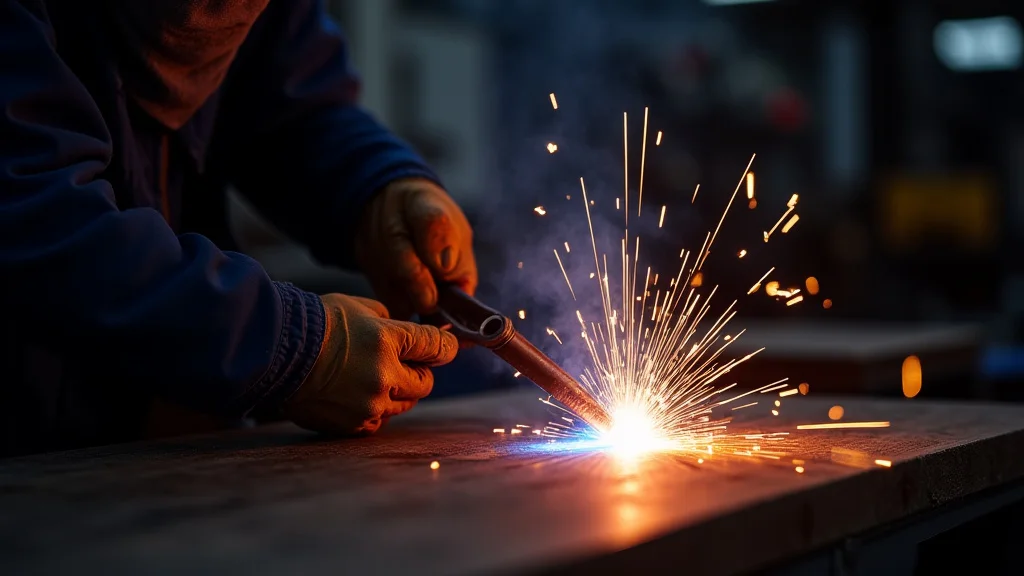
Before you try to make long, continuous welds, practice tack welds. These are small, short welds that hold pieces of metal together. They are great for practicing your arc start and how to control the weld puddle for a short burst.
Tack welds let you get a feel for the heat and how much filler metal to use. They also help you position your pieces correctly before you commit to a full weld.
Straight Beads
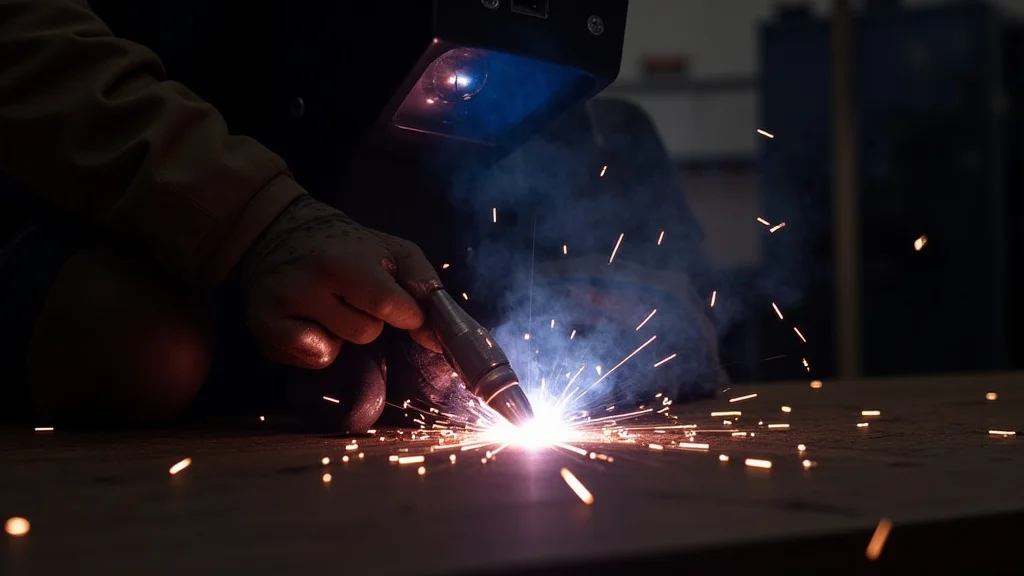
Once you’re comfortable with tack welds, try making straight beads. This means laying down a continuous line of weld metal. The goal is to keep your torch steady, move at a consistent speed, and maintain a consistent distance from the metal.
Practice on scrap pieces of metal. Try to make your beads as straight and uniform as possible. This skill is fundamental to almost all welding.
Controlling the Puddle
The weld puddle is the molten metal where the welding is happening. Learning to control this puddle is crucial. You need to keep it a consistent size and shape.
If it gets too big, you might burn through. If it’s too small, you might not get enough penetration. Your travel speed, torch angle, and amperage all affect the puddle.
Consistent practice helps you develop this control.
Choosing the Right Welding Process
Stick Welding (SMAW)
Stick welding, also known as Shielded Metal Arc Welding (SMAW), is one of the oldest and simplest methods. It uses a coated electrode that melts to form the weld. The coating creates a gas shield to protect the weld.
Stick welding is good for outdoor work and on dirtier metal. It can be a bit harder to learn for some people because it’s harder to see the puddle.
MIG Welding (GMAW)
MIG, or Gas Metal Arc Welding (GMAW), is very popular for beginners. It uses a wire electrode that feeds automatically from a spool. A shielding gas flows through the torch to protect the weld.
MIG welding is generally easier to learn because it allows you to see the puddle clearly and the wire feeds itself. It’s great for making fast, clean welds.
TIG Welding (GTAW)
TIG, or Gas Tungsten Arc Welding (GTAW), offers the most control and produces the cleanest welds. It uses a non-consumable tungsten electrode to create the arc. Filler metal is added separately by hand.
TIG welding requires a lot of coordination and practice. It’s often considered more advanced, but some beginners choose to start with it if they are very patient. It’s excellent for thin metals and precise work.
Understanding Your Equipment
The Welding Machine
Each welding machine has settings like amperage and voltage. Amperage controls the heat, and voltage controls the arc length. For beginners, it’s important to understand what these settings do.
Your welding machine’s manual is your best friend. It will often have charts that suggest settings for different types of metal and thicknesses. Experimenting with scrap metal will help you find the sweet spot.
Ground Clamps and Connections
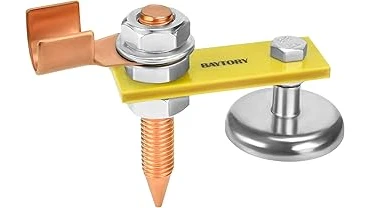
A good ground connection is essential for a strong weld. The ground clamp completes the electrical circuit. Make sure the clamp is attached to clean, bare metal.
A poor ground can cause all sorts of problems, like an unstable arc or weak welds. Always check your ground connection before you start welding.
Wire Feeders and Gas Regulators (for MIG/TIG)
If you’re using MIG or TIG, understanding how to set up and use the wire feeder or gas flow is important. For MIG, the wire speed is critical. Too fast or too slow can lead to poor welds.
For TIG and MIG, the gas flow rate needs to be correct to ensure proper shielding. Your equipment manual and online resources can help you set these correctly.
Choosing the Right Materials
Mild Steel: The Welder’s Best Friend
Mild steel is the most common material for beginner projects. It’s readily available, relatively inexpensive, and forgiving. It’s also easy to weld with most processes.
Mild steel can withstand a bit of heat and is less likely to warp or crack compared to other metals. For your first projects, stick to mild steel.
Thickness Matters
When selecting mild steel for your projects, pay attention to its thickness. For learning tack welds and basic beads, material around 1/8 inch (3 mm) thick is a good starting point. Thinner materials like sheet metal (18 gauge or thinner) can be trickier as they burn through easily.
Thicker materials (1/4 inch or 6 mm and up) require more heat and can be more challenging for beginners to get full penetration.
Simple Project Ideas for Beginners
The Ever-Useful Tool Caddy
A tool caddy is a classic beginner project. It’s essentially a small box with a handle. You can practice making square corners, welding straight lines, and joining multiple pieces.
It’s also very practical once it’s done!
A Basic Plant Stand
Plant stands can be simple square frames or more elaborate designs with legs. They teach you how to cut metal to length and join it securely. You’ll get great practice making corner welds and creating a stable structure.
Metal Picture Frames
Making a simple picture frame is another excellent starting point. You’ll practice cutting angles (miters) and joining them to create a square or rectangular shape. Getting clean corner welds is a good challenge.
Garden Stakes or Markers
If you want something quick and easy, welding some simple garden stakes is a great idea. You can weld a decorative element or a simple handle onto a piece of rod. These are small, fast projects that give you a sense of accomplishment.
A Small Fire Pit Ring
For a slightly larger project, a simple fire pit ring made from thick steel bands can be a good challenge. It involves bending metal and making long, continuous welds. This project teaches you how to handle heavier material.
Tips for Success on Your First Welds
Clean Your Metal
Dirt, rust, and paint on metal can cause all sorts of welding problems. It can lead to spatter, poor fusion, and weak welds. Always clean the metal surfaces you’re going to weld.
A wire brush or grinder works well. Make sure the area around your weld is clean too.
Practice on Scrap Metal
Don’t start your actual project with a live weld. Get some scrap pieces of the same material you’ll be using. Practice your welds on these scraps.
This helps you dial in your settings, get a feel for your torch, and build confidence before you commit to your project.
Maintain a Consistent Stance and Grip
Being comfortable and steady is key to making good welds. Find a comfortable stance that allows you to remain stable for the duration of your weld. Grip your welding gun or electrode holder firmly but not too tightly.
Tension can lead to jerky movements.
Listen to Your Welder
Your welding machine will often make sounds that tell you if something is wrong. A nice, smooth arc sounds different from a sputtering or inconsistent one. Pay attention to the sounds your machine makes and how it feels to create the weld.
This feedback is valuable.
Don’t Be Afraid to Ask for Help
If you’re really stuck or unsure about something, don’t hesitate to ask someone experienced. A quick tip from a seasoned welder can save you a lot of frustration. Online forums and welding classes are also great resources.
Frequently Asked Questions
Question: What is the easiest welding process for a complete beginner?
Answer: MIG welding (GMAW) is generally considered the easiest welding process for beginners. It’s straightforward to learn, produces clean welds, and allows you to see the weld puddle clearly.
Question: What thickness of metal should I start with?
Answer: Starting with mild steel around 1/8 inch (3 mm) thick is a good balance. It’s thick enough not to burn through easily but not so thick that it requires excessive heat.
Question: How much practice is enough before starting a project?
Answer: It’s more about quality than quantity. Spend time practicing tack welds and straight beads on scrap metal until you feel comfortable with your arc, puddle control, and travel speed.
Question: Can I weld outdoors?
Answer: Yes, you can weld outdoors, but it presents challenges. Wind can blow away shielding gas (especially with MIG and TIG), so stick welding (SMAW) is often preferred. You’ll also need to protect your work area from the elements.
Question: What’s the most important safety gear?
Answer: The most important safety gear includes a welding helmet (preferably auto-darkening), welding gloves, and protective clothing that covers your arms and legs. Proper ventilation is also critical.
Final Thoughts
Learning to weld is an exciting skill, and starting with the right tips makes all the difference. By picking simple projects, always prioritizing safety gear, and practicing basic techniques, you’re setting yourself up for success. Remember to choose beginner-friendly materials like mild steel and get to know your equipment.
Your first welds might not be perfect, and that’s totally okay. Each project you complete builds your confidence and skill. Keep practicing, stay safe, and enjoy creating things with your own two hands!