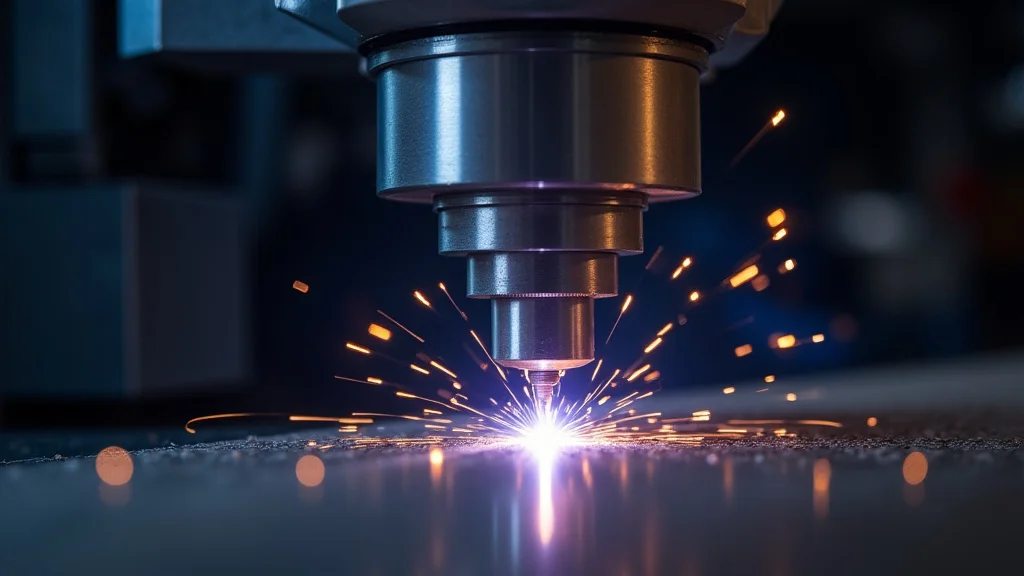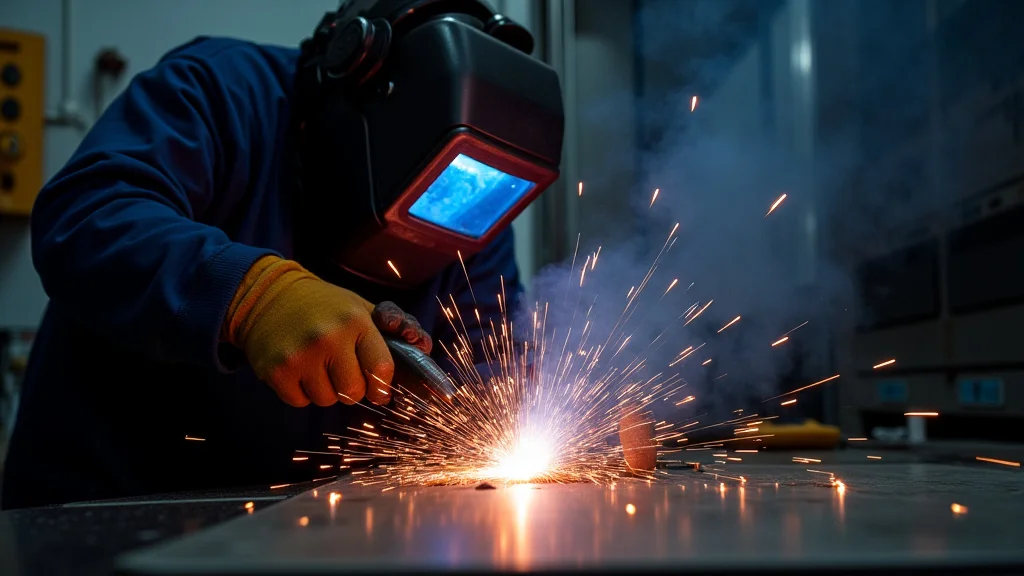
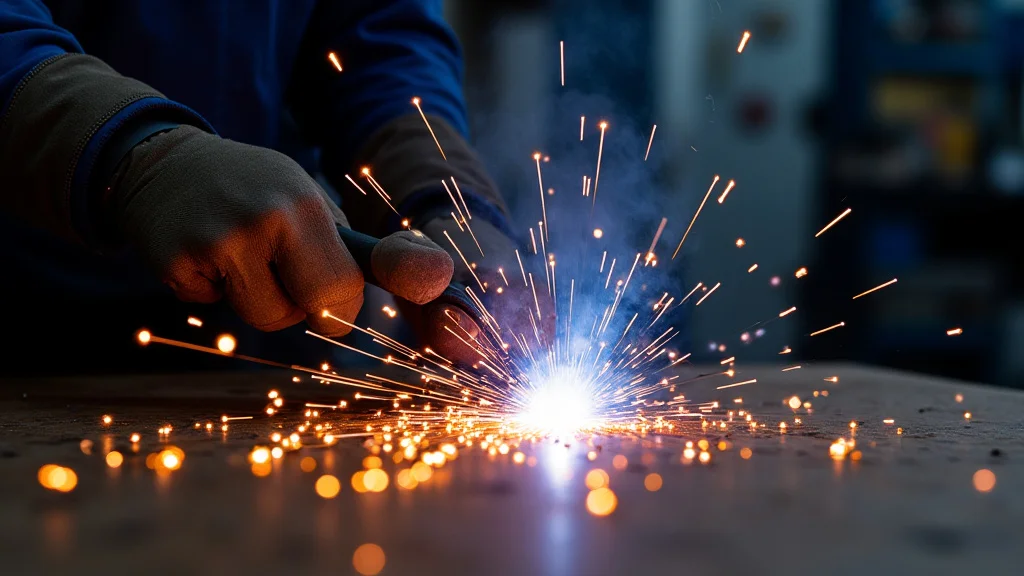
Learning to TIG weld can be exciting, but sometimes little metal blobs, called spatter, fly everywhere. It’s a common thing that happens, especially when you’re just starting out. Don’t worry, it’s not as tricky as it might seem.
This guide will show you exactly How Do You Reduce Spatter in TIG Welding?. We’ll break it down into simple steps so you can get cleaner welds. Stick around, and you’ll be making smooth beads in no time.
Key Takeaways
- Spatter in TIG welding often happens due to issues with gas flow or arc length.
- Keeping the correct distance between your electrode and the metal is key to reducing spatter.
- Using the right amount of shielding gas protects your weld pool from air.
- Proper cleaning of your tungsten electrode helps maintain a stable arc.
- Adjusting your welding parameters, like amperage, can prevent excessive spatter.
- Practicing with a consistent technique leads to cleaner TIG welds.
What is TIG Welding Spatter?
TIG welding, also known as Gas Tungsten Arc Welding (GTAW), is a fantastic process for making clean, precise welds. However, sometimes you’ll see little drops of molten metal fly away from the weld. These are called spatter.
For beginners, seeing this can be a bit frustrating. It makes the weld look messy and can even weaken it if the spatter lands where it shouldn’t.
Spatter happens when molten metal droplets detach from the weld pool and are propelled away. Think of it like water boiling too rapidly; little splashes occur. In TIG welding, this happens because of unstable arc conditions or issues with how the shielding gas is working.
Why Does Spatter Happen in TIG Welding?
There are a few main reasons why you might be seeing spatter when you TIG weld. Understanding these causes is the first step to fixing them.
1. Incorrect Arc Length
The distance between the tip of your tungsten electrode and the metal you’re welding is super important. If you hold the electrode too close, it can dip into the weld pool. This causes it to melt and break off, creating spatter.
If you hold it too far away, the arc becomes unstable and can’t protect the weld pool properly, leading to spatter too.
For most TIG welding, the ideal arc length is about the same as the diameter of your tungsten electrode. This might take some practice to get right, but it’s worth it for clean welds.
2. Poor Shielding Gas Coverage
Shielding gas is like a protective blanket for your weld. It stops oxygen and other gases from the air from getting into the molten metal. If your shielding gas isn’t flowing right, or if there’s a breeze, the air can get in.
This contaminates the weld pool and causes spatter.
This can happen if your gas flow rate is too low. It can also happen if your gas lens isn’t working properly or if you’re welding outside where there’s wind. A good gas flow rate ensures the weld pool stays clean.
3. Contaminated Tungsten Electrode
Your tungsten electrode is the non-consumable part that creates the arc. If the tip of the tungsten gets contaminated with metal from your workpiece or filler rod, it won’t have a stable shape. A contaminated tungsten will cause the arc to wander and become unstable, leading to spatter.
This is why it’s vital to keep your tungsten clean. If you accidentally touch the tungsten to the workpiece or filler rod, you need to stop, grind a fresh, sharp point on it, and then continue welding.
4. Incorrect Amperage Settings
The amount of electricity (amperage) you use affects how hot your weld gets. If the amperage is too high for the material thickness or the type of metal, it can cause the metal to melt too quickly and splatter. If it’s too low, you might not get enough fusion, but spatter is more often linked to being too hot.
You need to set your amperage according to the metal you’re welding. Thicker metals need more amperage, and thinner metals need less. Having the right settings helps control the weld pool and prevent spatter.
5. Arc Starting Issues
How you start your arc can sometimes cause initial spatter. If you’re using a scratch start method, you might scratch too hard or not lift the tungsten cleanly. This can cause the tungsten to get damaged or contaminated right at the start, leading to immediate spatter.
Many TIG machines have high-frequency (HF) start, which helps create an arc without touching the tungsten to the metal. This is generally cleaner. If you use scratch start, be gentle and lift straight up once the arc is established.
6. Improper Filler Metal Technique
While TIG welding is non-consumable for the electrode, you often use a filler rod. If you dip the filler rod into the weld pool too aggressively or at the wrong angle, you can break off small pieces. These pieces can then become spatter.
The key is to gently feed the filler rod into the leading edge of the weld pool. Let the heat of the arc melt the filler rod. Avoid plunging it into the molten metal.
How Do You Reduce Spatter in TIG Welding? Practical Tips
Now that you know why spatter happens, let’s look at how to stop it. Following these steps will help you achieve much cleaner TIG welds.
1. Maintain a Consistent Arc Length
This is one of the most important things. Always try to keep the distance between your tungsten and the metal consistent. A good rule of thumb is to keep the arc length about the same as the diameter of your tungsten electrode.
For a 1/16-inch tungsten, keep the arc about 1/16-inch away.
Practice holding your torch at a steady angle and distance. This will help you control the arc and prevent it from getting too long or too short. A steady hand is your best friend here.
2. Ensure Proper Shielding Gas Flow
Your shielding gas needs to flow at the right rate. For most common TIG welding applications, a flow rate of 10-20 cubic feet per hour (CFH) is usually good. Check the recommendations for your specific gas and setup.
Also, make sure there’s no wind blowing your gas away. If you’re welding outside or in a drafty area, consider using a windscreen around your workpiece or a larger nozzle on your TIG torch. A gas lens on your torch can also help provide a wider, more stable gas shield.
3. Keep Your Tungsten Electrode Clean and Sharp
Tungsten contamination is a big spatter cause. After each welding session, or if you notice the arc acting weird, check your tungsten. If it’s become rounded or has metal stuck to it, grind a fresh, sharp point.
For DC welding, a pointed tungsten is best.
Use a dedicated tungsten grinder to avoid contaminating your metal grinding wheels. Always grind the tungsten lengthwise, not across the tip. This creates a stable arc that tends to stay centered and reduces spatter.
4. Set the Correct Amperage
Amperage settings are crucial. For thin metals like 1/16-inch steel, you might only need 30-50 amps. For thicker metals, you’ll need more.
Always consult welding charts or experiment on scrap pieces first to find the sweet spot.
If you see the metal melting too fast and the arc getting too wide, your amperage is likely too high. If you’re struggling to get fusion and the arc seems weak, it might be too low, but this is less likely to cause spatter than being too hot.
5. Use High-Frequency (HF) Start When Possible
If your TIG welder has HF start, use it! It creates an arc without you having to touch the tungsten to the metal. This means your tungsten stays cleaner for longer, and you avoid that initial spatter from scratching.
If you don’t have HF start, practice a gentle scratch and lift technique. Start the arc with a light scratch, then immediately lift the torch to get your proper arc length.
6. Master Filler Metal Placement
When adding filler metal, be smooth and controlled. Introduce the rod to the leading edge of the molten puddle. Let the puddle’s heat melt the rod.
Avoid plunging the rod into the puddle or letting it drag. Keep the filler rod tip just out of the gas shield.
Think of it as a gentle dip and withdraw. You want to add just enough filler to build up your bead. Too much filler or improper feeding can cause disruptions that lead to spatter.
7. Proper Torch Angle and Travel Speed
The angle you hold your TIG torch affects how the shielding gas flows and how the arc hits the metal. Generally, you want to keep the torch at a slight angle (around 70-80 degrees) in the direction you are welding. This helps push the gas forward and protects the molten puddle.
Your travel speed is also important. If you move too fast, you won’t get good fusion and may create an unstable arc. If you move too slow, you can overheat the metal, leading to excessive spatter.
Find a steady pace that allows the filler metal and base metal to fuse properly.
8. Clean Your Base Metal
While not a direct cause of spatter from the arc itself, dirty base metal can cause other welding issues that might be mistaken for spatter or make it harder to control the weld. Always clean your metal thoroughly with a stainless steel wire brush and a degreaser before welding.
Contaminants on the metal can cause porosity and other defects, and a clean surface helps you maintain a stable arc and control the weld pool better.
Common Mistakes to Avoid
Even with the right knowledge, beginners often make a few common mistakes that lead to spatter. Watch out for these:
- Touching the tungsten to the filler rod or workpiece: This contaminates the tungsten and often causes significant spatter.
- Holding the torch too far away: A long arc is unstable and can lead to spatter and poor weld quality.
- Not enough shielding gas: This lets air into the weld, causing contamination and spatter.
- Moving too quickly or too slowly: Inconsistent travel speed disrupts the weld puddle and arc.
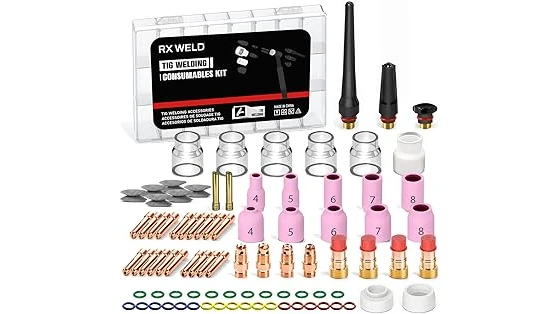
- Using the wrong size tungsten or collet: This can affect arc stability and gas flow.
Frequently Asked Questions
Question: What is the most common reason for spatter in TIG welding?
Answer: The most common reasons are incorrect arc length and poor shielding gas coverage. Holding the electrode too close or too far from the metal, or not having enough gas to protect the weld pool, are frequent culprits.
Question: Can I fix spatter after it happens?
Answer: Not really. Spatter is a sign that something went wrong during the welding process. The best approach is to prevent it by focusing on proper technique, settings, and gas flow.
You can grind off excessive spatter after the weld cools, but it’s better to get it right the first time.
Question: Does the type of gas matter for spatter?
Answer: Yes, the type of gas is important. For steel, argon is common and usually works well. However, if you’re welding aluminum, you might use a mix or pure argon with different settings.
The gas must be pure and flowing correctly.
Question: How do I know if my tungsten is contaminated?
Answer: A contaminated tungsten will usually have a rounded tip or metal stuck to it. The arc might also be unstable, wander around, or produce more spatter than usual. If you see this, stop welding and grind a fresh point.
Question: Is a little bit of spatter okay?
Answer: Ideally, TIG welding should produce very little to no spatter. A tiny bit might be unavoidable sometimes, but if you’re seeing noticeable amounts, it’s a signal to check your technique and settings. Excessive spatter means the weld quality might be compromised.
Final Thoughts
Learning How Do You Reduce Spatter in TIG Welding? comes down to mastering a few key elements. Keep your tungsten sharp and at the right distance from the metal. Make sure your shielding gas flows steadily to protect the weld.
Always use the correct amperage for the job. Gentle feeding of filler rod and a steady pace are also vital. Practice these steps, and you’ll see your welds become much cleaner and more professional.
You’ve got this!