It’s a common puzzle for new welders: you’re trying to lay down a nice bead, and suddenly, your stick welder’s voltage seems to dip. You wonder, Why Is My Stick Welder Voltage Dropping? This can be confusing because a steady arc is key to good welds. Don’t worry, though.
We’ll break down the simple reasons this happens and how to fix it. Get ready for a clear, step-by-step look at what’s going on.
Key Takeaways
- You’ll learn the most frequent reasons for voltage drops in stick welding.
- We’ll show you how different parts of your setup can affect voltage.
- You’ll discover simple checks to make before and during welding.
- Simple fixes for common problems will be explained.
- You’ll gain confidence in keeping your arc steady.
Understanding Stick Welder Voltage
When you’re stick welding, you’re using an electric arc to melt metal. This arc needs a consistent amount of power to stay stable. That power comes from your welder’s voltage.
Voltage is like the “push” that drives the electricity. If that push weakens, the arc can sputter or even go out. For beginners, seeing this happen can be a bit of a head-scratcher because it’s not always obvious why it’s changing.
What is Arc Voltage?
Arc voltage is the electrical pressure across the welding arc itself. It’s measured when welding is actually happening. A good arc voltage helps melt the electrode (the stick) and the base metal nicely.
It also helps push the molten metal into a solid weld. Too low a voltage, and the arc might be weak, leading to poor penetration. Too high, and you might get a spattery, messy weld.
Why Consistency Matters
A steady arc voltage creates a stable arc. This stable arc is what allows you to control the molten puddle. You can shape the weld bead nicely when the arc is consistent.
Fluctuations in voltage make it hard to control that puddle. It’s like trying to paint a smooth line with a shaky hand; you won’t get the result you want.
Common Causes for Voltage Drop
Several things can cause your stick welder’s voltage to drop. Most of them are pretty easy to spot and fix once you know what to look for. We’ll go through the usual suspects.
Power Source Issues
Your welder needs a steady supply of power to begin with. If the power coming into the welder isn’t stable, the welder can’t put out a stable voltage. This is like trying to fill a bucket with a hose that has weak water pressure; you won’t get a full bucket quickly.
Extension Cords and Amperage
Using extension cords can be a big culprit. The longer and thinner the cord, the more resistance it has. This resistance eats up some of the power before it even gets to your welder.
If you’re running your welder at a high amperage (which needs more power), this effect is even worse. A cord that’s too small for the job can make your voltage drop significantly.
Tip: Always use the thickest gauge extension cord you can find, and keep it as short as possible. Check the manufacturer’s recommendations for your welder.
Input Voltage Fluctuations
Sometimes, the power coming from your wall outlet isn’t perfectly steady. If you’re plugging into a circuit that also has other large appliances running, it can cause slight dips in voltage. This is more common in home workshops than in commercial settings with dedicated circuits.
Cable Connections and Condition
Loose or dirty connections are a major cause of voltage drop. Electricity needs a clean, solid path to flow. Any dirt, rust, or loose clamps on your cables can create resistance.
This resistance acts like a bottleneck, slowing down the electrical flow and lowering the voltage.
Electrode Holder and Ground Clamp
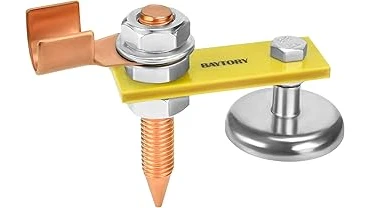
The connection points are critical. Make sure the electrode holder where you put your welding stick is clean and tight. The ground clamp needs to be firmly attached to a clean piece of the metal you’re welding or a clean welding table.
If the ground clamp is loose or on a rusty surface, it’s a common place for voltage loss.
Check: Wiggle your electrode holder and ground clamp. Do they feel secure? Are the metal surfaces they connect to clean?
Welding Cables
The welding cables themselves can be a problem. If they are damaged, frayed, or the connections at the welder are loose, you’ll lose voltage. Over time, cables can wear out.
Ensure they are in good condition and securely attached to your machine.
Amperage Settings and Arc Length
Your welder’s amperage setting is directly related to the voltage it will produce. More importantly, how you use the welder has a big effect.
Incorrect Amperage
If you have your amperage set too low for the type of electrode you’re using, it might not have enough power to maintain a strong arc. This can sometimes feel like a voltage drop. You might need to turn up the amperage to get the arc you want.
Similarly, if the amperage is too high, you’ll get excessive spatter, which also affects arc stability.
Arc Length
This is perhaps the most common reason beginners see voltage issues. Arc length is the distance between the tip of your electrode and the metal you are welding. If you hold the electrode too far away from the workpiece (a long arc), the voltage needed to bridge that gap increases.
Your machine might not be able to supply that higher voltage, or it might try and pull more amperage than it can handle, causing a dip. If you hold the electrode too close (a short arc), you can “stick” the electrode to the workpiece.
Goal: Aim for a consistent, short arc length. The sound of the weld often tells you when it’s right – a steady crackle, not a harsh popping sound.
Electrode Type and Condition
The welding stick you’re using plays a role in how the arc behaves and how voltage is affected.
Electrode Type
Different types of electrodes are designed for different welding jobs and produce different arc characteristics. Some electrodes are known for a softer, more stable arc, while others can be more forceful. If you’re using an electrode that’s not suited for your machine or the material, it might lead to arc instability that feels like a voltage drop.
Damp Electrodes
Welding electrodes can absorb moisture from the air. This moisture can cause the arc to be unstable, sputter, and produce excessive spatter. It can also lead to porosity (small holes) in your weld.
Damp electrodes effectively make the arc harder to control and can mimic voltage problems.
Solution: Store electrodes in a dry place. If you suspect they are damp, they may need to be reconditioned in an electrode oven (though this is less common for hobbyists).
Machine Performance and Maintenance
Your welder itself needs to be in good working order. Just like any tool, it needs occasional care.
Internal Issues
Less commonly, there might be an issue inside the welder itself. Components can degrade over time. If you’ve checked all the external factors and are still experiencing problems, there might be an internal fault that requires professional attention.
Duty Cycle
Stick welders have a “duty cycle.” This refers to how long they can weld continuously at a certain amperage before needing to cool down. If you’re welding for extended periods at high amperages, you might be exceeding the duty cycle. The welder will overheat and its performance will suffer, which can include voltage drops.
The welder needs to cool down to perform correctly.
Troubleshooting Steps: Fixing Voltage Drops
When you notice your voltage dropping, it’s time to become a bit of a detective. Follow these steps, and you’ll likely find the cause quickly.
1. Check Your Power Supply
Start at the source. Is your extension cord adequate? Is it plugged into a stable power outlet?
If you’re using a generator, is it running at the correct speed and providing clean power?
2. Inspect All Connections
Go through every connection point. Unplug the cables from the welder and re-secure them. Make sure the electrode holder and ground clamp are clean and making solid contact.
Clean any rust or dirt off the workpiece where the ground clamp attaches.
3. Verify Amperage Settings
Are your amperage settings appropriate for the electrode and the thickness of the metal? Consult your electrode’s packaging or a welding chart for recommended settings. Sometimes a small adjustment up or down can make a big difference.
4. Practice Your Arc Length
Focus on keeping your arc length consistent and short. Try to maintain a steady, rhythmic movement. Listen to the sound of the arc – it’s a good indicator of what’s happening.
5. Evaluate Your Electrode
Are you using the right type of electrode for the job? Are they stored properly? If you have a new pack of electrodes, try those to rule out dampness.
6. Consider the Duty Cycle
If you’ve been welding for a long time without breaks, give your welder a chance to cool down. Overheating is a common cause of performance issues.
Troubleshooting Table
Here’s a quick reference to help you diagnose problems:
| Problem | Possible Cause | Solution |
|---|---|---|
| Voltage drops significantly | Undersized or long extension cord | Use thicker, shorter cord. |
| Arc is weak and sputters | Loose ground clamp or electrode holder | Clean and tighten connections. |
| Inconsistent arc, spatter | Long arc length | Shorten and maintain consistent arc length. |
| Arc dies or sticks often | Amperage too low or short arc | Increase amperage, practice arc length. |
| Weld is rough, porosity | Damp electrodes | Use dry electrodes. |
| Welder output fades | Exceeding duty cycle (overheating) | Allow welder to cool. |
Frequently Asked Questions
Question: What is the ideal arc length for stick welding?
Answer: The ideal arc length is a short, consistent one. You want to be just far enough away from the metal that the arc doesn’t stick, but close enough for a stable weld. Listen to the sound; it should be a steady crackle.
Question: Can a bad extension cord really cause voltage drops?
Answer: Yes, absolutely. A cord that is too long or too thin has resistance. This resistance uses up some of the power, meaning less power reaches your welder, which can cause a voltage drop, especially at higher amperages.
Question: How do I know if my amperage setting is correct?
Answer: Check the packaging of your welding electrodes for recommended amperage ranges. Also, observe the arc and the weld puddle. If you have too much spatter, you might be too high; if the puddle isn’t melting well, you might be too low.
Question: Why does my voltage drop when I start welding after a break?
Answer: This is usually not a voltage drop issue, but rather the welder still coming up to temperature or ensuring all internal connections are fully energized. If it’s consistent, it might point to a power supply or connection issue you’re not seeing.
Question: What should I do if my welder keeps overheating?
Answer: If your welder is overheating, you are likely exceeding its duty cycle. This means you’re welding for too long without giving it a break to cool down. Allow the welder to rest and cool according to the manufacturer’s instructions.
Final Thoughts
Seeing your stick welder’s voltage dip can be confusing, but it’s usually a sign of a simple issue. You’ve learned that power supply, clean connections, and how you hold your electrode are key. Amperage settings and electrode condition also matter.
By systematically checking these things, you can fix most voltage drop problems. Remember to use the right cords, keep your connections tight, and focus on a consistent, short arc. You have the tools now to keep your arc stable and make better welds.