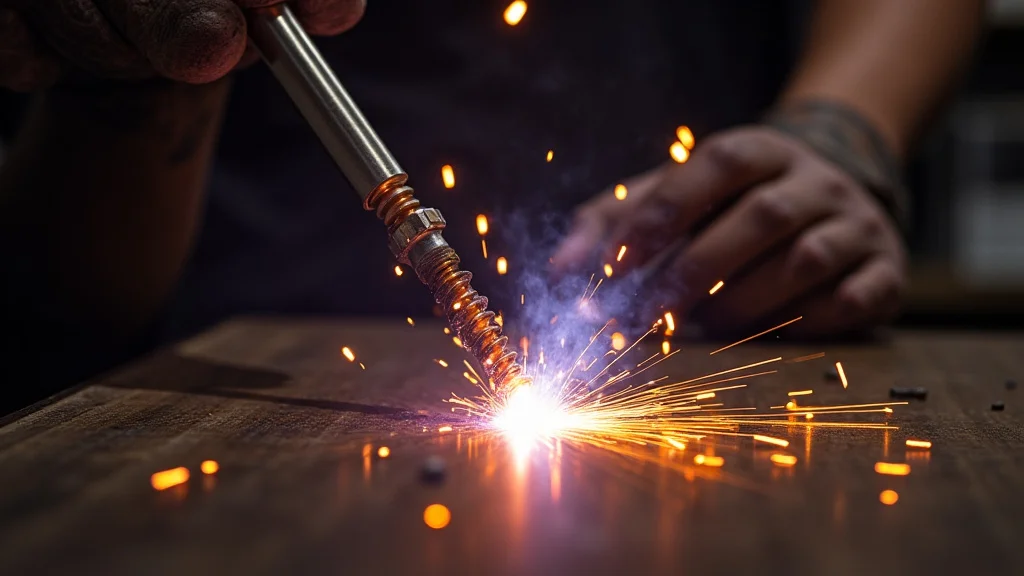
It’s common for people new to TIG welding to face issues with heat. Getting the heat just right is key to good welds. Sometimes, the heat can spread out unevenly, which makes creating a strong, clean bead tricky.
This problem, the TIG Welder Uneven Heat Distribution? Fix, can be frustrating. But don’t worry!
We’ll show you simple ways to fix it, step by step. Let’s get your welds looking great.
Key Takeaways
- Learn the main reasons heat spreads unevenly in TIG welding.
- Discover how to adjust your welding machine settings for better heat control.
- Understand the role of filler material in managing heat.
- See how different torch angles affect heat distribution.
- Find out how to prepare your metal for even heating.
- Get simple tips for practicing and improving your heat control.
Understanding Heat in TIG Welding
TIG welding, also called Gas Tungsten Arc Welding, is a precise process. It uses a non-consumable tungsten electrode to create the arc. This arc melts the base metal and filler rod, forming a weld puddle.
The heat from the arc is what melts the metal. Controlling this heat is the most important part of making a good TIG weld. If the heat is too high or too low, or if it doesn’t spread evenly, the weld will suffer.
When heat spreads out unevenly, you might see a few problems. One is called “washout” or “burn-through.” This happens when too much heat is concentrated in one spot, melting through the metal. On the other hand, you might see a weld that doesn’t fuse properly, with gaps or weak spots.
This is often because the heat isn’t strong enough or isn’t reaching all the areas that need to melt. Both of these issues stem from not managing the heat distribution effectively.
Common Causes of Uneven Heat
Several factors can lead to uneven heat distribution when TIG welding. Understanding these causes is the first step to fixing them. It’s not usually one big thing, but a few small things working together.
Incorrect Amperage Settings
The amperage setting on your TIG welder is like the “power” dial. It controls how much electrical current flows through the tungsten electrode. Too much amperage sends too much heat into the metal too quickly.
This can cause rapid melting and burn-through, especially on thinner materials. Not enough amperage means the metal won’t melt properly, leading to a weak, unfused weld. Finding the right amperage for the metal’s thickness and type is crucial.
For example, if you’re welding thin aluminum, you’ll need a lower amperage than if you’re welding thick steel. If you set the amperage too high for the material, the heat will build up in one spot very fast, and it won’t have time to spread out evenly before it causes damage.
Poor Electrode Angle and Stick-out
The angle at which you hold your TIG torch matters a lot. If you hold the torch too close to the metal, the heat can get trapped. This can lead to a very hot spot right under the arc.
If you hold it too far away, the arc spreads out too much, and you lose the focused heat needed for a good weld. The “stick-out” of the tungsten electrode from the collet is also important. Too much stick-out can make the arc unstable and spread heat less effectively.
Too little stick-out can cause the tungsten to dip into the puddle, contaminating the weld.
Imagine shining a flashlight directly on a spot versus holding it further away. When the flashlight is close, the spot is bright and intense. When it’s further away, the light is spread out.
The arc behaves similarly with heat.
Incorrect Filler Material Technique
The filler rod is used to add metal to the weld joint. How you add the filler rod can greatly affect heat. If you dip the filler rod into the puddle too aggressively or too often, you can push too much heat into the weld.
This can disrupt the molten puddle and cause uneven melting. Conversely, not adding enough filler can leave you with a groove that’s too hot in the center. The goal is to add filler smoothly and consistently to help control the puddle and distribute heat.
Think of it like adding sugar to your coffee. If you dump it all in at once, it might not mix well. If you stir it in slowly, it dissolves better.
The filler rod helps blend the heat into the weld.
Travel Speed Too Fast or Too Slow
Your travel speed is how fast you move the torch along the weld joint. If you move too fast, the arc doesn’t have enough time to melt the metal properly. This leads to a narrow, cold weld.
If you move too slowly, the heat has too much time to build up in one area. This can cause excessive melting, burn-through, and a wide, excessive bead. The right travel speed keeps the puddle consistent and the heat where you want it.
A good analogy is painting. If you paint too fast, you miss spots. If you paint too slow, you get drips and uneven coverage.
You need a steady, even stroke.
Material Preparation
How clean your metal is before you start welding is super important. Any dirt, oil, rust, or paint on the metal can cause problems. These contaminants can cause the arc to be unstable.
This instability can lead to uneven heating and weak spots in the weld. It can also cause spatter, which is small droplets of molten metal flying out. For best results, always clean the metal thoroughly before TIG welding.
Imagine trying to cook a clean piece of food versus one covered in dirt. The clean one cooks evenly and tastes better. The dirty one will have hot spots and might not cook through properly.
Simple Fixes for Uneven Heat
Now that we know what can go wrong, let’s look at how to fix the TIG Welder Uneven Heat Distribution? Fix problem. These are practical steps you can try right away.
Adjusting Amperage and Machine Settings
The first thing to check is your machine’s amperage setting. For steel, a common starting point is around 1 amp per thousandth of an inch of material thickness. So, for 1/8-inch steel (about 0.125 inches), you might start around 125 amps.
For aluminum, it’s often a bit higher. Always consult charts for specific recommendations or experiment on scrap pieces.
Many modern TIG welders also have features like AC balance and frequency controls (for aluminum) or pulse welding.
- AC Balance (Aluminum): Controls the amount of cleaning action versus heat input. Adjusting this can help manage heat.
More cleaning (electrode negative) means more heat input.
- AC Frequency (Aluminum): Higher frequencies create a more focused arc, which can reduce heat spread and improve puddle control.
- Pulse Welding: This setting makes the amperage cycle between a high peak and a lower background current. This allows the puddle to cool slightly between pulses, helping to control heat, especially on thin materials or out-of-position welds.
Optimizing Torch Angle and Stick-out
Try to keep your torch at a consistent angle, usually around 10-15 degrees from the vertical, pointing in the direction of travel. This helps direct the arc’s heat effectively. For the tungsten stick-out, aim for about 1/4 to 1/2 inch.
If you’re welding in a tight spot, you might need a specialized gas lens kit that allows for a shorter stick-out while still providing good gas coverage.
Maintain a consistent distance between the tungsten and the workpiece. Too close can lead to contamination, too far leads to a weak arc. Practice holding a steady distance.
Mastering Filler Material Addition
Add filler material to the edge of the puddle, not directly into the center of the arc. This helps the filler melt smoothly and join the base metals without adding excessive heat directly. Try to feed the filler rod at a consistent rate.
For many applications, a slight angle of the filler rod, about 10-20 degrees, works well.
If you’re finding the puddle is getting too large, try adding filler less frequently or using a slightly smaller diameter rod. For tack welds, you can sometimes use less filler or even just melt the base metal together if the joint design allows.
Controlling Travel Speed
Practice moving the torch at a steady pace. You’re looking for a consistent bead width and height. Watch the puddle: it should flow smoothly and merge with the base metal without collapsing or getting too wide.
If the puddle starts to sag or spread out too much, you’re likely moving too slowly or have too much heat. If the puddle is very narrow and doesn’t seem to be fusing well, you’re probably moving too fast.
You can practice on scrap pieces of metal, focusing only on achieving a consistent bead. Try to make your travel speed match the rate at which the puddle is forming and solidifying.
Thorough Metal Preparation
Always start with clean metal. For steel, use a stainless steel wire brush or a grinder to remove rust, mill scale, and paint. For aluminum, use a dedicated stainless steel brush (never use a brush that has touched steel) and wipe with a clean rag and acetone or a specific aluminum cleaner.
This removes oxides and contaminants that can interfere with the arc and heat distribution.
Proper cleaning ensures a stable arc, which is essential for consistent heat. It also prevents inclusions and porosity in your weld.
Advanced Techniques for Heat Management
Once you have the basics down, you can explore more advanced ways to manage heat.
Using the Foot Pedal (If Applicable)
If your TIG welder has a foot pedal or a hand control, it’s your primary tool for heat management during the weld. You can increase amperage as needed to melt the metal and decrease it to control the puddle size and prevent burn-through. Learning to feather the pedal is a skill that takes practice but offers the most control.
Start with small, controlled movements of the pedal. Gradually increase to the desired amperage to establish the puddle, then ease off slightly to maintain it. If you see it getting too hot, ease off the pedal further to let it cool a bit before adding more filler.
Tack Welding Techniques
Proper tack welds are crucial. They hold your pieces together securely before you make the final weld, preventing movement and distortion. Make sure your tack welds are hot enough to fuse the base metal but not so hot that they create excessive heat buildup or weaken the surrounding material.
They should be small, consistent, and spaced appropriately.
Think of tack welds as anchors. They need to be strong enough to hold, but you don’t want them to be so big they cause problems for the main weld. Space them out evenly to help hold the joint without overheating one area.
Gas Lens Benefits
A gas lens is a special adapter that fits into your TIG torch. It helps deliver a wider, steadier stream of shielding gas (usually Argon) over the weld puddle. This better gas coverage helps prevent oxidation and contamination.
It also allows you to use a longer tungsten stick-out, which can give you better visibility and access, and sometimes a more diffused heat pattern, depending on how it’s used.
A gas lens creates a smoother flow of gas, like a gentle breeze instead of a gust. This protects the weld puddle better.
Practice Makes Perfect
The best way to overcome the TIG Welder Uneven Heat Distribution? Fix is through consistent practice. Grab some scrap pieces of the same material you plan to weld.
Experiment with different settings and techniques. Focus on observing how the puddle behaves and how the heat affects the metal.
Try welding different joint types: butt joints, lap joints, and corner joints. Practice on various thicknesses of metal. Each situation will teach you something new about heat control.
Frequently Asked Questions
Question: What is the most common cause of burn-through in TIG welding?
Answer: The most common cause of burn-through is setting the amperage too high for the thickness of the material being welded. This sends too much heat into the metal too quickly, causing it to melt through.
Question: How can I tell if my heat is too low?
Answer: If your heat is too low, you’ll notice that the metal isn’t melting properly. The weld puddle will be very small, and the filler rod might not melt into the base metal. The resulting weld will be weak and might look like it’s just sitting on top of the metal.
Question: Does the type of metal affect heat distribution?
Answer: Yes, different metals conduct heat differently. For example, aluminum conducts heat much faster than steel. This means you need to adjust your settings and technique accordingly.
Aluminum also has a wider melting range, making it harder to control heat.
Question: Should I use filler metal on every TIG weld?
Answer: Not always. For very thin materials or certain joint designs, you might be able to fuse the pieces together without filler metal. However, for most structural welds, filler metal is needed to build up the joint and ensure proper fusion and strength.
Question: How often should I practice TIG welding to improve heat control?
Answer: Regular practice is key. Even short, focused practice sessions a few times a week can make a big difference. Aim for consistency rather than just long, infrequent sessions.
Final Thoughts
Getting your TIG welds to have even heat distribution is a skill that improves with practice. You’ve learned that incorrect amperage, torch angle, travel speed, and poor metal preparation can all lead to issues. Simple adjustments to your machine settings, focusing on steady filler rod technique, and maintaining a consistent travel speed are your best tools.
Remember to always prepare your metal properly. Keep practicing on scrap pieces. You’ll soon find that controlling heat becomes second nature, leading to cleaner, stronger TIG welds.