It’s common for sparks to fly a bit much when you’re learning to weld, and figuring out why can be tricky. Welding Machine Sparking Issues and Solutions can make beginners feel a little unsure, but don’t worry! We’ll walk through it step-by-step, making it easy to fix.
What’s next will show you how to get your welding machine working right so you can create great work.
Key Takeaways
- You will learn about common causes for too much sparking from a welding machine.
- Simple fixes for electrode angle and travel speed will be explained.
- The role of amperage and voltage in controlling sparks will be clear.
- You will discover how to choose the right welding consumables for less sparking.
- Tips for maintaining your welding equipment to prevent sparking problems will be provided.
Why Do Welding Machines Spark Too Much?
Understanding the Spark
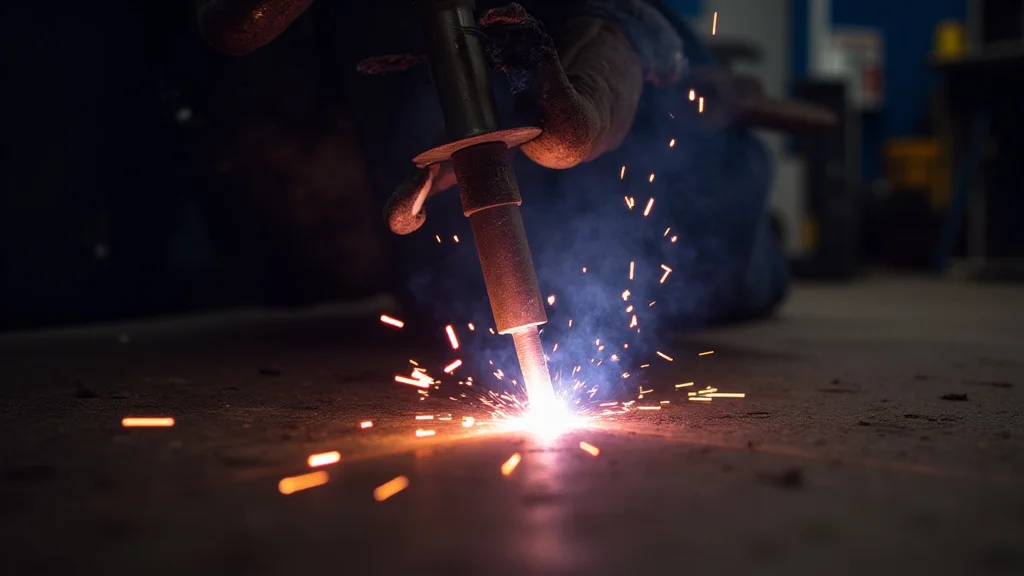
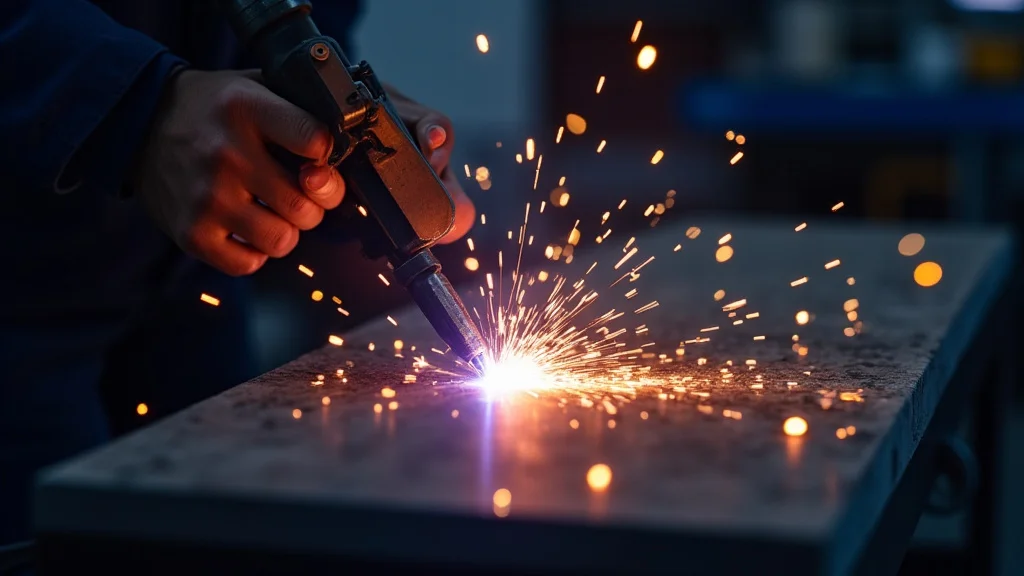
Sparks from a welding machine are normal to some extent. They are small bits of molten metal flying off. However, when you see a lot of sparks, it usually means something isn’t quite right with your welding setup or technique.
Too many sparks can make your weld weak and look messy. It can also be a safety hazard.
Common Culprits for Excessive Sparks
Several things can make your welding machine throw off too many sparks. These often relate to how you’re holding the welding rod, how fast you’re moving, or the power settings on your machine. Sometimes, the welding wire or rod you’re using plays a big part too.
Even the type of metal you’re welding on can affect how many sparks you see.
Troubleshooting Common Sparking Issues
Electrode Angle and Travel Speed
Your welding angle and how fast you move the welding torch or stick are super important. If you hold the electrode too far away from the metal, you’ll get more sparks. Think of it like holding a flashlight too far from a wall – the light gets spread out and weaker.
Keeping the electrode closer usually means fewer, more controlled sparks.
Moving too fast or too slow can also cause problems. If you move too quickly, the weld pool doesn’t have enough time to form properly, and molten metal can fly off. If you move too slowly, you can overheat the metal and the electrode, leading to excessive spatter.
Finding the sweet spot for your travel speed is key.
Amperage and Voltage Settings
The amperage (current) and voltage settings on your welding machine are like the gas pedal and steering wheel. Too high an amperage can burn through the metal too quickly and create a lot of sparks. Too low an amperage might not melt the metal enough, leading to a weak weld and also extra spatter.
Voltage works with amperage to control the arc. If the voltage is too high, the arc gets longer and wider, which can make it unstable and spray more molten metal. If the voltage is too low, the arc can be too short and stubby, also causing issues.
Adjusting these settings to match your welding wire or rod and the metal thickness is vital.
Polarity
Polarity refers to the direction of the electrical current. For many welding processes, especially Stick welding (SMAW), using the wrong polarity can cause increased sparking and poor weld quality. Different electrodes and welding processes require specific polarity settings (DCEN, DCEP, AC).
Always check what the electrode manufacturer recommends.
Ground Clamp Connection
A loose or dirty ground clamp can cause electrical resistance. This resistance can lead to an inconsistent arc and an increase in sparks. Make sure the clamp is firmly attached to clean metal on your workpiece or welding table.
A good connection ensures a stable electrical path.
Workpiece Condition
The surface of the metal you’re welding on matters a lot. If the metal is dirty, rusty, oily, or painted, it can interfere with the arc. These contaminants can burn, sputter, and cause the arc to become unstable, resulting in more sparks.
Cleaning the metal thoroughly before welding is a simple yet effective step.
Choosing the Right Welding Consumables
Selecting the Correct Welding Rod or Wire
The type of welding rod (for Stick welding) or wire (for MIG welding) you use has a big impact. Different rods and wires are designed for specific metals and welding positions. Some are known to produce less spatter than others.
For example, some flux-cored wires are formulated to minimize spatter.
Always check the packaging or specifications for your welding consumables. Manufacturers often provide guidance on recommended settings and expected performance, including spatter levels. Using the wrong type of rod or wire for the job is a frequent cause of excessive sparking.
Wire Feed Speed (MIG Welding)
In MIG (GMAW) welding, the wire feed speed is directly related to the amperage. If the wire feed speed is too high for the voltage setting, you’ll get a “spray arc” that can create a lot of spatter. If it’s too low, the arc might be unstable.
Proper synchronization between wire feed speed and voltage is essential for a clean weld with minimal sparks.
Shielding Gas (MIG and TIG Welding)
For MIG and TIG welding, the shielding gas protects the weld pool from the air. The type and flow rate of the gas are critical. Using the wrong gas or having too little gas can cause the arc to become unstable and lead to more sparks.
For MIG welding, a common issue is using pure CO2 gas, which tends to produce more spatter than a mix of argon and CO2.
Ensuring the gas flow rate is set correctly is also important. If the flow is too high, it can create turbulence that actually draws air into the weld. If it’s too low, you won’t get enough protection.
Check the recommended flow rate for your specific gas and welding process.
Maintenance and Equipment Checks
Inspect Your Welding Gun and Cables
Damage to your welding gun, torch, or cables can cause electrical issues. Check for worn insulation, damaged connections, or obstructions. In MIG welding, a clogged or worn contact tip can cause the wire to feed erratically, leading to spatter.
Ensure your contact tip is the correct size for your wire and replace it if it looks worn.
Check Your Welding Machine’s Power Source
Occasionally, the issue might be with the welding machine itself. While less common for simple sparking problems, internal issues could cause inconsistent power output. If you’ve tried all other solutions and still have excessive sparking, it might be worth having your machine inspected by a professional.
Quick Fixes for Common Sparking Problems
Here’s a quick look at what to do:
- Too much arc length? Move the electrode closer to the metal.
- Moving too fast? Slow down your travel speed.
- Moving too slow? Speed up your travel speed slightly.
- Too many sparks from MIG wire? Adjust voltage up or wire feed speed down.
- Dirty metal? Clean it before you start welding.
- Electrode sticking? Increase amperage slightly or adjust travel speed.
Frequently Asked Questions
Question: Why am I seeing a lot of sparks when I first start welding?
Answer: This can happen if your electrode is too far from the workpiece when you strike the arc, or if the metal surface is dirty or rusty. Try to strike the arc closer to the metal and ensure the surface is clean.
Question: My MIG welds have a lot of tiny, scattered sparks. What’s wrong?
Answer: This often points to incorrect voltage or wire feed speed settings. Try increasing the voltage slightly or decreasing the wire feed speed. Also, check that you are using the correct contact tip for your wire diameter.
Question: I’m using a Stick welder and getting very long, whipping sparks. What should I do?
Answer: This usually means your arc length is too long or your amperage is too low. Try moving the electrode closer to the workpiece and consider increasing the amperage slightly. Make sure you are also using the correct electrode for the material.
Question: Can the type of metal I’m welding on cause more sparks?
Answer: Yes, some metals and their surface conditions can influence sparking. Thicker metals might require higher settings, and certain alloys can behave differently. However, the primary causes are usually technique and machine settings.
Question: How do I know if my welding machine is the problem, not my technique?
Answer: If you have tried adjusting your technique, electrode angle, travel speed, and machine settings, and the problem persists across different projects and consumables, then your machine might need a check-up from a professional. However, most sparking issues are solvable with proper setup.
Final Thoughts
Learning to control sparks is a big step in becoming a better welder. We’ve explored why your welding machine might be sparking too much and how to fix it. You learned about adjusting your angle, speed, and machine settings.
Picking the right welding supplies and keeping your gear in good shape also makes a huge difference. By applying these simple tips, you can reduce those extra sparks and make cleaner, stronger welds. Keep practicing these solutions, and you’ll see your welding improve.