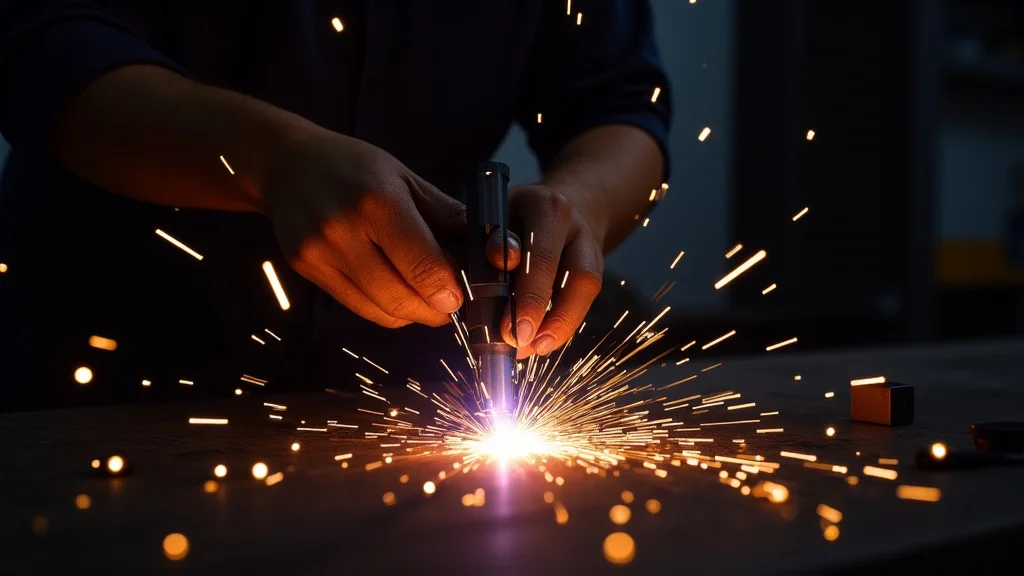
If you’re new to stick welding and your machine keeps shutting off, you’re not alone. It’s a common question: Why Is My Stick Welder Stopping Randomly? This can be frustrating when you just want to get your project done. Don’t worry, most of the time, the reasons are pretty simple to fix.
We’ll walk through what might be happening, step by step. After we figure this out, you’ll know what to check next time.
Key Takeaways
- Your stick welder might stop randomly because of overheating.
- Power supply issues, like a weak circuit or wrong amperage, can cause shutdowns.
- Dirty or loose connections can interrupt the welding current.
- Duty cycle limitations mean the welder needs breaks to cool down.
- Issues with the welding leads or ground clamp can create problems.
- Machine settings that are too high or too low can also lead to interruptions.
Why Does My Stick Welder Keep Stopping?
It can be really confusing when your stick welder suddenly stops working mid-weld. You’re in the middle of a project, maybe trying to fix something or build something cool, and poof! The power cuts out.
This happens a lot to people just starting out with stick welding. There are several reasons why this might be happening, and thankfully, most of them are easy to spot and fix. We’ll look at the common culprits so you can get back to welding.
Overheating Is a Common Culprit
One of the most frequent reasons a stick welder stops working is that it’s getting too hot. Think of it like a car engine that overheats; it needs to cool down before it can run again. Welders have internal fans and systems to keep them cool, but they can only do so much.
Understanding Duty Cycle
Every welder has something called a “duty cycle.” This is basically a measure of how long the welder can run at a certain amperage over a 10-minute period before it needs to cool down. For example, a welder with a 60% duty cycle at 100 amps means it can weld for 6 minutes at 100 amps and then needs to rest for 4 minutes to cool off.
If you’re welding for long stretches without giving the machine a break, especially at higher amperages, it will likely overheat. You might see a light on the welder that indicates it’s overheating or has shut down due to heat.
What to Do About Overheating
- Give it a break: The simplest solution is to let the welder cool down. Turn it off and wait for about 10-15 minutes, or until the overheat indicator light goes off.
- Weld shorter beads: Try to weld in shorter sections. Instead of trying to do a long weld all at once, break it up into smaller passes with short pauses in between.
- Lower the amperage: If you’re welding at a very high amperage, try turning it down a bit. This will generate less heat in the machine.
- Ensure good airflow: Make sure the welder’s vents are not blocked. Don’t place it in a tight, enclosed space. Good airflow helps it cool more effectively.
Power Supply Problems
Your stick welder needs a stable and sufficient power supply to run correctly. If the power it’s getting isn’t right, it can cause it to stop. This can be due to a few different things.
Check Your Circuit Breaker
If your welder is plugged into a standard household outlet, you might be overloading the circuit. Stick welders, especially at higher settings, draw a lot of power. If the circuit breaker trips, the welder will stop.
Make sure the circuit you’re using is rated for the welder’s power draw and that nothing else on that same circuit is using a lot of power at the same time.
Proper Extension Cords
Using the wrong extension cord can also be a problem. If the cord is too thin (low gauge number) or too long, it can cause a voltage drop. This means the welder isn’t getting enough power to operate properly, and it might shut down or not perform well.
Always use an extension cord that is rated for the amperage your welder needs and is as short as possible. A thicker cord (lower gauge number like 10 or 12) is better than a thinner one (higher gauge number like 16).
Voltage Fluctuations
If you’re in an area with inconsistent power, or if other large appliances in your home are cycling on and off, it can cause voltage fluctuations. This can sometimes be enough to make a sensitive welder shut down.
Loose or Dirty Connections
Good electrical connections are vital for welding. Any dirt, rust, or looseness in the connections can create resistance, heat, and ultimately, an interruption in the welding current. This can make your welder stop seemingly without reason.
Ground Clamp Issues
The ground clamp is critical. It needs to make solid contact with the metal you’re welding. If the clamp is loose, dirty, or not making good contact, the welding arc will be unstable and can even stop the welder.
What to do:
- Make sure the clamp is clean and free of paint, rust, or dirt.
- Clamp it firmly to a clean spot on your workpiece or welding table.
- Ensure the cable connecting the clamp to the welder is also secure.
Electrode Holder and Cable Connections
The same applies to the connection at the electrode holder and where the welding cables connect to the welder itself. Check that these connections are tight and clean. Loose connections here can cause power loss and cause the welder to cut out.
Machine Settings and Amperage
Incorrect settings on your welder can also lead to it stopping. This isn’t always about overheating, but more about the machine not being able to maintain the arc.
Amperage Too Low
If you have your amperage set too low for the type of electrode you’re using and the thickness of the metal, the arc won’t be strong enough to maintain a weld. The electrode might stick to the metal, and if you try to pull it away, the welder might shut off or the arc will just die.
Refer to the electrode manufacturer’s recommendations for the correct amperage range for each type and size of electrode. Start in the middle of the recommended range and adjust as needed.
Amperage Too High
While less common for causing a complete shutdown, setting the amperage too high for very thin metal can cause the electrode to burn through quickly. This can lead to arc instability and stopping, though it’s more about poor weld quality than a machine fault.
Problems with Welding Cables and Leads
The cables that carry the electricity from the welder to the electrode holder and the ground clamp are like the arteries of your welding system. If they have issues, the welder can act up.
Damaged Cables
Inspect your welding cables regularly. Look for any cuts, nicks, fraying, or excessive wear. Damaged insulation can expose wires, leading to short circuits or power loss, which can cause your welder to stop.
Loose Cable Connections
Check where the cables connect to the welder and to the electrode holder and ground clamp. If these connections are loose, they can cause resistance, heat, and intermittent power. This might make the welder cut out unexpectedly.
Internal Welder Issues
While most random shutdowns are due to external factors, sometimes the problem can be inside the welder itself. These are less common, especially for beginners, but it’s good to be aware of them.
Fan Malfunction
As mentioned, the cooling fan is crucial. If the fan isn’t working, the welder will overheat much faster, leading to it shutting down. You might hear if the fan is running.
If it’s not, that’s a problem.
Internal Component Failure
Rarely, a component inside the welder might fail. This could be a capacitor, a circuit board, or another part. If this happens, the welder will likely stop working altogether or behave erratically.
If you suspect an internal issue, it’s usually best to take the welder to a qualified repair technician. Trying to fix internal electrical components yourself can be dangerous if you’re not trained to do so.
Troubleshooting Steps: A Quick Checklist
When your stick welder stops randomly, here’s a quick way to figure out what’s going on:
- Did it just stop? If so, check for an overheat light. If it’s on, let it cool.
- Check connections: Make sure the ground clamp, electrode holder, and cable connections are tight and clean.
- Inspect cables: Look for any damage to your welding cables.
- Power supply check: Are you on a suitable circuit? Is your extension cord appropriate?
- Review settings: Are your amperage settings correct for your electrode and material?
- Listen to the fan: Is the cooling fan running when the machine is on?
Frequently Asked Questions
Question: Why does my stick welder shut off right after I start welding?
Answer: This often means the circuit you’re plugged into is not strong enough or is already overloaded. The welder draws a lot of power when you start, and if the circuit can’t handle it, the breaker will trip, shutting everything off.
Question: Can I use any extension cord with my stick welder?
Answer: No, you should not use any extension cord. You need a heavy-duty cord specifically rated for the amperage your welder requires. Using a light-duty or long cord can cause voltage drops and prevent the welder from working correctly or cause it to shut down.
Question: My stick welder has an indicator light that comes on, and then it stops. What does that mean?
Answer: That light usually means the welder has overheated. It’s a safety feature designed to protect the machine. You need to turn the welder off and let it cool down before trying to weld again.
Question: I’m welding thin metal, and my stick welder keeps stopping. What am I doing wrong?
Answer: You might be using an electrode that’s too large or set your amperage too high for the thin material. Try using a smaller diameter electrode and lower your amperage. Also, weld in shorter bursts to avoid overheating the metal and the machine.
Question: Is it normal for my stick welder to make a buzzing sound before it stops?
Answer: A buzzing sound can sometimes indicate poor electrical contact. Check your ground clamp and electrode holder connections. If the buzzing continues or gets worse, and the welder stops, it could be a sign of a more serious connection issue or internal problem.
Final Thoughts
Figuring out Why Is My Stick Welder Stopping Randomly? can seem tricky, but it’s usually about checking a few simple things. Overheating is a big one, so give your machine breaks and ensure good airflow. Power supply is also key; make sure your circuit and cords are up to the job.
Clean, tight connections prevent electrical hiccups. By looking at these common causes, you can get your stick welder running smoothly again and focus on your projects.