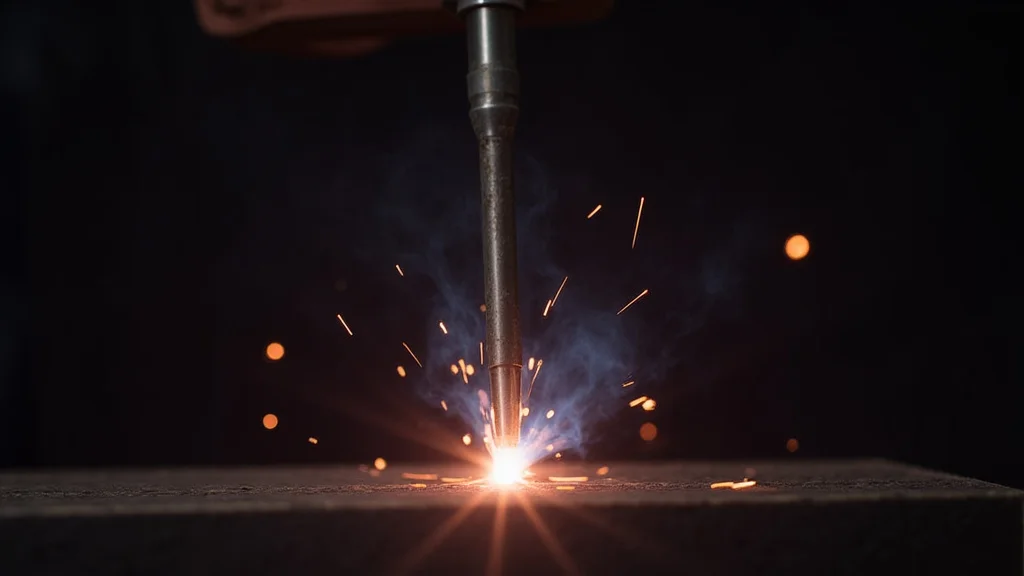
Getting your stick welder to work right can feel tricky at first. Many new welders wonder, Why Is My Stick Welder Arc Unstable? It’s a common question because lots of little things can make the arc sputter and jump. Don’t worry, though!
We’ll walk through this step by step to make things clearer. Let’s figure out what’s making your arc wiggly and how to fix it so you can weld smoothly.
Key Takeaways
- You will learn the main reasons why a stick welder arc might be unstable.
- Simple checks for your welding machine and its settings will be explained.
- The role of your welding rods and how they affect the arc will be covered.
- Tips for improving your technique to get a steady arc will be shared.
- Common beginner mistakes that cause arc instability will be identified.
- Practical steps to fix an unstable arc will be provided.
Understanding Stick Welder Arc Instability
An unstable arc on a stick welder means the electricity jumping between the rod and the metal isn’t smooth. It can sputter, pop, or even go out. This makes it hard to melt the metal right and build a good weld.
For folks just starting out, this can be really frustrating. It’s like trying to draw with a shaky hand – the lines don’t come out clean.
There are a few big reasons why this happens. Think of it like a recipe; if one ingredient is off, the whole dish might not turn out right. We’ll look at everything from the machine itself to the little rod you’re holding.
Getting a steady arc is key to making strong, good-looking welds.
Common Causes of an Unstable Arc
Let’s break down the most frequent culprits behind a wobbly arc. Each one is a piece of the puzzle. Fixing these can make a huge difference in your welding.
Machine Settings Are Off
Your welding machine has settings that control the electricity. These are super important. If they’re not right for the job, the arc won’t behave.
Amperage Too Low or Too High
Amperage is like the power or heat of the arc. If it’s too low, the rod won’t melt well and can stick or sputter. The arc might seem weak and hard to keep going.
If the amperage is too high, the arc will be too hot. It can burn through the metal quickly or make the rod melt too fast, leading to spatter and an erratic arc. You’ll see big, splattery messes and the rod might get eaten up too quickly.
For different types of welding rods and metal thickness, you need different amperage. A general rule is to use lower amperage for thinner metals and smaller rods, and higher amperage for thicker metals and larger rods. Always check the recommendations on the welding rod packaging.
They usually give a good starting range.
Wrong Polarity (DC Electrode Positive vs. Negative)
Polarity tells us which way the electricity is flowing. Stick welding often uses Direct Current (DC). You can have DC Electrode Positive (DCEP) or DC Electrode Negative (DCEN).
Each type of welding rod works best with a specific polarity. Using the wrong one can make the arc unstable. It can also affect how much heat goes into the metal and how the weld metal is deposited.
For example, many general-purpose rods like 6013 work well on DCEN or AC. However, rods like 7018, which are used for stronger welds, typically run best on DCEP. If you use 7018 on DCEN, you’ll find it much harder to start and maintain a steady arc.
The rod might get sticky and hard to control.
Welding Rod Issues
The welding rod itself is a critical part of the arc. If the rod isn’t right or isn’t in good shape, the arc will suffer.
Incorrect Rod Type for the Job
There are many types of welding rods, and they’re designed for different metals and welding positions. Using a rod meant for heavy steel on a thin sheet metal, or vice versa, will cause problems. Some rods are easier to strike and run than others.
Beginners often find rods like 6013 or 6010 easier to start with.
If you need to weld a specific type of metal, like stainless steel or cast iron, you need a special rod. Using a general-purpose steel rod on these materials will likely result in a poor weld and an unstable arc. Always match the rod to the metal you are welding.
Damaged or Wet Rods
Welding rods are covered in a flux coating. This coating helps stabilize the arc and also creates shielding gases and slag to protect the molten metal. If this coating is chipped, cracked, or missing, the arc can become very unstable.
The flux helps control the metal transfer from the rod to the weld pool.
Moisture is a big enemy of welding rods, especially for certain types like 7018. If these rods absorb moisture from the air, they become “wet.” Wet rods will make the arc sputter, pop, and can cause porosity (tiny holes) in your weld. They are also more likely to stick.
You might need to dry out these rods in a special oven designed for welding electrodes, or use fresh ones.
Poor Ground Connection
A good ground connection is essential for any electric welding process. It completes the electrical circuit. If the ground clamp is loose, dirty, or not making good contact, the electricity can’t flow smoothly.
This leads to an unstable arc and poor welding results.
The ground clamp should be attached directly to the metal you are welding or to the welding table if it’s conductive. Make sure the connection point is clean. Scrape away any paint, rust, or dirt to ensure a solid metal-to-metal contact.
A loose ground clamp can cause arcing at the clamp itself, making a lot of noise and heat, but not delivering steady power to your welding rod.
Technique Issues
How you hold and move the welding rod also plays a big part. Beginners often struggle with these movements.
Incorrect Arc Length
Arc length is the distance between the tip of the welding rod and the surface of the metal you are welding. It’s probably the most important factor for a stable arc. If the arc is too long, it’s like stretching a rubber band too far – it snaps and sputters.
The arc becomes weak, and you get a lot of spatter. It also doesn’t provide enough heat to melt the metal properly.
If the arc is too short, the rod will likely dig into the molten pool and stick to the metal. This is called “stuck rod” or “dragging.” When the rod sticks, it can interrupt the arc completely or cause a very rough, uneven weld. You want to maintain a consistent, short arc, usually about the diameter of the welding rod.
Wrong Travel Speed
Travel speed is how fast you move the welding rod along the joint. If you move too fast, you won’t deposit enough metal, and the weld will be too narrow. The arc might seem to be running ahead of where it should be, and it won’t have enough time to melt the base metal properly.
You’ll end up with a weak weld that looks like a thin bead.
If you move too slowly, you deposit too much metal in one spot. This can create a large, uneven bead that might burn through thinner materials. The heat builds up too much, leading to a lot of spatter and an unstable arc.
You want to move at a steady pace that allows the rod to melt and deposit metal evenly, creating a consistent bead width.
Incorrect Welding Angle
The angle at which you hold the welding rod also matters. For most stick welding, you’ll hold the rod with a slight drag angle, meaning you pull the rod slightly backward in the direction you are welding. This angle is usually around 10-15 degrees.
Holding the rod too upright or pushing it forward can affect how the flux flows and how the shielding gas is produced, leading to an unstable arc and poor weld quality.
Different welding positions might require slight adjustments to your angle, but the basic principle of a slight drag is common for many rods. Experimenting with your angle can help you find what works best for the specific rod and situation.
Environmental Factors
Sometimes, what’s happening around you can affect your welding.
Wind or Drafts
Stick welding produces shielding gases from the flux to protect the molten metal from the air. If there’s a strong wind or draft, these gases can be blown away. This leaves the molten weld pool exposed to oxygen and nitrogen in the air, which can cause porosity and an unstable arc.
You might see the arc sputtering and the weld metal looking rough.
If you are welding outdoors, try to set up a windbreak or shield yourself and your work area from strong breezes. Even a small barrier can make a big difference in maintaining a stable arc and producing a good weld.
Contaminated Metal
The metal you are welding should be clean. If there’s rust, paint, grease, oil, or dirt on the surface, it can interfere with the arc. These contaminants can vaporize when the arc hits them, creating smoke and unstable conditions.
They can also get trapped in the weld, making it weaker and affecting the arc’s stability. Always clean the metal surface thoroughly with a wire brush or grinder before you start welding.
Troubleshooting Steps for an Unstable Arc
Here’s a practical way to tackle the problem when your arc is acting up.
1. Check Your Machine Settings
Start with the basics. Is the amperage set correctly? Refer to the welding rod packaging for the recommended range.
If you’re unsure, try adjusting the amperage up or down a bit to see if it improves. Make sure you’re using the correct polarity for the rod. If your machine has AC/DC settings, ensure it’s on the right one and that the polarity is set correctly for DC welding.
2. Inspect Your Welding Rods
Are your rods dry and in good condition? Look for any damage to the flux coating. If you’re using rods like 7018 or 6010, they are sensitive to moisture.
If they’ve been sitting out, they might need to be reconditioned or replaced. Try a fresh, dry rod to see if that makes a difference.
3. Verify Your Ground Connection
Is your ground clamp making good, solid contact with the metal? Wiggle it around to ensure it’s secure. Clean the area where the clamp is attached.
A dirty or loose ground is a very common cause of welding problems.
4. Adjust Your Technique
Focus on your arc length. Try to keep it consistent and short, about the diameter of the rod. If you’re having trouble keeping it steady, practice on a scrap piece of metal.
Work on maintaining a smooth, even travel speed. Don’t go too fast or too slow. Pay attention to your welding angle; a slight drag is usually best.
5. Consider Your Environment
If you’re welding outdoors or in an area with drafts, try to block the wind. Ensure the metal you’re welding is clean and free of rust, paint, or grease.
Quick Guide: Rods and Amperage Recommendations (General)
This is a general guide. Always check the packaging for the most accurate settings.
| Welding Rod Type | Typical Amperage Range (Low) | Typical Amperage Range (High) | Recommended Polarity |
|---|---|---|---|
| 6013 | 50 A | 120 A | AC or DCEN |
| 6010 | 40 A | 100 A | DCEN |
| 7018 | 70 A | 150 A | DCEP |
| 6011 | 50 A | 110 A | AC or DCEN |
Frequently Asked Questions
Question: What is the most common reason for an unstable stick welding arc?
Answer: The most common reasons are incorrect amperage settings, a poor ground connection, or an inconsistent arc length. These are often the first things to check.
Question: Can using the wrong welding rod cause arc instability?
Answer: Yes, absolutely. Different rods are designed for different jobs and materials. Using a rod not suited for your project or metal type will significantly affect arc stability and weld quality.
Question: How do I know if my welding rods are too wet?
Answer: Wet rods tend to sputter a lot, stick to the metal easily, and can cause porosity in your weld. You might also hear a crackling or popping sound that is more pronounced than usual. Rods like 7018 are especially sensitive.
Question: Is it okay to weld with paint or rust on the metal?
Answer: No, it’s not okay. Paint, rust, grease, and dirt contaminate the weld and cause an unstable arc. You should always clean the metal surface thoroughly before welding for best results.
Question: What should I do if my rod keeps sticking to the metal?
Answer: If your rod keeps sticking, your arc length is likely too short, or your amperage might be too low. Try increasing the amperage slightly and focus on maintaining a consistent, short arc length – about the diameter of the rod.
Final Thoughts
Dealing with an unstable stick welder arc is a challenge many welders face. You’ve learned that settings like amperage and polarity are key. Making sure your rods are dry and appropriate for the job matters a lot.
A clean, solid ground connection is never optional. Your technique, like arc length and travel speed, directly impacts how smoothly the arc burns. By checking these simple things, you can fix most arc issues and get back to welding with confidence.
Keep practicing these steps, and you’ll be making clean, strong welds in no time!