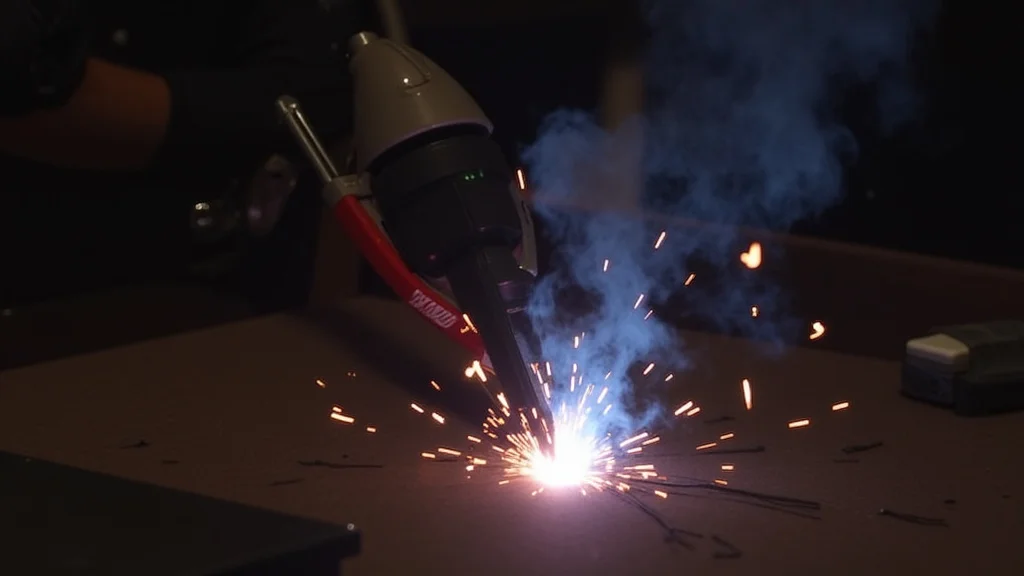
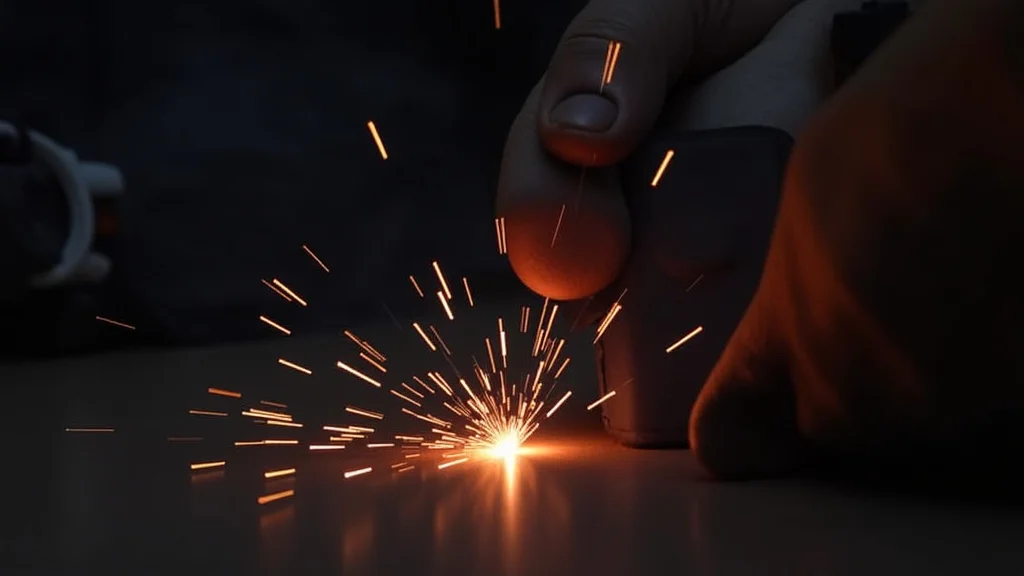
It’s frustrating when your MIG welder gets too hot. Many people starting out wonder, “Why Is My MIG Welder Overheating Frequently?” This happens because new welders might not know the common causes. It can feel confusing.
But don’t worry, we’ll look at simple steps to fix it. We’ll figure out why it’s happening so you can get back to welding smoothly.
Key Takeaways
- Understand common reasons why MIG welders overheat.
- Learn how duty cycle affects welder performance.
- Discover the importance of proper ventilation for your welder.
- Recognize how wire speed and voltage settings play a role.
- Find out how to check and maintain your MIG welder’s components.
- Identify solutions to prevent your welder from overheating.
Why Is My MIG Welder Overheating Frequently? Let’s Find Out!
That hot MIG welder smell is never a good sign. If you’re new to welding, seeing your machine heat up too fast can be worrying. You just want to finish your project, and suddenly, the welder shuts down.
This is a common problem for beginners, but the good news is it’s usually easy to fix once you know what to look for.
Understanding Duty Cycle
One of the biggest reasons MIG welders overheat is exceeding their duty cycle. Think of duty cycle like a timer for your welder. It tells you how long your welder can run at a certain amperage within a 10-minute period before it needs to cool down.
For example, a welder might have a 60% duty cycle at 150 amps. This means you can weld for 6 minutes out of every 10 minutes at that amperage. The other 4 minutes are for cooling.
If you try to weld continuously for longer than that, the welder’s internal parts will start to get too hot.
What Happens When You Exceed Duty Cycle
Most modern MIG welders have a thermal overload protection system. When the welder gets too hot, this system will automatically shut it down to prevent damage. You’ll usually see a light come on your machine that indicates it’s overheating.
This is a safety feature. It’s designed to protect the expensive components inside your welder, like transformers and transistors. While it’s annoying to have your welding session interrupted, it’s much better than burning out your machine.
Factors Affecting Duty Cycle
Several things can make it seem like you’re exceeding the duty cycle even when you’re not. The amperage you’re welding at is a big one. Higher amperages mean the welder works harder and generates more heat.
The environment also plays a role. If you’re welding in a very hot workshop with poor airflow, the welder will heat up faster. Your welding technique matters too.
Longer, continuous welds put more strain on the machine than short, tack welds.
Ventilation is Key
Just like any engine or electronic device, your MIG welder needs to breathe. Poor ventilation is a major cause of overheating. Welders generate a lot of heat when they’re running, and they rely on fans and vents to dissipate that heat.
If the vents are blocked, or if the machine is in a confined space, the hot air can’t escape. This trapped heat builds up inside the welder, causing it to overheat much quicker.
Checking Your Welder’s Vents
Take a look at your MIG welder. You’ll see vents on the sides and back of the machine. Make sure these are not blocked by anything.
This includes dust, dirt, or other debris.
If you see a lot of dust buildup, it’s time for a cleaning. A can of compressed air is great for blowing out dust from vents and internal components. Do this regularly, especially if you weld in a dusty environment like a garage or workshop.
Proper Placement of Your Welder
Where you put your welder is important. Avoid placing it directly against a wall or in a cramped corner. Give it at least a few inches of space all around so air can flow freely.
If you’re welding outdoors, try to keep it out of direct sunlight, which can add to the heat.
Wire Speed and Voltage Settings
Your wire speed and voltage settings can also contribute to overheating, though usually indirectly. These settings control how the arc behaves and how much power is used. Incorrect settings can lead to inefficient welding, which means the welder has to work harder than it needs to.
If your wire speed is too low for the voltage, you might get a “spitting” arc, or a lot of spatter. The welder has to push the wire through the arc, and if it’s not moving fast enough, it can cause issues. Similarly, if the voltage is too high or too low, it can affect the stability of the arc and increase heat buildup in components.
Finding the Right Settings
Consult your welder’s manual for recommended settings based on the type and thickness of metal you are welding. Many welders have charts or quick reference guides. Experimenting with settings is part of learning, but always start with the manufacturer’s suggestions.
A good, stable arc is efficient. It transfers energy effectively to melt the metal. A sputtering or unstable arc wastes energy as heat, putting more strain on the welder’s power supply components.
Maintaining Your MIG Welder
Regular maintenance is crucial for preventing overheating. Like any tool, a MIG welder needs to be kept in good condition to perform at its best.
Checking the Ground Clamp
A poor ground connection can cause all sorts of problems, including increased heat buildup. Make sure your ground clamp is clean and making good contact with the workpiece. Any resistance in the electrical path means more heat is generated.
Inspecting the Welding Gun and Cable
The welding gun and its cable carry the current to the workpiece. If the cable is damaged, frayed, or kinked, it can restrict the flow of electricity and cause it to overheat. Also, check the contact tip for wear or debris.
A clogged or worn tip can restrict wire flow and affect the arc.
The liner inside the welding gun can also get clogged with wire debris. This can cause feeding issues and make the motor work harder, leading to heat buildup in the machine. Periodically cleaning or replacing the liner is a good idea.
Cooling System Check
Most MIG welders have an internal fan. Make sure this fan is working correctly. You should be able to hear it running when the welder is on.
If the fan isn’t spinning, it needs to be repaired or replaced. Some higher-end machines may also have liquid cooling systems, which require checking coolant levels and for leaks.
Common Culprits Summary
Let’s quickly recap the most common reasons your MIG welder might be getting too hot:
- Over-duty cycle: Welding for too long without breaks.
- Blocked vents: Dust and debris preventing airflow.
- Poor placement: Welder in a confined space or direct sun.
- Incorrect settings: Wire speed and voltage not matched to the job.
- Bad connections: Dirty or loose ground clamp.
- Damaged components: Frayed cables, clogged gun liner, or faulty fan.
Frequently Asked Questions
Question: How often should I clean my MIG welder’s vents?
Answer: You should clean your MIG welder’s vents at least every few months, or more often if you work in a dusty environment. Regular cleaning ensures proper airflow.
Question: What happens if I ignore the overheating warning light?
Answer: If you ignore the warning light and continue welding, the thermal overload protection will eventually shut down the machine. Continued use after repeated shutdowns can cause permanent damage to internal components.
Question: Can welding in cold weather cause my MIG welder to overheat?
Answer: No, cold weather generally helps a welder stay cooler. Overheating is usually caused by the machine working too hard or not being able to dissipate heat properly, which is more of an issue in warm environments or with poor airflow.
Question: My welder has a fan, but it sounds weak. What should I do?
Answer: If the fan sounds weak or is not spinning at full speed, it might be failing. A weak fan can’t move enough air to cool the welder effectively. It’s best to have it inspected and replaced if necessary.
Question: Is it normal for a MIG welder to get warm during use?
Answer: Yes, it is normal for a MIG welder to get warm during operation. The warning light or shutdown is specifically for when it’s getting too hot and needs a break. Normal warmth is not a problem.
Final Thoughts
It’s easy to get discouraged when your MIG welder heats up too fast. But now you know that Why Is My MIG Welder Overheating Frequently? often comes down to a few simple, fixable issues. Check your duty cycle, make sure the vents are clear and airflow is good, and inspect your connections and cables.
Small steps in maintenance and awareness can keep your machine running cool and welding strong. Keep practicing these checks, and you’ll find your welder stays ready for your projects.