It’s frustrating when your MIG welder doesn’t heat up like it should. Many people starting out wonder, “Why Is My MIG Welder Not Heating Properly?” This can happen for a few simple reasons. Don’t worry, though!
We’ll walk through it step-by-step to get you welding again. Let’s figure out what’s going on.
Key Takeaways
- You’ll learn about common power supply issues.
- We’ll cover why wire feed problems affect heat.
- You’ll discover how gas flow impacts welding temperature.
- We’ll explain how machine settings play a big role.
- You’ll get tips on basic maintenance to prevent issues.
Why Is My MIG Welder Not Heating Properly? Common Causes and Fixes
When you’re trying to weld, you need heat. It’s what melts the metal and joins it together. If your MIG welder isn’t getting hot enough, your welds won’t be strong.
This is a common problem, especially for folks new to welding. It can be confusing because there are several things that could be wrong. Let’s break down the most likely reasons and how to fix them.
Power Supply Issues
The first place to look is your power. A MIG welder needs a steady stream of electricity to work. If it’s not getting enough power, it simply can’t generate enough heat.
Check the Outlet and Circuit Breaker
Is the welder plugged into a working outlet? It sounds obvious, but sometimes outlets can be faulty. Also, check your home’s or workshop’s circuit breaker box.
Did a breaker trip? If it did, try resetting it. If it trips again right away, you might have a bigger electrical problem or the welder might be drawing too much power for that circuit.
Extension Cord Problems
Are you using an extension cord? Many welders need a heavy-duty cord. A thin or too-long extension cord can reduce the amount of power getting to the welder.
This is like trying to drink a milkshake through a tiny straw – not much gets through. Always use the thickest, shortest extension cord you can, and make sure it’s rated for your welder’s amperage.
Input Voltage Settings
Some MIG welders can run on different voltage inputs, like 120V or 240V. Make sure your welder is set to the correct voltage for the power source you’re using. If it’s set to 240V but you’re plugging it into a 120V outlet, it won’t have enough power.
Wire Feed Problems
The wire you feed into the weld is what the arc heats up and melts. If the wire isn’t feeding correctly, the arc won’t be consistent, and the heat transfer will be poor.
Dirty or Damaged Wire
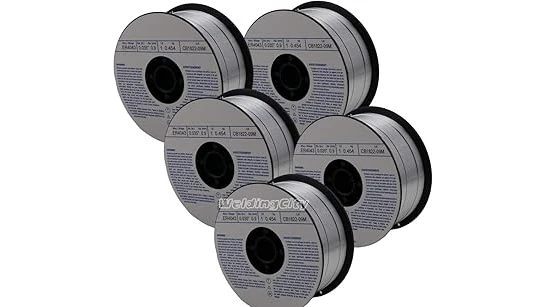
Look at your welding wire. Is it rusty, dirty, or kinked? A dirty wire can cause a poor electrical connection at the contact tip.
A kinked wire might get stuck. Clean or replace the wire if it looks bad. Use a wire brush designed for welding wire to clean it.
Worn Contact Tip
The contact tip is a small metal part at the end of the welding gun. It carries the electricity to the wire and also guides the wire. If the hole in the tip is worn out, too large, or clogged with spatter, it can cause a bad connection.
This leads to inconsistent arc and poor heat. Check the tip for wear and tear. Replace it if it looks damaged or enlarged.
Keep it clean from spatter.
Incorrect Drive Roll Tension
The drive rolls push the wire through the gun liner. If the tension is too loose, the rolls will slip, and the wire won’t feed smoothly. If the tension is too tight, it can crush the wire or make it hard to feed.
You want just enough tension so the wire feeds without slipping, but not so much that it deforms the wire. You should be able to pinch the wire between the rolls and have it slip a little under pressure.
Bent Liner or Gun Cable
The liner is a flexible tube inside the welding gun cable that guides the wire. If the liner gets bent or has a sharp kink, the wire can get stuck. This will stop the wire feed and prevent proper heating.
Check the entire length of the gun cable for any sharp bends or kinks. If you find one, you might need to replace the liner or the entire gun assembly.
Gas Flow Issues
For MIG welding, you need shielding gas. This gas protects the molten weld pool from the air. The gas flow also affects the arc and how the metal heats up.
Low Gas Pressure or Flow Rate
Is your gas cylinder empty or nearly empty? Check the pressure gauge on your regulator. If it’s low, you need to replace the cylinder.
Also, make sure the regulator is set to the correct flow rate. A common setting is around 20-25 cubic feet per hour (CFH). Too little gas means the weld isn’t protected, and the arc can be unstable.
Too much gas can cause turbulence and also create problems.
Leaking Gas Lines or Fittings
Check all the connections for your gas system. Make sure the regulator is tightly screwed onto the cylinder. Ensure the hose connections are secure.
A small leak can let a lot of gas escape without you noticing, reducing the amount reaching the weld. You can test for leaks by using soapy water on the connections; bubbles will appear if there’s a leak.
Incorrect Gas Type
Different metals require different shielding gases. For steel, a mix of argon and CO2 is common. For aluminum, pure argon is usually used.
Using the wrong type of gas for your material will affect the weld quality and how the metal melts. Double-check that you’re using the correct gas for the type of metal you’re welding.
Regulator Malfunction
The gas regulator controls the flow of gas from the cylinder. If the regulator is faulty, it might not be delivering gas at the correct pressure or flow rate, even if the cylinder is full. If you’ve checked everything else and the gas flow seems off, the regulator itself might need to be replaced.
Machine Settings
The settings on your MIG welder are designed to give you the right amount of heat and wire speed for different jobs. If they’re wrong, your weld won’t heat up properly.
Voltage and Wire Speed Relationship
Voltage controls the arc length and heat. Wire speed controls how much wire is fed, which also affects the heat. These two settings work together.
Generally, as you increase wire speed, you need to increase voltage to maintain the same arc length and heat. If your wire speed is too high for the set voltage, you won’t get enough heat. Many modern welders have “synergic” controls that link these two settings, but older ones require manual adjustment.
Always consult your welder’s manual for recommended settings.
Incorrect Polarity
MIG welding uses DC (direct current) power. You can connect the gun and the ground clamp in two ways: DC electrode positive (DCEP) or DC electrode negative (DCEN). For most solid steel wire MIG welding, you need DCEP.
If you accidentally set your machine to DCEN, the arc will be weak, and you won’t get enough heat. Check your welder’s manual or the wire spool for the correct polarity setting.
Duty Cycle Exceeded
Every welding machine has a duty cycle. This is the percentage of time the welder can operate at a certain amperage within a 10-minute period without overheating. For example, a 30% duty cycle at 150 amps means you can weld for 3 minutes out of every 10.
If you’re welding continuously for too long, the welder will overheat and shut down or reduce its output, leading to poor heating. Let the machine cool down if it has overheated.
Maintenance and Other Factors
Dirty Welder and Connections
Dust and dirt can build up inside your welder, affecting its performance. Keep your machine clean. More importantly, ensure all electrical connections are clean and tight.
This includes the ground clamp connection to the workpiece and the welder, and the connection of the ground cable to the welder itself.
Ground Clamp Issues
A poor connection at the ground clamp is a frequent cause of problems. Make sure the clamp is firmly attached to a clean piece of metal on your workpiece. Any rust, paint, or dirt between the clamp and the metal will create resistance, reducing the power and heat transfer.
Scrape away any paint or rust where the clamp attaches.
Dirty Nozzle
The nozzle on your welding gun can get clogged with spatter. This can obstruct the gas flow and affect the arc. Clean the inside of the nozzle regularly with a nozzle tip cleaner tool or by tapping it gently to dislodge spatter.
Frequently Asked Questions
Question: What is the most common reason a MIG welder isn’t heating?
Answer: Often, it’s a problem with the power supply, like a tripped circuit breaker, a bad extension cord, or incorrect voltage settings. Sometimes, it’s as simple as a dirty ground connection.
Question: Can a bad ground clamp stop my MIG welder from heating?
Answer: Yes, absolutely. A loose or dirty ground clamp creates resistance, preventing the full electrical current from reaching the arc. This drastically reduces the heat produced.
Question: My wire is feeding, but the weld isn’t hot. What else could it be?
Answer: If the wire is feeding, but the heat is low, check your gas flow. If you don’t have enough shielding gas, the arc can be unstable and won’t transfer heat effectively. Also, verify your voltage and wire speed settings and machine polarity.
Question: How often should I clean my MIG welder and gun?
Answer: It’s good practice to clean your welding gun nozzle and contact tip after every welding session. Regularly check and clean electrical connections. Keeping the machine itself clean from dust and debris will also help prevent performance issues.
Question: My welder is new, but it’s not heating properly. What should I do?
Answer: Even with new equipment, the setup can be incorrect. Double-check that the input voltage is set correctly, the polarity is right for your wire, and your shielding gas is connected and flowing properly. Review the welder’s manual for initial setup guidance.
Final Thoughts
It’s clear that a MIG welder not heating properly usually comes down to a few key areas: power, wire, gas, or settings. We’ve looked at how the outlet and cords matter for power. We saw that dirty wire or a worn tip can stop heat.
We also discussed how gas leaks or wrong settings can cause problems. By checking these common spots first, you can usually fix the issue fast. A clean machine and good connections are always important.
Keep these steps in mind, and you’ll get back to making good welds.