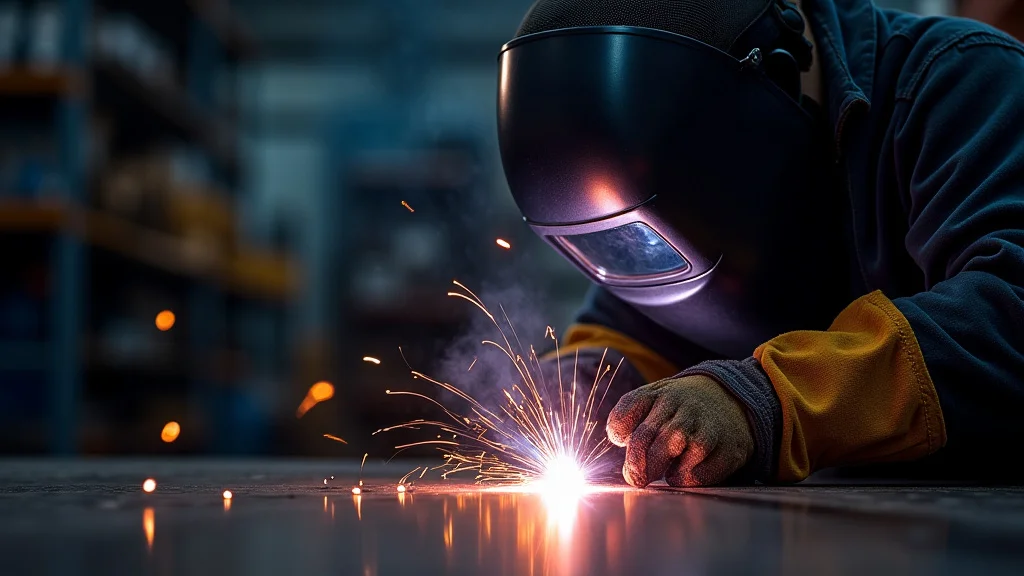
Many folks new to welding wonder about What Safety Gear Do You Need for MIG Welding? It can seem like a lot to remember at first. But don’t worry, it’s simpler than it looks. We’ll break down exactly what you need, step-by-step, so you can start welding safely.
Let’s get you ready for your first sparks!
Key Takeaways
- You need a welding helmet to protect your eyes and face from bright light and sparks.
- Special welding gloves are a must to keep your hands safe from heat and sharp metal.
- Wearing flame-resistant clothing protects your skin from burns and sparks.
- Sturdy, closed-toe shoes are important to shield your feet.
- Ventilation is key to breathing clean air while you weld.
- Understanding these basic gear needs helps you weld with confidence.
Essential Gear for MIG Welding
MIG welding is a great way to join metal. It’s popular because it’s a bit easier to learn than some other types. But like any tool or activity involving heat and sparks, safety comes first.
Knowing What Safety Gear Do You Need for MIG Welding? is the first big step to becoming a good welder.
When you weld, you create a very bright light. This light has harmful rays, like ultraviolet (UV) rays. These rays can seriously damage your eyes and skin.
Sparks and hot metal can fly off your workpiece, too. You need gear that stops these things from hurting you. This isn’t just about comfort; it’s about preventing long-term injuries.
The Welding Helmet: Your First Line of Defense
The most important piece of gear is your welding helmet. It’s designed to protect your eyes and face. A good helmet blocks the harmful UV and infrared rays produced by the welding arc.
It also shields you from sparks, hot metal, and even flying debris.
There are two main types of welding helmets: passive and auto-darkening. Passive helmets have a fixed shade of lens. You have to flip them up and down when you’re not welding.
Auto-darkening helmets are much more convenient. They have a special lens that automatically darkens when the welding arc strikes. This means you don’t have to stop what you’re doing to flip your helmet, which helps you keep your work steady.
What to Look for in a Welding Helmet:
- Shade Range: For MIG welding, a shade of 9-13 is usually good. Check the manufacturer’s recommendations for the amperage you’ll be using.
- Viewing Area: A larger viewing area gives you a better look at your work.
- Comfort: Helmets have headbands and padding. Try one on if you can to make sure it fits well and isn’t too heavy.
- Power Source: Auto-darkening helmets usually use batteries and solar power.
Don’t skimp on your helmet. Your eyesight is too valuable. A good helmet will make welding much safer and more enjoyable.
Welding Gloves: Protecting Your Hands
Your hands are going to be close to hot metal and sparks. Welding gloves are not like regular gloves. They are made from thick leather, usually cowhide or deerskin.
This leather is tough and resists heat and punctures. MIG welding gloves are often a bit lighter and more flexible than stick welding gloves, allowing for more dexterity.
Why are they so important? They protect you from:
- Heat: Metal gets very hot, and gloves prevent burns.
- Sparks: Molten metal can spray from the weld.
- Sharp Edges: Metal can have sharp burrs that can cut you.
- UV Radiation: Even your hands can get burned by the arc.
Make sure your gloves fit well. They shouldn’t be too loose or too tight. You need to be able to grip your MIG gun comfortably.
Also, check them for holes or wear before each use.
Flame-Resistant Clothing: Your Body’s Shield
The sparks and heat from MIG welding can easily ignite regular clothing. This is why wearing flame-resistant (FR) clothing is super important. Cotton, polyester, and other synthetic fabrics can melt onto your skin if they catch fire, causing severe burns.
What kind of clothing should you wear?
- Long Sleeves and Pants: Cover as much skin as possible.
- Durable Fabric: Look for clothing made from materials like treated cotton or specific FR blends.
- No Cuffs or Pockets: Cuffs can catch sparks. Open pockets can let sparks fall into your boots.
- Leather Apron or Jacket: For extra protection, especially if you’re welding for a long time or at higher amperages, a leather apron or jacket can be a great addition.
Tuck your pants into your boots and make sure your sleeves cover your gloves. The goal is to leave no gaps for sparks to get to your skin.
Footwear: Sturdy Protection for Your Feet
Your feet are also at risk from falling metal, sparks, and dropped tools. You need to wear sturdy, closed-toe shoes. Leather work boots are the best choice.
They offer good protection against heat and impact.
What to avoid:
- Open-toed shoes: Sandals or flip-flops are a definite no-go.
- Canvas or mesh shoes: These don’t offer enough protection.
- Loose laces: Make sure laces are tied securely and tucked away so they don’t catch on anything or fall into sparks.
Some welders like to wear leggings or gaiters over their pants and boots for added protection, especially if they are working on the floor or in a position where sparks might fall downwards.
Breathing Easy: Ventilation and Respirators
When you weld, you create fumes. These fumes come from the metal you’re welding, the coating on the metal, and the welding wire itself. Breathing these fumes can be bad for your health, especially over time.
This is where good ventilation comes in.
Good ventilation means:
- Working in an open area: If possible, weld outside or in a large, open shop.
- Using a fan: A fan can help blow the fumes away from your breathing zone. Position it so it blows fumes away from you, not towards you.
- Using an exhaust system: Many professional shops have dedicated fume extraction systems.
If you can’t get good natural ventilation, you might need to wear a respirator. A respirator with cartridges designed for welding fumes can filter out harmful particles and gases. Make sure it fits properly to create a good seal around your nose and mouth.
Other Helpful Safety Gear
Besides the main items, a few other things can make your welding experience safer:
- Safety Glasses: Always wear safety glasses under your welding helmet. This gives you an extra layer of protection if your helmet is accidentally lifted.
- Ear Plugs: Welding can be noisy. Earplugs protect your hearing from loud grinding or welding sounds.
- Welding Cap: A flame-resistant cap can protect your hair and scalp from sparks and heat.
- Chipping Hammer and Wire Brush: While not protective gear, these are essential tools for cleaning your weld. Always wear your safety glasses when using them.
Having the right tools and accessories also contributes to overall safety.
Frequently Asked Questions
Question: What’s the most important safety gear for MIG welding?
Answer: The most important piece of safety gear is your welding helmet. It protects your eyes and face from intense light, heat, and flying sparks.
Question: Can I use regular work clothes for MIG welding?
Answer: No, it’s not safe to use regular work clothes. You need flame-resistant clothing to protect your skin from sparks and heat, as synthetic fabrics can melt and cause severe burns.
Question: How do I know what shade to get for my auto-darkening helmet?
Answer: For MIG welding, shades 9 to 13 are generally recommended. The exact shade depends on the amperage you are using, so check the helmet manufacturer’s guide.
Question: Do I really need to wear safety glasses under my welding helmet?
Answer: Yes, it’s a good practice. Safety glasses provide an extra layer of protection in case your helmet is accidentally bumped or lifted, preventing sparks or debris from reaching your eyes.
Question: What if I can’t get good airflow where I’m welding?
Answer: If good natural ventilation isn’t possible, you should use a respirator with appropriate cartridges for welding fumes. This helps protect your lungs from harmful gases and particles.
Final Thoughts
Knowing What Safety Gear Do You Need for MIG Welding? is your first step to a safe welding experience. A good helmet, tough gloves, flame-resistant clothes, and sturdy boots are your core protective items. Don’t forget good ventilation or a respirator to keep your lungs clear.
With this gear, you’re ready to tackle your projects and create amazing things. Weld smart, stay safe, and enjoy the process!