
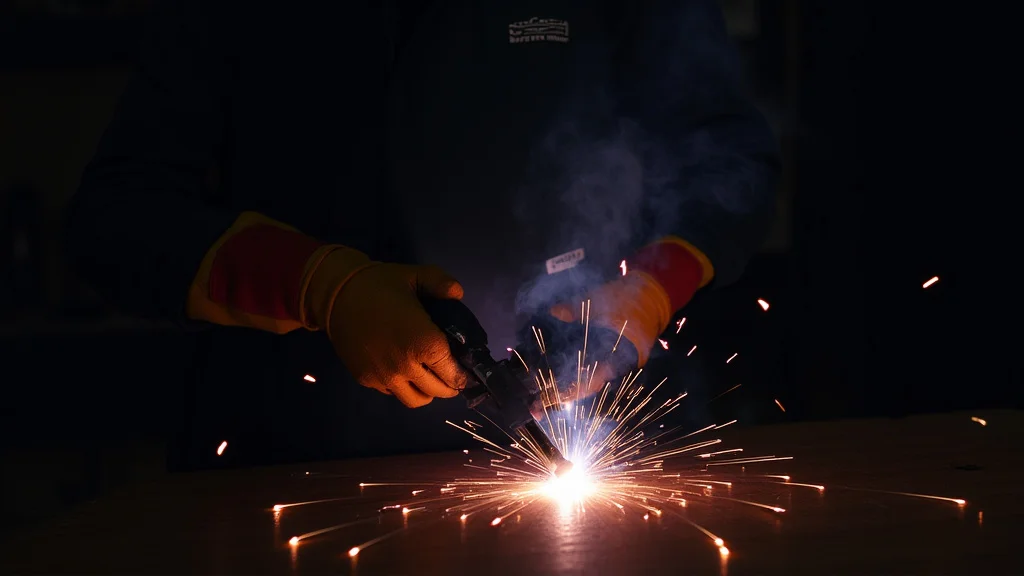
Figuring out What Is the Best Welding Machine for Beginners? can feel like a big question. There are many choices, and it’s easy to get lost. Don’t worry, though!
We’ll walk through it simply, step by step, to help you find the right one. Get ready to learn what to look for and which machines make starting easy.
Key Takeaways
- You’ll learn about the different types of welding machines that are good for new welders.
- We’ll explain the key features that make a welder beginner-friendly.
- You’ll discover how to choose a machine based on what you plan to weld.
- We’ll offer tips on setting a budget for your first welding machine.
- You will get advice on safety gear and how to get started with practice.
Understanding Welding Machines for Newcomers
When you’re just starting out with welding, the idea of picking the perfect machine can seem a little overwhelming. That’s why asking, “What Is the Best Welding Machine for Beginners?” is so common. You want a tool that’s easy to use, safe, and won’t break the bank.
The good news is, many machines are made specifically for people who are new to welding. They are designed to be forgiving and simple to operate. This guide will break down the options so you can make a smart choice.
Types of Welding for Beginners
There are a few main ways to weld. For beginners, some are much easier to learn than others. We’ll focus on the ones that offer a smoother learning curve.
MIG Welding (Gas Metal Arc Welding)
MIG welding is often called the easiest type of welding for beginners. It uses a wire electrode that feeds automatically through a welding gun. A shielding gas flows around the wire to protect the weld from the air.
Why MIG is Great for Beginners:
- Easy to Learn: You just need to pull the trigger and move the gun. The machine feeds the wire, and you focus on getting a good bead.
- Fast: You can weld faster with MIG than with other methods.
- Versatile: It works well on thin to medium-thick metals.
- Clean Welds: MIG often produces clean welds with less spatter.
MIG welders can be a bit more complex than some other types, especially if you need to set up gas bottles. However, many smaller MIG machines can also run flux-cored wire, which doesn’t need gas. This makes them even simpler to start with.
Flux-Cored Arc Welding (FCAW)
Flux-cored welding is very similar to MIG welding. The main difference is the wire. Instead of solid wire, it uses a wire that has a powdery flux material inside.
This flux melts and creates its own shielding gas, so you don’t always need a separate gas tank.
Pros of Flux-Cored for Beginners:
- No Gas Needed (Often): This makes setup much simpler and more portable.
- Good for Outdoors: The flux helps protect the weld from wind, which is great for working outside.
- Penetrates Well: It can often get better penetration on thicker metals.
The main drawback is that flux-cored welding can create more spatter and smoke. It might also require a little more cleanup after welding compared to MIG with gas. But for simplicity, especially if you’re not welding indoors, it’s a strong contender.
Stick Welding (Shielded Metal Arc Welding – SMAW)
Stick welding uses a consumable electrode covered in a flux coating. The flux coating protects the weld pool from contamination and helps create a stable arc.
Is Stick Welding for Beginners?
Stick welding can be a bit trickier to learn than MIG or flux-cored. You need to manage the arc length and the angle of the electrode carefully. It can also create more sparks and require more cleanup.
- Simple Equipment: The machines themselves are often very basic and durable.
- Good for Outdoor/Dirty Conditions: It works well in windy or dirty environments.
- Handles Rust and Dirt: It’s more forgiving on dirty or rusty metal.
While some beginners do start with stick welding, it generally has a steeper learning curve. If you’re looking for the easiest start, MIG or flux-cored might be better.
TIG Welding (Gas Tungsten Arc Welding)
TIG welding is known for producing very clean and precise welds. It uses a non-consumable tungsten electrode and a separate filler rod that you feed into the weld pool with your other hand. A shielding gas protects the weld.
TIG Welding for Beginners:
TIG welding is widely considered the most difficult type of welding to master. It requires a lot of coordination to manage the torch, the filler rod, and the foot pedal (if used) simultaneously.
- High Precision: Produces beautiful, clean welds.
- Works on Many Metals: Excellent for aluminum and stainless steel.
For someone just starting, TIG welding is usually not recommended as the first choice. The complexity can be frustrating. Stick with MIG or flux-cored first.
Key Features to Look for in a Beginner Welder
When you’re shopping for your first welding machine, certain features will make your life much easier. Think about what will help you learn and practice without getting too frustrated.
Ease of Use
This is number one. A beginner-friendly welder should have simple controls. You shouldn’t need to spend hours tweaking settings before you can even start welding.
- Simple Dial Controls: Look for machines with straightforward knobs for voltage and wire speed (for MIG/flux-cored).
- Auto-Set Features: Some machines have buttons that suggest good starting settings based on the material thickness.
- Clear Instructions: A good manual that explains how to set up and use the machine is essential.
Portability
If you plan to move your welder around your garage, take it to a friend’s place, or even use it for mobile work, weight and size matter. Many modern welding machines are surprisingly light and compact.
- Lightweight Design: Machines under 30 pounds are easy to carry.
- Compact Size: They take up less space in your workshop.
- Multi-Voltage Input: Some welders can run on different power outlets (like 120V and 240V), making them more versatile.
Power Output and Material Thickness
The power of a welder determines how thick of metal it can effectively join. For most home projects and general repairs, a welder that can handle up to about 1/4 inch or 3/8 inch steel will be sufficient.
- Amperage Range: Higher amperage generally means it can weld thicker metal. For beginners, a range that starts around 20-30 amps and goes up to 100-140 amps is usually good for MIG/flux-cored.
- Duty Cycle: This tells you how long the machine can weld continuously before needing to cool down. For hobby use, a duty cycle of 20-30% at typical welding amperages is often fine.
Dual Voltage Capability
Some welders can plug into a standard 120-volt household outlet as well as a higher-power 240-volt outlet. This is a huge advantage for beginners.
- Flexibility: You can practice at home with a 120V outlet and then use it on thicker materials with a 240V outlet if you have one.
- Less Initial Setup: You might not need to hire an electrician to install a new outlet right away.
Brand Reputation and Support
Choosing a well-known brand can give you peace of mind. Reputable companies usually offer better warranties and customer support if you run into any issues.
- Read Reviews: See what other users, especially beginners, say about the machine.
- Warranty: A good warranty shows the manufacturer stands behind their product.
- Availability of Parts: Make sure you can easily get replacement parts like MIG gun liners or contact tips.
Recommended Welding Machine Types for Beginners
Based on ease of use and versatility, here are the types of machines that are generally considered the best for those just starting out.
All-in-One MIG/Flux-Cored Machines
These are often the top choice. They can do both MIG welding (with gas) and flux-cored welding (without gas). This gives you flexibility as you learn and tackle different projects.
- Benefits: Great for beginners, versatile, relatively easy to learn.
- What to look for: Machines that can run on 120V power are ideal for home use. Look for ones that can weld at least 1/4 inch steel.
Entry-Level Stick Welders (for specific needs)
If your primary goal is welding thicker, rougher metal outdoors, and you’re willing to put in a bit more effort to learn, a simple stick welder can be a good option. They are often the cheapest to buy.
- Benefits: Inexpensive, simple to operate mechanically, good for outdoor use.
- What to look for: A machine with adjustable amperage is better than a fixed-output one.
What to Weld (and What Not To) When You’re Starting
As a beginner, it’s wise to start with easier projects and materials. This helps build your confidence and skills.
Good Starting Materials
- Mild Steel: This is the most common and easiest metal to weld. It’s used in many DIY projects, car repairs, and general fabrication.
- Thin to Medium Thickness: Start with metal that is 1/16 inch to 1/8 inch thick. This allows you to practice controlling your weld puddle without burning through too quickly.
Materials to Avoid Initially
- Aluminum: Aluminum requires a different type of welder (AC TIG or a MIG with a spool gun) and is much harder to weld correctly due to its low melting point and oxide layer.
- Stainless Steel: While you can MIG or Stick weld stainless steel, it requires different settings and techniques than mild steel. It’s best to master mild steel first.
- Very Thick or Very Thin Metal: Very thick metal requires more power and advanced techniques. Very thin metal (like sheet metal on a car body) is easy to burn through.
Budgeting for Your First Welding Machine
The cost of welding machines can vary a lot. As a beginner, you don’t need the most expensive, professional-grade equipment. Focus on getting a reliable machine that fits your needs and budget.
Entry-Level Price Range:
For a good quality, beginner-friendly MIG or flux-cored welder, expect to spend anywhere from $300 to $700. Stick welders can be found for less, often starting around $150-$300.
What Else You Might Need to Buy:
Don’t forget to factor in the cost of essential accessories. These are just as important as the machine itself!
- Safety Gear: Welding helmet (auto-darkening is highly recommended), welding gloves, welding jacket or flame-resistant clothing, safety glasses.
- Consumables: Welding wire (if MIG/flux-cored), welding rods (if stick), contact tips, nozzle spray, wire brush, chipping hammer.
- Gas (if MIG): A small cylinder of shielding gas (like 75% Argon / 25% CO2) if your machine can use it. You might be able to rent these.
- Tools: Clamps, wire cutters, tape measure.
Many starter kits include some of these accessories, which can be a good value.
Safety First! Essential Gear for New Welders
Welding can be dangerous if you don’t take the right precautions. Always prioritize safety. Wearing the correct personal protective equipment (PPE) is non-negotiable.
Your Welding Helmet
This is your most important piece of safety gear. It protects your eyes and face from intense UV and IR radiation, sparks, and spatter.
- Auto-Darkening Helmets: Highly recommended for beginners. They have a lens that automatically darkens when it detects the welding arc, so you don’t have to flip your helmet down manually every time you start a weld. This makes it much easier to position your weld and get started.
- Shade Level: Ensure the helmet has an appropriate shade level for the type of welding you’re doing (usually Shade 9-13 for MIG/flux-cored).
Protective Clothing
Sparks and hot metal can cause serious burns.
- Flame-Resistant Clothing: Wear a welding jacket or heavy cotton clothing that is free of oil or grease. Natural fibers like cotton or leather are best. Avoid synthetic materials like polyester, as they can melt and stick to your skin.
- Long Sleeves and Pants: Always wear long sleeves and pants to cover your skin.
- Gloves: Heavy leather welding gloves protect your hands from heat and sparks.
Ventilation
Welding fumes can be harmful. Always weld in a well-ventilated area.
- Open Space: If possible, weld outdoors or in a garage with the door open.
- Fan: Use a fan to direct fumes away from your breathing zone.
Getting Started with Practice
Once you have your machine and safety gear, the best way to get better is to practice. Don’t expect perfect welds right away. Focus on consistency and learning from each attempt.
First Welds: Basic Beads
Start by practicing making straight beads on a scrap piece of metal. Try to keep your speed and distance consistent.
- Straight Lines: Lay down lines of weld metal without trying to join two pieces.
- Circles: Practice making circles or other simple shapes.
- Practice Welds on Scrap: Use pieces of metal you don’t care about.
Joining Two Pieces
Once you’re comfortable with laying beads, try joining two pieces of metal together.
- Butt Welds: Place two pieces of metal edge-to-edge and weld them together.
- Lap Welds: Overlap two pieces and weld along the edge.
- Tee Joints: Weld one piece perpendicular to another.
Watch videos, read guides, and don’t be afraid to make mistakes. Every welder started as a beginner!
Frequently Asked Questions
Question: What is the easiest welding process for a beginner?
Answer: MIG welding is generally considered the easiest for beginners because the machine feeds the wire automatically, allowing you to focus on moving the welding gun.
Question: Do I need a gas cylinder for my first welder?
Answer: Not necessarily. Many beginner-friendly machines can also use flux-cored wire, which produces its own shielding gas and doesn’t require a separate gas cylinder.
Question: How much should I expect to spend on a beginner welding machine?
Answer: You can find a good quality beginner MIG or flux-cored welder for around $300 to $700, not including safety gear and consumables.
Question: Can I weld aluminum with a beginner machine?
Answer: Most beginner machines are designed for steel. Welding aluminum typically requires a more advanced machine, like a TIG welder with AC capability or a MIG welder with a spool gun.
Question: What’s the most important safety gear for a beginner?
Answer: The most crucial safety gear is an auto-darkening welding helmet to protect your eyes and face from dangerous light and sparks. You also need flame-resistant clothing and sturdy gloves.
Final Thoughts
Choosing the right welding machine as a beginner is all about simplicity and ease of use. MIG and flux-cored welders stand out for their straightforward operation and versatility on common metals like steel. Look for features like dual-voltage capability and simple controls to make your learning process smoother.
Remember to budget for essential safety gear; your health and safety are always the top priority. With the right equipment and a willingness to practice, you’ll be creating your own projects before you know it.
Leave a Reply