
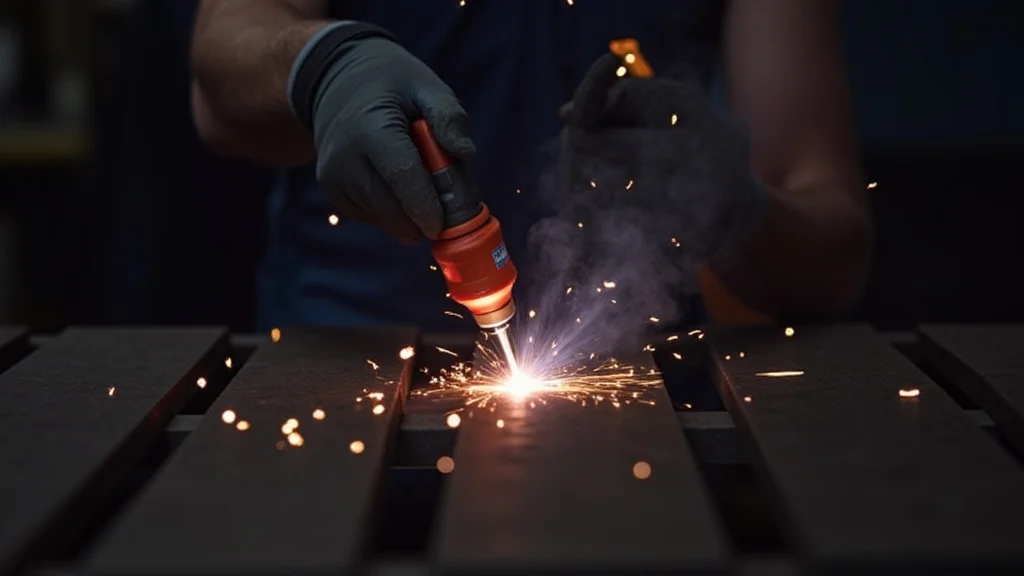
Choosing What Is the Best MIG Welder for Small Projects? can seem a bit tricky when you’re just starting out. There are so many options, and it’s easy to get confused by all the technical terms. But don’t worry, picking the right welder for your home projects is much simpler than you might think.
We’ll break it down step-by-step to help you find the perfect one for fixing things around the house or making fun new items. Get ready to see how easy it is to get started!
Key Takeaways
- Small projects often need simpler, more portable MIG welders.
- Power requirements and amperage are key factors for small projects.
- MIG welders with adjustable settings offer more flexibility for different metals.
- Budget-friendly options are available that still perform well for beginners.
- Understanding basic features helps in selecting the best MIG welder for your needs.
What Makes a MIG Welder Great for Small Projects?
When you’re working on smaller jobs, like fixing a bike frame, making a metal garden decoration, or doing simple repairs around the garage, you don’t always need a giant, super-powerful welding machine. What makes a MIG welder “best” for these kinds of tasks is usually a combination of a few things. First, size and weight matter.
If you need to move the welder around your workshop or even take it to a friend’s house, a smaller, lighter unit is much easier to handle.
Another big point is power. For most small projects, you’ll be welding thinner metals, like sheet metal or small tubing. These don’t require a lot of power.
Welders that can output between 70 to 120 amps are usually perfect. This range lets you control the heat enough to avoid burning through thin metal but gives you enough oomph for slightly thicker pieces you might encounter. You also want a machine that’s easy to set up and use.
Complicated controls can be frustrating for beginners.
Understanding Amperage and Power
Amperage is like the “push” that the electricity has when it’s welding. For small projects, you want a welder that offers a good range of amperage. This means you can turn the power up or down depending on the metal you’re working with and how thick it is.
Think of it this way: welding a thin piece of sheet metal is like trying to cook a delicate egg. You need gentle heat. Welding a thicker metal bar is like searing a steak; you need more heat.
A good MIG welder for small projects will have settings that let you do both. Many welders designed for home use will have a chart on them that suggests the right settings for different thicknesses of steel. This makes it super simple to get started.
Also, consider where you’ll be plugging in your welder. Most small MIG welders run on standard 120-volt household power. This is a huge advantage because you can plug it into any regular wall outlet without needing special electrical work.
Some larger, more powerful welders require a 240-volt outlet, which is more common in industrial settings or for larger appliances like electric dryers.
Wire Feed Speed and Control
The wire feed speed is how fast the welding wire comes out of the gun. It works hand-in-hand with the amperage. If the wire is feeding too fast for the heat you’re using, you’ll get a messy weld.
If it’s too slow, you won’t lay down enough metal. Good control over wire feed speed is essential for creating smooth, consistent welds.
Many beginner-friendly MIG welders have a setting where you can adjust this speed. Some even have an “auto-set” feature. This means you select the thickness of your metal, and the welder automatically sets both the amperage and the wire feed speed for you.
This is a fantastic feature for anyone just learning because it takes a lot of the guesswork out of the process.
Duty Cycle: How Long Can It Weld?
The duty cycle tells you how long a welder can run at a certain amperage setting before it needs to cool down. It’s usually expressed as a percentage over a 10-minute period. For example, a 20% duty cycle at 100 amps means the welder can run for 2 minutes at 100 amps and then needs to cool for 8 minutes.
For small projects, you’re probably not welding continuously for long stretches. You might weld for a minute, reposition your piece, then weld again. So, a duty cycle that might seem low on paper is often perfectly fine for home use.
Even a 10% or 20% duty cycle is usually enough for typical small repairs or hobby projects. If you plan on doing more continuous work, you’d want a higher duty cycle, but for most home users, this is less of a concern.
Synergic vs. Manual Controls
This is where some welders get a bit more advanced, but it’s still important to know. Welders with synergic controls are designed to simplify the process. When you choose a specific wire diameter and gas type, the welder automatically adjusts both the voltage (which controls the arc length and heat) and the wire feed speed to work together perfectly.
This is similar to the “auto-set” feature we mentioned earlier.
Welders with manual controls require you to set both the voltage and the wire feed speed independently. This gives you more control over the weld but can be a bit harder for beginners to get right. For small projects and for learning, synergic controls are often a big advantage.
They help you achieve good results faster.
Input Power: 120V vs. 240V
As we touched on before, most small MIG welders are designed to run on standard 120-volt household outlets. This is a huge convenience. You can set up your welding station almost anywhere in your house or garage.
You don’t need a special electrician to wire a new outlet for you. This makes them very portable and easy to use for quick jobs.
Some, but fewer, smaller welders might offer a dual-voltage option, meaning they can run on either 120V or 240V. This gives you more power when you connect to a 240V source, which can be helpful if you ever decide to tackle slightly larger projects. However, for the definition of “small projects,” 120V is almost always sufficient and much more convenient.
Portability and Build Quality
For small projects, portability is often a major plus. If you need to move your welder from your workbench to another part of the garage, or even outside, a lighter unit is much easier to manage. Many smaller MIG welders weigh under 50 pounds, making them quite easy to carry.
When it comes to build quality, you want a machine that feels solid. Even less expensive welders should have a durable metal casing. Look for welders with good reviews that mention reliable performance and ease of use.
While you might not need a heavy-duty, industrial-grade machine for small projects, a well-built unit will last longer and give you better results.
What to Look For in a Beginner MIG Welder
When you’re new to welding, simplicity is key. Here’s what to focus on:
- Easy Controls: Look for clear dials or buttons. Synergic controls or auto-set features are a big help.
- Lightweight Design: If you need to move it, a lighter welder is better.
- 120V Input: This means you can plug it into a standard wall outlet.
- Adjustable Amperage and Wire Speed: Even if it’s a simple dial, being able to adjust these is important.
- Built-in Safety Features: Things like thermal overload protection are good to have.
- Good Reviews: See what other beginners say about ease of use and results.
Top Features for Small Project Welders
Here are some specific features that make a MIG welder stand out for small tasks:
- Infinite Voltage Control: This gives you finer adjustments than just a few set steps.
- Spool Gun Capability: Some welders can use a spool gun, which is great for welding aluminum. While not strictly necessary for all small projects, it’s a nice bonus if you think you might want to try aluminum later.
- Built-in Gas Regulator: Some units have this integrated, which simplifies setup.
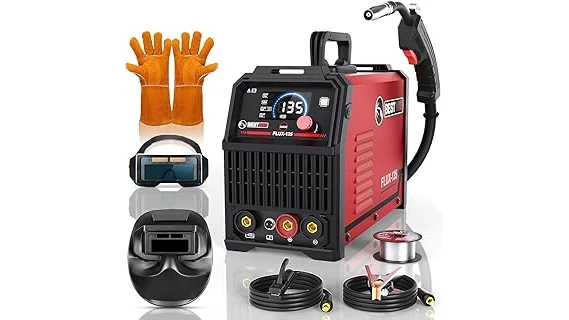
- Included Accessories: Does it come with a welding helmet, gloves, and a brush/hammer tool? These starter kits can save you money.
Common Beginner Mistakes and How to Avoid Them
Learning to weld involves a bit of practice. Here are common slips and how to keep your welds looking good:
- Not setting the correct wire speed and voltage: This leads to poor weld quality. Use the machine’s chart or auto-set feature.
- Moving too fast: Give the weld puddle time to form and cool.
- Holding the gun too far from the metal: Keep it close, as recommended by the welder’s manual or online guides.
- Not cleaning the metal properly: Rust, paint, and dirt will cause problems. Always clean your weld area.
- Incorrect gas flow: Too much or too little gas can cause issues. Follow the manufacturer’s recommendation.
Frequently Asked Questions
Question: What kind of metal can I weld with a small MIG welder?
Answer: Small MIG welders are typically great for mild steel and stainless steel. Many can also weld aluminum if they have the proper setup, like a spool gun, and the correct wire and gas.
Question: Do I need a gas bottle for my MIG welder?
Answer: Yes, most MIG welding requires a shielding gas, usually a mix of argon and CO2 (often called C25), to protect the weld pool from contamination. Some very small welders can use flux-cored wire, which doesn’t need gas, but gas welding usually gives a cleaner result.
Question: How thick of metal can I weld with a 120V MIG welder?
Answer: A typical 120V MIG welder can effectively weld steel up to about 1/4 inch (6mm) thick, sometimes a bit more depending on the machine’s amperage output and your technique.
Question: Is MIG welding harder than other types of welding for beginners?
Answer: MIG welding is generally considered one of the easier welding processes for beginners to learn because the machine feeds the wire automatically and the shielding gas is built into the process, which helps stabilize the arc.
Question: How much should I expect to spend on a good MIG welder for small projects?
Answer: For a reliable 120V MIG welder suitable for small projects and beginners, you can typically expect to spend between $300 and $700. Prices can vary based on brand, features, and included accessories.
Final Thoughts
Finding the right MIG welder for your small projects is about picking a machine that’s easy to use, has the right power for light-duty tasks, and fits your budget. You don’t need the biggest or the most expensive welder. Focus on a unit that plugs into a standard outlet and offers simple controls.
Adjustable settings for wire speed and amperage will help you learn and get good results on different types of metal. With a little practice, you’ll be making strong, clean welds on all sorts of projects around your home or workshop.
Leave a Reply