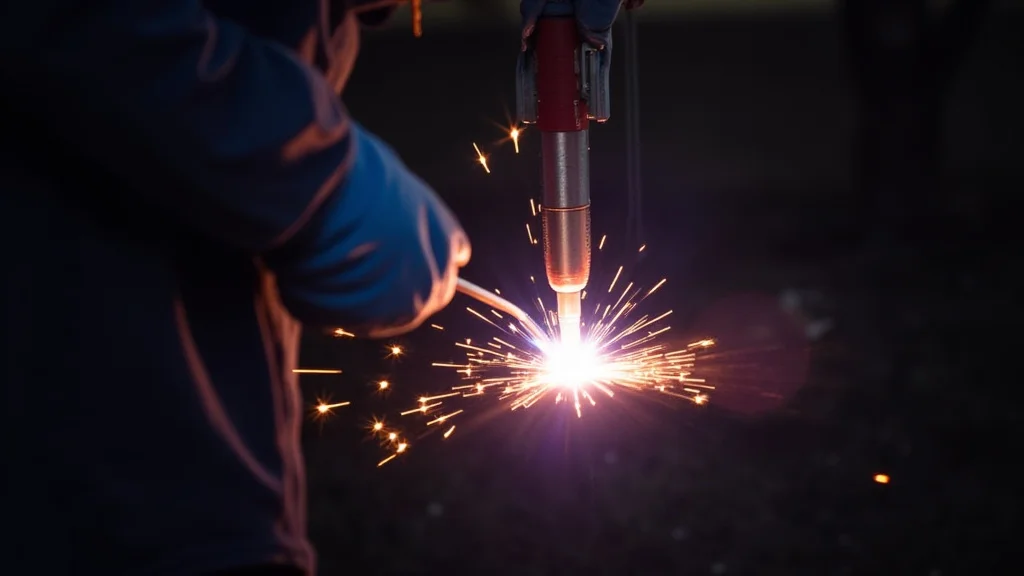
It can be tough when your TIG weld arc seems to jump around on its own. Many people starting out wonder, “What Causes TIG Weld Arc Fluctuations?” It feels like the arc has a mind of its own, and that makes getting a nice, steady weld really hard. Don’t worry, though.
We’ll break down why this happens in simple terms and show you how to fix it, step by step. Stick around to learn how to get your TIG arc nice and steady.
Key Takeaways
- You will learn the main reasons why TIG weld arcs can be unstable.
- You will discover how material cleanliness affects arc stability.
- You will understand the role of gas flow in preventing arc fluctuations.
- You will see how proper electrode setup leads to a consistent arc.
- You will learn about the impact of torch angle and travel speed.
- You will get simple tips to improve your TIG welding arc control.
Why Does My TIG Weld Arc Wander?
Getting a smooth, steady arc is the goal for any TIG welder. But sometimes, the arc just doesn’t behave. It might flicker, jump, or feel unstable.
This makes it hard to create a good weld bead. Lots of beginners get confused and frustrated when this happens. They ask, “What Causes TIG Weld Arc Fluctuations?” This common problem can stem from a few different things, and knowing them helps you fix it fast.
The Metal Matters: Cleanliness is Key
Think of the metal you’re welding like a blank canvas. If it’s not clean, the picture won’t turn out well. The same goes for TIG welding.
Dirt, oil, grease, rust, or even paint on the metal can really mess with your arc. These things can burn or vaporize when the arc hits them. This burning creates little bursts of gas and particles.
These bursts push the arc around, making it jump and flicker. It’s like trying to draw with a dirty paintbrush; you won’t get a clean line.
Always clean your metal thoroughly before you start. Use a stainless steel wire brush that’s only used for welding. You can also use acetone or a dedicated metal cleaner.
Make sure the area you’re welding is free from any contaminants. This is one of the simplest ways to get a much more stable arc.
Shielding Gas: Your Arc’s Best Friend
TIG welding uses a shielding gas, usually Argon. This gas protects the molten weld pool and the tungsten electrode from the air. Air has oxygen and nitrogen, which can cause defects in your weld.
If the shielding gas isn’t flowing correctly, the air can get into your weld. This makes the arc unstable. It’s like trying to keep a candle lit in a strong breeze; the flame will flicker and go out.
Gas Flow Rate
Too little gas, and the air gets in. Too much gas can actually disturb the arc. It can blow the molten metal around and even cause turbulence that makes the arc wander.
The right flow rate depends on a few things:
- Type of metal: Different metals might need slightly different flow rates.
- Amperage: Higher amperages often need more gas.
- Environment: Windy conditions might require a higher flow rate or a wind shield.
A good starting point for most TIG welding is around 10-20 cubic feet per hour (CFH). You can adjust this based on your setup and what you’re welding. Your gas flow meter on the regulator is important here.
Make sure it’s set correctly.
Gas Leaks
Another common issue is a leaky gas system. Check all your connections: from the cylinder to the regulator, the hose, and the torch. Even a small leak can reduce the amount of gas reaching your weld.
This lets air sneak in and cause arc fluctuations. Listen for hissing sounds, or use soapy water on the connections to find leaks.
The Tungsten Electrode: It Needs to Be Right
The tungsten electrode is what creates the arc. How you prepare and use it is super important for arc stability. A damaged or improperly shaped tungsten electrode will cause the arc to be erratic.
Electrode Grinding
For DC TIG welding (like on steel and stainless steel), you need to grind your tungsten to a sharp point. A sharp point helps to focus the arc. If the tip is balled up or rounded, the arc will spread out and become unstable.
Always grind your tungsten lengthwise, not across the tip. This creates fine striations that help the arc stay focused.
For AC TIG welding (like on aluminum), you usually want a slightly rounded tip, not a sharp point. A sharp point on AC can cause the tungsten to erode too quickly or create an unstable arc. A small balled tip is usually preferred.
Tungsten Type and Size
There are different types of tungsten electrodes. Pure tungsten and Zirconiated tungsten are mostly for AC welding. Thoriated, Ceriated, and Lanthanated tungsten are better for DC welding.
Using the wrong type can lead to poor arc performance. The size of the tungsten also matters. A tungsten that’s too thin for the amperage you’re using can overheat and cause issues.
Electrode Stickout
This is how much the tungsten electrode sticks out from the torch nozzle. If you stick it out too far, it’s more exposed to the air and the heat. This can cause it to overheat, get contaminated, or drift.
It also makes it harder to control the arc. Generally, you want the shortest possible stickout that still allows you to see your weld pool. For most applications, 1/4 inch to 1/2 inch is a good range.
Torch Angle and Travel Speed
How you hold and move your torch makes a big difference too. The angle of your torch and how fast you move it along the weld joint directly affects the arc and the weld pool.
Torch Angle
When you’re welding, you want to keep the torch at a consistent angle. Too much of a backward angle (dragging the torch) can sometimes lead to arc wander. Too much of a forward angle (pushing the torch) can cause issues with shielding gas and bead appearance.
For most TIG welding, a slight push angle is common. Keep this angle steady as you move.
Travel Speed
Moving too fast means you don’t give the weld pool enough time to form properly. This can lead to a thin, weak bead and an unstable arc. Moving too slow can cause you to build up too much heat, leading to a large, messy weld pool and potentially arc issues.
Find a speed that lets you create a consistent bead width and penetration. The molten pool should be a good size, not too big and not too small.
Amperage and Arc Length
The amount of power you’re using and how far the arc is from the metal are also key. These directly influence arc stability.
Amperage Control
If your amperage is set too high for the material thickness, you’ll have a very hot, large weld pool. This can make it harder to control the arc and the molten metal. If it’s too low, you might not get enough penetration, and the arc might seem weak or wander trying to find heat.
Keeping your amperage steady, especially if you’re using a foot pedal or fingertip control, is important.
Arc Length
This is the distance between the tip of the tungsten electrode and the surface of the metal. It’s one of the most common causes of arc fluctuations for beginners. If the arc is too long, it becomes unstable and spreads out.
It’s harder to control and can lead to porosity and other defects. If the arc is too short, you risk dipping the tungsten into the weld pool. This contaminates the tungsten and can cause splattering and arc instability.
Aim for a consistent, short arc length – just enough to see the arc clearly and control the weld pool.
Machine Settings and Power Source
Sometimes, the issue might be with your welding machine itself. The settings and the quality of the power it provides can play a role.
AC Balance and Frequency (for AC Welding)
When welding aluminum with AC, settings like AC balance and frequency are important. AC balance controls how much cleaning action versus penetration you get. If it’s not set correctly, it can affect arc stability.
AC frequency controls how focused the arc is. Higher frequencies can make the arc more stable and easier to control. Experimenting with these settings can help.
High-Frequency Start (HF Start)
Most TIG welders have a high-frequency start. This helps to start the arc without touching the tungsten to the metal. If the HF start is set too low, it might not be strong enough to establish a stable arc, or it might cut out too early.
If it’s set too high, it can interfere with the arc once it’s running. Make sure your HF settings are appropriate for your machine and application.
Power Fluctuations
Less common, but still possible, is instability in the main power supply. If the electricity coming into your shop or welding area fluctuates, it can affect the welding machine’s output and lead to arc instability. This is usually a more general electrical problem.
Your Technique: The Human Factor
Even with everything set up perfectly, your own technique can cause arc fluctuations. Consistency is key.
Hand Movement
Jerky or inconsistent hand movements can cause the torch to move erratically. This makes the arc length and angle change, leading to an unstable weld. Try to develop a smooth, steady motion.
Practicing on scrap pieces can help you get a feel for it.
Filler Metal Control
Adding filler metal also needs to be consistent. If you’re adding filler too fast, too slow, or inconsistently, it can disturb the weld pool and the arc. The filler rod should be dipped into the leading edge of the molten pool, not jabbed into the arc itself.
Troubleshooting Common Arc Fluctuation Issues
Let’s look at some specific scenarios and how to fix them.
Scenario 1: The Arc Seems “Spitty” and Uneven
Likely Causes:
- Dirty metal.
- Insufficient shielding gas or gas leaks.
- Contaminated tungsten electrode.
Solution: Clean the metal thoroughly. Check your gas flow and connections. Ensure your tungsten is clean and properly ground.
Scenario 2: The Arc Pushes Away or Jumps
Likely Causes:
- Magnetic arc blow (more common on DC welding with thick materials).
- Incorrect torch angle.
- Excessive amperage for the material.
Solution: If it’s magnetic arc blow, try changing your ground clamp position or welding direction. Ensure a consistent torch angle. Double-check your amperage setting.
Scenario 3: The Arc is Very Wide and Diffuse
Likely Causes:
- Arc length is too long.
- Tungsten electrode is balled up or too blunt (on DC).
- Shielding gas flow is too high.
Solution: Shorten your arc length. Re-grind your tungsten to a sharp point. Reduce gas flow slightly if it’s too high.
Scenario 4: The Arc Won’t Start Smoothly or Cuts Out
Likely Causes:
- Low HF start setting.
- Contaminated tungsten or base metal.
- Loose connections.
Solution: Increase HF start power. Ensure metal and tungsten are clean. Check all power and ground connections.
Frequently Asked Questions
Question: Why does my TIG arc flicker when I weld steel?
Answer: Flicker often happens if the steel isn’t clean, if your shielding gas flow is too low or too high, or if your tungsten electrode tip isn’t sharp enough. Make sure the steel is spotless and that your gas is flowing steadily. A sharp tungsten helps a lot with steel.
Question: Can my TIG machine settings cause arc fluctuations?
Answer: Yes, absolutely. Settings like amperage, high-frequency start, and for AC welding, the balance and frequency, can all affect how stable your arc is. If they aren’t right for the job, the arc can become unstable.
Question: How does gas flow rate affect the TIG arc?
Answer: The gas flow rate is critical. Too little gas lets air contaminate the weld and arc, making it unstable. Too much gas can blow the arc around and disturb the weld pool.
You need a steady, consistent flow that’s right for the job.
Question: What is the most common mistake beginners make that causes arc fluctuations?
Answer: The most common mistake is usually having too long an arc length. A consistent, short arc is vital for a stable TIG weld. Also, not keeping the metal perfectly clean is a very frequent problem.
Question: Does the type of tungsten I use matter for arc stability?
Answer: Yes, it does. Different types of tungsten are better for DC welding (like on steel) and AC welding (like on aluminum). Using the wrong type can lead to a less stable arc, faster erosion of the tungsten, or other welding issues.
Final Thoughts
When your TIG weld arc jumps around, it’s usually for simple reasons. Keeping your metal clean is number one. Make sure your shielding gas flows correctly and your tungsten electrode is properly prepared.
Pay attention to how far the tungsten sticks out and how long your arc length is. Your torch angle and how fast you move also play a big role. By focusing on these key areas, you can get a smooth, stable arc.
Practice makes perfect, so keep trying!