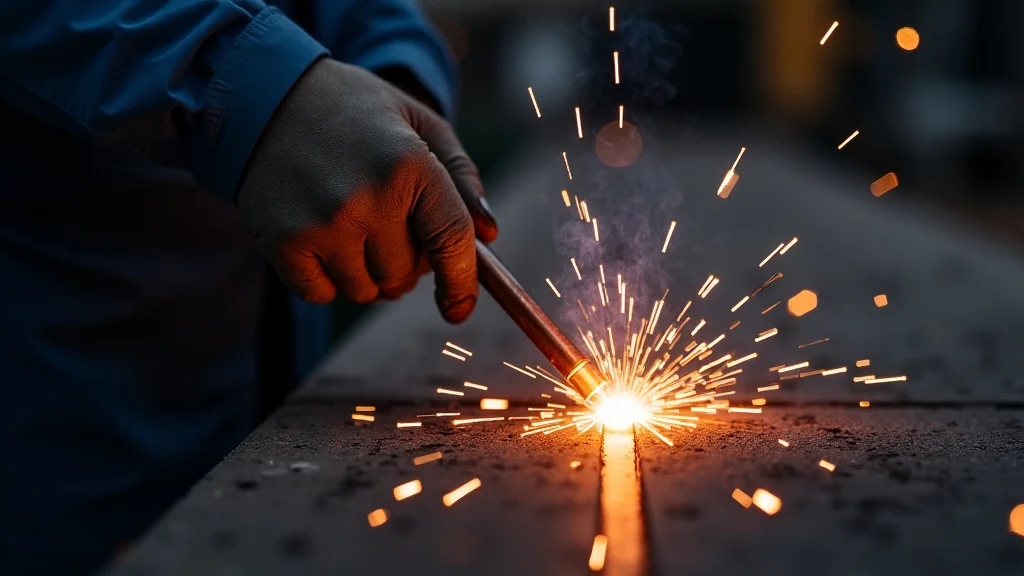
TIG welding can be tricky when the arc starts acting funny. Many new welders wonder, What Causes Arc Instability in TIG Welding? It’s a common hurdle because a steady arc is key to clean welds. Don’t worry, though!
We’ll break down why this happens in a simple way. Get ready for a step-by-step guide to fix it, and learn what makes a good TIG arc hum. Let’s start with what you need to know.
Key Takeaways
- You will learn the main reasons why a TIG welding arc can become unstable.
- Discover how incorrect settings can lead to a shaky arc.
- Understand the importance of clean base metal and filler material.
- Learn how gas flow affects arc stability and weld quality.
- Find out how the tungsten electrode impacts the arc.
- Grasp how torch angle and travel speed play a role.
Understanding Arc Instability in TIG Welding
What is a Stable TIG Arc?
A stable TIG arc is like a steady flame. It’s a consistent, focused stream of electricity that melts the metal smoothly. When the arc is stable, you get clean, strong welds.
It’s easy to control, and the weld puddle looks like liquid silver. This steadiness makes TIG welding a great process for precise work.
Why Does an Arc Become Unstable?
An unstable arc is jumpy and unpredictable. It might flicker, pop, or wander off course. This makes it hard to control the weld puddle and can lead to bad welds.
We will look at the common things that make this happen so you can fix them.
Common Causes of Arc Instability
1. Incorrect Amperage Settings
Amperage is the amount of electrical power you use. If it’s too high, the arc gets too hot and sputters. The metal can melt too fast, causing porosity or burn-through.
If the amperage is too low, the arc might be weak and hard to maintain. It won’t melt the base metal enough, leading to a weak joint.
Finding the right amperage depends on the metal type and thickness. Always check your welding machine’s guide or a reliable chart for starting points. Adjusting amperage slowly is better than making big jumps.
2. Dirty Base Metal
TIG welding needs super clean metal. Oil, grease, paint, rust, or dirt on the metal can cause problems. These contaminants burn off when the arc hits them.
This creates gases that get trapped in the weld, causing bubbles (porosity). It can also make the arc unstable, like a sputtering candle.
Always clean your metal thoroughly before you start welding. Use a stainless steel wire brush dedicated only to welding. A good degreaser can also help remove oils and grime.
The cleaner the metal, the more stable your arc will be.
3. Contaminated Filler Material
Just like the base metal, filler wire needs to be clean. If the filler rod touches anything oily or dirty, it can transfer that contamination to the weld. This causes porosity and makes the arc unstable.
Keep your filler rods in a clean container.
Avoid touching the filler rod with your hands after you’ve cleaned it. If you drop a filler rod, don’t use it until you’ve cleaned it again. A clean filler rod helps maintain a consistent arc.
4. Incorrect Shielding Gas Flow
Shielding gas, usually Argon for TIG, is very important. It protects the molten weld puddle and the tungsten from the air. Air has oxygen and nitrogen, which can ruin your weld.
If the gas flow is too low, the air gets in. This causes porosity and makes the arc unstable.
If the gas flow is too high, it can create turbulence. This turbulence can disturb the arc and pull air into the weld. It can also cause “gas inclusions” in the weld.
You should have a steady, soft flow of gas, not a strong blast. A good starting point is often 10-15 cubic feet per hour (CFH). Check your flowmeter and regulator to ensure they are working correctly.
5. Improper Torch Angle
The angle of your TIG torch matters a lot. If you hold the torch at a steep angle, you can disrupt the gas flow. This lets air in and makes the arc unstable.
It can also cause the arc to “hitch” or move around. It is best to hold the torch at a slight angle, usually about 10-15 degrees, pointing in the direction you are welding.
Keeping the torch angle consistent helps maintain a steady arc and a good weld. Avoid jerky movements with the torch. A smooth, controlled motion is key to stable TIG welding.
6. Tungsten Electrode Issues
The tungsten electrode is what creates the arc. If it’s not prepared correctly, it can cause problems. For DC welding, the tip should be ground to a sharp point.
A dull or rounded tip will make the arc spread out and become unstable. It might also wander.
For AC welding on aluminum, you often want a balled or rounded tip. This helps create a more stable AC arc. Ensure your tungsten is the right type for the metal you are welding.
Also, make sure the tungsten electrode is properly seated in the collet. A loose tungsten can vibrate and cause arc instability.
7. Incorrect Tungsten Stick-Out
How much of the tungsten electrode sticks out from the torch cup is called stick-out. If you have too much stick-out, the arc can spread out. It also makes the tungsten more likely to get contaminated.
If you have too little stick-out, the tungsten can overheat, or the cup might get in the way of the arc.
A good rule of thumb for DC welding is to have about 1/4 to 1/2 inch of tungsten stick-out. For AC welding, it can be a bit more. Experiment to find what works best for your setup.
8. Travel Speed
How fast you move the torch along the weld joint affects the arc. If you move too slowly, the metal can overheat and melt too much. This can make the arc jumpy.
If you move too fast, you won’t melt enough metal, and the arc might struggle to stay consistent. It might also create a thin, weak bead.
The right travel speed creates a steady bead width and consistent penetration. You’ll learn to recognize the right speed by watching the weld puddle and listening to the arc. Practice moving at a steady pace.
9. Arc Length
The distance between the tungsten electrode and the metal being welded is the arc length. A short arc length (close to the metal) generally creates a more focused and stable arc. It also melts the metal more effectively.
A long arc length makes the arc spread out.
A long arc is harder to control, can cause porosity, and results in a wider, flatter bead. It’s also more prone to contamination from the air. Aim for a consistent, short arc length, about the diameter of the tungsten itself.
10. Wrong Electrode Type or Size
There are different types and sizes of tungsten electrodes. Using the wrong one for the job can cause issues. For example, using a thin tungsten on a high-amperage job will cause it to overheat and break.
Using a thick tungsten on a very low-amperage job might make it hard to start a stable arc.
Common tungsten types include Pure (green, mostly for AC aluminum), Zirconiated (brown, good for AC and DC), Ceriated (grey, good for low-amperage DC), and Lanthanated (blue or gold, all-around performer). Match the tungsten to your machine’s power and the metal you’re welding.
11. Welder’s Technique
Sometimes, the issue isn’t the machine or materials, but how the welder is working. Jerky movements, inconsistent filler rod feeding, or unsteady torch control can all lead to arc instability. TIG welding requires practice and fine motor skills.
Building muscle memory through consistent practice is key. Focus on smooth hand movements and a steady rhythm. Learning to feed the filler rod consistently without bumping the arc is also vital.
12. Problems with the TIG Torch or Machine
While less common, sometimes the TIG torch itself or the welding machine can have issues. A worn-out torch liner, a damaged gas nozzle, or faulty internal components in the machine can all cause an unstable arc. If you’ve checked everything else, consider having your equipment inspected.
Ensure your torch is properly assembled and that the collet and back cap are tightened correctly. Check that your gas connections are secure. A well-maintained machine and torch are essential for a stable arc.
Troubleshooting Common Problems
Arc Starts Erratically
If your arc is hard to start or starts with a sputter, check your amperage setting. Ensure the tungsten is sharp (for DC) or properly balled (for AC). Make sure you have enough shielding gas flowing before you initiate the arc.
High-frequency start issues can also cause this.
Arc Pops or Sputters During Welding
This is often a sign of contamination. Check your base metal and filler rod for dirt, oil, or moisture. Ensure your shielding gas flow is adequate and not interrupted.
A loose tungsten electrode can also cause popping sounds.
Arc Wander or Drift
Arc wander can happen if the torch angle is too steep or inconsistent. Magnetic fields from the workpiece can also pull the arc. Ensure the work clamp is securely attached to clean metal, as far from the weld as possible.
Arc is Too Wide or Diffuse
This usually means the arc length is too long, or the tungsten is not sharp enough (for DC). Check your amperage; it might be too low, or you might need a larger tungsten electrode for the amperage you’re using.
Frequently Asked Questions
Question: What is the most common reason for an unstable TIG arc?
Answer: The most common reasons are often dirty base metal, incorrect amperage settings, or insufficient shielding gas flow. These are the first things to check.
Question: How does tungsten type affect arc stability?
Answer: Different tungsten types are designed for specific applications. Using the wrong type, like a pure tungsten for DC welding, will lead to a less stable arc and poor performance compared to an appropriate alloyed tungsten.
Question: Can travel speed really make the arc unstable?
Answer: Yes, inconsistent or incorrect travel speed can affect how the arc melts and fuses the metal. Moving too fast or too slow disrupts the molten pool and can cause the arc to become erratic.
Question: What should I do if my arc keeps blowing out?
Answer: An arc that blows out often means there is too much air disturbance. Check your shielding gas flow to make sure it’s consistent and not too high. Also, ensure there are no drafts in the welding area.
Question: Is it normal for the arc to sound different sometimes?
Answer: A healthy TIG arc makes a consistent, steady humming sound. If it starts to crackle, pop, or sound irregular, it’s a sign that something is wrong, usually related to contamination or gas flow.
Final Thoughts
Mastering TIG welding means understanding how to keep that arc steady. We’ve seen that dirty metals, wrong settings, and gas issues are the main culprits behind arc instability. You learned about cleaning your materials, setting the right amperage, and ensuring proper gas flow.
Pay attention to your tungsten’s condition and how you hold the torch. Keep practicing these steps, and your TIG welds will become much smoother and stronger. You’ve got this!