
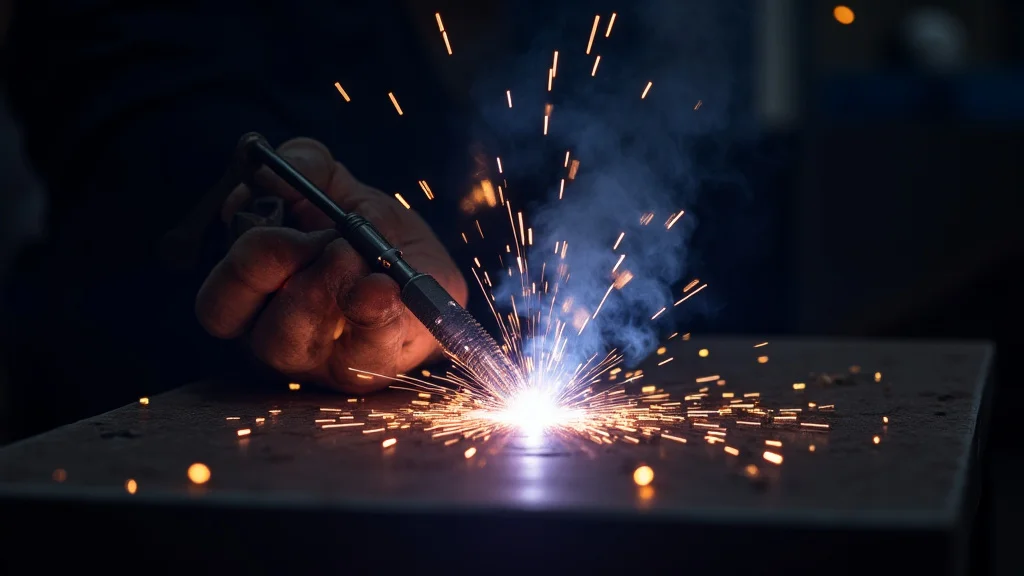
Learning to weld can feel a bit tricky at first. You might wonder about What Are the Most Common Welding Defects? It’s okay if this seems confusing; many beginners find it hard to spot them. This guide will break it down simply, step by step.
We’ll show you how to spot and fix these issues so your welds look great. Let’s get started on making your welding skills shine.
Key Takeaways
- You will learn about common welding problems beginners often face.
- We will explain what each main welding defect looks like.
- You will discover why these defects happen in the first place.
- Tips on how to prevent these common welding defects will be shared.
- Simple ways to fix or avoid these issues will be provided.
- The importance of good welding practices for strong joints will be clear.
What Are the Most Common Welding Defects?
Understanding Welding Imperfections
Welding joins metal pieces together. Sometimes, the joint doesn’t turn out perfectly. These less-than-perfect spots are called welding defects.
They can make your welds weak or look bad. Knowing what these problems are helps you fix them. It also helps you stop them from happening again.
Why Defects Matter
Defects aren’t just about looks. A bad weld can break. This can be dangerous, especially in things like bridges or cars.
For new welders, spotting and fixing these is a big step in getting better. It means your welds will be strong and safe.
Common Welding Defects Explained
1. Porosity
Porosity looks like little holes or bubbles in your weld. These holes are trapped gas. Gas gets trapped when the metal cools too fast or if the welding area is dirty.
You might see it on the surface of the weld or inside it.
Reasons for porosity include:
- Dirty metal: Grease, oil, or rust on the metal you are welding.
- Damp welding rods: If welding rods are wet, they can cause gas.
- Too much wind: If welding outside, wind can blow away the shielding gas.
- Wrong welding settings: Using the wrong voltage or amperage can cause issues.
To fix porosity, clean the metal really well. Make sure your welding rods are dry. Protect your weld from wind.
Use the right settings on your welding machine.
2. Undercut
Undercut happens when the weld metal is lower than the base metal. It looks like a small groove next to the weld. This makes the metal thinner and weaker.
Undercut often happens because:
- Welding too fast: Moving the welding torch too quickly.
- Too much heat: Using too high a voltage or amperage.
- Wrong angle: Holding the welding torch at a bad angle.
To avoid undercut, slow down your welding speed. Use the correct heat settings. Keep the torch at the right angle.
You can sometimes fix undercut by adding a little extra weld metal to fill the groove.
3. Incomplete Fusion
This defect means the weld metal didn’t fully join with the base metal. There’s a gap or a weak spot where they should have melted together. It’s like gluing two things but not using enough glue.
Causes of incomplete fusion are:
- Not enough heat: The metal didn’t get hot enough to melt together.
- Dirty metal: Dirt or rust stops the metals from mixing.
- Wrong joint design: The pieces aren’t set up well for welding.
- Fast travel speed: Moving too quickly.
To prevent this, make sure you use enough heat. Clean your metal very carefully. Prepare your joints properly.
Weld at a steady pace.
4. Spatter
Spatter is when small drops of molten metal spray away from the weld. These drops stick to the metal around the weld. It doesn’t always hurt the strength of the weld, but it looks messy and you have to clean it off.
Spatter can be caused by:
- Too high voltage: The electricity is too strong.
- Dirty metal: Oil or rust can cause spatter.
- Wrong electrode angle: Holding the welding rod at a bad angle.
- Arc length issues: The distance between the rod and the metal is wrong.
To reduce spatter, lower your voltage. Clean your metal. Keep the welding rod at the correct angle.
Maintain the right arc length.
5. Slag Inclusions
Slag is a leftover material from the welding rod or flux. If it gets trapped inside the weld, it’s called slag inclusion. This makes the weld weak because the slag isn’t metal.
Slag gets trapped when:
- Welding too fast: The molten metal covers the slag too quickly.
- Not cleaning between passes: If you weld in layers, you must clean off slag from the first layer.
- Wrong electrode angle: Pushing the slag into the weld.
To avoid this, slow down your welding. Clean each layer of weld carefully. Use the right electrode angle.
Make sure the slag floats to the surface and can be removed.
6. Cracking
Cracks are breaks in the weld. They can happen while the weld is still hot or after it has cooled down. Cracks are very bad because they completely break the metal’s strength.
Cracks can be caused by:
- Too much heat: Letting the metal get too hot and then cool too fast.
- Wrong metal type: Some metals are more likely to crack.
- Not cleaning properly: Dirt or rust can start cracks.
- Stress in the metal: When the metal is pulled or pushed unevenly.
To prevent cracks, use the correct welding heat. Choose the right welding rod for the metal. Clean the metal well.
Try to avoid putting too much stress on the weld as it cools. Sometimes, a special kind of welding rod is needed.
7. Lack of Penetration
This is similar to incomplete fusion. It means the weld didn’t go deep enough into the metal. The weld might look good on top, but the pieces aren’t joined all the way through.
This happens because:
- Not enough heat: The weld metal didn’t melt into the base metal enough.
- Wrong joint preparation: The gap between the pieces might be too small.
- Welding too fast: The weld doesn’t have time to sink in.
To get good penetration, use enough heat. Prepare your joints so the weld can reach the bottom. Weld at a controlled speed.
Tips for Preventing Welding Defects
Cleanliness is Key
Always start with clean metal. Dirt, oil, rust, and paint can all cause defects. Use a wire brush or grinder to remove anything on the surface.
This is one of the most important steps for good welds.
Use the Right Settings
Your welding machine has settings for voltage and amperage. These need to be right for the type of metal and its thickness. Check your machine’s manual or look up charts for guidance.
Wrong settings are a common cause of many defects.
Proper Technique Matters
How you move your welding torch or rod is important. Keep a steady speed. Hold the torch at the correct angle.
Try to maintain a consistent arc length. Practice makes perfect here.
Shielding Gas Protection
For some types of welding (like MIG or TIG), shielding gas is used. This gas protects the weld from the air. If the gas flow is too low or blocked, defects like porosity can happen.
Make sure the gas cylinder is on and the flow is set correctly.
Inspect Your Work
After welding, take a good look. Can you see any holes? Are there any grooves?
Is the weld smooth? Learning to spot defects yourself is a skill that grows with practice. Look at the surface and the edges of the weld.
Frequently Asked Questions
Question: What is the most common defect beginners face?
Answer: Porosity and spatter are very common for beginners. Porosity happens because of dirt or gas issues, and spatter is often from incorrect settings.
Question: How can I tell if my weld is weak?
Answer: Defects like undercut, incomplete fusion, slag inclusions, and cracks all make a weld weak. Visual inspection can help spot some, but strength tests are the surest way.
Question: Is it always possible to fix a weld defect?
Answer: Some defects can be fixed by grinding out the bad part and welding over it. However, serious defects like cracks might mean the whole weld needs to be redone.
Question: What should I do if I see slag in my weld?
Answer: You need to remove the slag. Grind it out completely. Then, re-weld the area, making sure to clean between passes if you are welding in layers.
Question: Can welding defects happen even if I’m careful?
Answer: Yes, sometimes unexpected things can happen. But by following good practices like cleaning and using the right settings, you can greatly reduce the chances of defects.
Final Thoughts
Learning about What Are the Most Common Welding Defects? is a big step for any welder. You’ve seen how porosity, undercut, incomplete fusion, spatter, slag inclusions, and cracks can happen. Knowing the causes, like dirt, wrong heat, or fast movement, helps you prevent them.
By keeping your metal clean, using correct settings, and practicing good technique, your welds will get stronger and look much better. Keep practicing, and you’ll soon be making great welds with confidence.
Leave a Reply