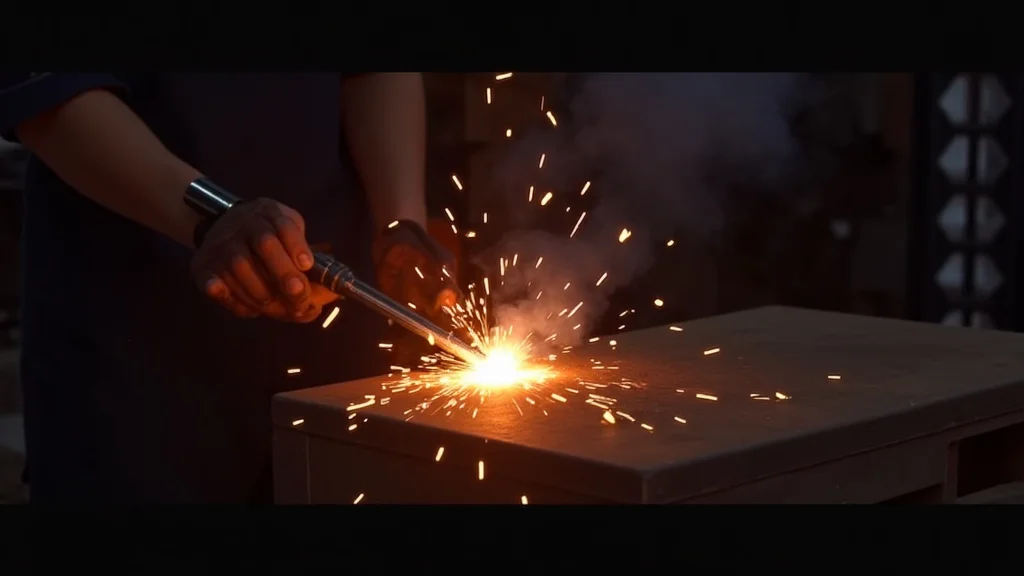
Learning to stick weld can seem tricky at first, but you’re not alone! Many people wonder, What Are the Best Tips for Stick Welding Beginners? It’s a common question because getting started involves a few key things that make a big difference. Don’t worry, we’ll break it all down super simply.
We’ll go step-by-step so you can feel confident. Ready to learn what makes stick welding easier?
Key Takeaways
- You’ll learn how to pick the right gear for stick welding.
- You’ll find out how to set up your machine correctly.
- Simple techniques for starting and keeping a good weld arc will be covered.
- Tips for making strong, clean welds will be explained.
- You’ll get advice on staying safe while welding.
Getting Started with Stick Welding
What is Stick Welding?
Stick welding, also known as Shielded Metal Arc Welding (SMAW), is a really useful way to join metal. It uses an electric arc to melt the metal and a filler rod (the “stick”) to create the bond. This arc creates a lot of heat, making the metal flow together.
A special coating on the stick burns and creates a gas. This gas shields the hot metal from the air. This stops bad stuff from getting in and making the weld weak.
It’s a tough and reliable method.
Why Beginners Find Stick Welding Challenging
For someone new to welding, stick welding can feel a bit like a puzzle. You need to get the heat just right. Too much, and you burn through the metal.
Too little, and the weld won’t stick. Keeping the arc length consistent is also a skill. It’s like trying to hold a pencil steady while drawing.
Plus, there’s the slag that forms. You have to chip it away to see your weld. These little things can make it hard to get that perfect, smooth bead when you’re just starting out.
Essential Gear for Stick Welders
The Welding Machine
Your stick welding machine is the heart of your setup. For beginners, simple is usually best. You’ll want a machine that’s easy to plug in and use.
Many machines let you adjust the amperage, which is the amount of electrical current. More amperage means more heat. You might see machines called “AC” or “DC” welders.
DC welders are often easier for beginners because they give a steadier arc. Look for a machine that’s rated for the thickness of metal you plan to weld. A good rule is to get one that’s a bit more powerful than you think you’ll need.
Electrode Holders and Ground Clamps
You need a way to hold the welding stick and connect your machine to the metal. The electrode holder is where you put the stick you’re welding with. Make sure it feels comfortable in your hand.
The ground clamp is just as important. It needs to clip onto the metal you’re working on tightly. A good connection here makes sure the electricity flows correctly.
If the clamp is loose, your weld will be weak. Think of it like a good handshake – firm and secure.
Welding Rods (Electrodes)
The welding rod is the “stick” you use. They come in many types, and each is good for different metals and jobs. For beginners, a common and forgiving rod is the 6013.
It works well on different types of steel and is good for all positions. Another good one to try is the 7018. It makes stronger welds but can be a little trickier to start.
Rods have numbers that tell you about their strength and how they work. Always check the packaging for what they’re best used for. Keep your rods dry, as moisture can make them hard to use.
Safety Gear is a Must!
Welding is not a game. Your safety is the most important thing. You absolutely need a good welding helmet that automatically darkens when the arc starts.
This protects your eyes from the bright light. Never weld without one. You also need welding gloves to protect your hands from heat and sparks.
Wear a welding jacket or thick, non-flammable clothing like cotton. Avoid synthetic fabrics. A respirator or dust mask can help if you’re welding in a place with poor ventilation.
Steel-toed boots are also a smart choice.
Setting Up Your Machine and Workspace
Amperage Settings
Setting the right amperage is key to a good weld. The packaging on your welding rods will often give you a recommended amperage range. As a general rule, thicker metal needs more amperage (more heat), and thinner metal needs less.
If your rod is sticking to the metal a lot, you might need to turn the amperage up a bit. If you’re burning holes, you probably need to turn it down. It’s a good idea to practice on some scrap metal first to find the sweet spot for your rods and machine.
Small adjustments can make a big difference.
Ground Clamp Placement
Your ground clamp needs to be attached to the metal you are welding. The connection must be clean and solid. If there’s paint, rust, or dirt where you clamp it, the connection won’t be good.
This can lead to poor welds, or the arc might not start at all. Always grind a small spot clean before attaching the ground clamp. Make sure the clamp itself is tight.
A loose clamp is a common reason for welding problems, especially for beginners.
Workspace Prep
A good workspace makes welding much easier and safer. Make sure you have enough light to see what you’re doing, but avoid direct sunlight that can mess with your helmet’s auto-darkening feature. Clear away anything flammable from the area.
Sparks can fly far! Have your tools, rods, and safety gear within easy reach. A sturdy workbench or welding table is ideal.
If you’re welding outside, try to find a spot out of the wind, as wind can blow away the shielding gas. Keep your workspace tidy.
Basic Stick Welding Techniques
Striking the Arc
This is how you start the weld. There are two common ways: scratching like a match, or tapping like a hammer.
Scratching Method: Hold the electrode near the metal and lightly scratch the tip across the surface, just like lighting a match.
Once the arc starts, pull the rod back slightly to the correct arc length.
Tapping Method: Gently tap the electrode onto the metal, then quickly pull it back slightly to establish the arc.
The goal is to start the arc quickly without the rod sticking.
Don’t be discouraged if it sticks a few times. You’ll get the hang of it with practice.
Maintaining Arc Length
Once the arc is started, keeping it the right distance from the metal is super important. The ideal arc length is usually about the same as the diameter of the welding rod. If the arc is too long, it becomes unstable, sputters a lot, and the shielding gas can be blown away, leading to a weak weld with lots of little holes.
If the arc is too short, it can dig in too much, cause the rod to stick, and create a messy weld. You’ll learn to feel and see when the arc is just right.
Travel Speed
This is how fast you move the welding rod along the joint. If you move too fast, the weld bead will be thin and won’t have enough metal to hold the pieces together. If you move too slow, you’ll build up too much metal, and the weld might look lumpy and uneven, or you might even burn through the metal.
You want to move at a steady pace that creates a nice, consistent bead of metal. Look at the puddle of molten metal. It should be about twice as wide as the rod you’re using.
As you practice, you’ll develop a feel for the right speed.
Weaving and Rod Angle
Sometimes, you might need to weave the electrode side-to-side to create a wider bead or to help control the puddle. Gentle, consistent movements are best. For most straight welds, you’ll want to hold the rod at a slight angle, usually around 10-15 degrees, in the direction you are moving.
This angle helps push the molten metal forward and get good penetration into the joint. If you’re welding uphill, the angle might change slightly to help control the molten metal from dripping down.
Making Your First Welds
Starting and Stopping
To start a weld, you strike your arc as discussed. To stop, you simply pull the electrode away from the molten puddle. You want to try and end smoothly.
Sometimes, at the end of a weld, you might get a small crater. You can fill this crater by going back over it briefly with the electrode before pulling away. This helps prevent cracks from forming in the weld.
Practice making short welds to get a feel for starting and stopping consistently.
Creating a Good Weld Bead
A good weld bead looks like a neat row of evenly spaced ripples. It should be smooth and consistent. The edges of the bead should blend well with the base metal.
You’re looking for good penetration, meaning the weld has fused deeply into the metal. Avoid welds that are too wide, too narrow, or have lots of bumps and dips. These indicate issues with your arc length, travel speed, or amperage.
Cleanliness is also part of a good weld; make sure there are no sharp edges or rough spots after you’re done.
Dealing with Slag
After you finish a weld with many types of electrodes, a hard, brittle coating called slag will form over the bead. This is normal. Once the weld has cooled down a bit, you’ll need to chip this slag off.
A chipping hammer is the tool for this job. Hit it firmly but try not to dent the metal underneath. After chipping, you might see a beautiful, smooth weld underneath.
If there are any rough spots, you can sometimes grind them smooth with a grinder. Always wear eye protection when chipping slag.
Practice Makes Perfect
Choosing Scrap Metal
Before you try welding on something important, practice on scrap pieces. Old car parts, metal shelving, or even flat sheets of steel from a scrapyard are great for this. Try to use metal that’s similar in thickness to what you’ll be welding for your actual projects.
This lets you experiment with different settings and techniques without worrying about ruining anything. Keep these scrap pieces clean and ready to go.
Practicing Different Joints
There are several ways to join metal. Practicing different types of joints will make you a more well-rounded welder. Try butt joints (joining two pieces end-to-end), lap joints (overlapping two pieces), and T-joints (joining two pieces at a right angle).
Each joint requires slightly different techniques for positioning the electrode and controlling the weld puddle. Understanding how to make a strong weld on each type of joint is a valuable skill.
Consistency is Key
The most important thing for beginners is to be consistent. Try to make every weld bead look similar. This means keeping your arc length, travel speed, and rod angle as steady as possible.
It’s better to make a lot of simple, consistent welds than to try and make one perfect, complicated weld. As you get more comfortable, you can start to tackle more challenging projects. Patience and practice are your best friends here.
Safety First, Always
Personal Protective Equipment (PPE)
We’ve mentioned it before, but it’s worth repeating. Your PPE is your shield. Always wear your auto-darkening helmet, welding gloves, and protective clothing.
Make sure your clothes are buttoned up and have no holes. Leather boots are a good idea. If you’re welding in a confined space or a place with poor air circulation, consider a respirator.
Your health and well-being are the top priority.
Ventilation and Fire Prevention
Welding fumes can be harmful to breathe. Always weld in a well-ventilated area. If you can’t get good natural ventilation, consider using a fan to blow fumes away from your face, or even better, a fume extractor.
Also, be extremely careful about fire hazards. Sparks from welding can travel a good distance. Clear the area around your work of any flammable materials like paper, rags, wood, or solvents.
Keep a fire extinguisher nearby and know how to use it. Don’t weld on or near surfaces that might have flammable liquids or gases.
Electrical Safety
Remember, stick welding uses electricity. Make sure your welding cables are in good condition, with no cracks or frayed wires. Ensure your machine is properly grounded.
Never touch the electrode holder or the electrode with bare hands. Even when the machine is off, there can be residual charge. Always follow the manufacturer’s instructions for your welding machine.
If you’re unsure about any electrical aspect, it’s best to ask someone with experience.
Frequently Asked Questions
Question: What is the best amperage to start with for stick welding?
Answer: The best amperage depends on the type and size of your welding rod and the thickness of the metal. Always check the rod’s packaging for a recommended range. For a 1/8-inch 6013 rod on common steel, you might start around 75-100 amps.
Experimenting on scrap metal is the best way to find the perfect setting.
Question: How close should the welding rod be to the metal?
Answer: The ideal distance, or arc length, is usually about the same as the diameter of the welding rod. For a 1/8-inch rod, aim for a 1/8-inch gap. Too close and the rod will stick; too far and the arc will be unstable and weak.
Question: What is the most common mistake beginners make with stick welding?
Answer: A very common mistake is not maintaining a consistent arc length. Either holding the rod too close or too far from the metal leads to problems. Other common issues include inconsistent travel speed and incorrect amperage settings.
Question: Can I stick weld aluminum?
Answer: Stick welding is generally not recommended for aluminum. It’s very difficult to get good results because aluminum melts at a lower temperature and oxidizes quickly. TIG or MIG welding are much better choices for aluminum.
Question: How do I stop my stick welding rod from sticking?
Answer: If your rod sticks, it often means the amperage is too low, or you’re holding the rod too close to the metal. Try increasing the amperage slightly or ensure your arc length is correct. A quick, sharp movement away can sometimes free a slightly stuck rod.
Final Thoughts
Learning What Are the Best Tips for Stick Welding Beginners? boils down to a few simple things. Start with the right gear. Set up your machine and workspace carefully.
Practice striking and maintaining a steady arc. Control your speed and angle to build a good weld bead. Always put safety first with proper gear and a clean workspace.
Don’t get discouraged by early attempts; every welder started somewhere. With practice, you’ll get better at making strong, clean welds. Keep it simple and keep welding!