
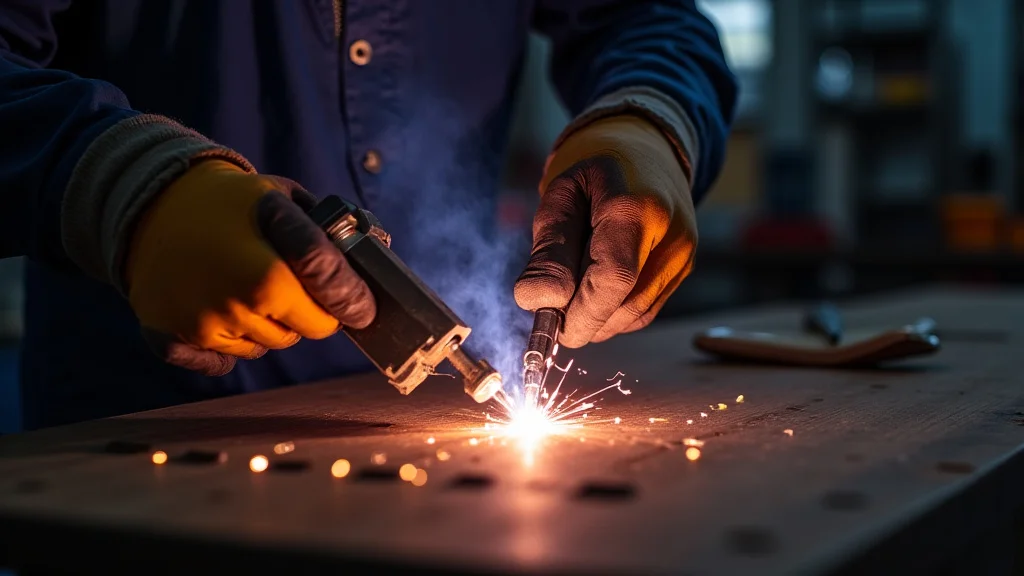
Sometimes your MIG welder’s trigger won’t work right. This can be frustrating, especially when you’re new to welding. You just want to get your project done!
But don’t worry, figuring out How to Troubleshoot MIG Welder Trigger Issues isn’t as hard as it seems. We’ll walk through it step by step to get you welding again fast. We’ll show you the common problems and simple fixes.
Key Takeaways
- You’ll learn about the most common reasons a MIG welder trigger might not work.
- We’ll explain how to check the trigger switch itself for damage.
- You’ll discover how to inspect the trigger cable for breaks or bad connections.
- We’ll cover how to clean and test the trigger assembly.
- You’ll find out how to check for issues with the wire feeder when the trigger is pressed.
- We’ll help you get your MIG welder working smoothly again.
Understanding MIG Welder Trigger Problems
Your MIG welder’s trigger is the command center for everything. When you squeeze it, a few things need to happen instantly. The wire needs to start feeding, the gas needs to flow, and the welding voltage needs to turn on.
If any part of this chain breaks, you won’t get a weld. For beginners, this can be confusing because there are several parts involved. It’s not just one simple switch.
Why Does the Trigger Stop Working?
Several things can cause your MIG welder trigger to act up. Think of it like a simple electrical circuit. If a wire is loose, broken, or a switch is bad, the circuit can’t complete.
Dust, debris, or simple wear and tear are often the culprits. Sometimes, it’s something as simple as a bad connection that can be fixed quickly.
Common Trigger Issues
The most common problems boil down to a few areas. The trigger switch itself might be faulty. The wire that connects the trigger to the welder could be damaged.
The gas solenoid valve, which lets the shielding gas flow when the trigger is pulled, might not be working. Lastly, the wire feeder mechanism could be jammed or malfunctioning, preventing wire from coming out even if the electrical signal is sent.
Troubleshooting Steps for MIG Welder Triggers
Let’s break down how to fix your MIG welder trigger. We’ll start with the easiest things to check and move to more involved steps. Always make sure your welder is unplugged before you start working on it.
Safety first!
Step 1: Check the Basics – Power and Gas
Before you blame the trigger, make sure the welder has power. Is it plugged in securely? Is the circuit breaker for the outlet tripped?
Check your gas bottle too. Is the valve open? Does it have enough gas?
If these are all good, you can move on.
Step 2: Inspect the Trigger Switch
The trigger switch is inside the gun handle. You’ll need to remove the handle cover. Look for any obvious damage.
Are the wires connected firmly to the switch terminals? Sometimes, a wire can become loose. If you see a loose wire, gently push it back onto the terminal.
If the switch looks physically broken or corroded, it might need to be replaced.
Checking the Switch Connections
On most MIG guns, there are two small wires that connect to the trigger switch. These are usually a light color, like blue or white. Make sure they are tight.
You can often gently pull on them to test the connection. If they feel loose, you might need to crimp them a little tighter or consider replacing the switch if it’s damaged.
Testing the Switch
If you’re comfortable with a multimeter, you can test the switch. With the welder unplugged, disconnect the wires from the switch. Set your multimeter to continuity mode.
Touch the probes to the two terminals on the switch. When you squeeze the trigger, the multimeter should beep or show a low resistance, indicating continuity. When you release the trigger, it should stop beeping, showing no continuity.
Step 3: Examine the Trigger Cable and Plug
The trigger cable runs from the gun handle down to the welder. Check the entire length for any cuts, kinks, or damage. Pay close attention to where the cable enters the gun and where it plugs into the welder.
The plug itself can get damaged or have bent pins.
The Welder Plug
The plug that connects to your welder has several pins. These pins carry the signal from the trigger to the welder’s internal components. Look for any bent or broken pins.
Also, check the socket on the welder for any debris or damage. A bent pin in the plug or a dirty socket can prevent the trigger signal from getting through.
Cable Connections Inside the Welder
Sometimes, the trigger wires connect to a terminal block inside the welder. You might need to open the welder’s main casing (again, with it unplugged!) to check these connections. Look for loose wires or corrosion on the terminals.
Ensure the trigger wires are securely attached.
Step 4: Check the Wire Feeder System
If the trigger switch seems to be sending a signal, but the wire isn’t feeding, the problem might be in the wire feeder. First, check if the drive rolls are properly engaged and clean. Make sure the tension on the drive rolls is set correctly – not too tight, not too loose.
Wire Spool Issues
Is the wire spool installed correctly? Is the wire unwinding freely? Sometimes, the wire can get tangled or kinked on the spool, preventing it from feeding.
Unspool a few feet of wire to ensure it’s moving smoothly.
Drive Roll Tension
The drive rolls are what push the welding wire through the liner. If the tension is too low, the rolls will slip. If it’s too high, it can damage the wire or make it hard for the motor to turn.
You want just enough pressure to grip the wire without deforming it.
Step 5: Inspect the Gas Solenoid Valve
When you pull the trigger, a solenoid valve opens to allow shielding gas to flow. If this valve isn’t working, you won’t get gas, and the welder might not even start the wire feed. This is usually located inside the welder.
You might hear a faint click when the trigger is pulled if it’s working. If you don’t hear it, and the electrical connections are good, the solenoid might be faulty.
Step 6: Clean and Lubricate
Dust and grime can build up in moving parts. Gently clean the trigger switch area and any other accessible mechanical parts. Some welders recommend a light lubricant on certain moving parts, but always consult your owner’s manual before applying any lubricants, as the wrong type can cause more problems.
When to Seek Professional Help
If you’ve gone through these steps and your trigger still isn’t working, it might be time to call a qualified repair technician. Some internal components can be complex, and it’s best to leave them to the experts. Trying to fix advanced electrical issues without proper knowledge can be dangerous and could cause more damage.
FAQ Section
Question: My MIG welder trigger sometimes works and sometimes doesn’t. What could be the issue?
Answer: Intermittent issues often point to a loose wire connection somewhere in the trigger circuit, the cable, or the plug. Wiggle the cable gently while holding the trigger to see if you can reproduce the problem. It could also be a worn-out trigger switch that isn’t making solid contact.
Question: The wire feeds, but no gas comes out when I pull the trigger. What’s wrong?
Answer: This usually means the gas solenoid valve inside the welder isn’t opening. Check that your gas bottle valve is open and the regulator is set correctly. If those are fine, the solenoid itself might be faulty or the electrical signal isn’t reaching it.
Question: My trigger feels mushy and doesn’t have a crisp click. What should I do?
Answer: A “mushy” trigger can indicate that the internal mechanism of the trigger switch is worn or damaged. It might need to be replaced. Also, check for any obstructions around the trigger assembly that might be preventing it from moving freely.
Question: I accidentally pulled a wire off the trigger switch. Can I just reattach it anywhere?
Answer: No, wires need to be connected to the correct terminals. Look for labels on the switch or consult your welder’s manual for the correct wiring diagram. Reconnecting wires incorrectly can damage the welder.
Question: My wire feeder motor hums but doesn’t turn the wire when I pull the trigger. What’s the problem?
Answer: This suggests the motor is receiving power, but it can’t overcome resistance. Check the drive rolls for correct tension and ensure they are clean and gripping the wire. Also, inspect the liner inside the welding cable for any kinks or blockages that might be preventing the wire from feeding through.
Final Thoughts
Fixing MIG welder trigger problems can seem tricky, but it’s often quite manageable. You’ve learned about checking power, inspecting the trigger switch and cable, and looking at the wire feeder. These simple checks can get your welder back to working order.
Don’t be afraid to take things apart gently to see what’s going on. With a little patience, you can solve most trigger issues yourself and get back to your welding projects with confidence.
Leave a Reply