
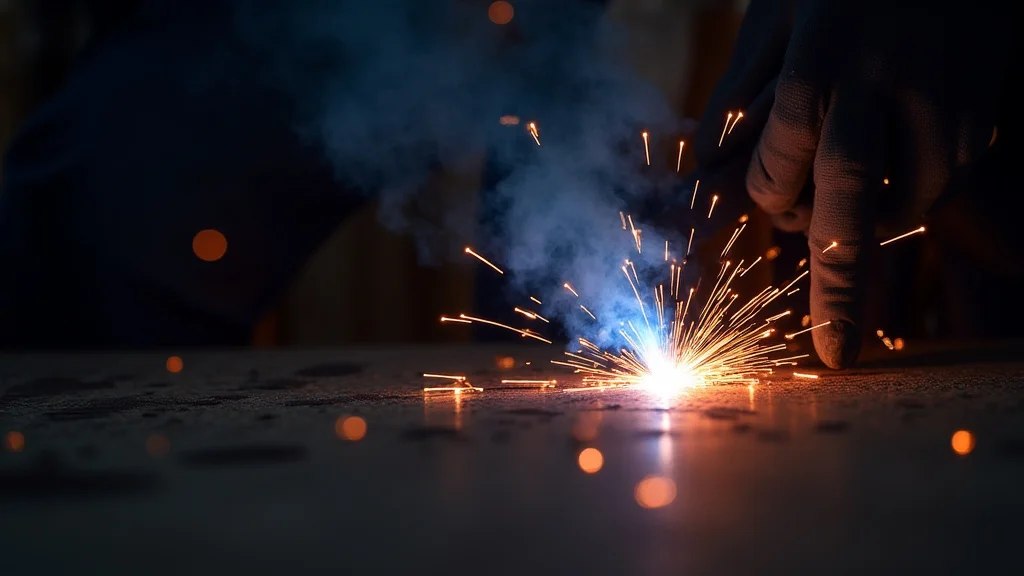
Getting a steady, clean bead when you’re MIG welding can seem tricky at first. Many beginners find How to Maintain Consistent Arc in MIG Welding a real challenge. You want that smooth, even look, but sometimes it feels like your torch is dancing on its own!
Don’t worry, it’s a common hurdle, and we’ll break it down. This guide will give you simple steps to get your MIG arc singing. Let’s look at what makes a good weld and how you can achieve it every time.
Key Takeaways
- Understanding the right wire speed and voltage is key to a stable arc.
- Proper gun angle and travel speed create a smooth, consistent weld bead.
- Maintaining the correct stickout helps control heat and prevent spatter.
- Knowing how to listen to your weld sound gives clues about arc stability.
- Practice with different materials and thicknesses builds confidence and skill.
- Clean metal is essential for a strong, consistent MIG weld.
What is a Consistent Arc in MIG Welding?
The Perfect Connection
A consistent arc in MIG welding is like a steady handshake. It means the electricity flowing from your welding wire to the metal you’re joining is smooth and unbroken. This steady flow creates a stable puddle of melted metal.
When you have this, your welds look clean, strong, and don’t have a lot of messy spatter. It’s the goal for any welder, whether you’re just starting or have been doing it for years.
Why It Matters
A consistent arc isn’t just about looks. It’s about making sure your weld is strong and holds up. If your arc is jumpy, the weld might have weak spots or be brittle.
This can lead to problems later on, especially if the metal needs to handle any stress. Think of it like building a house; you need a strong foundation for everything else to be solid.
Understanding the Basics: Your MIG Welder’s Settings
Wire Speed: The Flow of Metal
Your MIG welder has a wire speed setting. This controls how fast the welding wire feeds out of the gun. Think of the wire as the filler material that melts to join your pieces.
If the wire goes too fast, it can push too much metal into the puddle, making it unstable. If it’s too slow, you might not get enough filler metal, and the arc can become long and erratic.
Finding the sweet spot for wire speed is very important. It works hand-in-hand with your voltage setting. Most welders have a chart that suggests good starting points based on the type of metal and its thickness.
Always check this chart!
Voltage: The Electrical Push
Voltage is like the electrical “push” that drives the arc. It affects the width and shape of your weld puddle. Too low a voltage, and the arc can be weak, leading to a narrow, tall bead.
Too high a voltage, and the arc gets long and spattery, creating a wide, flat, and often weak weld. You want a nice, even puddle that spreads out just right.
Voltage settings often work together with wire speed. Many modern MIG welders have a synergic feature. This means when you set the wire speed, the welder automatically suggests a good voltage.
This makes it much easier to get started, especially when you’re learning How to Maintain Consistent Arc in MIG Welding.
Your Torch: The Key to a Steady Hand
Stickout: The Gap Matters
Stickout is the length of the welding wire that sticks out from the tip of your MIG gun. This is a really important factor for a stable arc. If the stickout is too short, the wire gets too hot before it even reaches the puddle.
This can cause it to melt back into the tip, creating a lot of spatter and an unstable arc.
On the other hand, if the stickout is too long, the wire can bend or wobble. This makes the arc jumpy and harder to control. A good rule of thumb for most MIG welding is to have a stickout of about 3/8 to 1/2 inch.
Always try to keep this consistent as you weld.
Gun Angle: Pointing in the Right Direction
The angle at which you hold your MIG gun also makes a big difference. For most general welding, you’ll want to hold the gun at a slight push angle. This means you’re pushing the gun forward, in the direction you’re welding.
A slight push angle helps to get good fusion with the base metal and keeps the arc from getting too wide.
If you drag the gun (pull it backward), the arc tends to be more erratic, and you might get more spatter and a less controlled bead. Imagine painting a wall; you want to push your brush smoothly, not yank it. The same idea applies to your MIG gun.
Keep that angle steady!
Travel Speed: The Pace of the Puddle
Travel speed is how fast or slow you move your MIG gun along the joint. This is super important for creating a consistent bead. If you move too fast, you won’t give the metal enough time to melt and flow properly.
This results in a narrow, weak weld that looks like it’s just been taped on.
If you move too slowly, you can overheat the metal. This can cause the puddle to get too large, leading to a wide, flat bead that might even burn through the metal, especially on thinner materials. The goal is to move at a steady pace, keeping up with the molten puddle.
You want the puddle to be a good size, not too big and not too small.
The Sound of a Good Weld
Listen Up!
Believe it or not, your MIG welder makes a sound when it’s working well. A consistent arc sounds like a steady sizzle or a bacon frying sound. It’s a smooth, consistent noise.
If the sound changes a lot, becoming crackly, popping, or very loud, it’s a sign that your arc might be unstable. This is your ears telling you to check your settings or technique.
Pay attention to how the weld sounds as you move. If you hear pops and crackles, you might need to adjust your wire speed or voltage, or check your stickout and travel speed. Learning to listen to your weld is a great way to troubleshoot and maintain a steady arc.
Metal Preparation: A Clean Start
Why Cleanliness is Key
Before you even strike an arc, the metal you’re welding needs to be clean. This is often overlooked by beginners, but it’s crucial for a good, consistent weld. Dirt, rust, paint, oil, or any other gunk on the metal can get into the molten puddle.
This contaminates the weld, making it weaker and causing lots of spatter and an unstable arc.
For steel, you can use a wire brush or sandpaper to clean the area you’ll be welding. For aluminum, special cleaning methods are needed. Always make sure your work surface and the metal pieces are free of anything that could interfere with a clean melt.
Practice Makes Perfect
Different Materials, Different Settings
MIG welding isn’t one-size-fits-all. The best settings and techniques can change depending on the type of metal you’re welding (like steel, stainless steel, or aluminum) and how thick it is. Thinner metals require lower settings and faster travel speeds to prevent burn-through, while thicker metals need more heat and slower speeds.
Don’t be afraid to grab some scrap pieces of metal and practice. Try different wire speeds and voltages. See how changing your stickout or travel speed affects the weld.
The more you practice, the better you’ll get at recognizing what a good, consistent arc feels and looks like.
Troubleshooting Common Arc Issues
Long, Stringy Arc
If your arc seems too long and “stringy,” it’s usually a sign of too much voltage or not enough wire speed. The wire is feeding too slowly for the amount of electrical power you’re sending through it, causing it to stretch out. Try increasing your wire speed slightly or decreasing your voltage a bit.
Short, Sticking Arc
A short, sticking arc, where the wire seems to almost weld itself to the tip, is often caused by too little voltage or too much wire speed. The wire is feeding too fast for the voltage, and it’s not getting enough “push” to maintain a stable gap. Try decreasing your wire speed or increasing your voltage.
Excessive Spatter
Lots of little metal droplets flying around (spatter) usually means your settings are off, or your stickout is too long. It could be too high a voltage, too low a wire speed, or the wire is extending too far from the gun. Make sure your metal is clean too, as contaminants can cause spatter.
Weld Puddle Too Wide or Too Narrow
A puddle that’s too wide might mean your voltage is too high or your travel speed is too slow. A puddle that’s too narrow could indicate too low a voltage or too fast a travel speed. The goal is a puddle that’s about as wide as a dime or nickel, allowing you to control it easily.
Frequently Asked Questions
Question: What is the most common mistake beginners make with MIG welding arcs?
Answer: Beginners often have trouble finding the right balance between wire speed and voltage. They might set one and forget the other, leading to an unstable arc.
Question: How does gun angle affect the MIG arc?
Answer: A slight push angle helps create a stable, controlled arc and a good weld bead. Dragging the gun can lead to a jumpy arc and more spatter.
Question: Should I worry about the sound my MIG welder makes?
Answer: Yes, the sound is a great indicator. A steady sizzle means a good arc, while crackling or popping suggests an issue with settings or technique.
Question: Does cleaning the metal really make that much difference?
Answer: Absolutely. Dirt, rust, and paint on the metal can cause a lot of problems, including an inconsistent arc, lots of spatter, and weak welds.
Question: How can I improve my travel speed for a consistent arc?
Answer: Practice moving at a steady pace that keeps up with the molten puddle. Watch the puddle and adjust your speed to keep it a consistent, manageable size.
Final Thoughts
Getting that perfect, steady arc in MIG welding is all about a few key things. It’s about getting your machine’s settings right, especially the wire speed and voltage. Your hand matters too; keeping your gun angle, stickout, and travel speed consistent makes a huge difference.
Remember to always start with clean metal for the best results. Listen to the sound your weld makes, and practice on scrap pieces. You’ll quickly learn what a good arc feels like and how to keep it there.
You’ve got this!
Leave a Reply