
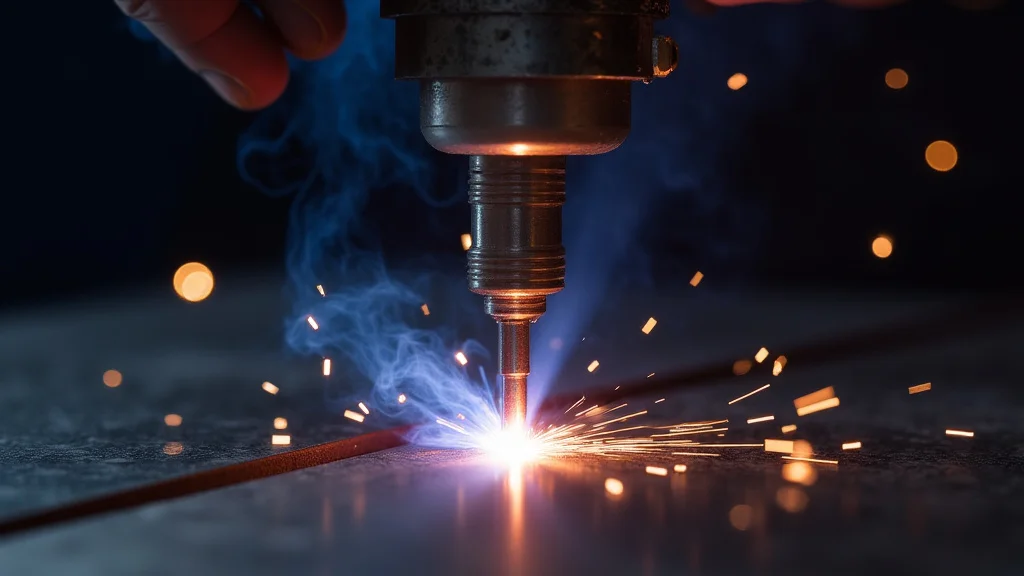
Learning How to Improve MIG Arc Stability on Thin Sheet Metal can feel tricky at first. Many beginners find it hard to get a smooth, steady weld without burning through. Don’t worry!
This guide will show you simple, step-by-step tips to get a great weld every time. We’ll cover the main reasons for shaky arcs and how to fix them easily. Get ready to weld thin metal like a pro!
Key Takeaways
- You will learn why thin metal is tough for MIG welding.
- Simple adjustments to your MIG welder settings make a big difference.
- Understanding your wire feed speed is key to a stable arc.
- The right voltage setting prevents too much heat on thin metal.
- Choosing the correct gas mixture helps control the arc.
- Proper welding technique is just as important as machine settings.
Understanding the Challenge of Thin Sheet Metal
Welding thin sheet metal with a MIG welder is a common challenge for people just starting out. It’s like trying to cook a delicate egg – too much heat, and it burns. Too little, and it doesn’t cook.
With thin metal, the heat from the welding arc can go through it really fast. This often causes “burn-through,” where you end up with a hole instead of a weld. It can also make the arc jumpy and unstable, creating a messy, weak weld.
This jumpy arc, or lack of stability, happens because the thin metal heats up so quickly. The molten pool of metal can move around more easily. This movement affects how the electricity flows from your welding wire to the metal.
A stable MIG arc is like a steady stream of water; it melts the metal smoothly and joins it together nicely. An unstable arc is more like a sputtering faucet, making it hard to control.
The Core Settings: Voltage and Wire Speed
The two most important settings on your MIG welder for thin metal are voltage and wire feed speed (WFS). Getting these right is the first step to a stable arc. Think of them as a team working together.
If one is off, the whole weld can suffer.
Wire Feed Speed (WFS) Explained
Your wire feed speed controls how fast the welding wire comes out of the gun. When you’re welding thin metal, you want a slower wire feed speed. This means less molten metal is being added to the weld pool at any given moment.
If the wire feed speed is too high, you’re adding too much metal too quickly. This creates a larger, hotter weld pool. This can easily lead to burn-through.
It also makes the arc unstable because the wire is pushing more metal than the base material can handle.
A good starting point for thin sheet metal is to set your wire feed speed lower than you would for thicker materials. You should aim for a smooth, consistent feeding of the wire. If the wire seems to be pushing too hard or creating a lot of spatter, your WFS is likely too high.
Voltage and its Role
Voltage controls the arc length. A higher voltage creates a longer, hotter arc. A lower voltage creates a shorter, cooler arc.
For thin sheet metal, you need to keep the heat down to avoid burn-through. This means using a lower voltage setting.
If your voltage is too high, the arc will be very wide and spattery. The molten metal will be too fluid, and you’ll have a hard time controlling it. This instability makes it easy to lose control of the weld puddle and create holes.
Setting the voltage too low can also cause problems. The arc might become “stubby” or have trouble melting the base metal properly. This can result in a weak weld.
The goal is to find the sweet spot where the arc is stable, the wire melts smoothly, and you have good control over the weld puddle.
The Relationship Between Voltage and Wire Speed
Voltage and wire feed speed are closely related. They work as a pair. Most modern MIG welders have a recommended chart or setting that shows good combinations of voltage and WFS for different metal thicknesses.
If you increase your wire feed speed, you often need to slightly increase your voltage as well. This ensures that the extra wire being fed melts properly. If you don’t adjust the voltage, the wire might not melt fast enough, leading to a “sticking” or “bird’s nest” effect.
Conversely, if you decrease your wire feed speed, you should also decrease your voltage. This keeps the arc length and heat input balanced. When welding thin metal, you’re typically looking for a lower WFS and a lower voltage setting.
This combination provides less heat and a more controlled weld puddle.
Shielding Gas: Your Arc’s Best Friend
The shielding gas you use plays a big part in arc stability. For MIG welding, you’re typically using a gas or a gas mix to protect the weld pool from the air. Air contains oxygen and nitrogen, which can cause defects in the weld if they get into the molten metal.
Common Gas Choices for Thin Metal
For welding steel, especially thin steel, a common choice is a mix of Argon and Carbon Dioxide (CO2). This is often called a “C25” mix, meaning it’s about 75% Argon and 25% CO2. However, for very thin metal, a mix with less CO2 is often better for arc stability.
A mix like 90% Argon and 10% CO2 can provide a smoother, more controlled arc. The lower CO2 content means less “spray” in the arc, which can be too hot and unstable for thin materials. Argon is a noble gas and helps create a stable, less aggressive arc.
Some welders might even use pure Argon for very thin steel or aluminum. Pure Argon creates a very soft, stable arc. However, it doesn’t offer as much penetration as gas mixes with CO2.
For steel, a small amount of CO2 or Oxygen (like a 98% Argon / 2% CO2 mix) can help with penetration without making the arc too wild.
Make sure your gas flow rate is set correctly. Too much gas can create turbulence in the weld puddle and actually pull contaminants in. Too little gas won’t provide enough protection.
A good starting point for gas flow is usually around 15-20 cubic feet per hour (CFH).
Choosing the Right Welding Wire
The type of welding wire you use also matters. For general steel welding, solid wire is common. The diameter of the wire is important for thin metals.
For thin sheet metal (18 gauge or thinner), you’ll want to use a smaller diameter wire. Common sizes are 0.023 inches (0.6 mm) or 0.025 inches (0.64 mm). These smaller wires use less electricity and add less metal to the weld pool, making them easier to control.
Using a larger wire on thin metal is like trying to fill a small hole with a fire hose – it’s too much. The larger wire requires more heat to melt, and it deposits more metal, increasing the risk of burn-through and arc instability.
Self-shielded flux-cored wire is another option, but it often produces a hotter, more spattery arc that can be harder to control on thin materials. For improved arc stability on thin sheet metal, solid wire with the right gas is usually preferred.
Technique: The Human Element
Even with perfect settings, your welding technique is crucial. How you move the welding gun and hold it makes a big difference.
Travel Speed
Your travel speed is how fast you move the welding gun along the joint. For thin metal, you need to move at a consistent pace. If you move too slowly, you’ll put too much heat into one spot and burn through.
If you move too fast, the weld won’t have enough time to form properly, and it will be weak.
Aim for a speed that allows the weld puddle to form and solidify behind the arc without burning through. It’s often described as a “walking the puddle” motion, where you’re guiding a small, controlled pool of molten metal.
Torch Angle and Contact Tip to Work Distance
Hold the welding gun at the correct angle. For MIG welding, a slight push angle is often recommended. This means the gun is angled slightly forward in the direction of travel.
This helps control the weld puddle and directs the shielding gas effectively.
The distance between the contact tip (the part at the end of the gun that the wire comes through) and the metal you’re welding is called the stick-out. For thin metal, a consistent, slightly longer stick-out (around 1/2 inch or 1.2 cm) can sometimes help create a more stable arc by providing a little more distance and control. However, keep it consistent.
An inconsistent stick-out will lead to an inconsistent arc.
Pulsed MIG Welding
Some advanced MIG welders have a “pulsed” setting. Pulsed MIG welding is excellent for thin materials. It works by alternating between a high peak current and a lower background current.
The high current melts the wire and the base metal, while the lower background current lets the weld puddle cool slightly. This cycle reduces the overall heat input and helps prevent burn-through. It also creates a very stable, controlled arc, often resulting in a nice, even bead with less spatter.
If your welder has this feature, it’s a fantastic tool for thin sheet metal.
Common Mistakes and How to Fix Them
Let’s look at some common issues and how to correct them.
- Burn-through: If you’re burning through, your heat input is too high. Try reducing your voltage and wire speed. Check your travel speed; you might be moving too slowly. Make sure you’re using the correct gas and wire size.
- Spatter: Excessive spatter can be caused by several things. Your voltage might be too high. Your wire feed speed could be too fast, or your travel speed too slow. Incorrect gas flow or wrong gas mixture can also cause spatter. Try adjusting these settings.
- Weak or Inconsistent Weld: If your weld is weak or looks lumpy, your arc might be unstable. Check your WFS and voltage. Ensure your shielding gas is flowing correctly and your contact tip is clean. A dirty or damaged contact tip can cause arc issues.
- Arc Won’t Start Smoothly: This can happen if your voltage and WFS are not balanced. Also, ensure your ground clamp is making good, clean contact with the metal. A poor ground connection can lead to a weak or erratic arc.
Troubleshooting Guide: Quick Fixes
Here’s a quick guide to help you fix common problems related to arc stability on thin sheet metal:
| Problem | Likely Cause | Solution |
|---|---|---|
| Jumpy, Unstable Arc | Voltage too high or too low | Adjust voltage down if jumpy and hot; up if arc is “popping” |
| Arc Won’t Dig In | Voltage too low, WFS too low, or wrong gas | Slightly increase voltage, WFS, or check gas mix |
| Excessive Spatter | Voltage too high, WFS too high, or incorrect gas | Lower voltage, lower WFS, check gas type and flow rate |
| Wire Sticking to Tip | WFS too high or contact tip dirty/worn | Lower WFS, clean or replace contact tip |
| Arc “Popping” or “Snapping” | Voltage too low or WFS not matched | Slightly increase voltage or adjust WFS to match |
FAQ
Question: What is the most common mistake beginners make when welding thin sheet metal?
Answer: Beginners often use too much heat by setting their voltage and wire speed too high, leading to burn-through and an unstable arc.
Question: Should I use flux-cored wire or solid wire for thin metal?
Answer: Solid wire with the correct shielding gas is generally preferred for thin metal because it offers more control over heat input and a more stable arc compared to flux-cored wire.
Question: How much should I adjust my settings when going from thicker metal to thin metal?
Answer: You will need to significantly reduce both your voltage and wire feed speed when switching to thinner materials to avoid burn-through.
Question: Is a pulsed MIG setting really that helpful for thin sheet metal?
Answer: Yes, pulsed MIG is very effective for thin metal. It greatly reduces the overall heat input, allowing for better control and preventing burn-through while maintaining arc stability.
Question: How do I know if my shielding gas is set correctly?
Answer: You should see a steady, quiet arc with minimal spatter. If you see excessive spatter or the arc is erratic, your gas flow might be too high, too low, or the gas mixture might be incorrect.
Final Thoughts
Mastering How to Improve MIG Arc Stability on Thin Sheet Metal is achievable with the right knowledge. You’ve learned that controlling heat through proper voltage and wire feed speed is key. Understanding how your shielding gas and wire size contribute to a steady arc is also vital.
Don’t forget that your technique, like travel speed and torch angle, plays a huge role. By applying these simple, step-by-step tips, you can build confidence and produce clean, strong welds on thin metal. Keep practicing, and you’ll see great results!
Leave a Reply