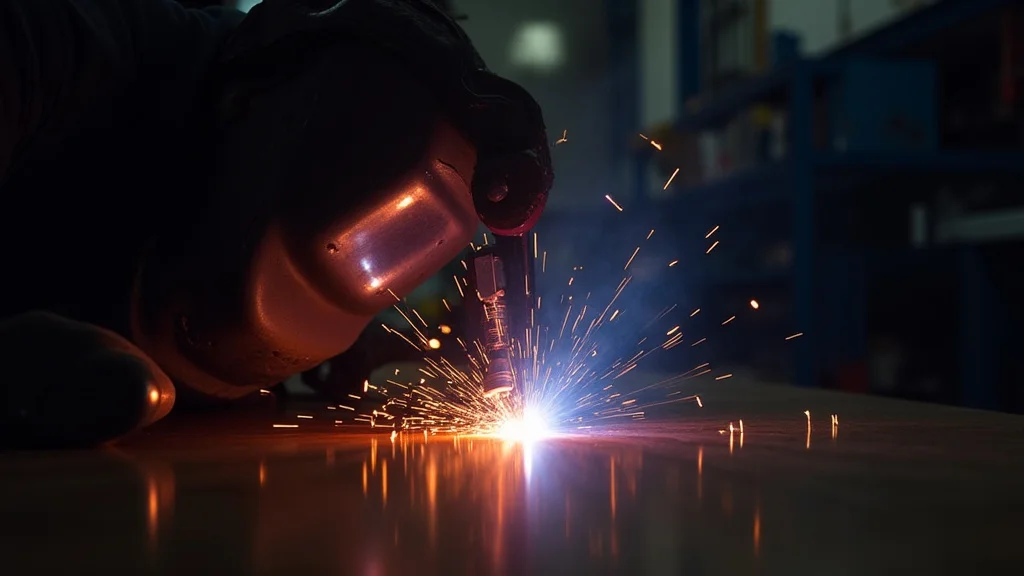
MIG welding can be super helpful for many projects. But sometimes, the welding arc just doesn’t behave right. This can make beginners feel a little stuck when they’re trying to learn How to Improve Arc Stability in MIG Welding.
Don’t worry! It’s a common thing to face when you’re starting out. We’ll go through some simple steps that will make your welding arc smooth and steady.
Get ready to see your welds get much better!
Key Takeaways
- You will learn what makes a MIG welding arc stable.
- You will discover how wire speed affects arc stability.
- You will understand the role of voltage in a steady arc.
- You will see how stick-out length impacts arc behavior.
- You will find out why proper shielding gas is important.
- You will learn how to choose the right welding gun angle.
What is Arc Stability in MIG Welding?
A stable arc in MIG welding means the welding arc is smooth and consistent. It sounds like a quiet sizzle, not a loud crackle or pop. When the arc is stable, it’s easy to control.
This leads to clean, strong welds. An unstable arc is jumpy. It can cause spatter, which is molten metal flying out.
It also makes it hard to create good-looking welds.
Why is a Stable Arc Important?
For anyone learning MIG welding, getting a stable arc is a big deal. It’s the foundation for making good welds. When the arc is steady, you can focus on moving your gun.
You don’t have to fight the welding arc itself. This helps you build confidence. Stable arcs also mean less cleanup.
You get fewer weld defects like porosity or inclusions. This saves you time and frustration.
Factors Affecting Arc Stability
Several things can make your MIG welding arc stable or unstable. Getting these right is key to good welding. Think of them as settings on your machine and how you hold the gun.
Wire Speed
Wire speed is how fast the welding wire feeds out of the gun. If the wire feeds too fast, it can push into the weld pool too hard. This can make the arc unstable.
If it’s too slow, you might not have enough filler metal. This can also cause problems. Finding the right balance is important.
Think of it like this: you need a steady stream of metal to melt. Too much, and it overflows. Too little, and there’s not enough to fill the gap.
The right wire speed helps the wire melt off smoothly. This keeps the arc steady.
Voltage
Voltage controls the length of the welding arc. It’s like the power that keeps the electricity jumping from the wire to the metal. If the voltage is too low, the arc might be short and stubby.
This can cause spatter. If the voltage is too high, the arc can get long and wavy. This can lead to poor weld penetration and a rough weld.
A good voltage setting creates an arc that’s just right. It’s long enough to melt the wire and the base metal properly. But it’s not so long that it starts to wander.
This gives you a nice, controlled melt. You’ll often find recommended voltage settings based on the wire you’re using and the metal thickness.
Stick-Out (Wire Extension)
Stick-out is the length of the welding wire that sticks out from the tip of your welding gun. A common recommendation is to keep the stick-out between 1/4 inch and 1/2 inch. If you have too much stick-out, the wire can start to wobble.
When the wire wobbles, the arc becomes unstable. It can also lead to less efficient melting. If the stick-out is too short, you might get too much heat into the gun.
This can cause problems too. Keeping a consistent stick-out is a simple way to improve arc control.
Shielding Gas
Shielding gas is super important. It flows out of the welding gun and protects the molten weld pool from the air. Air contains oxygen and nitrogen, which can cause defects in your weld.
These defects can weaken the weld.
If your shielding gas flow is too low, the air can get to the weld. This makes the arc unstable and can cause porosity. If the gas flow is too high, it can create turbulence.
This turbulence can blow the gas away. It can also cause issues. You need just the right amount of gas.
This creates a stable, protective blanket around the arc.
Gun Angle
The angle of your welding gun matters a lot. For MIG welding, you generally want to “push” the weld. This means the gun is angled slightly forward in the direction you are moving.
A pushing angle helps you see the weld pool better. It also helps the shielding gas flow correctly. It tends to produce a more stable arc and cleaner welds.
Pulling the gun, or angling it backward, can lead to more spatter and less control. It can also make it harder for the shielding gas to do its job. Experiment with a slight push angle to see how it improves your arc.
Troubleshooting Common Arc Stability Issues
Even when you know the factors, sometimes things still go wrong. Here’s how to fix common problems.
Excessive Spatter
Spatter is a sign of an unstable arc. It often means your settings aren’t quite right. Try adjusting your voltage and wire speed.
Make sure your stick-out is consistent. Check your shielding gas flow and ensure it’s at the proper rate.
Sometimes, using the wrong type of wire or gas for the metal you’re welding can also cause spatter. Always check the recommendations for your materials.
Arc Wandering or Unpredictable
If your arc seems to jump around on its own, it could be a few things. First, check for any drafts in the area you’re welding. Air currents can disturb the shielding gas.
This makes the arc unstable. Also, make sure your ground clamp is secure. A poor ground connection can cause all sorts of welding issues.
Your welding gun tip might also be dirty or worn. A damaged tip can disrupt the gas flow and the electrical contact. Cleaning or replacing the tip can help a lot.
Arc Too Short or Too Long
If the arc is too short, it might sound like a harsh buzz and produce a lot of spatter. This usually means your voltage is too low. Increase the voltage slightly.
If the arc is too long, it might be noisy and hard to control, with a weak weld. This often means your voltage is too high. Decrease the voltage.
Remember to adjust voltage and wire speed together. They work as a team to create the perfect arc.
Advanced Tips for Better Arc Stability
Once you have the basics down, these tips can help you get even better results.
Proper Gun and Cable Management
Keep your welding gun cable as straight as possible. A bent or twisted cable can affect how smoothly the wire feeds. This can lead to inconsistent wire speed and an unstable arc.
Take a moment to uncoil and straighten your cable before you start welding.
Cleaning Your MIG Gun and Consumables
Regularly clean your MIG gun nozzle and contact tip. Spatter can build up on these parts. This build-up can block gas flow and affect the electrical contact.
A clean gun makes for a more consistent arc. It’s a small step that makes a big difference.
Matching Settings to Material Thickness
Thicker metals need more heat and different settings than thin metals. Always refer to welding charts or your machine’s manual for recommended settings for different material thicknesses and wire types. Using settings that are too low for thick metal will result in a weak, unstable arc.
Using Different Wire Types
Not all MIG wires are the same. Some wires are designed for specific applications. For example, flux-cored wires can be more forgiving in windy conditions than solid wires.
However, they can also produce more spatter if not set correctly. Solid wires, when used with proper shielding gas, generally produce cleaner welds and a more stable arc.
The type of wire you use will influence the best settings for voltage and wire speed. Always consult the wire manufacturer’s recommendations for optimal performance. This ensures you get the best arc stability for the job.
How to Improve Arc Stability in MIG Welding: A Quick Guide
Here’s a summary of the most important things to check when you’re working on How to Improve Arc Stability in MIG Welding.
| Problem | Possible Cause | Solution |
|---|---|---|
| Spatter | Wire speed too high/low, voltage too high/low, too much stick-out, low gas flow. | Adjust wire speed and voltage. Shorten stick-out. Increase gas flow. |
| Arc Wander | Drafts, poor ground, dirty/worn tip. | Block drafts. Check ground clamp. Clean/replace gun tip. |
| Arc Too Short | Voltage too low. | Increase voltage slightly. |
| Arc Too Long | Voltage too high. | Decrease voltage slightly. |
Frequently Asked Questions
Question: What is the most common reason for an unstable MIG arc?
Answer: The most common reasons are incorrect voltage and wire speed settings, and inconsistent stick-out. These directly affect how the wire melts and interacts with the weld pool.
Question: How does the type of shielding gas affect arc stability?
Answer: The shielding gas protects the weld from air. If the flow is too low, air gets in, causing instability. If it’s too high, it can create turbulence and disrupt the arc.
Question: Should I push or pull the MIG gun?
Answer: For most MIG welding, pushing the gun is recommended. This angle helps create a more stable arc, reduces spatter, and improves visibility of the weld pool.
Question: How often should I clean my MIG gun tip?
Answer: You should clean your MIG gun tip regularly, ideally after every welding session or even more frequently if you notice spatter build-up. A clean tip ensures consistent electrical contact and proper gas flow.
Question: Can I use any wire with any shielding gas?
Answer: No, you should always match your wire type to the recommended shielding gas. For example, solid steel wire typically uses a mix of argon and CO2, while flux-cored wire might not need external gas.
Final Thoughts
Getting a stable arc in MIG welding is totally achievable. You just need to pay attention to a few key things. Make sure your wire speed and voltage are set right for the metal you’re welding.
Keep your stick-out consistent and clean. Always use enough shielding gas. A good gun angle helps too.
Practicing these simple checks will lead to much smoother welds. You’ll find your projects look better and are stronger. Keep at it!