
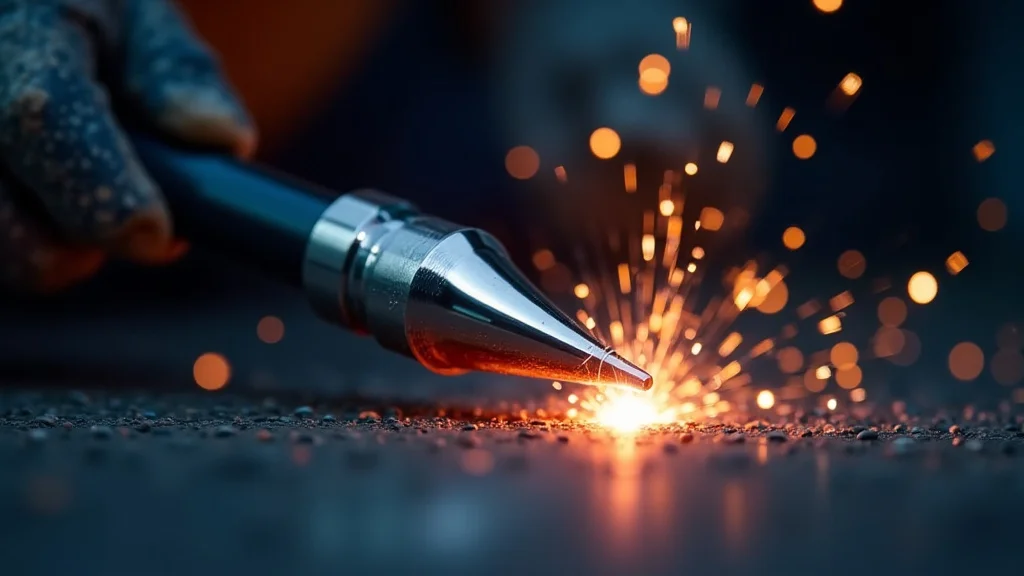
Learning to weld is exciting, but beginners often find that their welding tips and nozzles wear out fast. It seems like you’re always replacing them! This can be frustrating and add to your costs.
Don’t worry, though! Knowing a few simple tricks can make a big difference. We’ll show you exactly what to do, step by step.
Get ready to learn how to make your welding supplies last much longer.
Key Takeaways
- Understand why welding tips and nozzles wear out quickly.
- Learn how to clean your tips and nozzles properly.
- Discover the best ways to store your welding consumables.
- See how gas flow affects tip and nozzle life.
- Explore the benefits of using the right welding settings.
- Find out when it’s really time to replace a tip or nozzle.
Why Welding Tips and Nozzles Wear Out
Welding tips and nozzles are the parts of your welding gun that come into direct contact with the heat and sparks from the welding arc. Think of them as the front line. Over time, this constant exposure to high temperatures and molten metal takes its toll.
It’s totally normal for them to show signs of wear. Several factors speed up this process.
Heat and Metal Buildup
The most common reason for wear is the intense heat. When you weld, the metal you’re joining melts. Some of this molten metal can splash back and stick to the tip.
This buildup, often called spatter, makes the tip rough and can block the gas flow. If spatter isn’t cleaned off, it hardens and becomes difficult to remove. This can lead to a poor weld and even damage the tip itself.
Improper Gas Flow
Your welding machine uses shielding gas to protect the weld pool from air. This gas also flows around the welding tip and nozzle. The right amount of gas keeps the tip cool and blows away small bits of spatter before they stick.
If you have too little gas, the tip gets hotter and spatter sticks more. Too much gas can cause other problems, like blowing the arc around, which isn’t good for your welds either.
Wrong Welding Settings
The voltage and amperage settings on your welder play a big role. If they are too high for the material you’re welding, you’ll get a lot more heat and spatter. This extra heat and spatter means your tip and nozzle will wear out faster.
Finding the sweet spot for your settings is key to good welds and longer-lasting parts.
Physical Damage
Sometimes, tips and nozzles get damaged accidentally. Dropping the welding gun or bumping it against your workpiece can bend or break them. Even small dents can affect how the gas flows or how the arc forms.
Being careful with your equipment helps prevent this kind of damage.
How to Extend the Life of Welding Tips and Nozzles
Now that we know why they wear out, let’s talk about how to make them last. It’s not rocket science! A few simple habits can really boost their lifespan.
This will save you time and money on replacement parts.
Regular Cleaning is Essential
This is probably the single most important thing you can do. After every welding session, and sometimes even during longer ones, you need to clean off that spatter. Get yourself a good tip cleaner tool.
These often have different sized holes to match your tip. You can also use a wire brush or a scraper designed for welding tips. Gently remove any buildup.
Don’t try to chip away at hardened spatter with a hard tool, as you might damage the tip’s opening. A good habit is to clean the tip while it’s still a little warm, but not red hot. Spatter tends to stick less when it’s warm, and it’s easier to remove.
For the nozzle, you can use a cleaner spray or wipe it down with a clean cloth after removing spatter from the tip.
Proper Storage Matters
When you’re done welding for the day, don’t just toss your gun aside. Store it carefully. A common mistake is leaving the tip exposed to the air.
This can lead to oxidation, especially in humid environments. Oxidation can make it harder for electricity to flow properly and can damage the tip’s surface over time.
Many welders have a small, clean container or a dedicated spot to keep their welding gun. Some people even use a light coat of anti-spatter spray on the tip and nozzle before storing them. This spray creates a barrier that helps prevent spatter from sticking and also offers some protection against moisture.
Make sure the container is clean and dry to avoid introducing moisture.
Tune Your Gas Flow
Getting your shielding gas flow rate right is critical. It’s like giving your welding arc a protective bubble. If the flow is too low, the gas isn’t enough to keep the tip cool or push away spatter.
This leads to faster wear and more buildup. If the flow is too high, it can cause turbulence. This turbulence can lead to poor gas coverage, which then causes weld defects and can actually blow molten metal back onto the tip, causing more spatter.
How do you find the right flow? It depends on your machine, the gas you’re using, and the environment. A good starting point is often around 20-30 cubic feet per hour (CFH) for MIG welding.
You can test this by listening to the gas flow sound. It should be a steady hiss, not a roar or a weak puff. You can also check for good coverage by looking at the arc.
It should be stable and the gas should be forming a nice shield around the weld pool. Your welding machine’s manual or gas supplier can offer specific recommendations.
Select the Correct Welding Settings
Using the correct voltage and wire speed (which controls amperage) is super important for managing heat. If your settings are too hot, you’ll get a lot of spatter. This spatter sticks to your tip and nozzle, making them wear out faster.
It also makes your welds look messy.
Think of it like this: if you’re welding thin sheet metal, you need lower heat than if you’re welding thick steel plate. Your welding machine has charts or guides that suggest settings for different materials and wire sizes. Always refer to these.
It’s better to start a little lower and increase if needed, rather than starting too high and causing excessive spatter.
Experimenting on scrap metal is a great way to dial in your settings. Look for a smooth, consistent arc, minimal spatter, and good penetration into the metal. Once you find settings that work well for a specific job, write them down.
This will save you time in the future and help prolong the life of your consumables.
Use Anti-Spatter Products
There are many anti-spatter sprays and gels on the market. These products are designed to be applied to the welding tip and nozzle before welding. They create a non-stick surface.
When spatter lands on this surface, it doesn’t adhere as strongly and is much easier to wipe or brush off. Some products even help to keep the nozzle clean.
Using these products regularly can significantly reduce the amount of stubborn spatter that builds up. This means less time spent cleaning and less wear on your tips and nozzles. Make sure to follow the product’s instructions.
Some sprays are best applied while the tip is cool, while others can be applied to a warm tip.
Choose the Right Consumables
Not all welding tips and nozzles are created equal. They come in different materials, sizes, and types. Using the correct consumable for your specific welding process and application is important.
For example, if you’re welding with a higher amperage, you’ll need a more robust tip than if you’re welding with lower amperage.
Similarly, the size of the tip opening should match the diameter of your welding wire. Using a tip that’s too large or too small can lead to poor gas coverage and increased spatter. Always check your welding machine’s manual or consult with a welding supply expert to ensure you’re using the right consumables for your setup.
Investing in good quality consumables can also make a difference in how long they last.
Maintain Your Welding Gun
The welding gun itself can affect the life of your tips and nozzles. Ensure the connection between the tip and the gun’s contact tube is clean and tight. A loose connection can lead to electrical resistance, overheating, and inconsistent welding.
Keep the inside of the gun clean, too. Debris or old spatter buildup inside the nozzle can restrict gas flow.
Regularly inspect the gun’s liner and gas diffusers. A damaged liner can cause wire feeding problems, which in turn can lead to arc instability and more spatter. A cracked or damaged gas diffuser can disrupt the smooth flow of shielding gas, leading to similar issues.
Keeping these parts in good condition ensures that the shielding gas is delivered effectively, protecting your tip and nozzle.
Welding Technique
Your welding technique can also influence spatter. Try to maintain a consistent distance between the tip and the workpiece. This is called the “stick-out.” Too short a stick-out can cause the tip to be directly in the arc’s path, leading to more spatter and faster wear.
Too long a stick-out can cause the shielding gas to dissipate before it reaches the weld pool, leading to poor gas coverage and potential weld defects, as well as more spatter.
The angle at which you hold the welding gun matters, too. Generally, for MIG welding, a slight push or pull angle can affect spatter. Experiment with slight adjustments to find what works best for your specific setup and material.
Learning to control your arc and minimize spatter through your technique is a skill that pays off in both weld quality and consumable life.
When to Actually Replace Them
Even with the best care, tips and nozzles will eventually need to be replaced. Don’t wait until they are completely unusable, though. Signs that it’s time for a change include:
- A significantly enlarged or misshapen tip opening.
- Visible cracks or deep gouges in the tip or nozzle.
- Inconsistent arc behavior or excessive spatter that doesn’t improve after cleaning.
- Poor gas coverage despite correct gas flow settings.
- Difficulty feeding wire through the tip.
Replacing a worn tip or nozzle is a simple job. Make sure the welding machine is turned off and the gun has cooled down. Unscrew the old tip and
Frequently Asked Questions
Question: How often should I clean my welding tip?
Answer: It’s best to clean your welding tip regularly. Aim to clean it after every welding session. If you’re doing a long weld, it’s a good idea to clean it midway through, especially if you notice spatter building up.
Question: Can I use any anti-spatter spray on my tips?
Answer: Most anti-spatter products are formulated for welding and should work well. However, it’s always a good idea to check the product’s label to ensure it’s suitable for your type of welding process (like MIG or TIG) and material. Following the manufacturer’s instructions is key.
Question: What happens if I don’t clean my welding tip at all?
Answer: If you don’t clean your welding tip, spatter will build up. This buildup can block the flow of shielding gas and electricity. It will lead to poor weld quality, inconsistent welds, and can damage the tip itself, forcing you to replace it sooner.
Question: Is it okay to use a file to clean a welding tip?
Answer: It’s generally not recommended to use a metal file directly on the tip opening. Files can be too abrasive and can enlarge or damage the precise opening of the tip, which affects the arc and gas flow. Stick to dedicated tip cleaning tools or wire brushes.
Question: How do I know when my nozzle needs replacing?
Answer: Your nozzle needs replacing if it’s cracked, heavily deformed, or if you notice that spatter buildup inside it is significantly disrupting the gas flow, even after cleaning. Damaged nozzles can also cause poor gas coverage and lead to weld defects.
Final Thoughts
Taking care of your welding tips and nozzles is a smart move. It’s not complicated, but it requires a little attention. By cleaning them after each use, storing them properly, and using the right settings, you’ll see a big difference.
Making these simple habits part of your routine will save you money and help you get better welds. Your equipment will last longer, and you can focus on the welding itself.
Leave a Reply