Figuring out the right settings for your stick welder can seem tricky at first. Many beginners wonder How to Adjust Stick Welder Settings for Better Results because a little change can make a big difference in your welds. Don’t worry, it’s simpler than you think!
We’ll walk through it step-by-step, so you can make great welds every time. Get ready to learn how to get your welder just right.
Key Takeaways
- You will learn how amperage affects your weld.
- We will explain the role of voltage in stick welding.
- You will discover how electrode type influences settings.
- Learn about polarity and when to use it.
- Understand how metal thickness changes your approach.
- Get tips for tweaking settings for different welding positions.
Understanding Stick Welder Settings
The Role of Amperage
Amperage is probably the most important setting on your stick welder. It controls how much heat you put into your metal. Too little amperage, and your weld won’t stick well.
It might look like little beads sitting on top of the metal. This is often called “cold welding.” The electrode might stick to the metal right away, and you’ll have a weak joint.
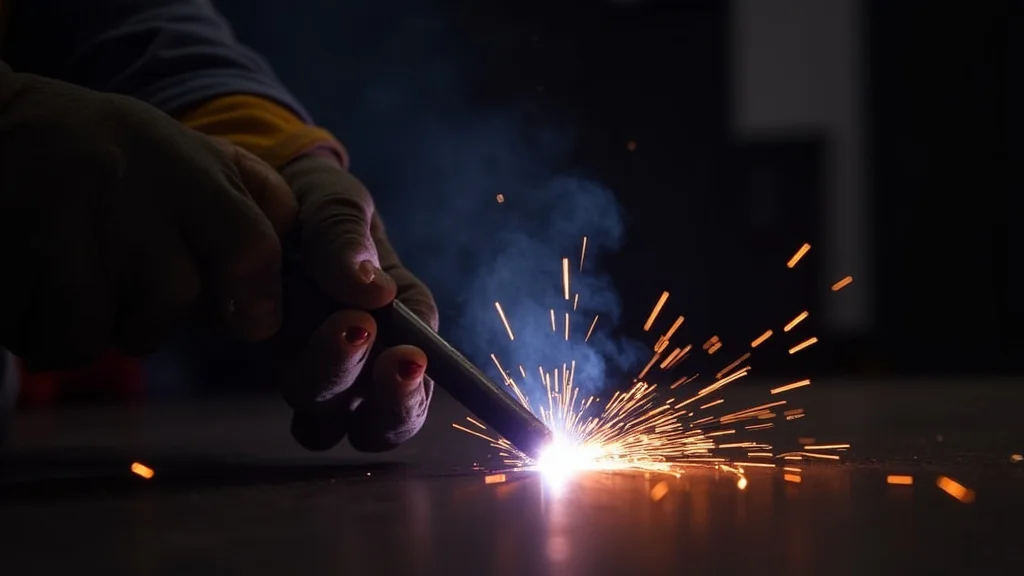
Too much amperage, and you’ll have the opposite problem. You’ll burn through your metal, especially if it’s thin. You might see a big hole appear where your weld should be.
The metal can also glow too bright, and you’ll have a lot of spatter, which is those little hot metal drops that fly everywhere. Getting the amperage right is key for a good, strong weld.
How Amperage Affects Your Weld
Think of amperage like the flow of electricity. A strong flow (high amperage) melts metal quickly. A weaker flow (low amperage) melts it slowly.
- High Amperage: Melts metal fast, can burn through thin material, creates a deep penetration weld, produces more spatter.
- Low Amperage: Melts metal slowly, good for thin materials to avoid burn-through, can result in shallow penetration, electrode might stick to the workpiece.
Finding the Right Amperage
The best amperage for your weld depends on a few things. The most important is the type and diameter of your welding electrode. The manufacturer of the electrode usually prints a recommended amperage range right on the package or the electrode itself.
Always check this first.
Another factor is the thickness of the metal you are welding. Thicker metal needs more heat (higher amperage) to melt properly. Thinner metal needs less heat (lower amperage) to avoid burning through.
The Influence of Voltage
Voltage plays a role too, but it’s often less adjustable on simpler stick welders. On some machines, you might have a voltage setting, or it might be tied to the amperage. Voltage is like the “push” that moves the electricity.
In stick welding, it affects the arc length. The arc is the spark you see between the electrode and the metal.
A proper arc length helps create a smooth, steady weld. If your arc is too long, it can be unstable. You might get more spatter, and the weld might be weaker.
If the arc is too short, it can feel like the electrode is dragging on the metal, and you might get a “fish-eye” look in your weld, which means it’s not penetrating well.
Arc Length and Stability
Maintaining a consistent arc length is important. A good rule of thumb is to keep the arc length about the same as the diameter of your electrode. For example, if you’re using a 1/8 inch electrode, try to keep your arc gap around 1/8 inch.
Choosing the Right Electrode
The type of welding electrode you use is very important. Different electrodes are designed for different metals, welding positions, and types of welds. They also have different amperage and polarity recommendations.
Common Electrode Types
Some common stick electrodes include:
- 6010: These are deep-penetrating electrodes, good for dirty or rusty metal and welding in all positions. They usually run on DC negative polarity.
- 6011: Similar to 6010 but can run on AC or DC power. Good for general-purpose welding on various types of metal.
- 6013: A very versatile electrode, good for all-position welding on clean metal. It produces a smoother arc and less spatter than 6010/6011 and runs on AC or DC.
- 7018: This is a low-hydrogen electrode, excellent for high-strength welds, especially on thicker materials. It requires careful handling to keep it dry and usually runs on DC positive polarity.
Electrode Diameter
The diameter of the electrode also affects the amperage needed. Thicker electrodes (like 1/8 inch or 5/32 inch) require higher amperage than thinner electrodes (like 3/32 inch). Always refer to the electrode manufacturer’s recommendations for the correct amperage range for each specific electrode diameter.
Understanding Polarity
Polarity refers to the direction of electrical current flow in your welding circuit. It affects how much heat goes into your workpiece and your electrode.
Types of Polarity
- DCEN (Direct Current Electrode Negative), also known as Straight Polarity: The electrode is connected to the negative terminal, and the workpiece to the positive terminal. This directs about two-thirds of the heat into the workpiece, providing good penetration. It’s often used for thinner metals or when you need deeper penetration.
- DCEP (Direct Current Electrode Positive), also known as Reverse Polarity: The electrode is connected to the positive terminal, and the workpiece to the negative terminal. This directs about two-thirds of the heat into the electrode, resulting in less penetration and a wider bead. It’s good for thicker metals or when you need a smoother arc and less spatter.
- AC (Alternating Current): The current switches direction many times per second. This provides a balance between penetration and deposition. It’s a good all-around choice for many applications but can sometimes produce more spatter.
Matching Polarity to Electrode and Material
The electrode packaging will usually tell you the recommended polarity for that specific electrode. For example, 7018 electrodes typically perform best on DCEP for their smooth arc and good weld quality. 6010 electrodes often use DCEN for their deep penetration.
If you’re unsure, check the electrode packaging or consult a welding guide. Using the correct polarity is vital for getting the desired weld characteristics.
Metal Thickness Matters
The thickness of the metal you’re welding is a huge factor in choosing your settings. Welding thin sheet metal is very different from welding thick structural steel.
Welding Thin Metal
For thin metal (like 20 gauge to 1/8 inch), you need to be careful not to burn through. This means you’ll generally use:
- Lower amperage.
- Thinner electrodes (e.g., 3/32 inch).
- Electrodes that provide less penetration, like 6013 or 7014.
- A faster welding speed.
You might need to “stitch” your welds, meaning you make short, quick welds in different spots rather than one continuous bead. This helps prevent the metal from overheating in one area.
Welding Thick Metal
For thicker metal (like 1/4 inch and up), you need more heat to get good penetration. You’ll typically use:
- Higher amperage.
- Thicker electrodes (e.g., 1/8 inch, 5/32 inch, or 3/16 inch).
- Electrodes designed for deep penetration, like 6010 or 7018.
- Slower travel speed.
You might also need to make multiple passes to build up a strong weld bead.
Adjusting for Welding Position
The position you’re welding in can also require adjustments to your settings. Welding flat on a table is different from welding overhead or vertically.
Flat Position
The flat position is the easiest. You generally use standard settings for the electrode and material thickness. Gravity helps keep the molten metal in place.
Horizontal Position
In the horizontal position, gravity wants to pull the molten metal down. You might need to:
- Slightly decrease amperage to reduce the size of the puddle.
- Use a slightly faster travel speed.
- Employ a weaving technique to help control the puddle.
Vertical Position
Welding up (vertical up) is generally preferred because it uses gravity to your advantage. It allows for deeper penetration and a stronger weld. You might:
- Use the lower end of the recommended amperage range.
- Use a slightly faster travel speed.
- Use a slight whipping or weaving motion to control the puddle.
Welding down (vertical down) is faster but results in less penetration and is usually used for tacking or on thin materials where burn-through is a concern.
Overhead Position
The overhead position is the most challenging. Gravity works against you, and molten metal can fall. You’ll need to:
- Use the lower end of the amperage range.
- Use a faster travel speed to keep the puddle small.
- Use a tight arc length.
- Use specific electrodes that handle overhead welding well, like 7018.
This position requires a lot of practice.
Practice and Observation
The best way to get good at adjusting stick welder settings is to practice. Pay attention to what your weld looks like.
- Spatter: Too much spatter might mean your amperage is too high, your arc length is too long, or you’re using the wrong polarity.
- Burn-through: Amperage is too high, or you’re holding the arc too long on thin material.
- Poor Fusion/Undercut: Amperage might be too low, or you’re moving too fast. Undercut is a groove melted into the base metal next to the weld toe.
- Rough Bead: Arc length might be too long, or you’re not moving smoothly.
Keep a welding log. Note the electrode type, diameter, amperage, polarity, metal thickness, and position for each weld. This will help you learn what works best.
Frequently Asked Questions
Question: What is the most common mistake beginners make with stick welder settings?
Answer: A common mistake is using too high of an amperage, which leads to burn-through on thin metals and excessive spatter. Beginners often struggle to find the right balance.
Question: How do I know which electrode to use?
Answer: Check the electrode packaging for recommended uses, metal types, positions, and amperage ranges. Different electrodes are for different jobs.
Question: Can I weld all metals with a stick welder?
Answer: Stick welders are versatile but work best on ferrous metals like steel and iron. Welding aluminum or stainless steel may require different electrodes and techniques, or even a different type of welder.
Question: How does the metal thickness affect my amperage setting?
Answer: Thicker metal needs more heat to melt properly, so you’ll use higher amperage. Thinner metal requires lower amperage to prevent burning through.
Question: What should I do if my electrode keeps sticking to the metal?
Answer: If your electrode sticks, your amperage is likely too low. Try increasing it slightly, or make sure you have a good arc started before you begin feeding the electrode into the joint.
Final Thoughts
Getting your stick welder settings right is like learning to ride a bike. It takes a little practice, but soon it feels natural. You learned that amperage is your main heat control, and voltage helps with arc stability.
We saw how electrode choice and polarity are super important, and how metal thickness and welding position change what you need to do. Remember to always check your electrode’s recommendations. Start with the suggested settings and then adjust.
Watch your puddle and listen to your arc. You’ve got the basics now to start making better welds.