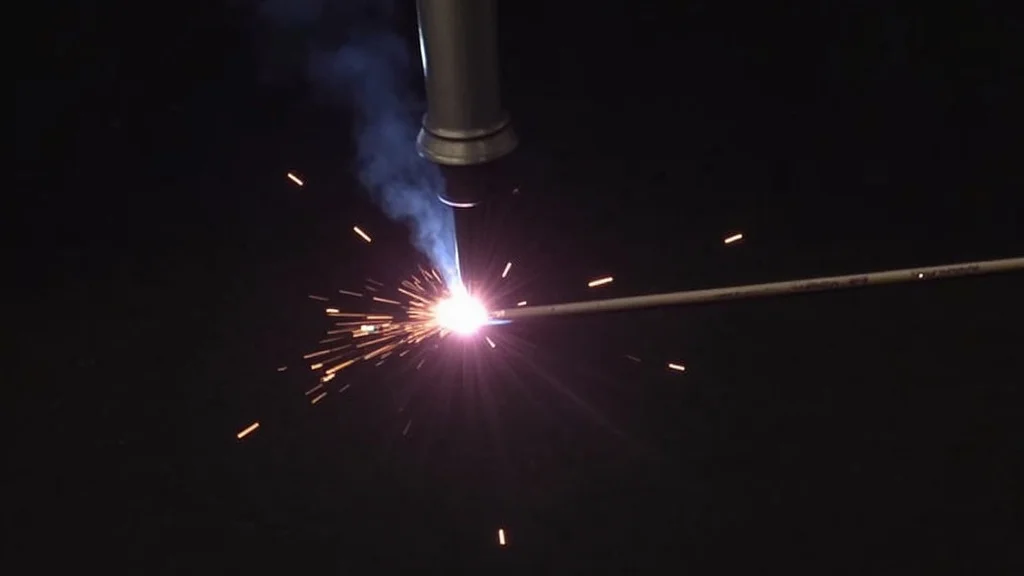
Getting your MIG welder to run smooth can seem tricky at first. Many beginners find that How to Adjust MIG Wire Feed for Better Arc Control is one of those things that just doesn’t click right away. You might get spatter, a weak weld, or just a noisy arc.
Don’t worry, it’s totally normal! We’ll walk you through this step-by-step, making it simple to get that perfect weld. Soon, you’ll be laying down nice, clean beads.
Key Takeaways
- You will learn how wire speed directly affects your MIG arc.
- Discover the relationship between wire speed and voltage for optimal welds.
- Understand how to identify and fix common wire feed issues.
- Learn to fine-tune your settings for different metal thicknesses.
- Gain confidence in troubleshooting your MIG welder’s performance.
Why Wire Feed Matters for Your MIG Arc
Your MIG welder works by feeding a wire electrode through a gun. This wire carries the electrical current to create the arc. The speed at which this wire feeds is super important.
It’s not just about pushing metal; it’s about controlling the whole welding process. When the wire speed is just right, it helps make the arc stable. A stable arc means you get a clean weld with less mess.
If it’s too fast or too slow, things can go wrong quickly.
Think of it like this: the wire feed is the fuel for your welding fire. Too much fuel, and it burns too hot and messy. Too little, and it sputters out.
You need that perfect amount to keep it burning steady and strong.
The Connection Between Wire Speed and Voltage
Wire speed and voltage are like best friends for your MIG welder. They work together to give you the best weld. You can’t really change one without thinking about the other.
When you turn up the wire speed, you’re feeding more metal into the weld pool. This usually means you need to turn up the voltage too. Why?
Because the extra metal needs more heat to melt and blend properly.
If you have the wire speed high but the voltage low, you might get what’s called “worm tracking.” This is when the arc looks jumpy and the weld doesn’t flow smoothly into the base metal. It can also cause lots of spatter. On the flip side, if your wire speed is too low and your voltage is too high, you might get a “globule transfer.” This means the metal comes off the wire in big blobs, leading to a rough weld and poor penetration.
Finding the Right Balance
Most modern MIG welders have recommended settings charts. These charts are a great place to start. They usually list a range of wire speeds and corresponding voltages for different types of wire and metal thickness.
Your goal is to find the sweet spot where the arc sounds like a steady sizzle, not a harsh crackle or a weak hiss.
When you’re starting out, pick a setting from the chart for the metal you’re welding. Then, make a small test weld on some scrap metal. Listen to the sound of the arc.
Watch how the metal melts and flows. Make tiny adjustments to either the wire speed or the voltage, one at a time, until you get that nice sizzle and a clean, consistent bead.
Common MIG Wire Feed Problems and Solutions
Even with the best intentions, you can run into issues with your wire feed. These problems can make welding frustrating and the welds look bad. Knowing what to look for and how to fix it will save you a lot of headaches.
Birdnesting
This is a common one for beginners. Birdnesting happens when the wire gets tangled up at the end of the contact tip. It looks like a little bird’s nest of wire.
This usually occurs when the drive rollers are too loose, or there’s too much resistance in the liner of your welding gun. The wire can’t feed smoothly, so it buckles and jams.
- Check the Drive Rollers: Make sure they are tight enough to grip the wire but not so tight they flatten it. The knurled groove on the roller should match your wire size.
- Inspect the Liner: The plastic tube inside your welding gun’s cable is called the liner. If it’s kinked or worn out, it can create friction. You might need to replace it.
- Clear Obstructions: Sometimes, a little piece of metal can get stuck in the tip or the liner. Blow it out with compressed air.
Wire Slipping
If the wire feeds inconsistently, or seems to be slipping, your drive rollers might be worn out or dirty. They need to grip the wire firmly to push it through the gun. If they are smooth or have residue on them, they can’t get a good hold.
- Clean the Drive Rollers: Use a wire brush or a clean cloth to remove any dirt or metal shavings from the rollers.
- Replace Worn Rollers: If the grooves in the rollers are smooth, it’s time for new ones.
- Check Tension: Ensure the tension arm on the wire feeder is applying enough pressure to the wire.
Uneven Arc or Spatter
A sputtering, crackling arc with a lot of spatter usually means your wire speed and voltage settings are out of sync. As we talked about, they need to work together.
- Adjust Voltage: If the arc is too “cold” and spattery, try increasing the voltage slightly.
- Adjust Wire Speed: If the weld looks too “hot” with a lot of spatter, try decreasing the wire speed slightly.
- Check Gas Flow: Make sure your shielding gas is flowing correctly. Too little gas can cause spatter and a weak weld. Too much can actually blow the arc around and cause problems. A flow rate of 15-25 cubic feet per hour (CFH) is common for many applications.
- Contact Tip Condition: A worn or dirty contact tip can also cause an uneven arc. Replace the tip if it looks burnt or enlarged.
Poor Wire Stick-Out
Wire stick-out is the length of wire that extends from the contact tip to the end of the weld pool. The recommended stick-out for most MIG welding is about 1/4 to 1/2 inch (6 to 12 mm). If your stick-out is too long, the wire can start to melt too early, causing spatter and a weak weld.
If it’s too short, you might not get enough heat into the base metal.
- Maintain Consistent Gun Position: Practice holding the welding gun at a consistent angle and distance from the workpiece.
- Monitor Stick-Out: Keep an eye on how much wire is sticking out as you weld. Adjust your gun movement to keep it consistent.
- Check Contact Tip Size: Make sure you are using the correct size contact tip for your wire diameter.
Adjusting for Different Metal Thicknesses
The thickness of the metal you’re welding is a big factor in setting your wire speed and voltage. Thicker metal needs more heat to melt through and create a strong bond. Thinner metal needs less heat to avoid burning holes.
| Metal Thickness | Wire Speed (Approximate) | Voltage (Approximate) | Notes |
|---|---|---|---|
| Thin (e.g., 20 gauge / 0.8 mm) | 100-150 IPM | 14-16 V | Use a sharp contact tip. Move quickly to avoid burn-through. |
| Medium (e.g., 1/8″ / 3 mm) | 200-300 IPM | 17-20 V | Good balance for most general repairs. |
| Thick (e.g., 1/4″ / 6 mm) | 350-450+ IPM | 20-24 V | May require multiple passes or beveling. |
Note: IPM stands for Inches Per Minute. These are starting points and will vary based on your specific welder, wire type, and gas. Always test on scrap material first.
Thin Metal Tips
Welding thin metal requires a delicate touch. If your wire speed is too high, you’ll likely burn through. Start with a lower wire speed and voltage.
Keep your gun moving steadily. You want to melt the metal quickly but not melt through it.
For very thin materials, you might even consider using a lower gas flow rate or a pulsed MIG process if your welder has it. The key is to use just enough heat to fuse the metals without causing damage.
Thicker Metal Techniques
For thicker metals, you need more heat. This means higher wire speed and higher voltage. You’ll be feeding more wire and melting it more rapidly.
If you’re welding very thick material, you might need to bevel the edges. This creates a V-groove that allows the weld to penetrate deeper and create a stronger joint.
It’s also common to use multiple passes on thick metal. The first pass lays down a root bead, and subsequent passes build up the weld and fill the joint. Always allow each pass to cool slightly before starting the next.
Practice Makes Perfect
The most important thing about learning to adjust your MIG wire feed is practice. No amount of reading will replace actually doing it. Grab some scrap pieces of metal, set up your welder, and start welding.
Try making a series of beads, changing only one setting at a time. See how it affects the arc and the weld. Listen to the sound.
Watch the puddle. Pay attention to how the wire melts and joins the metal. Over time, you’ll develop an ear for the right sound and an eye for the right look.
Frequently Asked Questions
Question: What is the most common wire feed problem for beginners?
Answer: The most common problem is birdnesting, where the wire gets tangled up before it reaches the contact tip.
Question: Should I adjust wire speed or voltage first?
Answer: They work together, but often you’ll adjust wire speed to control the amount of metal going in, and then fine-tune voltage to get the right melt and penetration.
Question: How do I know if my wire feed is too fast?
Answer: If your arc is very spattery, sounds rough, and the weld is piling up without good fusion, your wire speed might be too fast for the voltage.
Question: What is “wire stick-out” and why is it important?
Answer: Wire stick-out is the length of wire exposed past the contact tip. Keeping it consistent (usually 1/4 to 1/2 inch) is important for controlling arc length and heat.
Question: Can I use the same settings for steel and aluminum?
Answer: No, you generally cannot. Aluminum wire is softer and requires different drive rollers and often a different gas. Settings for aluminum are also usually higher.
Final Thoughts
Mastering How to Adjust MIG Wire Feed for Better Arc Control is a key step in becoming a skilled welder. You’ve learned that wire speed and voltage are partners. Paying attention to common issues like birdnesting and spatter helps you fix problems fast.
Adjusting for different metal thicknesses ensures strong welds every time. Keep practicing, listen to your welder, and watch your welds. You’ll get that smooth, clean arc you’re aiming for.