
If you’re new to welding, you’ve probably wondered, How Do You Stop MIG Welding Spatter Issues? This is a super common question for beginners because those little molten metal blobs can be frustrating. They stick to your workpiece and make things look messy. Don’t worry, though!
It’s not as tricky as it seems. We’ll walk through this step-by-step to get your welds looking clean and smooth. Ready to learn how to fix it and make your welding projects shine?
Key Takeaways
- You will learn the main reasons why MIG welding spatter happens.
- Discover how to adjust your welding settings to reduce spatter.
- Understand the importance of your welding wire and gas for spatter control.
- Learn how to properly prepare your MIG gun to prevent spatter buildup.
- Find out simple techniques to improve your welding technique for cleaner welds.
- Know how to deal with spatter that does occur to keep your work looking good.
Understanding MIG Welding Spatter
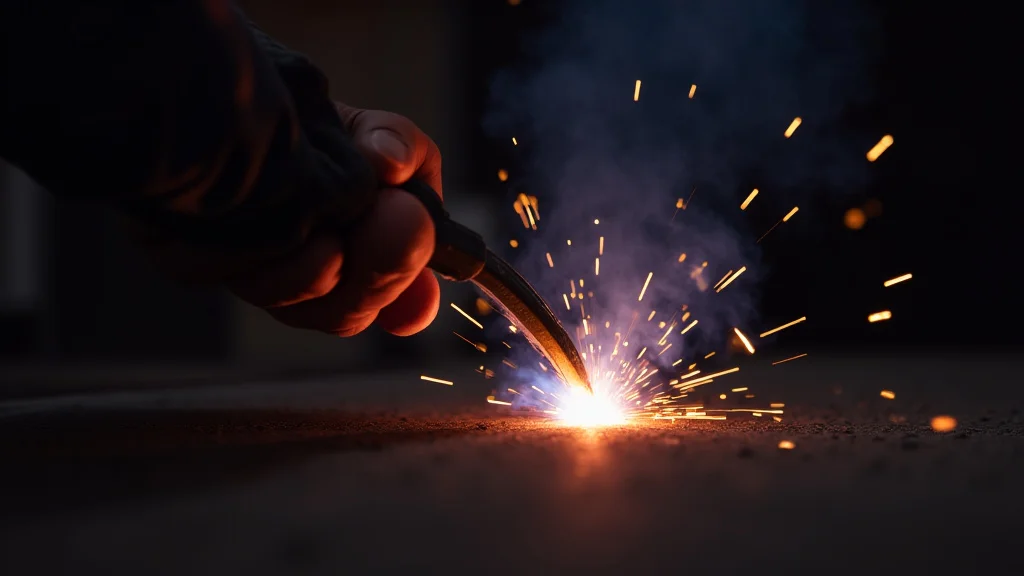
MIG welding, also known as Gas Metal Arc Welding (GMAW), is a popular choice for many projects. It’s known for being relatively easy to learn. However, a common challenge new welders face is dealing with spatter. Spatter is those tiny droplets of molten metal that fly off the weld pool and stick to your workpiece or the welding gun. It’s not just an annoyance; excessive spatter can make your welds look unprofessional and even weaken them if it attaches in the wrong places. So, How Do You Stop MIG Welding Spatter Issues? It really comes down to a few key factors you can control.
Why Does MIG Welding Spatter Happen?
Before we talk about stopping it, it’s helpful to know why it happens. Spatter occurs when the transfer of molten metal from the electrode wire to the weld pool is unstable. Several things can cause this instability. Understanding these root causes is the first step to fixing them.
Electrical Issues
One of the main culprits behind spatter is related to the electrical settings.
Incorrect Voltage
Voltage controls the arc length. If the voltage is too high, the arc becomes long and unstable, causing the molten metal to spray out erratically. If it’s too low, the arc can be too short, leading to an uneven transfer and spatter.
Incorrect Amperage (Wire Speed)
Amperage, which is directly controlled by the wire feed speed in MIG welding, determines how much heat is put into the weld. If the wire feed speed is too high for the set voltage, it tries to push too much metal into the weld pool too quickly. This can overwhelm the arc and cause a forceful, spattery transfer. Too low, and the arc might not be hot enough for a smooth transfer.
Shielding Gas Problems
The shielding gas is crucial in MIG welding. It protects the molten weld pool from atmospheric contaminants like oxygen and nitrogen. If this protection is compromised, spatter is almost guaranteed.
Wrong Type of Gas
Different metals and welding processes require different shielding gases. For steel with solid wire, common choices are 100% CO2 or a mix of Argon and CO2 (like 75% Argon / 25% CO2). Using pure Argon with solid steel wire can lead to an “open circuit” transfer which is very spattery. Pure CO2 can also cause issues at higher wire speeds.
Insufficient Gas Flow
Not enough gas flowing from the cylinder means the arc isn’t properly shielded. This can happen if the flow rate is set too low, the gas bottle is nearly empty, or there’s a leak in the hose or connections. An unstable arc is a sure sign of poor shielding.
Drafts and Wind
Even if your gas flow rate is correct, strong drafts or wind can blow the shielding gas away from the weld puddle. This is especially common when welding outdoors or near fans. The gas can’t do its job if it’s not where it needs to be.
Wire Issues
The welding wire itself plays a big role in the quality of your weld and the amount of spatter.
Poor Quality Wire
Cheap or low-quality welding wire can have inconsistencies in its coating or composition. This can lead to an unstable arc and increased spatter.
Contaminated Wire
If the welding wire is dirty, rusty, or greasy, it can introduce impurities into the weld pool. This disrupts the smooth transfer of metal and causes spatter. Always use clean wire.
Wrong Wire Diameter
Using a wire diameter that isn’t suited for the thickness of the metal or your machine’s capabilities can lead to spatter. Thicker wires generally require higher amperage to run smoothly.
Technique and Gun Problems
Sometimes, the issue isn’t the machine settings or the gas, but how you’re welding.
Incorrect Stick-Out
Stick-out is the distance the welding wire extends from the tip of your MIG gun nozzle. If the stick-out is too long, the wire heats up too much before it reaches the weld pool, leading to pre-mature melting and spatter. The recommended stick-out varies but is often around 1/4 to 3/8 inch for steel.
Wrong Gun Angle
Pushing or pulling the gun at the wrong angle can affect the gas flow and the metal transfer. A slight push angle is often recommended for steel to help drive the arc into the puddle and reduce spatter.
Dirty Contact Tip
The contact tip is what conducts electricity to the welding wire. If it gets clogged with molten metal spatter, the electrical connection becomes inconsistent. This can cause arc instability, poor wire feeding, and lots of spatter.
How Do You Stop MIG Welding Spatter Issues? Your Step-by-Step Guide
Now that you know the common causes, let’s look at how to fix them. Addressing these points will significantly reduce or eliminate spatter.
Step 1: Get Your Settings Right
This is often the most impactful step. Your welding machine has settings for voltage and wire feed speed.
Wire Feed Speed (Amperage) and Voltage Chart
Most welding machines come with a chart that suggests starting settings for different wire sizes and metal thicknesses. Consult this chart. Generally, for short-circuit transfer (the most common for beginners on thin to medium steel), you want a balance between voltage and wire speed.
* Too much wire speed for the voltage: This is a very common cause of spatter. If the wire is feeding too fast, it’s like trying to pour too much water through a small pipe. It splatters.
* Too much voltage for the wire speed: This creates a long, hot arc that can also lead to spatter, though often a different kind.
A good starting point for 0.030″ steel wire on 1/8″ steel is often around 17-20 volts and 150-200 inches per minute (IPM) wire speed. For 0.035″ wire, you might be looking at 19-22 volts and 180-250 IPM. These are just starting points; you’ll fine-tune them.
Listen to the Arc
A good MIG arc sounds like a steady sizzle, not a loud crackle or popping. A crackling sound often indicates settings are off.
Step 2: Check Your Shielding Gas
Proper shielding is non-negotiable for clean welds.
Gas Type
For welding mild steel with solid wire, a 75% Argon / 25% CO2 mix is usually a good all-around choice. If you’re using 100% CO2, you might need slightly different voltage settings. Avoid using pure Argon with solid steel wire unless you’re specifically using a spray transfer mode (which is less common for beginners).
Gas Flow Rate
Set your flow rate at the regulator on your gas cylinder. A common starting point is 20-25 cubic feet per hour (CFH). Perform a “gas leak test” by listening for hissing sounds and checking all connections. You can also use soapy water; if it bubbles, there’s a leak.
Protect from Drafts
If you’re welding anywhere with wind or strong air currents, use a windbreak. This can be a simple piece of cardboard or a welding screen. Make sure the gas is flowing out of the nozzle and around the arc.
Step 3: Use Quality and Clean Wire
Your wire is the electrode, so its quality matters.
Buy Reputable Brands
Invest in welding wire from well-known manufacturers. It costs a little more, but you’ll get more consistent results and fewer headaches.
Keep Wire Clean and Dry
Store your wire spool in a dry place. Before welding, run a little wire through the gun and wipe it down with a clean cloth. If it looks rusty or dirty, clean it thoroughly or consider replacing the spool.
Match Wire Diameter to Your Machine and Material
Common wire diameters for small MIG welders are 0.023″ (0.6mm), 0.030″ (0.8mm), and 0.035″ (0.9mm). Ensure your machine is set up for the wire diameter you’re using, and the diameter is appropriate for the metal thickness.
Step 4: Maintain Your MIG Gun
A clean and functional MIG gun is essential.
Check and Clean the Contact Tip
This is one of the most frequent maintenance tasks. After each welding session, or even during a long session, inspect the tip. If you see spatter buildup, carefully remove it. You can use a wire brush, pliers, or a specialized tip cleaner tool. If a tip is severely clogged, replace it.
Ensure the Tip is Tight
Make sure the contact tip is screwed in snugly. A loose tip can cause electrical resistance and arc instability.
Check the Gas Nozzle
The gas nozzle directs the shielding gas. Ensure it’s clean and free of spatter. A clean nozzle ensures proper gas coverage.
Correct Stick-Out
As mentioned, too much stick-out causes spatter. Aim for about 1/4 to 3/8 inch for steel. The wire should be just barely visible extending from the nozzle.
Step 5: Refine Your Welding Technique
Sometimes, small changes in how you hold and move the gun make a big difference.
Gun Angle
For steel, a slight push angle is generally preferred. This means you are pushing the gun forward into the weld puddle. This helps the shielding gas flow better and can reduce spatter compared to a pull angle. Experiment with a slight push.
Travel Speed
Move the gun at a consistent speed. If you move too slowly, you can overheat the metal, leading to spatter. If you move too fast, you won’t get enough penetration, and the weld can be weak. A moderate, consistent speed is best.
Maintain a Consistent Arc Length
This is related to voltage. If you can’t keep the arc length consistent, your weld won’t be either. Try to keep the distance between the tip and the workpiece steady.
Step 6: Clean Up Spatter When It Happens
Even with perfect settings and technique, a little spatter might still occur.
Use a Chipping Hammer or Wire Brush
Keep a chipping hammer and a wire brush handy. After welding, you can chip off larger pieces of spatter with the hammer. Then, use the wire brush to clean the rest of the area.
Anti-Spatter Spray or Gel
You can spray or dip the contact tip and the inside of the gas nozzle with an anti-spatter product before welding. This creates a barrier that molten metal has a harder time sticking to. Be careful not to get it on the welding wire itself, as it can interfere with the arc.
Troubleshooting Common Spatter Scenarios
Let’s look at some specific spatter problems and their likely causes.
Scenario 1: Very Fine, Shower-like Spatter
This often indicates the voltage is too low for the wire feed speed. The wire is trying to melt faster than the arc can handle it, leading to a “short circuit” transfer that is very fine and widespread.
* Solution: Increase the voltage slightly.
Scenario 2: Large, Globular Spatter
This can happen if the voltage is too high, or if there’s not enough shielding gas. The metal transfers in large blobs.
* Solution: Decrease the voltage or increase the wire feed speed (if voltage is correct), or check your gas flow and protect from drafts.
Scenario 3: Spatter Building Up on the Contact Tip Rapidly
This is usually due to a dirty contact tip, incorrect stick-out, or a poor electrical connection.
* Solution: Clean or replace the contact tip. Ensure the tip is tightly screwed in. Check your stick-out is correct (not too long).
Scenario 4: Spatter Flying Back into the Nozzle
This often means the shielding gas is not reaching the arc effectively. It could be insufficient flow, drafts, or a dirty nozzle.
* Solution: Increase gas flow, block drafts, clean the nozzle.
Frequently Asked Questions
Question: What is the most common cause of MIG welding spatter?
Answer: The most common cause is incorrect welding machine settings, specifically the balance between voltage and wire feed speed. Other frequent causes include issues with shielding gas or an improper stick-out distance.
Question: Should I use anti-spatter spray on my MIG gun?
Answer: Yes, using an anti-spatter spray or gel on the contact tip and nozzle can help reduce spatter buildup. Just be careful not to get it on the welding wire itself, as it can interfere with the arc.
Question: How does the type of shielding gas affect spatter?
Answer: Using the wrong type of shielding gas, like pure Argon for solid steel wire, will cause a very spattery arc. A mix of Argon and CO2 (like 75/25) is usually best for mild steel and provides a smoother transfer.
Question: My wire feed speed seems fine, but I still get a lot of spatter. What else could it be?
Answer: If your wire feed speed is correct, check your voltage. It might be too high or too low. Also, ensure your shielding gas is adequate and you have the correct stick-out distance on your MIG gun.
Question: Is it normal to have some spatter when MIG welding?
Answer: While the goal is to minimize it, a small amount of spatter can sometimes occur even with correct settings. However, excessive or uncontrollable spatter is not normal and indicates a problem that needs to be addressed.
Final Thoughts
Learning How Do You Stop MIG Welding Spatter Issues? is about understanding the basics. It’s about setting your machine correctly, ensuring your shielding gas is doing its job, and keeping your equipment clean. Small adjustments to your settings, like getting the right balance of voltage and wire speed, and paying attention to how far the wire sticks out, make a huge difference. With a little practice and by following these simple steps, you’ll see cleaner welds and fewer frustrating spatter problems. Keep practicing, and your welding skills will improve noticeably.