Many beginners wonder, How Do You Set Correct TIG Torch Angle for Welding? It can seem tricky at first. You want a good weld, but the torch angle feels off. Don’t worry!
This guide will show you the simple way. We will cover the basics so you can get it right every time.
Key Takeaways
- The TIG torch angle affects weld penetration and bead appearance.
- A slight forward angle is generally best for most common TIG welding situations.
- Maintaining a consistent torch angle is key to producing uniform welds.
- Different joint types and materials may require slight adjustments to the angle.
- Practicing with a consistent angle will improve your welding skills quickly.
Why Torch Angle Matters in TIG Welding
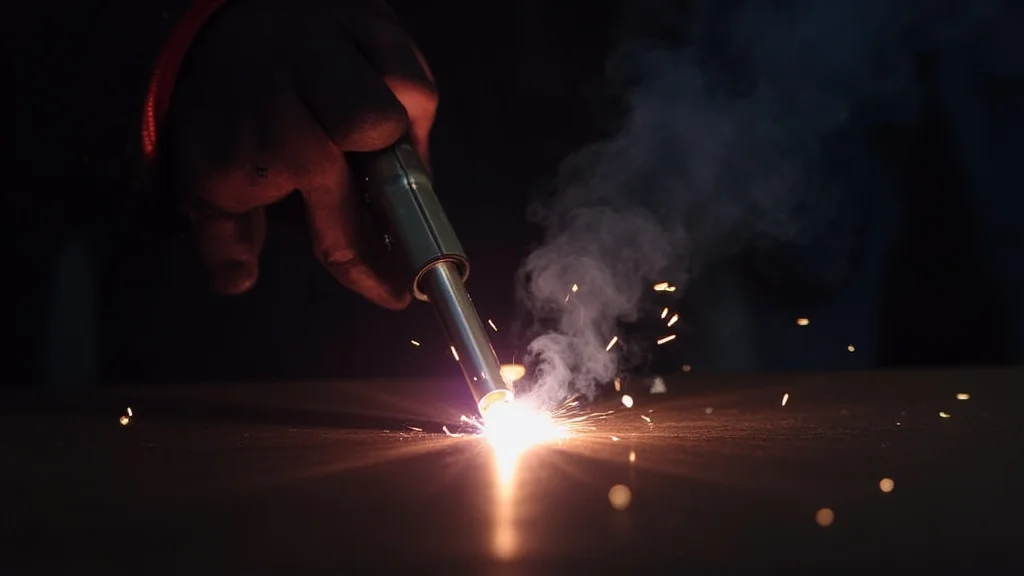
TIG welding, or Gas Tungsten Arc Welding, is known for creating clean and strong welds. A big part of getting those great welds is controlling how you hold the torch. The angle of your TIG torch is super important.
It doesn’t just look nice; it really affects how the metal melts and joins together. Getting this angle right helps you make welds that are strong and don’t have flaws. It also makes your finished welds look smooth and professional.
Think of it like a paintbrush. If you hold a paintbrush at a weird angle, you won’t paint a nice, even line. It’s kind of the same with a TIG torch.
The angle helps the heat from the arc and the filler metal (if you’re using it) go where you want them to. This means better control over the molten pool of metal.
Understanding the Basic TIG Torch Angle
For most common TIG welding jobs, especially on flat surfaces or butt joints, a slight forward angle is your best friend. This means you tilt the torch a little bit in the direction you are moving. Aim for a range between 5 and 15 degrees forward.
This small tilt does a few things.
First, it helps push the molten puddle slightly ahead of the arc. This gives you a better view of what you’re doing. You can see the puddle clearly, which helps you control it better.
Second, this angle helps the filler metal flow smoothly into the joint. If you’re adding filler rod, a slight forward angle helps it melt into the puddle naturally, rather than just sitting on top.
Avoid holding the torch straight up and down (90 degrees) or too far back. A straight-up torch can make it harder to see and control the puddle. A torch angled too far back can cause undercut or uneven bead formation.
It’s all about finding that sweet spot that works for the task at hand.
Factors Influencing the Ideal Torch Angle
While the 5-15 degree forward angle is a great starting point, it’s not the only answer for How Do You Set Correct TIG Torch Angle for Welding? Several things can change what angle works best for you.
Joint Type
Different ways you join metal pieces will need different angles. For a simple flat weld, the slight forward angle is usually perfect.
- Butt Joints: These are when two pieces of metal meet edge-to-edge. A slight forward angle (5-15 degrees) is generally best. It helps push the puddle and allows filler metal to integrate smoothly.
- Lap Joints: Here, one piece overlaps another. You’ll still use a slight forward angle, but you might need to adjust it to ensure good fusion on both overlapping pieces without overheating one side. Aim to keep the arc focused on the edge of the top piece and the surface of the bottom piece.
- T-Joints: When one piece meets another at a right angle, forming a ‘T’. You’ll want to aim the torch to evenly heat both the vertical and horizontal members of the joint. A slight forward angle, perhaps closer to 10-20 degrees, can help distribute heat and fill the corner nicely.
- Corner Joints: Joining two pieces at their edges to form a corner. Similar to T-joints, you want to ensure good fusion on both pieces. A forward angle can help here, but you might also need to adjust side-to-side to keep the arc centered on the corner.
Material Thickness
Thicker metals need more heat and might benefit from a slightly more aggressive forward angle to ensure penetration. Thinner metals need less heat, and a more upright angle or a very slight forward angle can prevent burn-through.
Material Type
Different metals behave differently when heated. For example, aluminum melts at a lower temperature than steel and can be more prone to porosity. You might find a slightly more upright torch angle or a quicker travel speed helps manage the puddle on aluminum.
Welding Position
Where you’re welding matters too. Welding overhead or in a vertical position can be trickier. Gravity plays a role in how the molten metal behaves.
You might need to adjust your angle to fight gravity and keep the puddle from sagging.
- Flat Position: This is the easiest. A 5-15 degree forward angle is usually perfect.
- Horizontal Position: You might need to angle the torch slightly upward to counteract gravity and prevent the puddle from drooping.
- Vertical Up: Here, you typically want to keep the torch more upright, maybe even slightly back, to let gravity help the molten metal stack up.
- Overhead: This is challenging. You’ll often keep the torch very upright or slightly back to prevent the puddle from falling.
The Role of the TIG Torch Angle in Heat Input
The angle of your torch directly impacts how much heat goes into the weld. When you tilt the torch forward, you’re essentially pushing the arc and heat slightly ahead. This can lead to deeper penetration.
If you tilt the torch too far forward, you might get too much heat, leading to burn-through on thinner materials or excessive penetration on thicker ones. You might also get a very wide, flat bead that isn’t as strong as a more convex one. On the flip side, holding the torch too upright can result in shallow penetration and a bead that looks like it’s sitting on top of the metal, rather than being fused into it.
Think about how the arc’s heat spreads. A forward angle directs this heat more effectively into the leading edge of the weld joint. This helps melt the base metal and fuse it with the filler material.
The goal is to achieve uniform melting and fusion across the entire thickness of the joint.
Technique for Setting the Correct Angle
So, How Do You Set Correct TIG Torch Angle for Welding? It comes down to practice and feel. Here’s a simple way to think about it.
Start with your torch perpendicular (straight up and down) to the workpiece. Then, gently tilt it forward in the direction you plan to move. Imagine you are gently pushing the arc and the molten puddle.
Your tungsten electrode should be pointing slightly towards the leading edge of where you want the weld to be.
If you’re using a filler rod, the angle of the filler rod is also important. It should generally be held at a lower angle, feeding into the leading edge of the molten puddle, at an angle that complements your torch angle. The filler rod should almost seem to disappear into the puddle as it melts.
The key is consistency. Once you find an angle that works well for a specific joint and material, try to hold it steady as you move along the weld. Jerky movements or changing angles mid-weld will lead to inconsistent beads.
What Happens with the Wrong Torch Angle?
Using the wrong TIG torch angle can cause a few common problems:
- Burn-through: This happens when you use too much heat or angle the torch too far forward on thin materials, causing the metal to melt completely.
- Lack of Fusion: If your torch angle is too upright or you’re not getting enough heat, the filler metal might not fuse properly with the base metal. This creates a weak weld.
- Undercut: This is a groove melted into the base metal next to the weld. It often happens with too much heat or an incorrect torch angle that directs the arc too aggressively into the base metal.
- Poor Bead Appearance: An incorrect angle can result in a wavy, uneven, or overly wide and flat weld bead, which isn’t as strong or attractive as a well-formed bead.
- Porosity: Trapped gas bubbles in the weld. While often caused by contamination, an incorrect torch angle can sometimes contribute by affecting how the molten puddle solidifies.
Practice Makes Perfect
The best way to master your TIG torch angle is through practice. Grab some scrap pieces of metal similar to what you’ll be working with. Try welding with a consistent 5-10 degree forward angle and observe the results.
Then, try welding with a slightly different angle, maybe 20 degrees forward, and see how it changes the puddle and the bead. Experiment with holding the torch more upright. Pay close attention to how the molten puddle behaves.
Notice how easy or difficult it is to control. Observe the shape and penetration of the finished weld.
Take notes or simply remember what you see. Good welds have a nice, consistent bead shape, good penetration, and no visible defects. You’ll start to develop an intuition for the correct angle based on the material, the joint, and the sound of the arc.
Adjusting Angle for Different Applications
While we’ve talked a lot about a forward angle, remember that welding is dynamic. You’re not glued to one angle for your entire project.
For instance, when you start a weld, you might hold the torch slightly more upright to establish your puddle. As you move forward, you introduce the forward angle. Sometimes, at the end of a weld, you might need to pause slightly and build up a small crater.
You might adjust your angle and filler rod addition here to avoid a crack forming as the weld cools.
If you’re welding a long seam, you need to maintain that consistent angle throughout. This is where good technique and practice come in. It’s about developing muscle memory so your torch angle stays steady without you having to think about it too hard.
Frequently Asked Questions
Question: Is there a single “correct” TIG torch angle for all welding?
Answer: No, there isn’t a single correct angle for every situation. While a slight forward angle (5-15 degrees) is common and effective for many jobs, the ideal angle can change based on the material thickness, type of metal, joint design, and welding position.
Question: How do I know if my torch angle is too far forward?
Answer: If your torch angle is too far forward, you might notice the weld puddle becoming too wide and flat, excessive heat input causing burn-through on thinner materials, or the weld bead looking like it’s “dripping” over the edge. You might also get undercut along the edges of the weld.
Question: What should I do if I’m having trouble controlling the puddle?
Answer: First, check your torch angle. Ensure it’s within the typical range for the job. You might also be moving too fast or too slow.
Try adjusting your travel speed and focus on maintaining a consistent torch angle and distance from the workpiece.
Question: Does the angle of the filler rod matter as much as the torch angle?
Answer: Yes, the filler rod angle is also very important. It should generally be fed into the leading edge of the molten puddle at a relatively low angle, complementing the torch angle. Both angles work together to ensure proper fusion and bead formation.
Question: How can I improve my consistency with TIG torch angle?
Answer: Consistent practice is key. Focus on developing a comfortable grip that allows for stable hand movement. Try to keep your arm and wrist steady.
Welding on longer seams or practice plates can help you build the muscle memory needed to maintain a steady angle over time.
Final Thoughts
Mastering How Do You Set Correct TIG Torch Angle for Welding? is about more than just holding the torch. It’s about controlling heat, guiding the puddle, and achieving strong, clean welds. A slight forward tilt, generally between 5 and 15 degrees, is your go-to for most common tasks.
This helps you see the puddle, manage heat, and integrate filler metal smoothly. Always remember that factors like joint type, material, and welding position can require small adjustments. Consistent practice is your best tool.
Keep experimenting, pay attention to the puddle, and you’ll find that perfect angle for every weld.