Learning to TIG weld can be exciting, but some parts feel tricky at first. Knowing How Do You Replace TIG Tungsten Properly? is one of those things. It seems simple, but doing it right makes a big difference in your welds.
Don’t worry! We’ll walk through it step-by-step. You’ll be changing your tungsten like a pro in no time, ready for even better welding results.
Key Takeaways
- You will learn the basic reasons for replacing TIG tungsten.
- We will show you the simple tools needed for the job.
- You will discover the correct way to remove old tungsten.
- We will explain how to pick and install the new tungsten.
- You will find out how to shape your new tungsten for different metals.
- We will cover common mistakes and how to avoid them.
Why Tungsten Needs Replacing
Tungsten is the heart of your TIG torch. It’s what creates the arc that melts your metal. Over time, the tip of the tungsten wears down.
It can get blunted, contaminated, or even break off. When this happens, your arc becomes unstable. This makes it hard to get clean, strong welds.
A worn tungsten tip can cause sputtering, inconsistent heat, and a wide, messy arc. This means your welds won’t look good and might not be as strong as they should be.
When to Change Your Tungsten
You’ll know it’s time to swap out your tungsten when you notice a few things. If your arc starts to spread out too much, that’s a sign. If the tungsten tip gets a rounded or ball-like shape, it’s time for a change.
Also, if you see tiny specks of metal stuck to the tip, that’s contamination. Contamination happens when you accidentally touch the tungsten to your weld pool or filler metal. This can really mess up your welds.
Lastly, if the tungsten breaks off inside the torch, you definitely need a new one.
Tools You’ll Need
You don’t need a lot of fancy tools to change TIG tungsten. Most of what you need is probably already in your welding setup. First, you’ll need your TIG torch.
Inside the torch, there’s a collet and a collet nut that hold the tungsten. You’ll need to loosen the collet nut to get the old tungsten out and put a new one in. Sometimes, the collet nut can be a bit tight, so having a pair of pliers or an adjustable wrench can be handy, but be gentle!
You’ll also need new tungsten electrodes. Make sure you get the right type and diameter for your machine and the metals you’re welding. Finally, a grinder or a sharpening stone is very important for shaping the new tungsten, but we’ll get to that.
Removing the Old Tungsten
Changing the tungsten is a simple process. First, make sure your TIG torch is cool. Never try to change tungsten on a hot torch.
Turn off your welder to be safe. Then, unscrew the back cap of your TIG torch. This cap is usually what you hold onto.
Inside, you’ll see the collet nut. Gently unscrew the collet nut. As you unscrew it, the collet inside will loosen its grip on the tungsten.
Once the collet nut is loose enough, you should be able to pull the old tungsten rod straight out. If it’s stuck, a gentle wiggle might help. Don’t force it, or you could damage the torch parts.
What if the Tungsten is Stuck?
Sometimes, the tungsten can get stuck inside the collet. This might happen if it’s been in there a long time or if it’s gotten bent. If this happens, try unscrewing the collet nut all the way.
Then, carefully try to pull the collet out of the torch body. You might be able to push the tungsten out from the other side of the collet. If it’s still stuck, you can try gently tapping the collet on a hard surface.
If all else fails, you might need to use needle-nose pliers to grip the tungsten and pull it out. Be careful not to damage the collet itself. A damaged collet will need to be replaced.
Choosing and Installing New Tungsten
When you buy new tungsten, you’ll see different colors on the end. These colors tell you what the tungsten is made of and what it’s best for. For DC welding (like on steel and stainless steel), pure tungsten (green band) or ceriated tungsten (grey band) are good choices.
For AC welding (like on aluminum), lanthanated (blue band) or pure tungsten (green band) are often used. Zirconiated (brown band) is also good for AC. The diameter of the tungsten matters too.
Smaller diameters (like 0.040″ or 1/16″) are for lower amperage, and larger ones (like 1/8″ or 5/32″) are for higher amperage.
Once you have your new tungsten, insert it into the collet. Make sure it sticks out of the torch cup the right amount. A good starting point is about 1/2 inch to 3/4 inch.
The exact amount can change depending on what you’re welding and your personal preference. Then, screw the collet nut back on. Tighten it until it holds the tungsten firmly.
Don’t overtighten, as you might damage the threads or the collet. You want it snug, but not forced.
How Much Tungsten Should Stick Out?
The length of tungsten that sticks out is called the “stick-out.” This is really important for arc stability. If you stick out too much tungsten, the arc can wander and become unstable. It also makes it easier to contaminate the tungsten.
If you stick out too little, it can be hard to see your weld pool and harder to add filler metal. For most general welding on steel, sticking out about 1/4 inch to 1/2 inch is a good rule of thumb. For welding on aluminum with AC, you might want a bit more stick-out.
For very fine detail work, you might try a shorter stick-out.
Shaping Your Tungsten
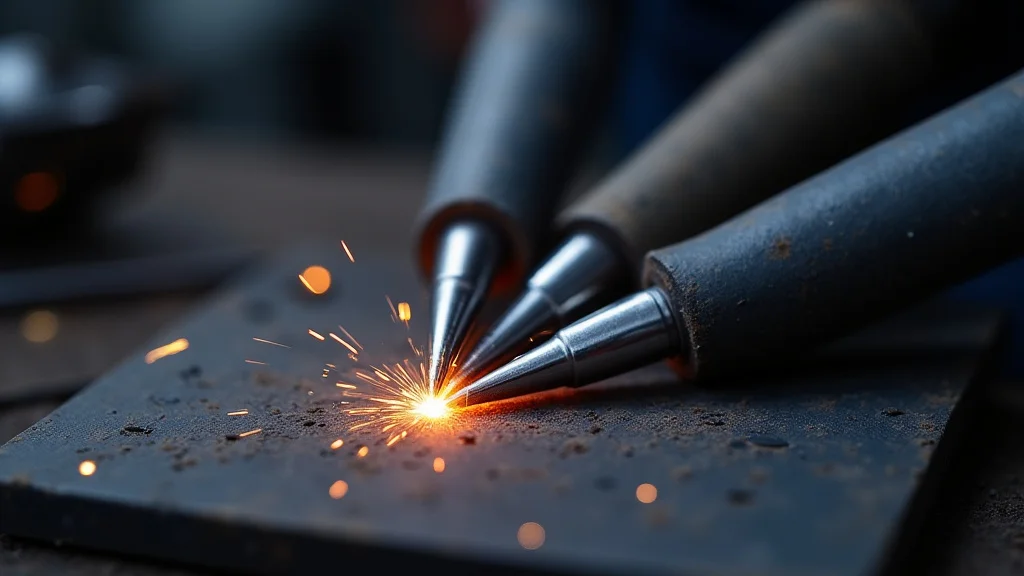
This is where the magic happens! The shape of your tungsten tip affects your arc. For DC welding, you almost always want a pointed tip.
This creates a focused, stable arc. You can grind your tungsten to a nice, sharp point. Use a dedicated tungsten grinder if you have one, or a clean grinding wheel on an angle grinder.
Grind in one direction only to create a smooth, conical shape. Don’t grind the tungsten on the same wheel you use for regular metal, as this can contaminate it.
For AC welding on aluminum, you usually want a slightly balled tip. After you’ve ground it to a point, strike an arc on a scrap piece of aluminum for a few seconds. The heat will naturally round off the tip into a ball shape.
A perfectly rounded ball gives a stable, wide arc needed for aluminum. If the ball gets too big, you can re-grind it to a point and then ball it up again.
DC vs. AC Tungsten Grinding
It’s important to remember the difference between DC and AC. For DC welding, you want a sharp point. Think of it like a pencil tip.
This concentrates the electricity to create a small, powerful arc. For AC welding, you want a rounded tip. This is like a small ball.
It helps spread the arc out and makes it more stable on aluminum.
Using a sharp point on AC can cause the tungsten to burn off quickly and erratically. The arc can wander all over the place. Using a ball on DC might not give you the focused arc you need and could lead to an unstable weld.
Always match your tungsten shape to the type of current you are using and the metal you are welding.
Common Mistakes to Avoid
One big mistake beginners make is not changing the tungsten often enough. They try to weld with a worn-out or contaminated tip. This leads to poor welds and frustration.
Another common error is touching the tungsten to the weld pool. This contaminates the tungsten and the weld. If you do this, stop welding, pull the tungsten out, and often you’ll need to regrind or replace it.
Not using the right type or diameter of tungsten is also a problem. Using pure tungsten for high-amperage DC welding might lead to a balling tip. Using a tungsten that’s too thin for the amperage can cause it to overheat and break.
Lastly, grinding the tungsten on a dirty grinder can transfer contaminants, which will then transfer to your weld.
Maintaining Your Tungsten
Good maintenance makes your tungsten last longer and perform better. Keep your tungsten electrodes clean and stored properly. Use a dedicated grinder for sharpening.
If you accidentally contaminate your tungsten, don’t try to force it. It’s usually best to cut off the contaminated tip or regrind it. If it’s badly contaminated, a new piece is often the quickest way to get back to good welding.
Pay attention to how your arc behaves. If it’s unstable, check your tungsten first. Is it clean?
Is it the right shape? Is it the correct length of stick-out? These small checks can save you a lot of trouble and lead to much better welds.
Remember, a sharp, clean tungsten is your best friend for a strong, consistent arc.
Frequently Asked Questions
Question: How often should I replace my TIG tungsten?
Answer: You should replace or regrind your TIG tungsten whenever it becomes blunted, contaminated, or breaks. If you notice your arc is unstable, sputtering, or spreading out, it’s likely time for a change.
Question: What is the difference between DC and AC tungsten grinding?
Answer: For DC welding, you grind the tungsten to a sharp point. For AC welding, you typically grind it to a point and then let it form a ball shape by striking an arc on scrap metal.
Question: Can I use any type of tungsten for any metal?
Answer: No, different metals and welding processes work best with specific types of tungsten. Pure tungsten is often used for AC, while ceriated or lanthanated are common for DC.
Question: What happens if I touch the tungsten to the weld?
Answer: Touching the tungsten to the weld contaminates both the tungsten and your weld. This can lead to porosity, inclusions, and a weak weld. You usually need to regrind or replace the tungsten.
Question: How much tungsten should stick out of the torch cup?
Answer: A common stick-out for DC welding is about 1/4 inch to 1/2 inch. For AC welding, you might use a bit more. The ideal amount can vary based on the joint and your personal technique.
Final Thoughts
Knowing How Do You Replace TIG Tungsten Properly? is a key skill. You’ve learned it’s not hard. You know the simple tools you need and how to remove the old tungsten.
You also know how to pick and install new tungsten, and shape it for different metals. Avoiding common mistakes will make your welding much smoother. Keep practicing these steps, and you’ll be changing tungsten confidently every time.