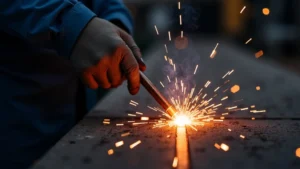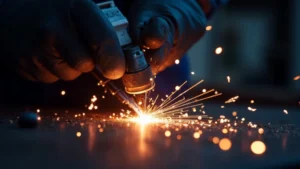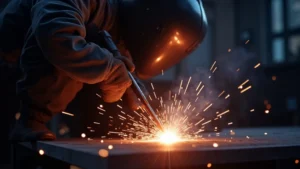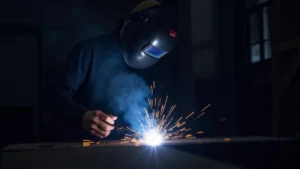
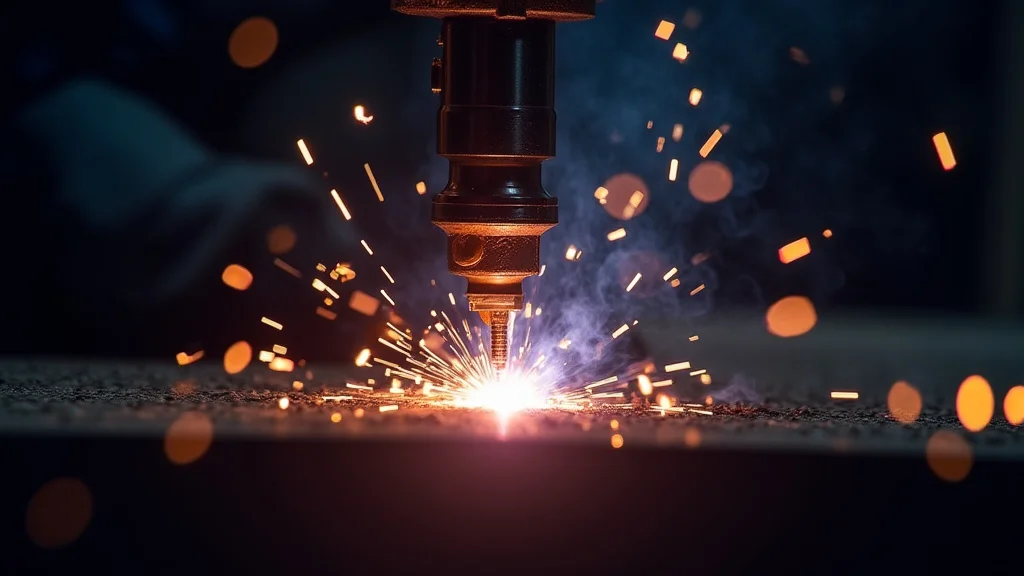
It’s common for new welders to wonder, How Do You Avoid Welding Sparks on Workpieces? Welding sparks can fly everywhere, and it’s easy to worry about them hitting your project and causing damage. Don’t fret! It’s a simple fix once you know a few tricks.
We’ll walk you through exactly what to do, step by step, so your projects stay clean and safe. Get ready to learn how to keep those sparks in check.
Key Takeaways
- Welding sparks are a normal part of the process but can damage workpieces.
- Proper preparation is key to preventing unwanted spark impact.
- Shielding materials are your best friends for protecting surfaces.
- Controlling the welding angle and speed helps manage spark direction.
- Good ventilation can help move sparks away from your work area.
- Regular practice builds the skill to anticipate and control sparks.
Why Sparks Fly and What They Can Do
The Nature of Welding Sparks
When you weld, you’re essentially melting metal. This melting process creates a lot of heat and molten droplets. As these droplets are ejected from the weld pool, they become welding sparks.
They are small, hot pieces of metal that fly out. It’s a natural part of how welding works. Different welding processes create different amounts of sparks.
For example, Stick welding (SMAW) typically produces more sparks than MIG welding (GMAW) or TIG welding (GTAW).
The Risk to Your Workpiece
These flying sparks, while normal, can cause problems. If a spark lands on a surface that isn’t meant to be welded or is already finished, it can burn a small hole or leave a scorch mark. This is especially true for delicate or painted surfaces.
If you’re working on a project that needs a clean finish, like furniture or a car body, these marks can be hard to fix. They can also damage electrical components if they are nearby.
Preparing Your Workspace to Minimize Sparks
Clearing the Area
Before you even pick up your welding torch, take time to clear the space around your workpiece. Remove anything flammable. This includes rags, paper, wood, and any other materials that could catch fire.
This is important for safety as well as for preventing sparks from landing where you don’t want them. A clean workspace is a safe workspace.
Securing Flammable Materials
If there are materials nearby that you can’t move, like parts of a larger assembly, you need to protect them. Use fire-resistant blankets or sheets. These are made of materials like fiberglass.
They can block sparks effectively. Make sure they cover the entire area you need to protect. Overlap them well to avoid any gaps where sparks could sneak through.
Using Protective Barriers
For larger projects or in a workshop setting, you might use welding screens or curtains. These are taller barriers that can block sparks from traveling long distances. They also help contain the sparks to a smaller area.
This makes cleanup easier and protects other areas of your workshop or site from stray sparks.
Techniques for Directing Sparks Away
Adjusting Your Welding Angle
The angle at which you hold your welding torch or electrode makes a big difference. Try to point the torch slightly away from areas you want to keep spark-free. Imagine you’re directing traffic with the torch.
If you’re welding on the edge of a plate, angle the torch so the sparks fly onto the scrap metal or the floor, not onto the finished surface of your workpiece. This takes some practice, but it’s very effective.
Controlling Travel Speed
How fast you move your torch also affects sparks. Moving too slowly can cause excessive spatter and sparks. Moving too quickly might result in a poor weld.
Find a steady, consistent speed. This usually means moving just fast enough to get a good melt pool without overheating the metal. Experiment to find the sweet spot for your specific welding setup and material.
Weld Seam Placement
Think about where you are starting and ending your weld. If you can, plan to start and finish your welds on scrap pieces of metal that are attached to your main workpiece. These are called run-off tabs.
After you finish welding, you can simply break or cut off these tabs. This way, any extra spatter or sparks at the start and end of your weld are on a piece you don’t need.
Choosing the Right Shielding
Fire-Resistant Blankets
As mentioned before, fire-resistant blankets are excellent. They are flexible and can be draped over or around parts of your workpiece. They are good for protecting rounded surfaces or areas where rigid barriers won’t fit well.
Always use blankets rated for welding sparks, usually made of fiberglass or treated cotton.
Sheet Metal Shields
Sometimes, a simple piece of sheet metal can be a great shield. You can bend it or prop it up to block sparks. It’s particularly useful for protecting flat areas or edges.
Aluminum or steel sheets work well. Just ensure they are thick enough to withstand some heat if a stray spark happens to hit them directly.
Welding Blankets vs. Drop Cloths
It’s important to distinguish between a proper welding blanket and a regular drop cloth. Regular cloths, even if thick, are often made of flammable materials and can catch fire easily from welding sparks. Always use materials specifically designed to resist heat and sparks.
Check the product description to be sure.
Understanding Different Welding Processes
Stick Welding (SMAW)
Stick welding is known for producing a lot of sparks and spatter. The flux coating on the electrode burns and creates slag, which contributes to the spatter. If you’re stick welding, you’ll need more robust shielding and careful technique to manage sparks.
Angle and speed are very important here.
MIG Welding (GMAW)
MIG welding generally produces fewer sparks than stick welding, but it can still create significant spatter. The amount of spatter depends on the shielding gas used, the wire feed speed, and the voltage. Using the correct gas and settings can help reduce the amount of spatter you deal with.
TIG Welding (GTAW)
TIG welding is the cleanest welding process when it comes to sparks and spatter. It produces very little to no spatter. The arc is shielded by an inert gas, and the filler metal is added separately by hand.
If you’re concerned about sparks, TIG welding is often the preferred method, though it requires more skill and is slower.
Practical Tips for Spark Management
Ventilation
Good ventilation in your welding area is crucial. While it won’t stop sparks from flying, it can help disperse them. Fumes rise, and so do sparks.
A good fan or exhaust system can help move sparks away from your immediate welding zone and prevent them from accumulating. It also keeps the air you breathe cleaner.
Using Magnets
Small, strong magnets can be surprisingly useful. You can use them to temporarily hold a small sheet metal shield in place. They can also help collect stray metal shavings that might be present in your workspace, reducing the chance of them being picked up by sparks and spread around.
Regular Cleaning
Keep your work area clean. Sweep up metal filings and debris regularly. This reduces the number of small objects that sparks can interact with or be attracted to.
A clean floor also makes it easier to spot and clean up any stray sparks or hot metal that may have fallen.
Personal Protective Equipment (PPE)
While this is about protecting your workpiece, don’t forget your own safety. Always wear appropriate PPE, including a welding helmet, gloves, and a fire-resistant jacket. Sparks can fly unexpectedly, and your safety gear protects you from burns.
Frequently Asked Questions
Question: What is the main reason welding sparks are a problem for workpieces?
Answer: Welding sparks are very hot and can burn or scorch surfaces of your workpiece that are not meant to be welded, leaving permanent marks.
Question: Can I use a regular blanket to shield my workpiece from sparks?
Answer: No, it’s very dangerous. Regular blankets are flammable and can easily catch fire from welding sparks. Always use fire-resistant welding blankets.
Question: Does the type of welding material affect spark production?
Answer: Yes, the welding process itself greatly affects spark production. Stick welding creates the most, MIG creates a moderate amount, and TIG creates very few.
Question: How does the angle of my welding torch influence sparks?
Answer: You can direct sparks by angling your torch. Aim it away from sensitive areas of your workpiece and towards scrap metal or the floor.
Question: Is it possible to completely stop welding sparks?
Answer: No, it’s not possible to completely stop sparks. They are a natural byproduct of most welding processes. The goal is to manage and minimize their impact.
Final Thoughts
Knowing How Do You Avoid Welding Sparks on Workpieces? is all about being prepared and smart with your technique. By clearing your area, using the right shielding like fire-resistant blankets and sheet metal, and adjusting your welding angle and speed, you can keep your projects looking great. Think of it as giving your workpiece a little protection.
Practice these methods, and you’ll see fewer unwanted marks. Keep welding, and keep those sparks under control for better results.