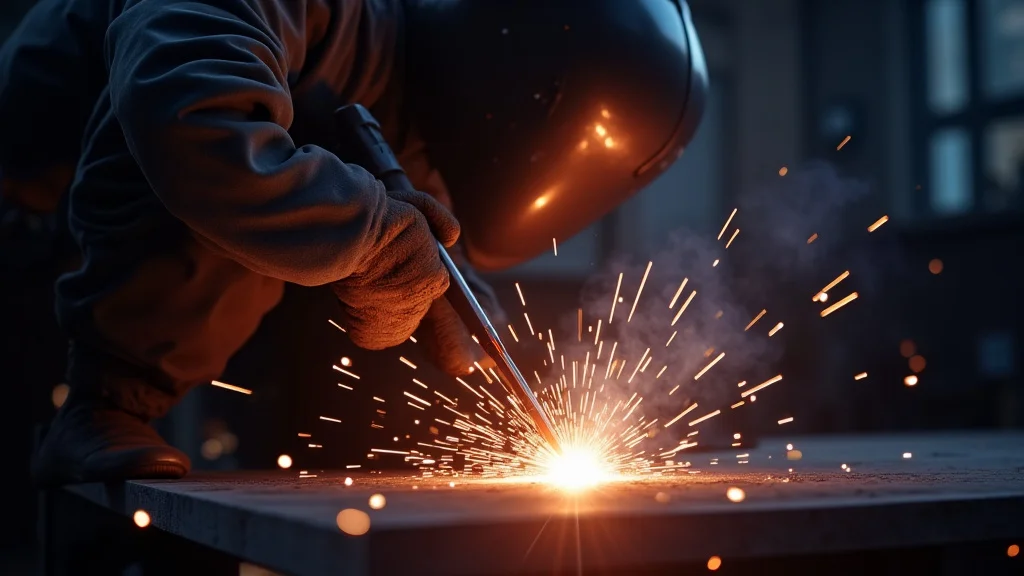
Welding sparks can seem a bit tricky when you’re just starting out. It’s easy to worry about them flying everywhere and causing problems. But don’t fret!
Learning How Do You Avoid Welding Sparks on Metal? is simpler than you might think. We’ll walk through it step-by-step, making it easy to get right. Keep reading to see how you can control those sparks and weld with more confidence.
Key Takeaways
- You can control welding sparks by choosing the right welding method.
- Proper machine settings help keep sparks from flying too much.
- Using the correct welding angle makes a big difference.
- Keeping your distance from the metal helps manage sparks.
- Protecting yourself and your area is very important.
Understanding Welding Sparks
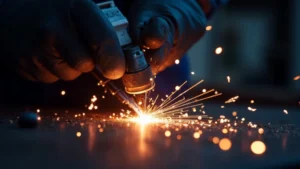
Welding sparks are tiny bits of hot metal that fly off during the welding process. They happen because the welding arc melts the metal. This melting process can fling small droplets of molten metal into the air. For new welders, seeing these sparks can be a bit startling. It might feel like you’re losing control, or that sparks are going where you don’t want them to. The main goal is to do good work while staying safe and not damaging anything.
Why Do Sparks Fly?
Sparks fly because of how welding works. The intense heat from the welding arc melts the metal you are joining. It also melts a bit of the welding rod or wire you are using. As these small pieces of metal melt, they can be pushed away by the force of the arc or the molten pool. Think of it like boiling water – tiny droplets can splash up. In welding, these splashes are much hotter and can travel farther.
Factors Affecting Spark Production
Several things make sparks fly more or less. The type of welding you do is a big one. Some ways of welding produce more sparks than others. The settings on your welding machine play a role too. If the heat is too high, more metal will melt and fly off. How you hold the welding torch or gun matters a lot. And of course, the type of metal you are welding can change things.
Methods for Controlling Welding Sparks
The easiest way to handle sparks is to use methods that create fewer of them. This is especially helpful for beginners.
Choosing the Right Welding Process
Some welding processes are known for being “cleaner” than others. This means they create fewer sparks.
Gas Metal Arc Welding (GMAW) / MIG Welding
MIG welding is often a good choice for beginners. It uses a continuous wire feed and a shielding gas. While it does produce sparks, they are usually manageable. The amount of sparks can be controlled by the settings.
Gas Tungsten Arc Welding (GTAW) / TIG Welding
TIG welding is known for producing very few sparks. It uses a non-consumable tungsten electrode and a separate filler rod. This method is more precise and gives you a lot of control. It’s often used for thinner metals and when a very clean weld is needed. Because it’s so controlled, sparks are not a big issue.
Shielded Metal Arc Welding (SMAW) / Stick Welding
Stick welding is very common but tends to create the most sparks. The flux coating on the welding rod burns and creates a shielding gas. This process can be a bit messier with more spatter and sparks. For beginners wanting to avoid sparks, it might be best to start with MIG or TIG.
Adjusting Machine Settings
Your welding machine has dials and controls that change how it works. These settings are super important for managing sparks.
Amperage and Voltage
These two settings control the heat of your weld.
* Amperage (Amps): This is the amount of electrical current. Higher amps mean more heat. If your amps are too high for the metal thickness, you’ll get more sparks.
* Voltage (Volts): This controls the arc length. A voltage that’s too high can make the arc unstable and throw more sparks.
Finding the right balance is key. Often, the welding machine manual or charts provide good starting points for different types of metal and wire. For instance, if you are welding thin sheet metal, you’ll use lower amps and voltage than for thick steel.
Wire Speed (for MIG welding)
In MIG welding, the speed of the wire going into the weld affects the heat and arc. If the wire speed is too high, it can cause more spatter. Too low, and the weld might not penetrate well. Adjusting this helps fine-tune the arc and spark output.
Understanding Polarity
Welding machines use different types of electrical current.
* Direct Current Electrode Positive (DCEP): This is common for MIG and TIG welding. It generally produces a smoother arc with less spatter.
* Direct Current Electrode Negative (DCEN): Used in some TIG applications, this can also be clean.
* Alternating Current (AC): Used for some TIG and other processes. It can create more spatter than DCEP but is useful for certain metals like aluminum.
For most beginners using MIG or TIG, DCEP is often the setting that helps reduce sparks.
Welding Technique Matters
How you actually move the welding torch or electrode is just as important as machine settings.
Torch or Electrode Angle
The angle at which you hold your welding gun or electrode directly affects the direction of the sparks.
* Pushing vs. Pulling (MIG): In MIG welding, pushing the gun slightly (in the direction of travel) can sometimes reduce spatter. Pulling the gun can sometimes create more. Experimenting with small changes can help.
* Angle of the Electrode (Stick): For stick welding, holding the electrode at a slight angle, usually around 15-20 degrees, in the direction of travel helps direct the molten metal and sparks.
Travel Speed
How fast or slow you move the welding torch is critical.
* Too Fast: If you move too quickly, the weld may not have enough time to form properly, and sparks can fly erratically.
* Too Slow: Moving too slowly can create too much heat, melting more metal than needed and leading to excessive spatter and sparks.
Finding a steady, consistent speed is important for a good weld and fewer sparks.
Arc Length
This is the distance between the tip of the electrode or wire and the metal you are welding.
* Short Arc Length: A shorter arc is generally more stable and produces less spatter. It creates a more focused heat.
* Long Arc Length: A longer arc is less stable, making it harder to control. It can lead to more spatter, sparks, and a wider, flatter weld.
For beginners, aiming for a consistent, short arc is a great way to reduce sparks and get better welds.
Preparing Your Workspace
Even with the best techniques, some sparks are inevitable. That’s why protecting your area is so important.
Remove Flammable Materials
This is the most crucial safety step. Sparks are hot enough to start fires.
* Clear the Area: Make sure there are no flammable items like rags, wood, paper, plastics, or chemicals anywhere near your welding spot.
* Fire Extinguisher: Always have a suitable fire extinguisher (like an ABC dry chemical type) nearby and know how to use it.
* Welding Blanket: Use a fire-resistant welding blanket to cover anything you can’t move that might be near the welding zone.
Grounding the Metal
A good ground connection is essential for a stable arc. A poor ground can cause the arc to wander and spatter more. Ensure the ground clamp is on clean metal and is making solid contact.
Using a Welding Shield
A welding shield, also called a welding curtain or screen, can help contain sparks. These are made of fire-resistant material and can block sparks from flying out into the rest of your shop or workspace.
Personal Protective Equipment (PPE)
While PPE doesn’t stop sparks from flying, it protects you from them.
Welding Helmet
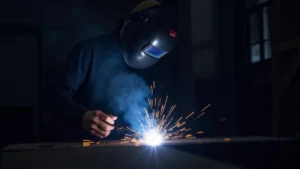
A good auto-darkening welding helmet is vital. It protects your eyes and face from the bright light, UV rays, and any sparks that might fly upwards.
Flame-Resistant Clothing
Wear heavy, flame-resistant clothing. This includes a welding jacket or apron, long pants, and closed-toe leather boots. Never wear synthetic materials like polyester, as they can melt onto your skin.
Gloves
Thick leather welding gloves protect your hands from heat and sparks.
Safety Glasses
Even with a helmet, wearing safety glasses underneath can provide an extra layer of protection.
Troubleshooting Common Spark Issues
Sometimes, even when you try to do things right, sparks can still be a problem. Here’s how to fix common issues.
Excessive Spatter
If you’re getting way too much spatter and sparks, check these things:
* Machine Settings: Are your amps and voltage too high? Try lowering them.
* Wire Feed (MIG): Is the wire speed correct? Is the wire feeder working smoothly?
* Ground Clamp: Is it making good contact with clean metal?
* Dirty Metal: Welding over rust, paint, or dirt can cause spatter. Clean your metal first.
* Contact Tip (MIG): If the contact tip is worn or dirty, it can cause poor wire feeding and more spatter.
Inconsistent Arc
An unstable arc often means more sparks.
* Check Ground: A loose or dirty ground is a common cause.
* Wire Feed Issues (MIG): Ensure the liner in your MIG gun is clean and not kinked.
* Electrode Condition (Stick): Old or damaged welding rods can cause an unstable arc.
* Power Source: Make sure your welding machine is receiving stable power.
Sparks Flying Sideways or Backwards
This usually relates to your angle and technique.
* Torch Angle: Are you pushing or pulling too much? Try a slight push for MIG.
* Travel Speed: Are you moving too fast or too slow? Try to maintain a consistent pace.
* Electrode Angle (Stick): Ensure you have the correct angle.
Frequently Asked Questions
Question: What’s the easiest welding method for beginners to avoid sparks?
Answer: TIG welding is known for producing very few sparks. MIG welding is also a good choice for beginners and offers more control over sparks than stick welding.
Question: Can I weld near flammable materials if I’m careful?
Answer: No, it’s never safe to weld near flammable materials. Even small sparks can ignite them. Always clear the area or use fire-resistant barriers.
Question: How does my welding angle affect sparks?
Answer: Holding your torch or electrode at the correct angle helps direct the molten metal and sparks away from unintended areas and into the weld puddle.
Question: Is it okay to wear regular work clothes while welding?
Answer: No, you should always wear flame-resistant clothing. Regular clothes, especially synthetics, can melt and catch fire, causing serious burns.
Question: What should I do if sparks start a small fire?
Answer: Use your fire extinguisher immediately. If the fire is too large, evacuate the area and call the fire department.
Final Thoughts
Learning How Do You Avoid Welding Sparks on Metal? gets easier with practice. You now know that choosing the right welding process, like TIG or MIG, makes a big difference. Paying attention to your machine’s settings, like amps and voltage, is key.
Your welding angle and how fast you move also control where sparks go. Always prepare your space by removing anything flammable. And, of course, wear your safety gear.
By following these simple steps, you can weld safely and effectively, keeping those sparks in check.