Many folks learning TIG welding wonder, “How Do You Adjust TIG Tungsten Angle for Arc?” It can seem a bit tricky at first because a small change makes a big difference. Don’t worry, it’s simpler than it sounds! We’ll break it down step-by-step to help you get that perfect arc.
Let’s explore how to make your tungsten work for you to achieve cleaner welds.
Key Takeaways
- You’ll learn how the tungsten angle affects your TIG arc.
- Discover the ideal angle for different TIG welding situations.
- Understand how to maintain a consistent tungsten shape.
- Find out how to fix common tungsten angle problems.
- Learn how tungsten angle impacts weld penetration and bead appearance.
Understanding TIG Tungsten Angle
What is TIG Tungsten Angle?
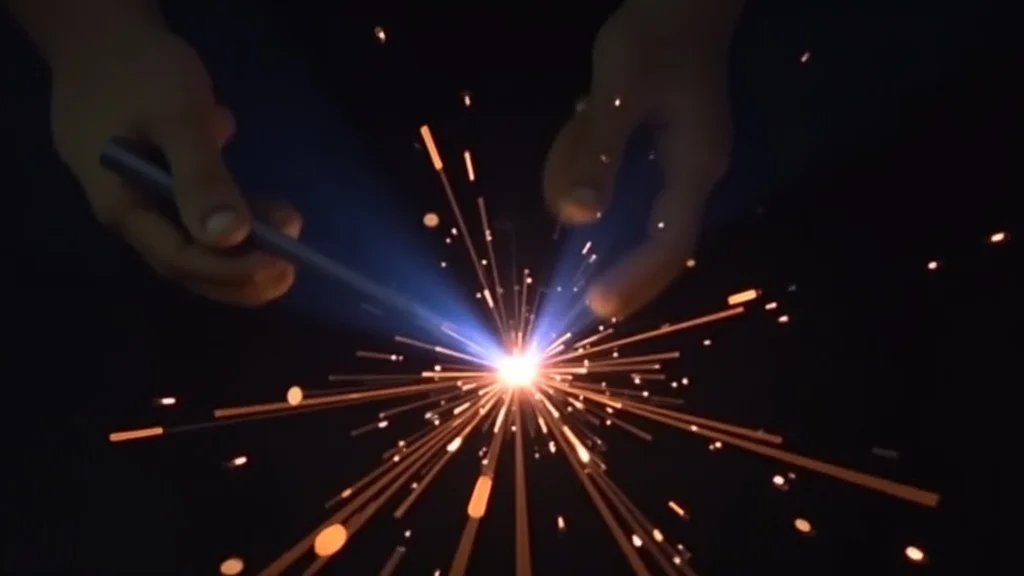
In TIG welding, the tungsten electrode is the part that creates the arc. This arc is what melts the metal and joins it together. The angle refers to how the tip of the tungsten electrode is shaped and how it relates to the flow of electricity and gas.
Think of it like sharpening a pencil. You can have a sharp point, a blunt point, or something in between. Each shape affects how the “lead” comes out, just like the tungsten’s shape affects the arc.
When we talk about the tungsten angle, we’re usually talking about the point at the very tip of the tungsten electrode. This point is ground to a specific shape, often a cone. The angle of this cone, or the sharpness of the point, directly influences the arc.
A well-shaped tungsten gives you a stable, focused arc that’s easy to control. A poorly shaped one can lead to an unstable arc, sputtering, or difficulty in starting and maintaining the weld.
Why Does Tungsten Angle Matter So Much?
The tungsten angle is really important for a few key reasons. First, it affects the arc’s stability. A stable arc is a predictable arc.
It stays where you want it, and it doesn’t jump around. This makes it much easier for you to control the heat and the weld puddle. When the arc is stable, you can make cleaner, more consistent welds.
Second, the tungsten angle influences the shape and penetration of your weld. A finely pointed tungsten electrode, for example, will produce a more concentrated, intense arc. This can lead to deeper penetration, which is good for thicker materials.
On the other hand, a blunter tungsten will create a wider, less intense arc. This is better for thinner materials where you want to avoid burning through.
Lastly, the angle helps to direct the flow of electricity and shielding gas. The tungsten electrode is central to creating the electrical path. Its shape helps to focus this path and, along with the gas nozzle, ensures the shielding gas flows correctly around the arc.
This protection is vital to prevent contamination of the molten weld pool.
How to Prepare Your Tungsten Electrode
Grinding Your Tungsten
The process of setting the correct tungsten angle starts with grinding. You need a dedicated tungsten grinder. Using a grinding wheel that’s also used for other metals can contaminate your tungsten, leading to poor weld quality.
Always use a grinder specifically for tungsten, or a clean grinding wheel.
When you grind tungsten, you’re creating that conical shape. The goal is to make a smooth, consistent taper from the body of the electrode down to the tip. You don’t want any rough edges or flats on the tip.
A smooth tip helps the arc form more cleanly and consistently. Think of it like sanding wood – you want a smooth finish for the best results.
Most TIG welding processes, especially for DC (Direct Current) welding of steel and stainless steel, benefit from a pointed tungsten. For AC (Alternating Current) welding, particularly with aluminum, the tip is often slightly blunted or rounded. This is because AC current tends to “ball up” the tungsten tip more aggressively than DC.
Choosing the Right Grinding Angle
The specific angle you grind your tungsten to depends on the type of metal you’re welding and the type of TIG machine you’re using. For most DC applications, a general rule is to grind to an angle of about 15 to 20 degrees. This creates a nice, sharp point that’s good for most general welding tasks.
If you need deeper penetration, you might go with a slightly sharper angle, perhaps closer to 15 degrees. If you’re welding very thin material and need to be careful not to burn through, a slightly blunter angle, maybe around 20-25 degrees, can help spread the heat a bit more. For AC welding of aluminum, you often want a ball tip.
This is achieved by running the machine for a few seconds with the tungsten in the argon gas, but no arc, allowing the tip to round over. Or, you can grind to a point and then very lightly dull it.
It’s important to grind the tungsten in the direction of the taper. Don’t spin it on the grinder, as this can create fine lines that run around the tungsten. These lines can cause the arc to wander.
Instead, move the tungsten along the grinder’s surface so the grinding marks run lengthwise, from the body of the tungsten towards the tip. This helps the arc stay centered and stable.
How Do You Adjust TIG Tungsten Angle for Arc?
Maintaining the Arc Point
The question, “How Do You Adjust TIG Tungsten Angle for Arc?” is really about maintaining the correct shape of your tungsten electrode throughout your welding session. Over time, as you weld, the tungsten tip will erode and its shape will change. This is normal.
The heat from the arc wears down the tungsten.
To maintain the desired angle and shape, you’ll need to regrind your tungsten periodically. How often you need to do this depends on how long you’re welding, the amperage you’re using, and the type of metal. If you notice the arc becoming unstable, wandering, or if the weld bead appearance changes, it’s probably time to pull out the grinder.
When you regrind, try to replicate the original angle you ground. This is why having a consistent technique is helpful. Some welders have a jig or a guide on their grinder to help them maintain the same angle each time.
The aim is to always have a sharp, consistent point (or a controlled ball for AC aluminum) that produces a focused arc.
Tungsten Length and Stick-Out
Besides the angle of the tip, the length of tungsten that you have sticking out of the gas nozzle also affects the arc. This is often called “stick-out.” A shorter stick-out (e.g., 1/4 inch) will result in a more focused, intense arc and deeper penetration. This is good for precise work or thicker metals.
A longer stick-out (e.g., 1/2 inch or more) will produce a wider, less intense arc. This can be useful for spreading heat on thinner materials or when you need a broader weld bead. However, a longer stick-out can also make the arc less stable and more prone to contamination from the surrounding air or shielding gas disruptions.
It also means the tungsten is more likely to get too hot and start to ball up or bend.
The ideal stick-out will vary depending on the amperage and the gas nozzle size. Generally, you want the shortest stick-out that still allows you to get the proper weld puddle control and access to the joint. For most applications, a stick-out of around 1/4 to 1/2 inch is a good starting point.
Experimenting with different stick-outs will help you find what works best for your specific situation.
Tungsten Types and Their Impact
Lanthanated Tungsten
Tungsten electrodes come in different types, distinguished by the small amount of alloying elements added to them. These elements improve their arc starting and stability. Lanthanated tungsten, often colored blue (e.g., 2% Lanthanated), is very popular and versatile.
It works well for both AC and DC welding and offers excellent arc stability and longevity.
Lanthanated tungsten is a great all-around choice. It’s known for its ability to maintain a sharp point for longer than pure tungsten. This means you’ll have to regrind less often, which is a big plus for productivity and consistency.
It handles higher amperages well without excessive erosion.
Ceriated Tungsten
Ceriated tungsten, often colored orange (e.g., 2% Ceriated), is another excellent option. It performs very similarly to lanthanated tungsten and is also suitable for both AC and DC applications. Ceriated tungsten is known for its excellent arc starting, especially at lower amperages.
If you frequently weld at lower amperages or need to start the arc quickly and reliably, ceriated tungsten can be a great choice. It also has good arc stability and doesn’t erode too quickly. Some welders prefer it for its consistent performance.
Pure Tungsten
Pure tungsten, typically colored green, was one of the earliest types used. It’s generally recommended for AC welding of aluminum and magnesium. Pure tungsten tends to form a ball at the tip when heated, which is beneficial for AC welding because it spreads the arc out, creating a stable, rounded arc.
However, it doesn’t hold a sharp point well for DC welding and erodes faster.
For DC welding, pure tungsten is not ideal. It’s prone to contamination and doesn’t offer the arc stability that the alloyed tungstens do. If you’re doing a lot of steel or stainless steel welding with DC, you’ll want to use a different type of tungsten.
Thoriated Tungsten
Thoriated tungsten, often colored red (e.g., 2% Thoriated), was once very popular for DC welding because it offered excellent arc stability and longevity. However, thorium is radioactive, so its use has been declining, and many professionals now avoid it due to health concerns. If you encounter it, be aware of its properties but consider newer, safer alternatives.
Common Tungsten Angle Problems and Solutions
Tungsten Balling Up
One common issue is the tungsten balling up. This means the tip melts and forms a rounded, bulbous shape. For DC welding, this is usually undesirable as it leads to an unstable arc and poor weld quality.
It can happen if the tungsten is too hot, if the amperage is too high for the tungsten diameter, or if you’re using the wrong type of tungsten for DC (like pure tungsten).
- Solution: Regrind the tungsten to a sharp point. Ensure you are using the correct type of tungsten for DC (lanthanated or ceriated). Check that your amperage is appropriate for the tungsten diameter.
Arc Wandering
If your arc seems to jump around uncontrollably, it’s likely wandering. This can be caused by an unevenly ground tungsten tip, contaminants on the tungsten, or improper gas flow. A tungsten that has been ground with a spinning motion can create fine lines that make the arc wander.
- Solution: Regrind the tungsten carefully, moving it lengthwise along the grinder to create parallel grinding marks. Ensure your tungsten is clean and that your shielding gas is flowing correctly.
Electrode Contamination
If you accidentally touch the tungsten to the weld puddle or the filler rod, it becomes contaminated. This contamination will cause the arc to be unstable and may leave inclusions in your weld. A contaminated tungsten tip often looks rough or uneven.
- Solution: If minor contamination occurs, you might be able to grind the tip to clean it. For significant contamination, it’s best to cut off the contaminated end and regrind to a fresh point.
Tungsten Melting into the Weld
Occasionally, a piece of the tungsten electrode might break off and fall into the weld puddle. This is a serious defect. It usually happens when the tungsten is too hot, the amperage is too high, or the tungsten stick-out is too long, causing the tip to become unstable and break.
It can also happen if the tungsten electrode is not properly seated in the collet.
- Solution: Immediately stop welding and remove the broken piece if possible. Regrind the tungsten and ensure it is securely in the collet. Reduce amperage or stick-out if necessary.
Adjusting for Different Materials and Amperages
DC Welding of Steel and Stainless Steel
For steel and stainless steel using DC current, you generally want a sharp, well-defined point on your tungsten electrode. This provides a focused arc that allows for good penetration and control. Lanthanated or ceriated tungstens are excellent choices here.
The angle of the grind should typically be between 15 and 20 degrees. This creates a stable point that can handle the heat. As you increase amperage, you might need a slightly thicker tungsten electrode to prevent it from overheating and losing its point too quickly.
AC Welding of Aluminum and Magnesium
When welding aluminum or magnesium with AC current, the tungsten electrode tends to round over or ball up. This is generally desirable for AC welding. A rounded tip creates a broader, more stable arc, which is good for aluminum’s heat dissipation characteristics.
Pure tungsten is often recommended for AC welding because it naturally forms a good ball tip.
You can achieve the rounded tip by grinding to a point and then letting the AC current round it off, or by using a grinder to create a slightly blunted or rounded end. The key is to have a stable, symmetrical shape that doesn’t cause the arc to wander.
Low Amperage Welding
For very low amperage welding, such as on thin sheet metal or intricate work, maintaining a sharp, fine point on the tungsten is critical. A sharp point allows for a concentrated arc that delivers precise heat. Ceriated tungsten is often preferred for low amperage starts because it initiates the arc very easily.
A shorter stick-out is usually beneficial in low amperage situations to keep the arc focused and prevent heat from spreading too much. Be careful not to let the tungsten get too close to the work, as this can easily cause contamination.
High Amperage Welding
When welding at high amperages, such as on thick plate, you need a tungsten electrode that can handle the heat without eroding too quickly or losing its shape. A thicker tungsten electrode is generally used for higher amperages. This provides more mass to absorb the heat.
The angle of the point is still important, but you might find that even with a well-ground point, it will start to soften or ball up faster at very high amperages. Regular inspection and regrinding are essential. A slightly blunter angle might be acceptable at very high amperages to help spread the arc a little, but you still want it to be controlled.
Final Thoughts
Learning how to adjust your TIG tungsten angle for the arc is key to better welds. It’s all about shaping the tungsten tip correctly and keeping it that way. A sharp, clean point, or a controlled rounded tip for AC aluminum, makes a huge difference in arc stability and weld quality.
Experimenting with different angles and stick-outs will help you find what works best for your projects.
Frequently Asked Questions
Question: What is the best angle to grind my tungsten for TIG welding?
Answer: For most DC welding of steel and stainless steel, a 15 to 20-degree angle is a good starting point. For AC welding of aluminum, a rounded or slightly blunted tip is often preferred.
Question: How do I know when to regrind my tungsten?
Answer: You should regrind your tungsten when you notice the arc becoming unstable, wandering, or if your weld bead appearance changes. It’s also a good idea to regrind after extended welding periods.
Question: Can I use a regular grinding wheel for my tungsten?
Answer: No, it’s best to use a dedicated tungsten grinder or a clean grinding wheel. Grinding tungsten with a contaminated wheel can transfer foreign material to the electrode, affecting your welds.
Question: What happens if my tungsten gets contaminated?
Answer: Contaminated tungsten leads to an unstable arc, poor weld quality, and can cause inclusions in your weld bead. It’s best to grind the contaminated tip off.
Question: How much tungsten should stick out from the gas nozzle?
Answer: The amount of tungsten that sticks out, called stick-out, depends on the application. Generally, 1/4 to 1/2 inch is a good range. Shorter stick-out gives a more focused arc, while longer stick-out gives a wider arc.
Conclusion
Mastering the TIG tungsten angle means focusing on the tip’s shape. A well-ground, consistent point creates a stable arc. Keep your tungsten clean and sharp, or rounded for aluminum.
This simple practice directly improves your weld control and quality. You’ve got this!