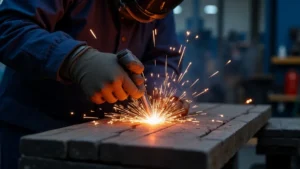
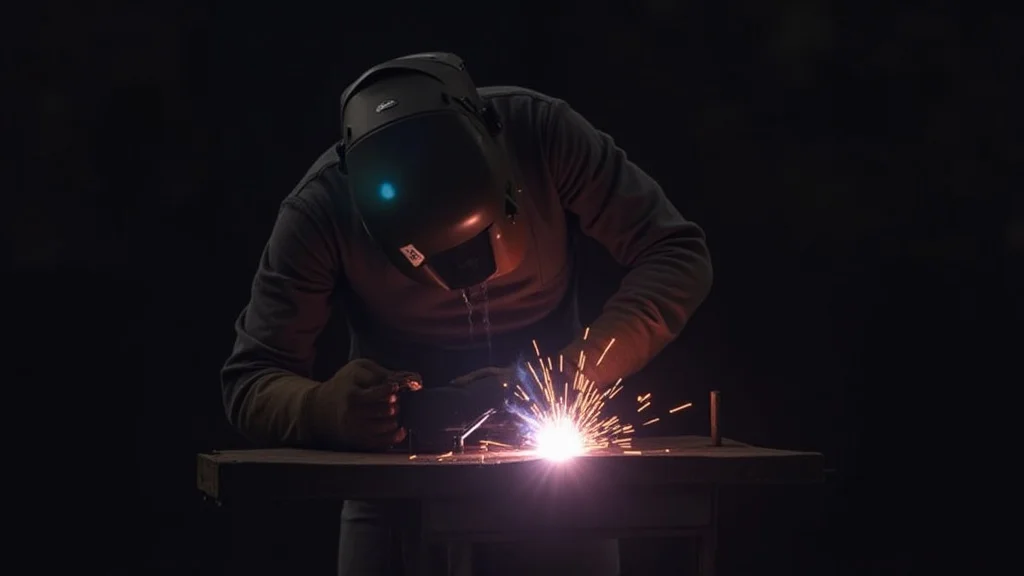
It’s frustrating when your welding machine won’t start the arc, and it’s a common issue for people just starting out. This problem, often called “Welding Machine Not Striking Arc? Troubleshoot,” can make you feel stuck.
But don’t worry! We’ll walk through it step-by-step. We’ll figure out why this happens and how to fix it, so you can get back to welding without any more trouble.
Key Takeaways
- You’ll learn the most common reasons a welding machine fails to strike an arc.
- We will cover simple checks you can do yourself to identify the problem.
- You’ll discover how settings on your welder can prevent arc striking.
- Tips for checking your welding leads and connections will be shared.
- Understand how power supply issues can impact your welder’s performance.
- Gain confidence in fixing basic welding machine problems.
Why Won’t My Welding Machine Strike an Arc?
When you’re ready to weld and your machine just won’t spark, it’s a real bummer. This happens to many welders, especially when they’re new to it. Think of it like trying to start a car, but the engine won’t turn over.
There are a few simple things that could be wrong. We’ll go through them one by one so you can get back to making cool stuff.
Common Causes for No Arc
The most frequent reason a welding machine won’t strike an arc is a simple oversight. It might be something you forgot to do, or a setting that’s not quite right. Let’s break down the usual suspects.
Power Supply Issues
Your welder needs good power to work. If the power source isn’t strong enough or is interrupted, the arc won’t start.
- Check the Outlet: Make sure your welder is plugged into the correct outlet. Some welders need a dedicated circuit.
- Extension Cords: If you’re using an extension cord, it needs to be heavy-duty and the right length. A cord that’s too thin or too long can cut down the power.
- Breaker Tripped: Check your circuit breaker. If it tripped, reset it. If it keeps tripping, there might be a bigger problem with your wiring or the welder itself.
Incorrect Settings
Modern welding machines have many settings. If they’re not set up right for your job, you won’t get an arc.
- Amperage: The amperage setting needs to be suitable for the type of metal you’re welding and its thickness. Too low, and it might not arc.
- Polarity: Different welding processes and electrodes need specific polarity (DC or AC, and positive or negative). Using the wrong polarity is a common mistake.
- Wire Speed (for MIG): If you have a MIG welder, the wire speed needs to match the voltage. If the wire isn’t feeding fast enough or too fast, it can cause issues.
- Gas Flow (for MIG/TIG): For MIG and TIG welding, the shielding gas is vital. If the gas isn’t turned on or the flow is too low, you won’t get a good arc.
Connection Problems
The flow of electricity is key to welding. Loose or bad connections can stop it dead.
- Ground Clamp: This is super important. Make sure your ground clamp is attached firmly to a clean piece of metal on your workpiece. Any rust, paint, or dirt can block the connection.
- Electrode Holder/Torch: Ensure the electrode (for Stick welding) or the TIG torch and its consumables are properly seated and tightened. A loose connection here means no power.
- Welding Cables: Check your welding cables for any damage, like cuts or fraying. Also, make sure they are securely connected to the welder.
Consumables and Electrode Issues
The things you use to weld, like electrodes or wire, can also be the problem.
- Damp Electrodes (Stick Welding): Stick welding electrodes can absorb moisture from the air. Damp electrodes are hard to strike an arc with and lead to poor welds. Keep them dry.
- Incorrect Electrode Type: Using the wrong type of electrode for your metal or machine will cause problems.
- Worn TIG Tungsten: For TIG welding, a worn-down or improperly sharpened tungsten electrode won’t create a stable arc.
- Dirty Wire (MIG Welding): If the welding wire is rusty or dirty, it can cause feeding problems and prevent a good arc.
Machine Malfunction
Sometimes, the welder itself might have a problem. This is less common but can happen.
- Internal Wiring: Loose or broken wires inside the machine can stop it from working.
- Component Failure: A specific part inside the welder could have failed.
- Overheating: If the machine has been running for too long, it might overheat and shut itself down to prevent damage. Let it cool down.
Troubleshooting Steps: A Simple Guide
Let’s walk through a simple plan to fix your welding machine when it’s not striking an arc. Follow these steps carefully.
Step 1: Check the Power
First, confirm your machine is getting power. Is it plugged in securely? Is the power switch on?
If you’re using a breaker, is it on? Try plugging something else, like a lamp, into the same outlet to make sure the outlet is working.
Step 2: Inspect Your Ground Clamp
The ground clamp is often the culprit. Make sure it’s clamped tightly to your workpiece. Scrape away any paint, rust, or dirt from the metal where the clamp is attached.
A clean, solid connection is vital.
Step 3: Verify Welding Cables and Connections
Look at your welding cables. Do they have any cuts or damage? Are they plugged firmly into the welder?
Are the electrode holder or TIG torch connections tight?
Step 4: Review Your Settings
Double-check all the settings on your welder. Are they appropriate for the material thickness and type you are welding? Is the polarity correct?
If you have a MIG welder, is the wire speed set correctly for the voltage?
Step 5: Examine Your Consumables
For stick welding, try a fresh, dry electrode. For TIG welding, check your tungsten tip. For MIG welding, make sure your wire is feeding smoothly and is clean.
Step 6: Test and Observe
After checking these things, try to strike an arc again. Listen for any unusual sounds. Look for any sparks or signs of life.
If it still won’t arc, consider the possibility of a machine issue.
Troubleshooting Specific Welding Types
Different welding types have their own specific quirks when it comes to arc starting.
Stick Welding (SMAW)
Stick welders are generally simpler. The main issues are usually power, ground, or damp electrodes. If your electrode is sticking to the metal without starting an arc, it could be too low amperage or a poor ground.
MIG Welding (GMAW)
MIG welders involve wire feed and gas. If the arc won’t start, check:
- Wire feeder tension: Is the wire feeding smoothly?
- Gas flow: Is the gas valve open and is there enough gas?
- Contact tip: Is the contact tip worn or clogged?
TIG Welding (GTAW)
TIG welding is more sensitive. Issues can arise from:
- Tungsten electrode: Is it sharp and clean? Is it the right type?
- High-frequency start: If your machine has HF start, ensure it’s engaged and working.
- Gas lens: A dirty or damaged gas lens can disrupt gas flow.
When to Seek Professional Help
If you’ve gone through all these steps and your welding machine still won’t strike an arc, it’s time to consider that there might be a deeper problem. This is especially true if you notice any strange smells, smoke, or hear unusual noises coming from the machine. Trying to fix internal electrical issues without the right knowledge can be dangerous and might cause more damage.
In these cases, it’s best to contact the manufacturer of your welding equipment or take it to a qualified welding machine repair shop. They have the tools and expertise to diagnose and fix more serious internal problems.
Frequently Asked Questions
Question: Why is my welding machine not making a spark?
Answer: This usually means there’s an issue with the power supply, a bad ground connection, incorrect settings, or problems with the welding cables or consumables.
Question: Can a bad ground clamp stop my welder from striking an arc?
Answer: Yes, absolutely. The ground clamp must make a clean, solid connection to your workpiece for the electricity to flow and create an arc.
Question: My MIG welder wire isn’t feeding, so no arc. What’s wrong?
Answer: Check the wire feeder tension, the liner in the MIG gun, and the contact tip. If the wire isn’t feeding, the arc cannot start.
Question: Is it safe to try and fix a welder that won’t arc myself?
Answer: Simple checks like power, ground, and settings are safe. However, opening up the machine to fix internal components can be dangerous due to electrical shock risks. Only do what you’re comfortable with.
Question: How often should I clean my welding machine?
Answer: It’s good to clean dust and debris from the exterior regularly. Internal cleaning or maintenance is usually best left to professionals unless you have specific training.
Final Thoughts
It’s normal for a welding machine not to strike an arc sometimes. Usually, the fix is pretty simple. Check your power source, make sure the ground clamp is on tight to clean metal, and double-check all your settings.
Also, look at your cables and the parts you use to weld, like electrodes or wire. Most of the time, one of these simple checks will get you welding again. If not, it might be time for expert help.