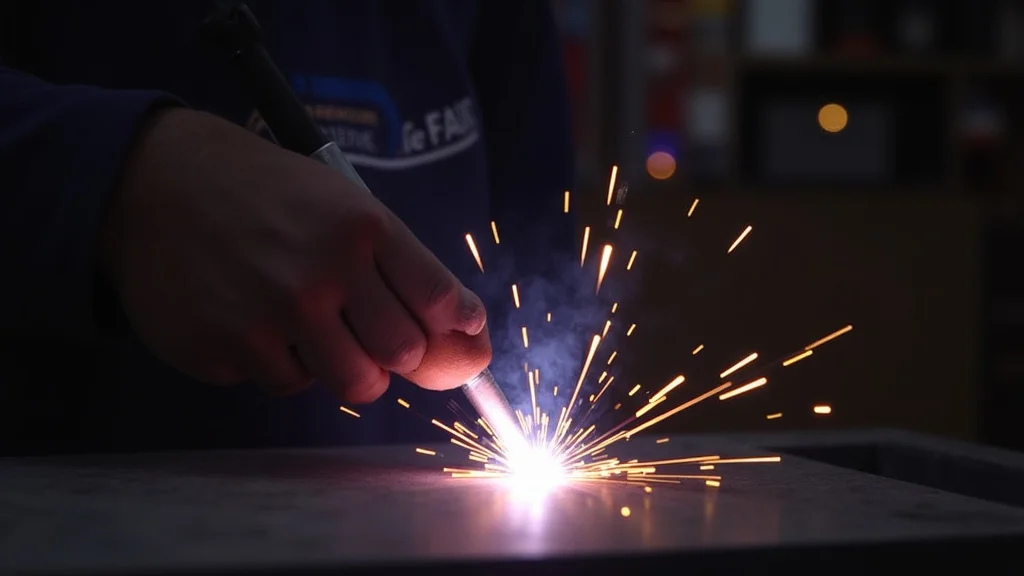
Having trouble with your TIG welds? If you’re seeing uneven penetration, you’re not alone. This is a common challenge, especially when you’re just starting out.
It can be frustrating to get a weld that looks good on the surface but doesn’t hold up. But don’t worry, fixing this is simpler than you might think. We’ll walk you through a few easy steps to get your welds looking consistent and strong.
Keep reading to learn how to solve your TIG Welder Uneven Penetration? Quick Fix problem and get back to making great welds.
Key Takeaways
- Learn the main reasons for uneven TIG weld penetration.
- Discover how to adjust your TIG torch angle for better results.
- Understand the impact of travel speed on weld penetration.
- See how different amperage settings affect how deep your weld goes.
- Find out how to select the right filler metal for consistent welds.
- Get tips on cleaning your metal for a strong, even weld.
What Causes Uneven TIG Weld Penetration?
Uneven penetration in TIG welding happens when your weld doesn’t go deep enough in some spots and too deep in others. This can make your welds weak. It’s like trying to build a wall where some bricks are sticking out and others are pushed in.
You want it all to be smooth and strong.
There are several things that can cause this. The good news is that most of them are easy to fix once you know what to look for. We’ll go through the most common causes and give you simple solutions.
Why It Happens: The Main Culprits
1. Incorrect Torch Angle
Your TIG torch is like a paintbrush for metal. If you hold it at a weird angle, the paint won’t go on right. The same is true for welding.
If you tilt your torch too much to one side, the heat won’t focus on the center of your weld. This means one side will get more heat and melt deeper, while the other side gets less heat and stays shallow.
For most TIG welding, you want to hold the torch almost straight up and down. A slight angle, usually 10 to 15 degrees, leaning towards your direction of travel is often best. This pushes the molten puddle forward and helps the filler metal blend in smoothly.
Imagine you’re pouring water into a bucket. If you pour it straight down, it goes to the bottom. If you pour it at an angle, some water might splash out or not reach the bottom evenly.
Your TIG torch works in a similar way with the molten metal.
2. Inconsistent Travel Speed
How fast you move your TIG torch matters a lot. If you move too slowly, the metal has too much time to melt. This leads to deep, wide welds that can even burn through.
If you move too fast, the metal doesn’t have enough time to melt properly. This results in shallow welds that are weak and don’t fuse well.
The key is to keep your speed steady. Think about walking at a normal pace. You don’t want to sprint one second and then stop and stand still the next.
You want a consistent, smooth movement.
For many materials, a speed that lets you add filler metal about as fast as you’re melting the base metal works well. You’ll see a consistent puddle forming and spreading evenly.
3. Wrong Amperage Setting
Amperage is the amount of electrical current that flows through your TIG welder. This current creates the heat that melts the metal. If your amperage is too low, you won’t melt the metal enough, leading to shallow penetration.
If it’s too high, you’ll melt too much and might even burn through, causing unevenness and weak spots.
Finding the right amperage is like finding the right temperature for baking cookies. Too cool, and they won’t cook. Too hot, and they’ll burn.
For TIG welding, there are charts and guides that can help you find a good starting point based on the type and thickness of the metal you’re welding.
Generally, thicker metals need higher amperage, and thinner metals need lower amperage. Always start with a recommended setting and then adjust based on how the puddle is forming. If the puddle is too small and doesn’t spread, increase the amperage slightly.
If it’s too big and hard to control, decrease it.
4. Poor Filler Metal Technique
The filler metal is like the glue that holds your weld together. How you add it to the puddle makes a big difference. If you add too much filler metal at once, it can cool down the puddle and cause it to freeze up, leading to shallow spots.
If you don’t add enough, you won’t get enough material to create a strong bead.
You want to add filler metal consistently, just enough to fill the gap and blend with the base metal. A common technique is to dip the filler rod into the leading edge of the puddle. Keep the rod tip just touching the molten metal, and add it smoothly as you move along.
Think of it like adding icing to a cake. You want to add it in a steady stream, not dump a whole blob in one spot. The goal is to add just the right amount to build up the weld bead without overwhelming the puddle.
5. Dirty Metal
Metal that isn’t clean can cause all sorts of problems with TIG welding, including uneven penetration. Dirt, oil, grease, rust, or even a thin layer of oxidation can prevent the weld from fusing properly. It can also cause porosity (little bubbles) and contamination, which weakens the weld.
Before you start welding, always clean the metal thoroughly. For steel, use a stainless steel wire brush. For aluminum, use a brush dedicated only to aluminum to avoid cross-contamination.
Degreasers can also be helpful for removing oils and grease.
Imagine trying to glue two pieces of wood together that are covered in dirt. The glue won’t stick well, and the joint will be weak. Clean metal is essential for a strong, even weld.
Quick Fixes for Uneven Penetration
Now that we know what causes the problem, let’s look at the solutions. These are simple adjustments you can make right away.
Adjusting Your Torch Angle
If you notice one side of your weld is deeper than the other, your torch angle is likely the issue. Stop and check how you’re holding the torch. For most situations, a near-vertical position is best, with a slight lean in the direction you’re moving.
Quick Fix: Hold the TIG torch as straight up and down as possible, with a slight forward lean (10-15 degrees). Practice moving along a scrap piece of metal, focusing on keeping the torch angle consistent throughout the entire weld.
Controlling Your Travel Speed
If your welds are too shallow in some areas and too deep in others, your speed is probably not steady. Try to maintain a consistent pace. You should see a small, well-formed puddle that you can control easily.
Quick Fix: Focus on moving your torch at a steady, rhythmic pace. Imagine a metronome ticking. Try to match your torch movement to that steady beat.
If the puddle gets too big, you’re going too slow. If it’s too small, you’re going too fast. Adjust your speed until the puddle looks consistent.
Dialing in the Amperage
If you’re consistently getting shallow welds, your amperage might be too low. If you’re burning through or the bead is too wide and flat, it might be too high. Start with a recommended setting and adjust as needed.
Quick Fix: For a start, use a TIG welding amperage chart for your metal type and thickness. If the weld is too shallow, increase the amperage by 5-10 amps. If it’s too deep or you’re burning through, decrease it by 5-10 amps.
Make small adjustments and observe the puddle.
Adding Filler Metal Smoothly
If your filler metal is causing the puddle to cool or not blending well, focus on how you’re adding it. Add small, consistent amounts. Dip the rod just into the edge of the puddle.
Quick Fix: Practice adding filler metal in small, even increments. Try to time your dips with your torch movement. You want the filler metal to melt into the puddle without cooling it down too much.
A good sign is a smooth transition where the filler rod seems to disappear into the bead.
Cleaning is Key
If you’re seeing spatter or the weld looks “dirty,” your metal might not be clean enough. Always clean your metal before you start welding. This is a quick step that makes a big difference.
Quick Fix: Before welding, use a clean stainless steel brush or abrasive pad to remove any rust, paint, oil, or other contaminants from the metal surface. For aluminum, use a brush that has only been used on aluminum.
Understanding Heat Input and Travel Speed
Heat input is a critical concept when welding. It’s the amount of heat energy transferred into the metal. When you have uneven penetration, it often means your heat input is not consistent.
This can be due to either the heat source (your arc) or how long that heat is applied to one spot (travel speed).
Think about heating a pan on the stove. If you leave it on high heat for a long time, it will get very hot, possibly too hot. If you only turn it on for a few seconds, it won’t get hot enough.
TIG welding is similar. The amperage controls how hot the arc is, and your travel speed controls how long that heat stays on one spot.
| Factor | Effect on Penetration | How to Adjust |
|---|---|---|
| Amperage | Higher = Deeper Penetration; Lower = Shallower Penetration | Increase for deeper welds, decrease for shallower welds. |
| Travel Speed | Slower = Deeper Penetration; Faster = Shallower Penetration | Slow down for deeper welds, speed up for shallower welds. |
| Torch Angle | Affects heat distribution; too much angle can cause unevenness. | Keep torch nearly perpendicular to the work surface. |
When you’re trying to fix uneven penetration, you’re essentially trying to balance these factors. If you need to go deeper, you might increase amperage slightly or slow down your travel speed. If you’re going too deep, you’ll do the opposite.
The Role of TIG Gas
While not always the primary cause of uneven penetration, your shielding gas plays a role in weld quality. Argon is the most common gas for TIG welding. It helps protect the molten puddle from the atmosphere.
If your gas flow is too low, you might get contamination that can affect how the weld metal flows and fuses, leading to inconsistencies.
A good gas flow rate (usually between 15-25 CFH, depending on your setup) creates a protective shield around the arc. This shield pushes away oxygen and nitrogen, which can otherwise weaken the weld and cause defects. You can usually tell if your gas flow is too low if you see a discolored or “burnt” look around your weld, even after cleaning.
Quick Tip: Ensure your gas flow is set correctly for the metal thickness and welding conditions. Check for any leaks in your gas hose or regulator.
Practice Makes Perfect
The best way to get consistent welds is to practice. Set up some scrap pieces of the same metal you’ll be working with. Try welding them using different settings and techniques.
Pay close attention to the puddle and how it forms.
Experiment with your torch angle. Move your torch at different speeds. Try different amperage settings.
You’ll start to develop a feel for what the puddle should look like when you’re getting good penetration.
Take notes on what works and what doesn’t. This will help you remember the best settings for different jobs. Remember, every TIG welder and every welding situation is a little bit different, so practice is key to mastering your technique.
Frequently Asked Questions
Question: What is the most common mistake beginners make with TIG welding penetration?
Answer: The most common mistake is inconsistent travel speed. Beginners often move their torch too fast or too slow, leading to shallow or too-deep welds.
Question: Should I lean my TIG torch when welding?
Answer: Generally, you should hold your TIG torch almost straight up and down. A slight lean of 10-15 degrees in the direction of travel can help push the puddle forward, but excessive leaning can cause uneven penetration.
Question: How do I know if my amperage is too high or too low?
Answer: If your amperage is too low, the puddle will be small, hard to control, and the weld will be shallow. If it’s too high, the puddle will be very large, difficult to manage, and you might burn through the metal.
Question: Does the type of filler metal affect penetration?
Answer: Yes, while the base metal and settings are primary, the diameter of the filler rod can indirectly affect how you add material and thus influence the overall weld bead profile and perceived penetration. Using the correct diameter filler rod for the joint and metal thickness is important.
Question: How important is cleaning the metal before TIG welding?
Answer: Cleaning the metal is extremely important. Dirt, oil, and oxidation can cause weld defects, contamination, and poor fusion, which can lead to uneven penetration and weak welds.
Final Thoughts
Fixing uneven TIG weld penetration is all about small, consistent adjustments. You’ve learned that things like your torch angle, how fast you move, and your heat setting are key. Cleaning your metal properly is also a simple but powerful step.
By focusing on these basics, you can make your welds much stronger and look better. Keep practicing these tips, and you’ll see a big improvement in your TIG welding results. You’ve got this!