
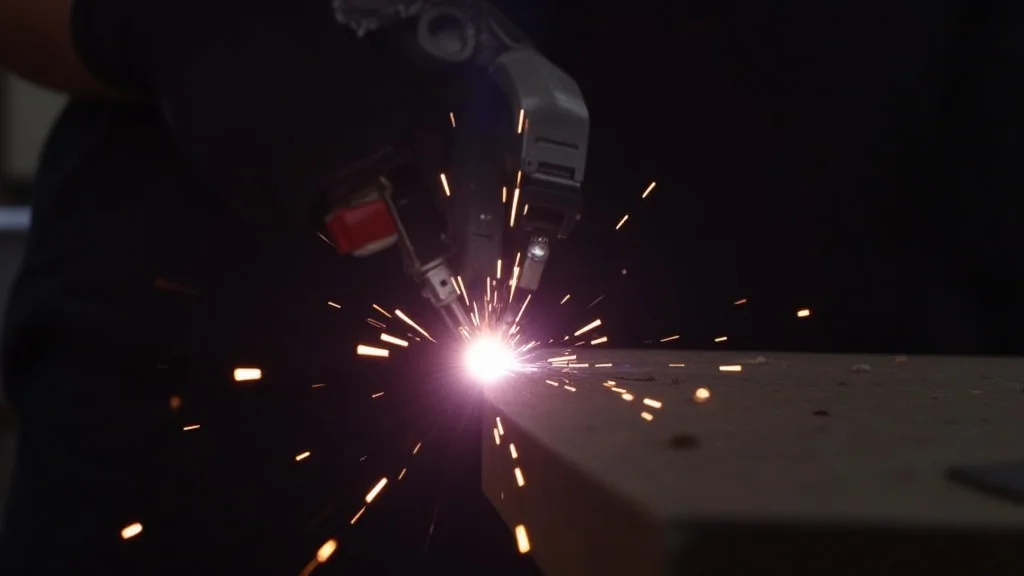
Having a TIG Welder Uneven Arc Problem? Quick Solutions is a common worry for folks just starting out with TIG welding. It can feel confusing when your TIG arc isn’t smooth and steady.
This guide is here to help! We’ll break down why this happens and give you easy steps to fix it. Get ready to make your welds look great.
Key Takeaways
- An uneven TIG arc is often caused by simple issues like incorrect gas flow or a dirty electrode.
- Proper tungsten preparation is vital for a stable and consistent arc.
- The correct amperage setting plays a big role in arc stability.
- Troubleshooting TIG arc problems involves checking multiple factors systematically.
- Mastering TIG welding takes practice, but understanding these basics speeds up the learning curve.
Why Does My TIG Arc Look Uneven?
Gas Flow Issues
One of the most frequent reasons for a shaky TIG arc is incorrect shielding gas flow. The shielding gas, usually Argon, protects the molten weld pool from the air. If you don’t have enough gas, or if it’s not flowing smoothly, oxygen can get into your weld.
This makes the arc sputter and become unstable. Too much gas can also be a problem. It can create turbulence around the arc, which also messes with its stability.
Think of it like trying to hold a candle steady in a gentle breeze. If the breeze is too strong or erratic, the flame flickers. The same idea applies to your TIG arc.
You want a calm, consistent shield around it.
Gas Flow Settings to Check
First, look at your flowmeter. It should be set correctly for the type of metal you’re welding and the size of your torch cup. A good starting point for most thin metals is around 10-15 cubic feet per hour (CFH).
Always check the recommendations for your specific setup.
Next, check your gas lens. This is a part of your TIG torch that helps direct the gas more smoothly. If the gas lens is dirty or damaged, it can cause the gas to flow unevenly.
Clean it gently with a soft cloth. Make sure all the O-rings are in place and not cracked.
Dirty or Damaged Tungsten Electrode
The tungsten electrode is what creates the arc. If it’s not clean or is damaged, the arc will be all over the place. Tungsten gets contaminated easily.
Touching it to the base metal or filler rod can cause it to get a balled-up tip. This makes the arc wander and become hard to control.
Also, the shape of the tungsten tip is super important. For DC TIG welding, you want a finely ground, pointed tip. It should be ground to a sharp point, like a pencil.
This helps focus the arc. If the tip is rounded or has a ball on it, the arc will be wide and unstable. For AC welding, you might want a slightly rounded tip, but it still needs to be clean and smooth.
Preparing Your Tungsten
Grinding your tungsten is a key step. Use a dedicated grinder with a diamond wheel. Always grind the tungsten lengthwise, following its shape.
Never grind it across the tip, as this can create small particles that can get into your weld. After grinding, inspect the tip. It should look smooth and have a sharp point.
If your tungsten gets contaminated, you’ll often see a discoloration. You might need to grind it down again to get to clean metal. For most common metals like steel, you’ll use a pure tungsten or a 2% thoriated tungsten.
Different types of tungsten have different optimal grinding shapes and cleaning methods.
Amperage Settings
The amount of power (amperage) you use affects the arc. If your amperage is too low, you might have a hard time getting the arc started smoothly. It can be weak and hard to control.
If the amperage is too high, the arc can be too intense, making it difficult to maintain a steady puddle and leading to arc instability.
You need to match your amperage to the thickness of the metal you are welding. A common rule of thumb for steel is about 1 amp per thousandth of an inch of thickness. For example, if you’re welding 1/8-inch steel (which is about 125 thousandths of an inch), you’d aim for around 125 amps.
However, this is just a starting point. You’ll need to adjust it based on your specific machine and technique.
Checking Your Amperage
Make sure your TIG welder is set to the correct output mode. Most TIG welders have DC (Direct Current) and AC (Alternating Current) settings. Steel and stainless steel are welded with DC.
Aluminum is usually welded with AC. Using the wrong mode will cause arc problems.
Your welder’s amperage dial should be easy to read. If you’re unsure of the setting, start low and gradually increase it until you get a nice, stable arc. You’re looking for a clean, focused arc that melts the base metal evenly.
If the arc is spitting or spreading out, your amperage might be off.
Welding Machine and Cables
Sometimes, the problem isn’t with your technique but with your equipment. The cables connecting your TIG torch and ground clamp to the welder can cause issues. If the cables are old, frayed, or have poor connections, they can reduce the amount of power getting to the arc.
A bad ground connection is a very common culprit. Make sure your ground clamp is securely attached to a clean, bare metal surface on your workpiece or welding table. Any rust, paint, or dirt on the connection point will increase resistance and disrupt the arc.
Inspecting Your Equipment
Check your TIG torch and ground clamp cables for any visible damage. Look for kinks, cuts, or worn insulation. The connectors should be clean and tight.
If you suspect a cable issue, try wiggling it while welding to see if the arc changes. This can indicate a loose connection.
Clean the contact surfaces of your ground clamp and the workpiece. A wire brush can help remove any buildup. A solid, clean ground is essential for a stable welding current.
Incorrect Filler Metal
Using the wrong type or size of filler rod can also lead to an uneven arc. If the filler rod is too thick for the amperage you’re using, it can cool the weld puddle too much, causing the arc to become unstable. If it’s too thin, it might melt too quickly and not add enough material.
The composition of the filler rod should also match the base metal you are welding. While this might not directly cause an uneven arc, it can affect the weld quality and make it harder to control the puddle, which in turn can indirectly affect arc stability.
Filler Rod Technique
How you introduce the filler rod into the weld puddle matters. If you dip the filler rod into the molten puddle too aggressively or too often, it can disrupt the arc. You want to feed the rod smoothly and consistently into the leading edge of the puddle.
The goal is to add just enough filler metal to build the bead you want, without disturbing the arc.
Practice feeding the rod at a steady rate. It should feel like you are gently adding material, not forcing it. The filler rod should barely touch the molten pool.
If it touches the tungsten, it will contaminate it and cause a very unstable arc and potentially short circuit.
Arc Length
The distance between the tungsten electrode and the workpiece is called arc length. This is one of the most critical factors for a stable TIG arc. If your arc length is too long, the arc will spread out, become weak, and the weld bead will be wide and flat.
It can also lead to spatter and a rougher weld.
If your arc length is too short, you risk “stubbing” the tungsten electrode into the weld puddle. This will contaminate the tungsten and can cause a short circuit, immediately stopping your weld. It also makes it hard to see what you’re doing.
Maintaining the Right Arc Length
For most TIG welding, you want to maintain an arc length that is roughly equal to the diameter of your tungsten electrode. So, if you’re using a 1/16-inch tungsten, aim for about a 1/16-inch arc gap. This provides a good balance of arc intensity and control.
Practice keeping this distance consistent. You’ll learn to feel when the arc length is right. It should sound like a consistent sizzle.
If it sounds crackly or sputtering, your arc length is likely too long or too short.
Workpiece Contamination
The cleanliness of the metal you’re welding is paramount. Any oil, grease, paint, dirt, or rust on the surface of the workpiece can cause the TIG arc to become unstable. These contaminants can boil up and create bubbles in the molten puddle, leading to porosity and a weaker weld.
When these contaminants vaporize, they can also interfere with the shielding gas, making the arc sputter and jump. This is why proper cleaning before welding is so important.
Cleaning Your Metal
Always clean the area you intend to weld thoroughly. Use a degreaser like acetone or a specialized metal cleaner to remove any oils or grease. For steel, a stainless steel wire brush dedicated solely to welding preparation is ideal for removing rust and mill scale.
For aluminum, use a separate stainless steel brush.
Avoid using the same brushes or rags you use for other tasks, as they can transfer contaminants. After cleaning, try not to touch the prepared surface with your bare hands, as skin oils can cause issues.
Frequently Asked Questions
Question: What is the most common cause of an uneven TIG arc?
Answer: The most common causes are insufficient or incorrect shielding gas flow and a dirty or improperly shaped tungsten electrode.
Question: How do I know if my gas flow is too high or too low?
Answer: If it’s too low, you’ll see a sputtering arc and potential weld contamination. If it’s too high, you might notice the flame flickering or the gas creating too much turbulence, which can also destabilize the arc.
Question: Can I use a regular grinding wheel to sharpen my tungsten?
Answer: It’s best to use a dedicated diamond grinding wheel for tungsten. Regular grinding wheels can leave particles that contaminate the tungsten and the weld.
Question: How important is the ground clamp connection?
Answer: It’s extremely important. A poor ground connection creates resistance, which can lead to an inconsistent and unstable welding current and arc.
Question: What if my arc is spitting a lot?
Answer: Spitting can be caused by a number of things, including a dirty tungsten, incorrect arc length, too high amperage, or contamination on the workpiece. Check these factors first.
Final Thoughts
Fixing an uneven TIG arc comes down to paying attention to a few key things. Keep your tungsten sharp and clean. Make sure your gas is flowing just right.
Check that your metal is spotless. And always make sure your machine is set up correctly. Small adjustments in these areas can make a big difference.
You’ll find your TIG arc becomes much steadier and your welds look better. Keep practicing, and you’ll get the hang of it quickly. Don’t get discouraged; these are common beginner challenges, and you’ve got this.
Leave a Reply