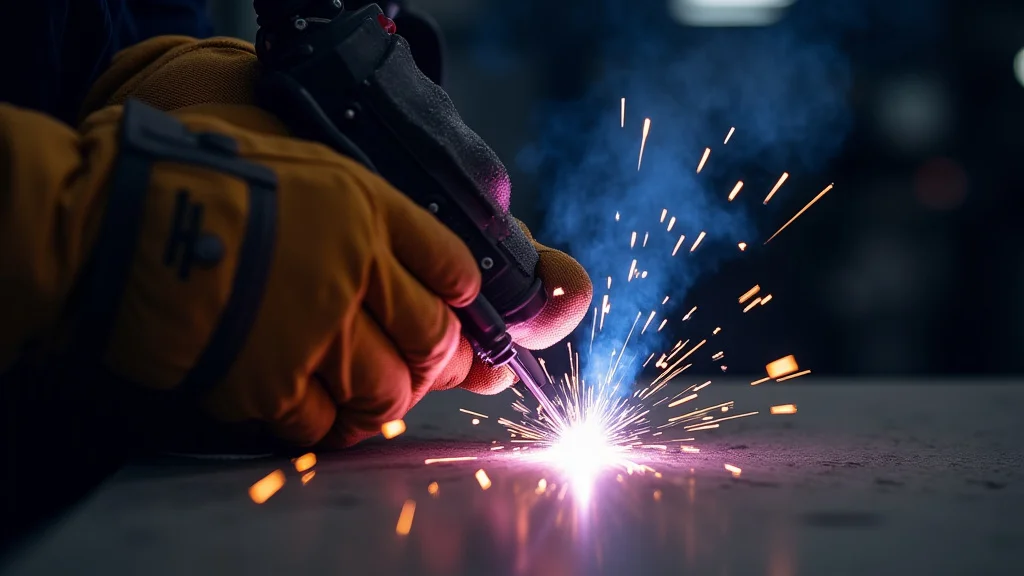
Learning TIG welding can be tough sometimes, and one common issue many beginners face is poor penetration. It’s easy to get discouraged when your welds don’t go deep enough, but don’t worry! This guide will show you exactly why this happens and how to fix it, step by step.
We’ll cover the main reasons and give you simple fixes.
Key Takeaways
- You will learn the most common causes of TIG welding poor penetration.
- We will explain how to adjust your TIG welding machine settings for better results.
- You will discover the importance of your TIG welding torch angle and movement.
- This guide will help you choose the right tungsten and filler rod for your needs.
- You will understand how base metal preparation affects weld penetration.
- We will offer practical tips to improve your TIG welding penetration immediately.
What is TIG Welder Poor Penetration?
Understanding Weld Penetration
Weld penetration is how deep the weld melts into the base metals you are joining. For a strong weld, you need the right amount of penetration. Too little, and the parts might not stick together well.
Too much, and you can burn through the metal.
When beginners struggle with TIG Welder Poor Penetration? Troubleshoot, it often means their welds are too shallow. The filler metal might just sit on top, and the two pieces of metal don’t fuse deeply.
This makes the weld look weak and can cause parts to break apart later.
Why Beginners Struggle
TIG welding is a precise process. It needs good control over heat, filler material, and torch movement. For someone new to it, balancing all these things can be tricky.
Small mistakes in any area can lead to poor penetration.
It’s like learning to ride a bike. At first, you might wobble and fall. But with practice and knowing what to adjust, you get smoother and more stable.
This guide is here to help you make those adjustments so your TIG welds are strong and deep enough.
Common Causes of Poor TIG Weld Penetration
Incorrect Amperage Settings
Amperage is like the “heat” your TIG welder puts out. If you don’t have enough amperage, the metal won’t get hot enough to melt deeply. This is a very common reason for poor penetration.
Think of it like trying to melt butter with a candle. If the flame is too small, the butter just softens. You need a bigger flame to melt it quickly and thoroughly.
Similarly, for TIG welding, you need enough amperage to melt through the base metal properly.
Wrong Torch Angle and Movement
How you hold and move your TIG torch matters a lot. If you hold the torch at too steep an angle or move too quickly, the heat doesn’t have enough time to sink into the metal.
Imagine pouring hot water on ice. If you move the cup too fast, the ice might not melt much. But if you hold it in one spot, it melts faster.
In TIG welding, a slight forward tilt (about 10-15 degrees) helps push the arc into the metal. Moving too fast is like not giving the heat a chance to work.
Using the Wrong Filler Material
The filler rod you use should match the metal you’re welding. Using a filler rod that’s too thick or not designed for the base metal can affect penetration.
Sometimes, a filler rod might cool the weld pool too much, preventing it from melting deep into the base metal. The filler rod also adds material to the weld, and if it’s not balanced with the heat, you won’t get good fusion.
Improper Tungsten Electrode Selection and Grinding
Your tungsten electrode is what creates the arc. The type, size, and how it’s sharpened can impact the arc’s stability and heat concentration.
A tungsten that’s too large or not properly ground to a fine point might create a wider, less focused arc. This spreads the heat out and reduces penetration. A sharp, pointed tungsten creates a more focused arc, which is better for deeper welds.
Poor Base Metal Preparation
Cleanliness is key in TIG welding. Rust, oil, paint, or dirt on the metal can prevent the arc from penetrating properly. It can also cause inclusions in the weld, making it weaker.
These contaminants act like a barrier. The arc might hit them instead of melting the clean metal underneath. Always clean your metal thoroughly before you start welding.
Arc Length Issues
The distance between the tungsten and the base metal is the arc length. If the arc is too long, the heat spreads out too much, and penetration suffers. If it’s too short, you can contaminate the tungsten or the weld.
A consistent, short arc (usually about the diameter of the tungsten electrode) is ideal. This keeps the heat focused where you need it for good penetration.
Troubleshooting Steps for Better TIG Weld Penetration
1. Adjust Your Amperage
This is the first thing to check. If your welds are shallow, try increasing the amperage. Most TIG welders have a dial or buttons to control this.
A good starting point for common metals like mild steel is around 1 amp per thousandth of an inch of material thickness. For thinner materials, you might need less; for thicker materials, more.
Example: For 1/8 inch steel (0.125 inches), try around 125 amps.
Always do a test weld on scrap metal to find the sweet spot. Watch how the puddle forms. You want a nice, fluid puddle that melts into the base metal, not just sits on top.
2. Optimize Torch Angle and Travel Speed
Hold the torch at a slight forward angle, about 10 to 15 degrees, pointing in the direction you are welding. This helps push the arc and molten puddle forward.
Keep your travel speed consistent. If you’re moving too fast, the weld won’t have time to penetrate. If you’re too slow, you risk burning through, especially on thinner metals.
You should see a consistent puddle size as you move.
Try to keep the distance from the tungsten to the metal consistent as well. This is part of maintaining a steady arc length.
3. Select the Right Filler Material
Use a filler rod that is made for the type of metal you are welding. For mild steel, use mild steel filler rods (like ER70S-2 or ER70S-6). For stainless steel, use stainless steel filler.
The diameter of the filler rod also matters. For thinner materials, use a thinner filler rod. For thicker materials, a slightly thicker rod can help add more metal and support penetration.
Don’t overwhelm the puddle with too much filler rod at once.
4. Choose and Prepare Your Tungsten Electrode
For most DC TIG welding (like steel and stainless steel), a 2% thoriated (red band) or ceriated (grey band) tungsten is a good choice. For AC welding (like aluminum), pure (green band) or zirconiated (brown band) tungsten can be used, but a lanthanated (blue band) is often preferred for its versatility.
Grind your tungsten to a sharp point. This creates a focused arc. The point should be fine, but not so needle-thin that it breaks off easily.
For DC welding, a pointed tip is best. For AC, a slightly blunted tip (about 1/16 inch flat) is sometimes recommended for aluminum.
5. Thoroughly Clean the Base Metal
Before you weld, clean both pieces of metal you are joining. Use a stainless steel wire brush dedicated only for welding prep, or sandpaper and degreaser/solvent.
For steel, remove any rust, mill scale, oil, or paint. For aluminum, remove the oxide layer with a stainless steel brush (use a separate one for aluminum) and clean with a solvent like acetone. Clean the area around the weld joint well.
6. Maintain a Consistent Arc Length
Keep the distance between the tip of your tungsten electrode and the base metal consistent. A good rule of thumb is to keep the arc length about the same as the diameter of your tungsten electrode.
A short arc concentrates the heat and improves penetration. A long arc spreads the heat out, leading to shallow welds and more spatter. Practice holding the torch steady and at a consistent height.
7. Check Your Gas Flow (Shielding Gas)
Argon is the most common shielding gas for TIG welding steel and stainless steel. It helps protect the weld puddle from the air, which can cause contamination and weak welds.
If your gas flow is too low, the weld won’t be properly shielded. This can lead to porosity and poor fusion. If it’s too high, it can cause turbulence and pull air into the weld, also causing problems.
For most steel welding, a flow rate of 15-25 cubic feet per hour (CFH) is typical. Always check your flow meter and ensure the gas lens on your torch is clean and intact.
8. Consider the Joint Type and Fit-Up
How the pieces of metal fit together can affect penetration. If there’s a large gap between the pieces, it’s harder to get deep penetration. A tight fit-up is usually best.
For butt joints, a slight bevel can help ensure the weld goes deep into the root of the joint. For lap joints, ensure there’s good contact between the two pieces. If you are welding with a backing strip, make sure it’s positioned correctly.
9. Practice, Practice, Practice
Like any skill, TIG welding improves with practice. Work on scrap pieces of metal that are similar to what you’ll be welding. Focus on making consistent welds with good penetration.
Try welding different thicknesses and types of metal. Pay attention to how your settings and technique affect the weld. Keep a welding log to note down your settings and what worked well.
Tips for Different Materials
Mild Steel
Mild steel is forgiving. Start with around 125-150 amps for 1/8-inch thick steel. Use 2% thoriated or ceriated tungsten.
Cleanliness is important, but it’s less sensitive to contamination than other metals.
Stainless Steel
Stainless steel conducts heat differently. It can be prone to warping and requires careful heat control. You might need slightly lower amperage than for mild steel of the same thickness, or a faster travel speed.
Use a dedicated stainless steel wire brush for cleaning. Use a filler rod like 308L for 304 stainless. Ensure good gas coverage to prevent oxidation, which can cause discolored welds.
Aluminum
Aluminum welding is different. It requires AC (alternating current) on your TIG welder. Aluminum has a thick oxide layer that needs to be cleaned off.
Use a specialized aluminum brush and solvent.
For AC welding, use a pure (green) or zirconiated (brown) tungsten, or a lanthanated (blue) for a good balance. Amperage settings are usually higher for aluminum than for steel. You’ll need a good flow of argon gas.
Frequently Asked Questions
Question: How do I know if my TIG weld has enough penetration?
Answer: Visually, a good penetration weld will show a consistent “wash” or fusion line where the filler metal meets the base metal. If you can, break a test weld apart. The weld should have fused deeply into both pieces.
You shouldn’t see a distinct line where the filler metal just sits on top.
Question: My TIG welds look good on top but are weak. What’s wrong?
Answer: This is a classic sign of poor penetration. The top might look fine, but the weld hasn’t fused deeply into the base metal. Check your amperage settings, travel speed, and arc length.
Ensure you’re not moving too fast or have the amperage too low.
Question: Can I fix poor penetration on an existing weld?
Answer: Generally, it’s difficult to “fix” poor penetration on an existing weld without grinding it out and re-welding it properly. If you try to add more weld over a shallow weld, it won’t significantly improve the underlying fusion. It’s best to remove the faulty weld and start again with correct settings.
Question: Does the thickness of the base metal affect penetration?
Answer: Yes, absolutely. Thicker metals require higher amperage and potentially slower travel speeds to achieve adequate penetration. Thinner metals require lower amperage and faster travel speeds to prevent burn-through while still achieving fusion.
Question: What if my TIG welds are burning through?
Answer: Burning through means you have too much heat or are moving too slowly. Try reducing your amperage, increasing your travel speed, or shortening your arc length. Ensure your torch angle is not too extreme.
Final Thoughts
Fixing poor TIG weld penetration comes down to understanding a few key things. It’s often about adjusting amperage, torch angle, and travel speed. Using the right tungsten and keeping your metal clean are also very important steps.
You can achieve strong, deep welds with practice and by paying attention to these details. Keep trying, and you’ll see improvements.