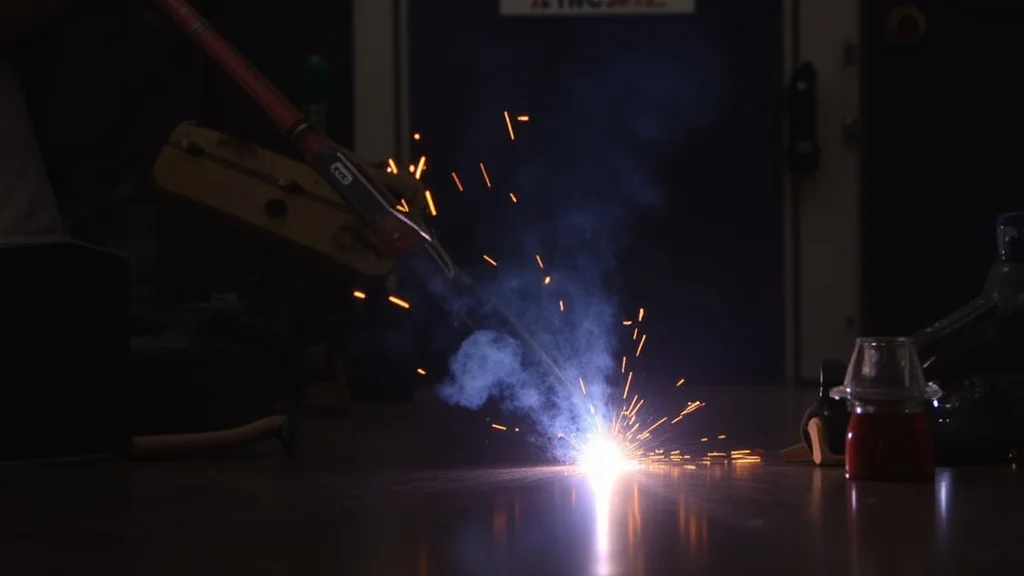
Troubleshooting a TIG Welder Gas Flow Issue? Quick Solution can feel tricky when you’re just starting out. It’s a common hiccup that can leave your welds looking messy.
But don’t worry, it’s usually something simple to fix! We’ll walk through it step-by-step to get your TIG welder working right. Ready to make your welds shine?
Let’s look at what might be going wrong and how to fix it fast.
Key Takeaways
- You will learn the main reasons why TIG gas flow problems happen.
- You will discover how to check your argon bottle and regulator.
- You will understand common issues with the TIG torch and gas lens.
- You will find out how to test your welding machine’s gas solenoid.
- You will get simple, clear steps to fix gas flow problems quickly.
Understanding TIG Welder Gas Flow
TIG welding uses a shield of inert gas, usually argon, to protect the molten weld pool from the air. This gas prevents oxidation and contamination, which is vital for strong, clean welds. When this gas flow isn’t right, you’ll notice problems right away.
The weld might look bubbly, discolored, or porous. Sometimes, it just won’t melt properly. Getting the gas flow correct is a big part of TIG welding success.
It’s like giving your weld a protective bubble. Without that bubble, everything goes wrong.
Why Gas Flow Matters So Much
Imagine trying to bake a cake without the oven. That’s kind of what a lack of proper gas flow is like for TIG welding. The gas shields your weld from the air around it.
The air has oxygen and nitrogen, which are bad for hot metal. When these get into your weld, they cause defects. These defects make the weld weak and ugly.
So, good gas flow means good welds, every time. It’s a simple idea, but it’s super important.
Common Causes of TIG Welder Gas Flow Issues
There are a few main places where a gas flow problem can start. It’s like following a trail of clues to find the source. We’ll look at the gas supply, the regulator and hose, the TIG torch, and the welding machine itself.
Each spot has its own common issues that can disrupt the gas flow. Thinking about each part helps us figure out what’s wrong faster.
Gas Supply Problems
The most basic thing is the gas itself. Is there even gas left in the bottle? It sounds obvious, but it’s the first thing to check.
An empty or nearly empty argon cylinder is the simplest reason for no gas flow. Always check the pressure gauge on the bottle. If it reads zero or very low, it’s time for a refill or a new cylinder.
Sometimes, the valve on the argon bottle might not be fully open. If you only open it a little, you won’t get enough gas. Make sure the valve is turned all the way open.
You should hear the gas hissing out when you open it slightly.
Regulator and Hose Issues
The regulator controls the pressure of the gas coming from the bottle. It also shows you how much gas is left. If your regulator isn’t working right, it can cause too much or too little gas to flow.
This could be due to a faulty gauge or a problem with the internal diaphragm.
Leaky hoses are another common culprit. The hose connects the regulator to the TIG torch. If there are cracks or loose fittings, gas will escape before it gets to your torch.
Always inspect the hose for any signs of damage. Make sure all connections are tight. You can often hear a faint hiss if there’s a leak.
A regulator that’s set too low will also restrict gas flow. Most TIG welding applications need a specific flow rate, usually measured in cubic feet per hour (CFH) or liters per minute (LPM). If this setting is too low, you won’t get enough protection.
TIG Torch and Gas Lens Problems
Your TIG torch is where the gas comes out to shield the weld. The parts inside the torch can get dirty or damaged. The most common issue here relates to the gas lens.
A gas lens is a special collet body that helps direct the shielding gas more smoothly and broadly. It’s designed to reduce turbulence.
If the gas lens parts are dirty, clogged, or not assembled correctly, the gas flow can be disrupted. The small holes in the ceramic cup or the gas lens screen can get plugged with welding debris. This blocks the gas.
Cleaning these parts is important. Make sure the gas lens is seated properly. It should fit snugly without gaps.
The tungsten electrode can also affect gas flow if it’s sticking out too far from the gas lens. A general rule is to have the tungsten extend about ¼ to ½ inch from the end of the gas lens. If it’s much longer, the gas cone can get disrupted.
Welding Machine Solenoid Issues
Your TIG welding machine has a solenoid valve. This valve is like an electric tap that turns the gas flow on and off when you start and stop welding. If this solenoid is stuck or faulty, it might not open properly, or it might leak gas when it should be closed.
Sometimes, the wiring to the solenoid can be loose or damaged. This means the machine can’t send the signal to open the valve. When you press the torch switch, the solenoid doesn’t get the command.
This is a bit more technical to fix, but it’s a possibility if everything else looks good.
Steps to Troubleshoot Your TIG Welder Gas Flow
Let’s go through a simple checklist to find and fix your gas flow problem. Follow these steps one by one. You’ll be back to welding smoothly in no time.
Step 1: Check the Argon Cylinder
First, look at the pressure gauge on your argon cylinder. Is there gas left? If the needle is at or near zero, the bottle is empty.
You need to swap it for a full one.
Next, make sure the cylinder valve is fully open. Turn it all the way counter-clockwise. You should hear gas escaping when you do this.
Step 2: Inspect the Regulator and Hose
Look at the regulator’s pressure gauge. Is it showing a reasonable pressure from the bottle? Now, check the flow gauge or dial (if your regulator has one).
Is it set to a typical TIG flow rate, like 15-25 CFH or 8-12 LPM? Adjust it if needed.
Carefully examine the hose connecting the regulator to the torch. Look for any cracks, cuts, or kinks. Wiggle the fittings at both ends.
Can you hear any hissing sounds? If you suspect a leak, you can use soapy water. Apply it to the hose and fittings.
Bubbles will show you where the leak is.
Step 3: Examine the TIG Torch and Gas Lens
Remove the ceramic cup from your TIG torch. Take out the collet and the gas lens assembly. Look at the gas lens screen or parts.
Are they clean? Use a soft brush or a can of compressed air to blow away any dust or metal particles.
Make sure all the gas lens parts are put back in the correct order. They should fit together snugly. Reassemble the torch, ensuring the ceramic cup is seated properly.
Check how far your tungsten electrode sticks out. It should be around ¼ to ½ inch.
Step 4: Test the Machine’s Gas Solenoid
This step requires your TIG welder to be plugged in and turned on. You don’t need to strike an arc. Simply press the torch switch.
Listen carefully. You should hear a distinct “click” sound from the machine. This sound usually means the solenoid valve is opening.
If you don’t hear the click, or if you hear a faint hiss from the machine itself when the torch switch is pressed, there might be an issue with the solenoid or its wiring. This might require a bit more technical skill or a visit to a repair shop if you’re not comfortable with electrical components.
Step 5: Perform a Flow Test
With the gas flow set on your regulator, and the torch assembled, point the torch away from yourself and anything flammable. Press the torch switch briefly. You should see a steady, visible stream of gas coming out of the torch.
It should look like a gentle breeze, not a strong gust or a weak puff.
If you get a good stream, the gas is flowing. If it’s weak or inconsistent, re-check steps 1 through 3. If you hear the solenoid click, but still get very little gas, the problem is likely in the hose, regulator, or torch assembly.
Troubleshooting Table
Here’s a quick table to help you pinpoint common problems and their likely solutions.
| Symptom | Possible Cause | Quick Fix |
|---|---|---|
| No gas at all | Empty cylinder, valve closed, solenoid stuck | Replace cylinder, open valve, check solenoid |
| Weak gas flow | Low cylinder pressure, kinked hose, dirty gas lens, regulator set too low | Replace cylinder, straighten hose, clean gas lens, adjust regulator |
| Gas leaks | Loose fittings, damaged hose, cracked cup | Tighten fittings, repair/replace hose, replace cup |
| Gas cuts off too soon | Machine’s post-flow setting too low, faulty solenoid | Adjust post-flow setting, check solenoid |
| Gas flows when welding stops | Solenoid not closing properly, regulator issue | Check solenoid, check regulator function |
Frequently Asked Questions
Question: How much argon gas flow do I usually need for TIG welding?
Answer: For most steel and stainless steel TIG welding, a flow rate between 15 to 25 cubic feet per hour (CFH) is common. For thinner materials or aluminum, you might use a bit less. It’s good to check your specific material and thickness, but this is a good starting point.
Question: My TIG welds are porous. Is this a gas flow issue?
Answer: Yes, porous welds are often a sign of poor shielding gas. This means the gas flow might be too low, disrupted, or contaminated. Check for leaks, ensure proper flow rate, and make sure your gas lens is clean and functioning correctly.
Question: Can I use a different gas besides argon for TIG welding?
Answer: Argon is the most common and best gas for TIG welding because it’s inert and creates a stable arc. For some specific applications, like welding thicker steel, a mix of argon and a small amount of CO2 or helium might be used, but pure argon is standard for most beginners.
Question: What does “post-flow” mean on my TIG welder?
Answer: Post-flow is the amount of time your TIG welder continues to send shielding gas to the weld area after you stop welding. This is important to let the molten puddle cool and solidify under the gas protection, preventing oxidation.
Question: My argon cylinder is full, but I still have low gas flow. What else could it be?
Answer: If the cylinder is full and the valve is open, check the regulator for blockages or damage. Also, inspect the hose for kinks or leaks. Finally, the gas lens on your TIG torch might be clogged with debris, which would restrict gas flow.
Final Thoughts
Fixing a TIG Welder Gas Flow Issue? Quick Solution is about checking the simple things first. You’ve learned that problems can start at the gas bottle, travel through the hose and regulator, and end at your torch.
By systematically looking at each part, you can find the cause. A clean gas lens and a properly set regulator are key. Don’t forget to listen for that solenoid click.
With these steps, you can get your TIG welder to protect your welds like it should.