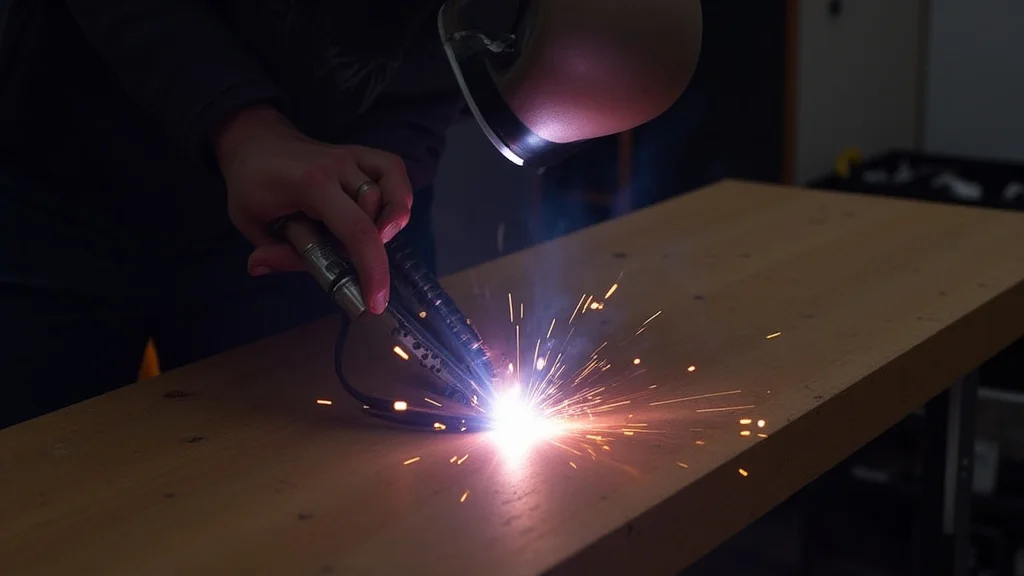
Are you new to TIG welding and finding that your TIG Welder Arc Too Weak? Troubleshoot is a common puzzle? It can be tricky when the arc sputters or won’t get hot enough to melt the metal properly.
Don’t worry! This happens to many beginners. We’ll walk through simple steps to fix it so you can get back to making great welds.
Let’s find out what’s causing your weak arc and how to fix it easily.
Key Takeaways
- You’ll learn the most common reasons for a weak TIG arc.
- We’ll show you how to check your TIG machine’s settings.
- You’ll discover how to inspect your TIG torch and consumables.
- We’ll explain the importance of proper ground connections.
- You’ll get tips on how to test and confirm your fixes.
Why Your TIG Welder Arc Might Be Too Weak
It’s frustrating when you’re trying to TIG weld, and the arc just isn’t strong enough. This means the heat isn’t right to melt your metal, making it hard to create a good weld. Lots of things can cause this.
Some are simple fixes, while others need a bit more checking. We’ll go through the common culprits so you can get your TIG welder working like it should.
Checking Your TIG Welder Settings
The first place to look when your TIG Welder Arc Too Weak? Troubleshoot is your machine’s settings. These controls tell your welder how much power to send to the arc.
If they’re not right, the arc will be weak.
Amperage Control
The amperage setting is like the “heat” control. It determines how much electrical current flows through the arc. If the amperage is set too low for the material you’re welding and its thickness, your arc will be weak.
For thin metals, you need less amperage. For thicker metals, you need more. Always check a welding chart for recommended amperage settings for different metals and thicknesses.
Pulse Settings (If Applicable)
Many modern TIG welders have a pulse function. This makes the amperage go up and down rapidly. While it’s great for controlling heat and bead appearance, incorrect pulse settings can make the arc feel weak.
If your pulse frequency (how fast it pulses) or pulse width (how long it’s at peak amperage) are set too low, the arc might not feel hot enough. Experimenting with these settings can help. Sometimes, turning the pulse off completely can tell you if it’s the source of the problem.
AC Balance (For Aluminum)
When welding aluminum with AC (alternating current), the AC balance setting controls how much cleaning action you get versus how much penetration. If the balance is too far towards cleaning, it can reduce the arc’s heat.
You might need to adjust the AC balance to be more towards penetration for a stronger arc on aluminum.
High-Frequency Start
Most TIG welders use high-frequency (HF) start to ignite the arc without touching the workpiece. If your HF start is set too low or not working properly, it might not be enough to get a strong arc going.
Check the HF start setting on your machine. It should be high enough to initiate the arc easily.
Inspecting Your TIG Torch and Consumables
The parts that actually make contact with the arc are vital. If any of these are worn or damaged, they can weaken the arc significantly.
Tungsten Electrode Condition
The tungsten electrode is the heart of the TIG arc. If it’s not properly prepared or has become contaminated, it won’t conduct electricity well.
- Cleanliness: Tungsten should be clean. If it gets dipped into the weld puddle, it can become contaminated with metal. This contamination makes the arc wander and weaken.
- Sharpening: For DC welding (like steel or stainless steel), the tungsten should be ground to a sharp point. This focuses the arc. For AC welding (like aluminum), it should be ground to a more rounded or balled tip. An improperly ground tungsten will lead to a weak or unstable arc.
- Type: Different types of tungsten (e.g., pure, thoriated, ceriated, lanthanated) are used for different metals and processes. Using the wrong type might affect arc stability.
Gas Flow Rate
The shielding gas (usually Argon for TIG) protects the tungsten and the molten weld pool from the air. If there isn’t enough gas, the arc will be unstable and weak.
Check your Argon cylinder’s regulator and flowmeter. Make sure the gas is turned on and the flow rate is set correctly. A general starting point is 10-20 cubic feet per hour (CFH) or 5-10 liters per minute (LPM), depending on the joint and conditions.
Too little gas can cause porosity and a weak arc. Too much can cause turbulence and also weaken the arc.
Gas Lens Usage
A gas lens is a special collet body in your TIG torch that helps distribute the shielding gas more evenly and over a wider area. Using a gas lens, especially with a larger cup, provides better shielding.
If you’re not using a gas lens or if your gas lens is dirty or damaged, the gas coverage might be poor, leading to a weak arc.
TIG Cup Size and Condition
The cup on your TIG torch directs the shielding gas. If the cup is too small for the job, or if it’s cracked or chipped, it won’t provide adequate gas coverage, resulting in a weak arc.
Ensure the cup is the right size for the weld joint and that it’s in good condition.
Torch Cable and Connections
A damaged torch cable or loose connections can cause resistance, which reduces the power getting to the arc.
Inspect the torch cable for any signs of damage like cuts or burns. Make sure the connections at the torch handle and the welder are clean and tight.
The Importance of a Good Ground Connection
A solid ground connection is absolutely critical for any welding process, and TIG welding is no exception. A weak or dirty ground connection is a common cause of a weak TIG arc.
Checking the Ground Clamp
The ground clamp connects your workpiece to the TIG welder. If this clamp is loose, dirty, or corroded, it creates high resistance. This resistance prevents electricity from flowing properly, making your arc weak.
Make sure the ground clamp is:
- Clean: The metal surfaces where the clamp attaches to the workpiece and the machine should be clean and free of paint, rust, or dirt.
- Tight: The clamp should be securely fastened to the workpiece.
- Properly Sized: The clamp should be rated for the amperage your welder is using.
Workpiece Connection
Ensure the ground clamp is attached to a clean, bare metal part of the workpiece or a welding table. Attaching it to a painted surface or a non-conductive material will cause problems.
Distance from Weld
The ground clamp should be as close to the weld joint as possible. The further the electricity has to travel through the metal, the more resistance there is, which can weaken the arc.
Other Factors Affecting Arc Strength
Beyond the settings and consumables, a few other things can play a role in arc strength.
Power Supply Issues
Sometimes, the problem isn’t with the welder itself but with the power source.
Ensure your TIG welder is plugged into the correct power outlet with the correct voltage and amperage rating. If you’re using a long extension cord, it can reduce the voltage reaching the welder, leading to a weaker arc.
Workpiece Material and Thickness
As mentioned before, different materials and thicknesses require different heat inputs.
If you’re trying to weld thick steel with settings meant for thin aluminum, your arc will naturally seem too weak. Always adjust your settings for the specific material and thickness you are working with.
Contaminated Base Metal
While the shielding gas and AC balance help clean the metal, if the base metal is heavily oxidized, greasy, or dirty, it can affect how the arc forms and transfers heat.
Always clean your base metal thoroughly before welding. This helps ensure a strong, stable arc.
Troubleshooting Steps: A Quick Guide
When you’re faced with a weak TIG arc, follow these steps to find the problem.
- Check the Obvious First: Is the welder plugged in? Is the gas turned on?
- Review Machine Settings: Amperage, pulse, AC balance (if applicable). Are they appropriate for your material?
- Inspect the Torch and Consumables: Is the tungsten sharp/balled correctly and clean? Is the cup intact? Is the gas flowing properly (use a flowmeter tester if unsure)?
- Verify the Ground Connection: Is the clamp clean, tight, and on bare metal? Is it close to the weld?
- Test with a Known Good Setup: If possible, try a different tungsten, a different gas bottle, or a different workpiece to rule out external factors.
Frequently Asked Questions
Question: My TIG arc is weak and sputters a lot. What should I do first?
Answer: Start by checking your amperage setting. Make sure it’s high enough for the material thickness you are welding. Also, check your ground clamp to ensure it’s clean and making good contact.
Question: I’m welding steel and the arc is weak. Is it my tungsten?
Answer: It could be. Make sure your tungsten is properly ground to a sharp point and that it isn’t contaminated. A dull or contaminated tungsten will lead to a weak arc on steel.
Question: How do I know if my shielding gas flow is too low?
Answer: If your arc is unstable, sputters, and you see discoloration or porosity in your weld, your gas flow might be too low. Check your flowmeter and ensure the gas is on. A common range is 10-20 CFH.
Question: I’m new to TIG welding aluminum, and my arc feels weak. What’s different?
Answer: Aluminum welding uses AC power. You need to ensure your AC balance is set correctly for good penetration, and that your tungsten is balled or rounded at the tip, not sharp. Also, ensure you’re using enough amperage.
Question: What if my TIG welder is plugged in, but the arc is still weak?
Answer: This could indicate an issue within the machine itself or with the power supply. Ensure the breaker hasn’t tripped and that your outlet is providing the correct voltage. If those are fine, you might need to have the machine serviced.
Final Thoughts
A weak TIG arc often comes down to a few common issues. You’ve learned how to check your machine’s settings, clean and prepare your tungsten, and ensure your gas is flowing correctly. A good ground connection is also key.
By systematically going through these checks, you can fix most weak arc problems. Keep practicing and paying attention to these details, and you’ll be welding with a strong, stable arc in no time.