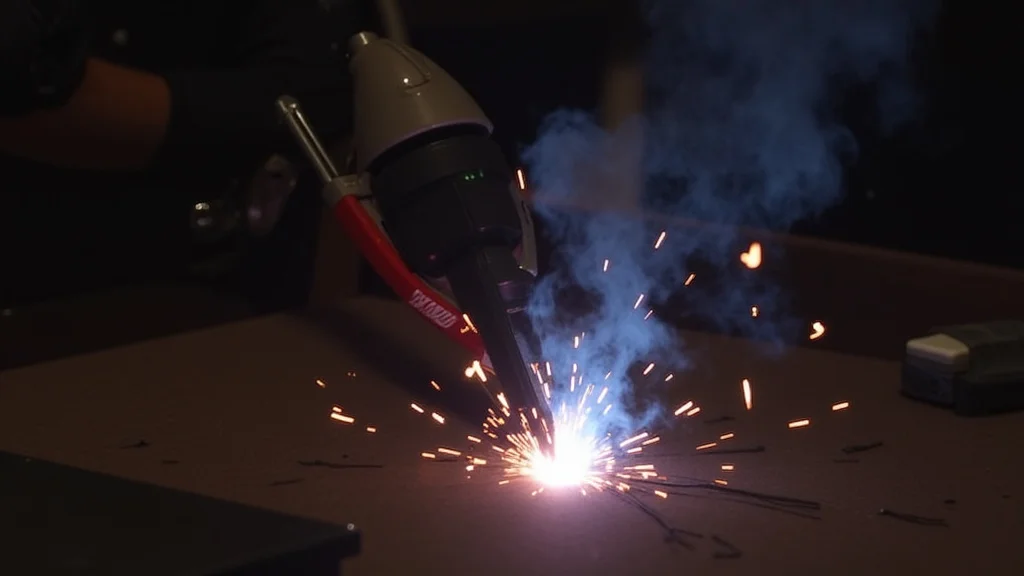
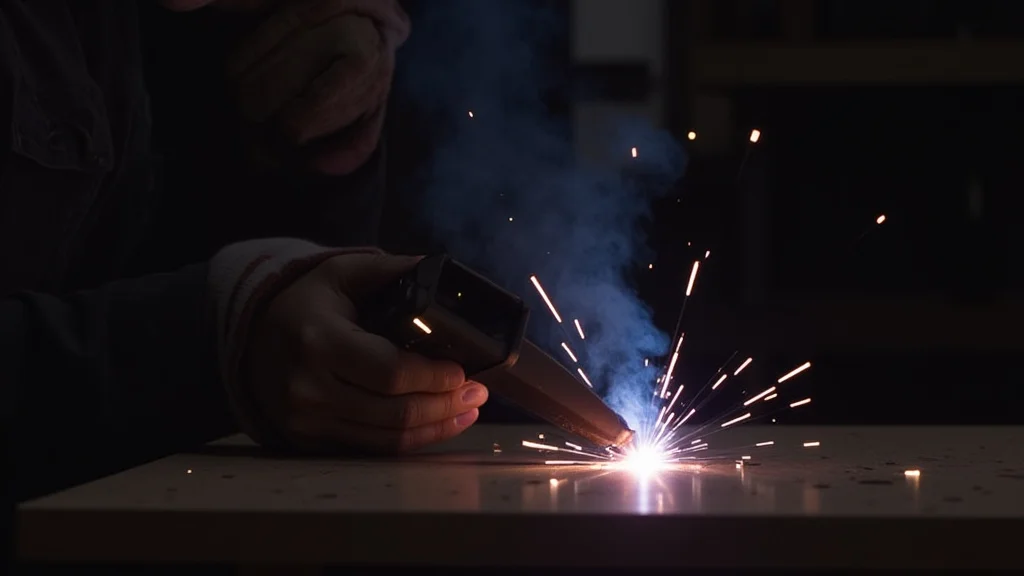
It’s common for new welders to struggle with keeping the TIG arc just right. If your TIG welder arc is too short frequently, it can make your welds messy and weak. Don’t worry, figuring out the TIG Welder Arc Too Short Frequently?
Solution isn’t as hard as it seems. We’ll walk through simple steps to fix this common issue. Let’s get your welds looking smooth and strong.
Key Takeaways
- You will learn why a short TIG arc happens.
- You will discover how to adjust your tungsten to fix the arc length.
- You will understand the importance of cleaning your metal for a good arc.
- You will learn how to control your filler metal to maintain arc length.
- You will find out how different TIG machine settings affect arc length.
- You will gain confidence in achieving a stable TIG welding arc.
Why Your TIG Arc Might Be Too Short
Lots of people starting out with TIG welding run into the same problem: their arc keeps getting too short. This happens more often than you think. It can be frustrating because it makes it hard to get a clean, good-looking weld.
The TIG arc is like the heart of your weld. When it’s too short, it acts funny. It can sputter, stick, and make a big mess.
This leads to weak spots in your metal. It’s like trying to draw with a crayon that’s worn down to a stub. You can’t make smooth, controlled lines.
The main reason your TIG arc feels too short is usually down to a few simple things. Think of it like learning to ride a bike. At first, you wobble and might fall.
But with practice and knowing how to balance, you get it. Fixing a short arc is similar. It’s about understanding what’s going on and making small adjustments.
We’ll break down these causes one by one so you can easily spot what’s wrong and fix it.
Common Culprits Behind a Short TIG Arc
When your TIG arc is too short, it often means something is getting too close to the metal you’re welding. The electricity from your tungsten electrode needs a little space to jump across to the metal. This gap is the arc.
If that gap shrinks too much, the electricity gets a bit wild. It can’t flow smoothly.
Here are the most common things that cause this:
- Tungsten Too Close: This is the number one reason. You’re just holding the tungsten electrode too near the metal.
- Dirty Metal: If the metal you’re welding isn’t clean, it can cause the arc to spread out or behave strangely, making it seem short.
- Filler Metal Issues: Adding filler metal too quickly or in the wrong way can also push the tungsten closer.
- Machine Settings: Sometimes, your TIG welder’s settings might be making it harder to control the arc length.
Let’s look at each of these in more detail so you can fix them.
The Tungsten Electrode: Your Arc’s Best Friend (When Set Right)
The tungsten electrode is key to TIG welding. It’s what creates the arc. How you prepare and use your tungsten has a huge effect on your arc length.
If your tungsten isn’t pointed correctly or is too long, it will be hard to maintain a consistent arc. The arc might wander or get too close to the metal.
Sharpening Your Tungsten
For most TIG welding, especially on steel or stainless steel, you want a sharp, pointed tungsten. This helps focus the arc. Imagine a light bulb.
A sharp point is like a spotlight, directing the light where you want it. A dull or rounded tip is like a floodlight, spreading light everywhere. For TIG, you need that focused spotlight.
To sharpen it, use a dedicated grinding wheel. Grind the tungsten lengthwise, not across the tip. This makes it long and pointy.
Don’t use a grinding wheel that you use for other metal, as this can contaminate your tungsten. Use a wheel meant only for tungsten. A good point helps you keep the arc length steady.
If your tungsten is dull or rounded, the arc will naturally want to shorten itself as it tries to find the easiest path to the metal. This makes the electrode seem too close even when it’s not.
Tungsten Stick-Out
Another big factor is how much tungsten you let stick out from the collet. This is called the “stick-out.” For most general welding, you want about 1/8 to 1/4 inch of tungsten sticking out. If you stick out too much tungsten, it can wobble and be hard to control.
If you stick out too little, it can overheat and break, or it can cause the arc to be too short because it’s too close to the work.
Think of it like holding a pencil. If you hold it very close to the paper, you have a lot of control. If you hold it far away, it’s harder to make fine marks.
The same idea applies to your tungsten. A shorter stick-out gives you more control, but too short makes the electrode hit the metal. A longer stick-out gives you more reach, but it can be harder to keep steady.
Finding that sweet spot is important.
Cleaning Your Metal: A Must for a Smooth Arc
This might seem obvious, but clean metal is super important for TIG welding. If the metal you’re welding has any grease, oil, rust, paint, or dirt on it, it will cause problems. These things burn up with the arc.
They create gases that get trapped in your weld. This makes your weld weak and also makes the arc behave strangely.
When the arc hits dirt or grease, it can sputter and jump. This makes the arc length seem inconsistent. It might suddenly feel like it’s too close.
You might see little pops or flashes. This is the contamination burning off. You need a clean surface for the electricity to flow smoothly and consistently from the tungsten to the metal.
How to Clean Properly
Always start by cleaning the metal. Use a stainless steel wire brush that is only used for welding. This is different from a wire brush you might use for rust on a car.
This brush should be dedicated to your welding metals. For most metals, a good scrub is enough. If there’s oil or grease, use a degreaser.
For aluminum, it’s even more important to clean it well. Aluminum builds up an oxide layer quickly. You often need to brush it right before you weld.
Clean both sides of the metal if possible. Also, keep your work area and clamp clean. A dirty ground clamp can also cause problems with your arc.
A clean metal surface allows for a stable, consistent arc. This makes it much easier to control the arc length and get a good weld.
Filler Metal: Adding It Without Messing Up Your Arc
If you’re using filler metal, how you add it can affect your arc length. When you add filler rod, you’re bringing new metal into the weld pool. If you push the filler rod too far into the arc or touch it to your tungsten, it can cause a short circuit or make the arc jump.
This can make it feel like your arc is suddenly too short.
The Right Technique for Adding Filler
The key is to add the filler rod into the leading edge of the weld pool. You want to dip the rod into the molten puddle just enough to melt the tip and add metal. Keep the filler rod moving in and out of the puddle.
It should be almost like a dance with the arc.
Here’s a simple way to think about it:
- Keep the filler rod tip at an angle.
- Dip it into the molten puddle just as the arc melts the tip.
- Pull it back slightly before it touches the tungsten.
- Repeat.
If you hold the filler rod too close to the tungsten, or plunge it into the puddle too aggressively, you can disrupt the arc. This can cause the arc to seem too short because you’re physically getting in the way. Always aim to add filler metal without touching the tungsten or the work piece directly with the rod.
A smooth, consistent addition of filler metal helps maintain a steady arc length.
Understanding Your TIG Welder Settings
Your TIG welder has different settings that can affect how the arc behaves. While many beginners focus on amperage, other settings can play a role in arc length stability.
Amperage
Amperage is the amount of electrical current. Too high an amperage for the metal thickness can make it hard to control the weld pool. This can lead to the tungsten getting too close.
Too low amperage might make the arc weak and harder to establish consistently. It’s important to match your amperage to the thickness of the material you’re welding.
High-Frequency (HF) Start
Most TIG welders have a High-Frequency start. This is what helps you start the arc without touching the metal. It sends a high-voltage spark across the gap.
If your HF start is set too low, it might be harder to get a clean arc start. This can make you feel like you need to get the tungsten closer to get the arc to go. While this is for starting, a consistent arc start leads to better overall arc control.
Arc Force or Inductance
Some advanced TIG welders have settings like “Arc Force” or “Inductance.” These settings control how “tight” or “soft” the arc is. A tighter arc is more focused and can sometimes feel more stable. However, if these settings are too extreme, they can make the arc behave in ways that might seem too short or too long.
For beginners, it’s often best to start with these settings at a neutral or factory default position. As you get more experience, you can experiment with them.
For the most part, focusing on your tungsten preparation, stick-out, and keeping your metal clean will solve most short arc issues. Machine settings are usually secondary for beginners.
Troubleshooting Common Problems
Let’s put it all together with some common scenarios and their fixes.
Scenario 1: The Arc Sputters and Seems Too Short
- Problem: Your arc is jumping and sputtering, and you feel like the tungsten is too close.
- Likely Cause: Dirty metal or contaminated tungsten.
- Solution: Stop welding. Clean your metal thoroughly with a wire brush and degreaser. If you suspect tungsten contamination, grind a fresh point onto your tungsten.
Scenario 2: Tungsten Keeps Sticking to the Metal
Problem: The tungsten electrode sticks to the metal when you try to start or maintain the arc.
Likely Cause: You are holding the tungsten too close to the metal. Also, low amperage for the material thickness can make this happen more easily.
Solution: Increase the distance between your tungsten and the metal. Ensure your amperage is set correctly for the material thickness. If using AC for aluminum, make sure the balance is not too far towards cleaning, which can sometimes cause issues if the tungsten is too close.
Scenario 3: The Arc Feels “Fuzzy” and Uncontrolled
Problem: The arc isn’t a clean, focused beam. It feels spread out and hard to control, making it seem short.
Likely Cause: Dull or rounded tungsten electrode. Also, too much or too little tungsten stick-out.
Solution: Re-grind your tungsten to a sharp point. Adjust your tungsten stick-out to about 1/8 to 1/4 inch.
A Quick Guide: Ideal Arc Length
What does an ideal TIG arc look like? It’s a steady, focused beam of light. It’s usually about the same length as the diameter of your tungsten electrode.
So, if you’re using a 1/16 inch tungsten, you want your arc gap to be about 1/16 inch.
Here’s a simple comparison:
| Arc Length | What it Means | How it Looks |
|---|---|---|
| Too Short | Tungsten too close to metal. | Sputtering, sticking, “fish eyes” in weld, difficult to control. |
| Just Right | Consistent gap (about tungsten diameter). | Steady, focused arc. Smooth weld pool. Easy control. |
| Too Long | Tungsten too far from metal. | Weak arc, lots of noise, wide and shallow weld pool, potential for contamination. |
Your goal is to maintain that “Just Right” arc length. This is achieved by consistent torch angle and distance.
Frequently Asked Questions
Question: Why does my TIG arc keep shutting off?
Answer: If your TIG arc keeps shutting off, it could be due to a poor connection at your ground clamp, the amperage being too low for the material thickness, or a problem with your power source.
Question: Can I use a regular grinding wheel to sharpen my tungsten?
Answer: It’s best not to. Regular grinding wheels can leave particles on your tungsten that contaminate the arc. Use a dedicated tungsten grinder or a clean grinding wheel that you only use for tungsten.
Question: What happens if I use the wrong type of tungsten?
Answer: Different tungsten types work best for different metals. Using the wrong type can lead to arc instability, electrode melting, and poor weld quality. For example, pure tungsten is mainly for AC on aluminum, while thoriated or ceriated tungsten are common for DC welding.
Question: How can I tell if my metal is clean enough?
Answer: If you see the metal bubbling, sparking, or if your arc is jumpy when you start welding, it’s probably not clean enough. A clean metal surface will allow for a smooth, consistent arc and a clean weld pool.
Question: Do I need to add filler metal all the time?
Answer: Not necessarily. For very thin materials or certain joining techniques like welding two pieces edge-to-edge, you might not need filler metal. However, for most structural welds or when joining thicker materials, filler metal is essential for creating a strong bond.
Final Thoughts
Fixing a TIG welder arc that’s too short frequently is all about getting the basics right. Your tungsten needs to be sharp and have the right amount sticking out. Keeping your metal clean is non-negotiable for a good arc.
How you add filler metal also matters. Pay attention to these simple things. Your TIG welding will become much smoother and your welds will look and perform better.
Practice these steps, and you’ll soon have the stable arc you’re looking for.