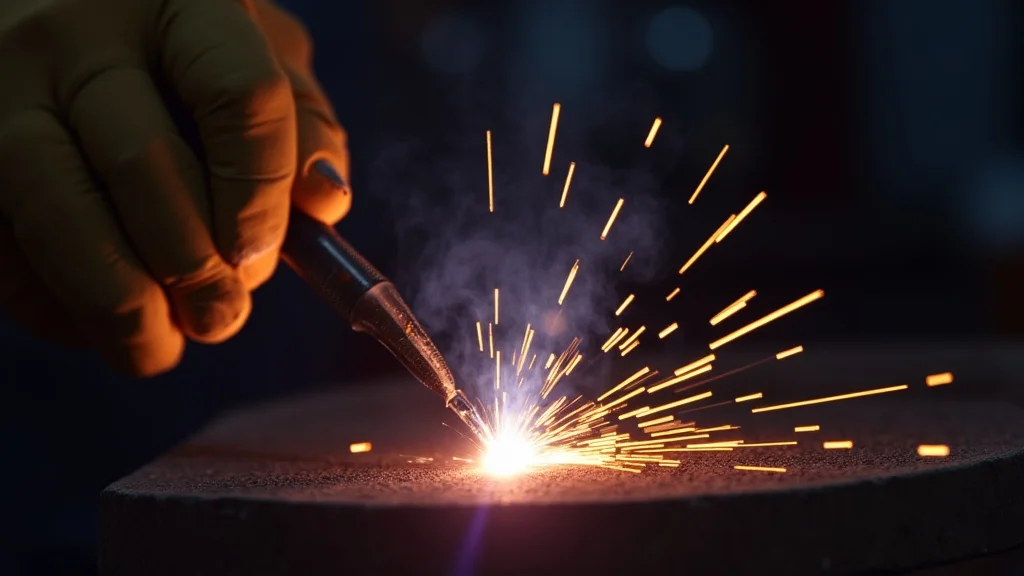
Does your TIG welder arc flicker like a candle in the wind? Many folks learning TIG welding run into issues where the arc just isn’t smooth. It can be frustrating when you’re trying to get a clean weld, and the arc won’t behave.
This common problem, often searched as TIG Welder Arc Not Stable? Quick Fix, can stop new welders in their tracks. But don’t worry, we’ve got a simple, step-by-step way to get your arc steady again.
Stick around, and we’ll show you how to get that nice, consistent arc you need.
Key Takeaways
- You will learn the most common reasons for an unstable TIG arc.
- We will show you how to check and fix your shielding gas.
- You will discover how electrode stickout affects arc stability.
- We will explain how to adjust amperage for a steady arc.
- You will find out how cleaning your tungsten and workpiece helps.
- We will cover the importance of a good ground connection.
Understanding TIG Arc Instability
What Makes a TIG Arc Unstable?
An unstable TIG arc is like a shaky hand trying to draw a straight line. It’s jumpy, flickery, and makes it hard to create a clean, strong weld. For someone new to TIG welding, this is a really common problem.
You might see the arc sputtering, widening, or even disappearing for a moment. This can happen for a few key reasons, and once you know what to look for, fixing it is much easier.
The Basics of a Stable Arc
A good TIG arc should be a steady, focused beam of light and heat. It’s like a controlled laser, melting the metal just where you want it. This stability comes from a few things working together perfectly: the right amount of electricity, clean materials, proper gas flow, and a sharp electrode.
When one of these is off, the arc can become wild and unpredictable.
Common Causes and Quick Fixes
Shielding Gas Issues
Shielding gas is super important. It protects your weld pool from the air. If the gas isn’t flowing right, the air gets in, and your arc will go crazy.
It might look like it’s spitting or exploding. This is one of the first things to check when you have an unstable arc.
Gas Flow Rate
Too little gas means not enough protection. Too much gas can actually blow the arc around, making it unstable. You need just the right amount.
For most TIG welding with argon, a flow rate between 15 and 25 cubic feet per hour (CFH) is a good starting point. Your welding machine or gas regulator will have a gauge to show you the flow rate. Adjust it until it looks right and the arc feels steady.
Gas Leaks
Check your gas hose and connections. Make sure there are no leaks. A leaky connection means gas is escaping before it even gets to your torch.
You can sometimes hear hissing, or you can use a little soapy water on the connections. If you see bubbles, you have a leak that needs fixing.
Wrong Gas
For most TIG welding on steel, aluminum, or stainless steel, pure argon is the gas you need. Using a different gas, like C25 (which is for MIG welding), will cause big problems with your TIG arc. Double-check that your gas cylinder is pure argon.
Electrode and Gas Cup Setup
Electrode Stickout
This is how far the tip of your tungsten electrode sticks out from the end of the gas cup. If it’s too far out, the gas doesn’t protect the tungsten well. This causes the arc to spread out and become unstable.
For most general TIG welding, you want the tungsten to stick out about 1/4 inch to 1/2 inch from the edge of the cup. This can change depending on the cup size and what you’re welding, but starting with a shorter stickout is usually better for stability.
Gas Cup Size
The gas cup, or nozzle, directs the shielding gas. A cup that’s too small might not give enough coverage, especially on larger welds or windy days. A larger cup can provide a wider blanket of gas.
Make sure the cup you’re using is appropriate for the job and provides good coverage. You should be able to see a consistent flow of gas around the tungsten when you start welding.
Tungsten Electrode Issues
Tungsten Condition
Your tungsten electrode is the heart of your TIG arc. If it’s not properly prepared, your arc will be all over the place. For DC welding (like on steel and stainless steel), you want to grind your tungsten to a sharp point.
This point helps focus the arc. For AC welding (like on aluminum), you’ll want to round the tip slightly. A dirty, balled-up, or improperly ground tungsten will always lead to an unstable arc.
Tungsten Type
There are different types of tungsten electrodes, identified by the color band on the end. For DC welding, a pure tungsten (green band) can work, but thoriated (red band) or lanthanated (blue or gold band) often provide a more stable arc and longer life. For AC welding, pure or zirconiated (white band) are common choices.
Contamination
If your tungsten touches the workpiece or filler metal, it gets contaminated. This contamination will make the arc wander and sputter. Always break contact if you accidentally touch something.
If it’s bad, you’ll need to stop, regrind the tungsten, and start fresh.
Amperage and Voltage Settings
Amperage Too Low
If your amperage setting is too low for the material you’re welding, the arc might struggle to melt the metal properly. This can cause it to arc erratically and make a weak weld. Try increasing the amperage slightly to see if the arc becomes more stable and melts the metal smoothly.
Amperage Too High
On the flip side, if the amperage is too high, you can get excessive heat and spatter, which also destabilizes the arc. The metal might become too fluid, and the arc will seem to be “chasing” the puddle. Adjusting amperage down can help create a more controlled arc.
Voltage Fluctuations
While less common to adjust directly on basic TIG machines, the relationship between amperage and voltage is important. An unstable arc is often a sign that the voltage isn’t right for the amperage and material thickness. Your machine tries to maintain a certain voltage, but if other factors are off, it will struggle.
Workpiece and Ground Connection
Dirty Workpiece
The surface you’re welding on needs to be clean. Oil, rust, paint, or dirt on the metal can interfere with the arc. It can cause sputtering and make the arc jumpy.
Always clean the metal thoroughly with a wire brush or solvent before you start welding.
Poor Ground Clamp Connection
The ground clamp connects your welding machine to the workpiece. If this connection is loose or dirty, it can cause all sorts of electrical problems, including an unstable arc. Make sure the clamp is making good, solid contact with clean metal on the workpiece.
Distance to Ground
The further the ground clamp is from where you are welding, the more resistance the electricity has to travel. This can sometimes lead to a less stable arc. Try to place the ground clamp as close to your weld as safely possible.
Travel Speed and Technique
Inconsistent Travel Speed
Moving too fast or too slow can affect the arc. If you move too fast, the arc might not have enough time to heat the metal. If you move too slow, you can overheat the area and cause issues.
Try to maintain a consistent, steady travel speed that allows the arc to melt the metal and form a good bead.
Torch Angle
The angle of your TIG torch can also influence the arc. Holding the torch at a consistent angle, usually around 10-15 degrees in the direction of travel, helps create a stable arc and a well-formed bead. Wildly changing your torch angle will make the arc jump around.
Checking Your Equipment
Reviewing Your TIG Welder Settings
Even if you’ve used your TIG welder before, it’s always a good idea to double-check your settings. Make sure you’re on the correct polarity (DC for steel/stainless, AC for aluminum). Verify that your amperage is set appropriately for the thickness of the metal you are welding.
A quick review can catch simple mistakes.
Inspecting Your TIG Torch and Consumables
Take a look at your TIG torch. Is the collet and collet body correctly installed? Is the gas lens (if you use one) clean and properly seated?
These small parts are crucial for gas flow and arc stability. Also, inspect the tungsten electrode itself – is it chipped, bent, or contaminated?
Frequently Asked Questions
Question: Why is my TIG arc so wide and fuzzy?
Answer: A wide and fuzzy arc usually means your shielding gas isn’t protecting the arc properly. Check your gas flow rate, look for leaks in your hose or connections, and make sure you’re using the correct gas (usually pure argon). Also, ensure your tungsten electrode isn’t sticking out too far from the gas cup.
Question: My TIG arc keeps breaking or disappearing. What’s wrong?
Answer: This can happen if your ground connection is bad or intermittent. Make sure your ground clamp is securely attached to clean metal. It could also be a problem with the power source or a faulty torch switch if it’s happening randomly.
Question: I’m getting a lot of spitting from my TIG arc. What should I do?
Answer: Spitting is often caused by contamination. Your tungsten might be dirty, or the workpiece might not be clean enough. Try cleaning the tungsten and the metal surface.
Also, check if your tungsten is balled up instead of pointed for DC welding, or rounded for AC welding.
Question: Can a dirty gas cup cause arc stability issues?
Answer: Yes, a dirty or clogged gas cup can disrupt the flow of shielding gas, leading to an unstable arc. Make sure your gas cup is clean and free from any debris or metal splatter.
Question: How does the type of TIG machine affect arc stability?
Answer: Different TIG machines have different inverter technologies and control systems. More advanced machines often offer better arc stability and control, especially at lower amperages or during dynamic welding conditions. However, proper setup and maintenance are key for any machine.
Final Thoughts
Having a TIG welder arc that isn’t stable is a common hurdle for many new welders. You might feel like you’re fighting the machine instead of controlling it. The good news is that most of these issues have simple fixes.
By checking your shielding gas, preparing your tungsten correctly, ensuring a clean workpiece, and setting your machine right, you can achieve that smooth, steady arc. Getting these basics down will make your welding much easier and your welds much better. Keep practicing, and you’ll see a big difference.