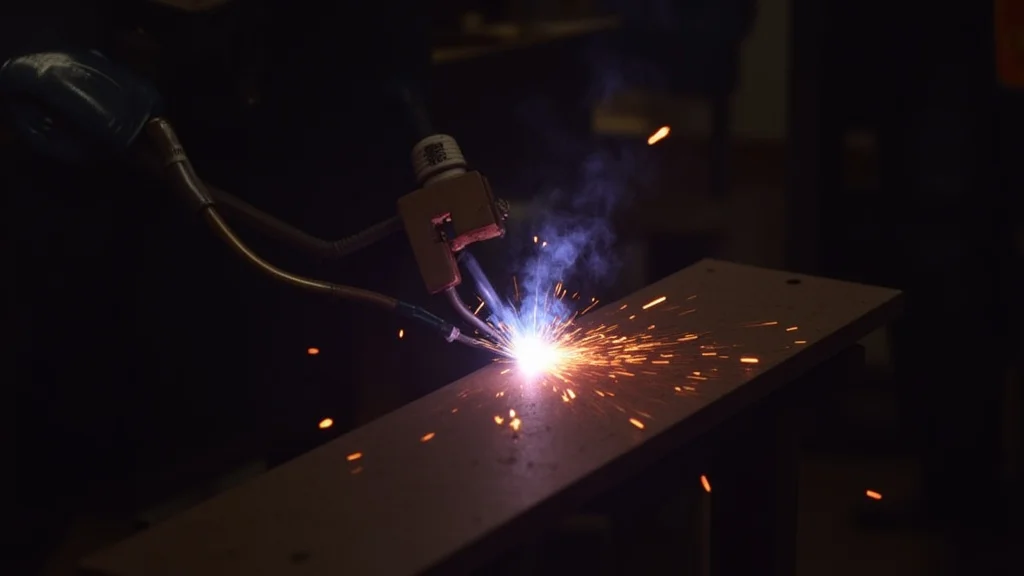
Is your TIG welder’s arc acting up? If the arc isn’t steady, it can make welding tough, especially when you’re just starting out. It’s a common snag that can make you feel stuck.
But don’t worry! This guide will walk you through fixing a TIG Welder Arc Not Consistent? Troubleshoot problem step-by-step.
We’ll get your arc running smoothly so you can weld with confidence. Get ready to learn the simple fixes that make a big difference.
Key Takeaways
- Learn the most common reasons for an inconsistent TIG arc.
- Discover how to check and adjust your TIG welder’s settings.
- Understand the role of filler metal and torch angle.
- Identify how ground clamp issues can affect your arc.
- Find out why gas flow is important for a stable arc.
- Get simple, actionable steps to fix a wandering TIG arc.
Why Your TIG Welder Arc Might Be Inconsistent
An inconsistent TIG arc is frustrating. It looks jumpy, unstable, or like it’s sputtering. This makes it hard to make clean, strong welds.
For beginners, it feels like the welder isn’t working right. But often, it’s just a few simple things that are out of place. Fixing these can make your welding much better.
The Basics of a Stable TIG Arc
A TIG arc needs a few things to be steady. It needs the right amount of power, a clean path for electricity, and a steady flow of shielding gas. When any of these are off, the arc can become wobbly.
Think of it like trying to write with a pen that’s running out of ink – it’s not going to be smooth.
Common Causes for an Inconsistent TIG Arc
Several things can cause your TIG arc to be all over the place. Let’s look at the most frequent culprits. Knowing these will help you find the problem fast.
1. Incorrect Amperage Setting
The amperage is the amount of electrical current your welder uses. If it’s too high or too low for the metal you’re welding, the arc won’t be stable. Too high, and it sputters and digs too deep.
Too low, and it’s weak and might not melt the metal properly.
Too Much Amperage
When amperage is too high, the arc gets very wide and unstable. You’ll see a lot of sparks and the metal can melt too fast. It’s like turning a water hose up too high – it splashes everywhere and you can’t control the stream.
Too Little Amperage
If the amperage is too low, the arc will be thin and might not even melt the base metal. It will look like it’s just sitting on the surface. This can make the arc jump around because it’s struggling to create a strong connection.
2. Poor Ground Clamp Connection
The ground clamp connects your welder to the metal you are welding. If this connection is loose or dirty, it can interrupt the flow of electricity. This causes the arc to become weak and jumpy.
A good ground is like a solid bridge for the electricity to travel.
Dirty Metal or Clamp
If the metal where you attach the clamp is dirty, rusty, or painted, the connection won’t be good. The clamp itself can also get dirty over time. Always scrape the metal clean and make sure the clamp jaws are making good contact.
Loose Clamp
A clamp that isn’t tightened down securely can also cause problems. Vibration from the welding process can make it loosen up even more. You need a firm grip for a consistent flow of power.
3. Contaminated Tungsten Electrode
The tungsten electrode is what creates the arc. If it gets contaminated with filler metal, base metal, or any other debris, the arc will suffer. A contaminated tip makes the arc spread out and become unstable.
Touching the Weld Pool
The most common way to contaminate tungsten is by accidentally dipping it into the molten weld pool. This happens when your torch angle is wrong or you’re not steady. It instantly ruins the tip and the arc.
Oxidation
If you don’t store your tungsten properly, it can oxidize. Oxidized tungsten has a dull, grayish-white tip instead of a clean, shiny one. This will make the arc hard to control.
4. Incorrect Gas Flow Rate
Shielding gas, usually Argon for TIG welding, protects the weld from the air. If the gas flow is too high or too low, it can disturb the arc. It can also lead to weld defects.
Too Little Gas
If there’s not enough gas, the air gets to your molten weld and tungsten. This can cause the arc to flicker and might lead to porosity in your weld. The arc might also look like it’s blowing around.
Too Much Gas
Surprisingly, too much gas can also be a problem. It can create turbulence around the arc, making it unsteady. It’s like blowing too hard on a candle flame – it flutters and goes out.
5. Wrong Tungsten Type or Grinding
There are different types of tungsten electrodes for different welding jobs. Using the wrong type or grinding it incorrectly can affect arc stability.
Tungsten Types
Pure tungsten is older and not as stable. Today, most welders use thoriated, ceriated, or lanthanated tungsten. These have additives that help create a more stable arc and last longer.
Grinding Shape
For DC welding, you generally want to grind your tungsten to a point. A sharp point helps create a focused arc. A dull or rounded tip can lead to a wider, less controlled arc.
For AC welding, you might want a slightly rounded tip.
6. Material Contamination
The metal you are welding must be clean. Oil, grease, paint, rust, or dirt on the surface can cause the arc to sputter and be inconsistent. It can also cause weld defects.
Surface Dirt and Oil
Always clean the metal thoroughly before welding. A wire brush and a degreaser are your best friends here. Even a fingerprint can leave oil that causes issues.
Rust and Paint
Rust and paint don’t conduct electricity well and can cause the arc to jump. They also introduce impurities into your weld. Make sure all such coatings are removed.
7. Torch Angle and Distance
The angle of your TIG torch and how close it is to the metal matters a lot. Holding the torch at a bad angle or too far away can make the arc unstable and hard to control.
Torch Angle
You want to hold the torch at a slight angle, usually 10-15 degrees, in the direction of travel. Too steep an angle can pull air into the arc or cause the tungsten to dip. Holding it too upright can also make the arc wander.
Torch to Work Distance
Keep the tungsten electrode a consistent distance from the metal. This distance is often about the same as the diameter of the tungsten. Too far, and the arc becomes wide and weak.
Too close, and you risk dipping the tungsten.
8. AC Balance and Frequency Issues (AC Welding)
If you’re welding aluminum or magnesium with AC, the AC balance and frequency settings are important. Incorrect settings can lead to an unstable arc.
AC Balance
This setting controls how much cleaning action you get versus how much penetration. If the balance is off, the arc might be too wide or too narrow, affecting stability.
AC Frequency
Frequency affects how narrow the arc is. Higher frequencies can create a more focused, stable arc, but too high can be difficult to control. Lower frequencies create a wider arc.
Troubleshooting Steps for an Inconsistent Arc
Now that you know what might be causing the problem, let’s go through how to fix it. Follow these steps to get your TIG arc back in line.
Step 1: Check Your Settings
Start with the basics. Double-check all the power settings on your TIG welder.
- Amperage: Make sure it’s set correctly for the thickness and type of metal you’re welding. If you’re unsure, consult a welding chart.
- Pre-flow and Post-flow Gas: Ensure these are set to adequate times. You need gas to flow before the arc starts and for a short while after it stops.
- Pulse Settings (If Used): If you’re using pulse, make sure the pulse frequency, peak amperage, and background amperage are set appropriately.
Step 2: Inspect Your Ground Clamp
A solid connection is vital. Take a few minutes to make sure your ground clamp is working right.
- Remove the ground clamp and clean the metal surface where it will attach.
- Clean the jaws of the ground clamp itself.
- Securely attach the clamp to a clean spot on the workpiece or welding table.
Step 3: Examine Your Tungsten Electrode
Your tungsten is the business end of the arc. Look closely at its condition.
- Check for contamination. If it’s balled up, melted, or has dark spots, it needs to be replaced or re-ground.
- If it’s contaminated, pull the electrode out, and clean up the torch collet and cup if needed.
- Re-grind the tungsten to a sharp point if it’s not contaminated but just dull.
Step 4: Verify Gas Flow
Your shielding gas needs to be just right. Use a flow meter if you have one.
- Set your Argon flow rate according to the manufacturer’s recommendations or general welding guidelines (often around 15-25 cubic feet per hour, or CFH).
- Observe the gas flow. You should see a steady stream of gas coming from the torch cup when you press the pedal or button.
- Check your Argon tank. Make sure there’s enough gas left.
Step 5: Clean Your Base Metal
Dirt and oil are arc killers. Make sure your metal is spotless.
- Use a stainless steel wire brush dedicated only to welding preparation.
- Use a degreaser or solvent like acetone to remove any oils or grease.
- Ensure the area around your weld seam is free of any paint, coatings, or heavy rust.
Step 6: Adjust Torch Technique
How you hold and move the torch makes a big difference.
- Maintain a consistent torch angle, usually around 10-15 degrees in the direction of travel.
- Keep a consistent arc length. Try to maintain a distance from the workpiece that is about the diameter of your tungsten electrode.
- Move at a steady pace. Erratic movement can destabilize the arc.
Step 7: Check AC Settings (If Applicable)
For aluminum and magnesium, fine-tune your AC settings.
- Experiment with AC balance. A good starting point might be 30% EN (electrode negative) for a balance of cleaning and penetration.
- Adjust AC frequency. Higher frequencies (e.g., 100-200 Hz) can give a tighter, more stable arc.
Troubleshooting Table: TIG Welder Arc Not Consistent?
Here’s a quick guide to common issues and their fixes:
| Problem | Possible Cause | Solution |
|---|---|---|
| Arc is jumpy/unstable | Loose ground clamp | Clean and tighten ground clamp. |
| Arc is wide and sputtering | Amperage too high, contaminated tungsten | Lower amperage, clean or replace tungsten. |
| Arc is weak/thin | Amperage too low, poor ground | Increase amperage, check ground. |
| Arc flickers or blows around | Low gas flow, drafts | Increase gas flow, shield from drafts. |
| Arc has dark spots or spits | Material contamination, dipped tungsten | Clean metal, replace tungsten. |
Frequently Asked Questions
Question: Why does my TIG arc keep going out?
Answer: Your arc might be going out because the amperage is too low, the ground connection is poor, or there isn’t enough shielding gas to keep it stable. Make sure your settings are correct and your connections are clean and secure.
Question: Can the type of filler metal affect my arc?
Answer: While the filler metal itself doesn’t directly control the arc’s stability, if you accidentally dip it into the weld pool, it will contaminate your tungsten and disrupt the arc. Using the correct filler metal for your base metal is still important for weld quality.
Question: How far should the tungsten stick out of the cup?
Answer: For DC welding on steel, a good starting point is to have about 1/4 inch to 1/2 inch of tungsten sticking out. This distance helps maintain a focused arc. For AC welding on aluminum, it might be slightly different, and a rounded tip is often used.
Question: My TIG arc seems to wander even when I’m steady. What could be wrong?
Answer: A wandering arc can be caused by poor gas coverage, which might be due to low gas flow or drafts. It can also be related to the tungsten not being properly pointed or contaminated, or the ground connection being inconsistent.
Question: I’m welding thin metal and the arc is unstable. What should I do?
Answer: For thin metal, you need lower amperage. If the amperage is too high, the arc will be very unstable. Ensure you are using a sharp tungsten, adequate gas flow, and a good ground.
You might also consider using a pulse setting if your welder has one.
Final Thoughts
Fixing an inconsistent TIG arc is about checking the simple things first. Make sure your amperage is right for the job. Keep your ground clamp tight and clean.
Always use clean tungsten and ensure your shielding gas is flowing correctly. Cleaning your metal properly is also key. By paying attention to these details and using steady technique, you can get a smooth, stable TIG arc every time.