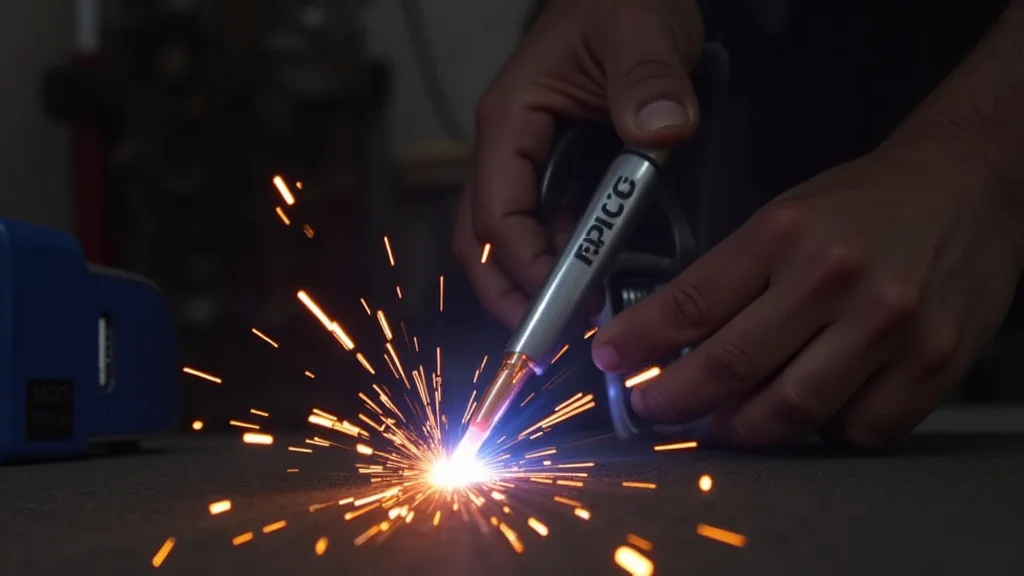
Having your TIG welder arc act up can be frustrating, especially when you’re just starting out. It’s easy to wonder, “TIG Welder Arc Inconsistent? Quick Fix” is even possible.
This common problem often leaves beginners scratching their heads. But don’t worry! We’re going to walk through some simple steps to get your arc smooth and steady again.
Get ready to learn how to fix your TIG arc in no time.
Key Takeaways
- You will learn the common reasons why a TIG welder arc becomes inconsistent.
- This guide will show you simple, step-by-step solutions for fixing arc inconsistency.
- You will discover how different settings impact your arc stability.
- You will understand the importance of proper setup and maintenance.
- This post provides practical tips for achieving a consistent TIG arc.
Why Your TIG Welder Arc Might Be Inconsistent
When your TIG welder arc sputters or dances around instead of staying nice and stable, it can make welding feel impossible. This “TIG Welder Arc Inconsistent? Quick Fix” search happens a lot because several small things can throw off the whole process.
It’s not usually one big problem, but a few little issues piling up.
Power Supply Issues
Your TIG welder needs clean, steady power to work right. If the power source isn’t giving it what it needs, the arc can become weak or unstable.
Voltage Fluctuations
Big changes in the electrical voltage can cause the arc to flicker. This is more common if you’re using a long extension cord or if your home’s wiring is a bit old.
Amperage Settings
The amount of amperage you set for your weld is super important. If it’s too low, the arc might not be strong enough to melt the metal properly. Too high, and it can be wild and uncontrollable.
Tungsten Electrode Problems
The tungsten electrode is the heart of your TIG arc. If it’s not in good shape, your arc won’t be either.
Dull or Contaminated Tungsten
A tungsten tip that’s rounded off or has any gunk on it won’t create a focused arc. It needs to be sharp and clean, usually ground to a point.
Wrong Tungsten Type
Different metals and welding situations call for different types of tungsten. Using the wrong kind can lead to a less stable arc. For example, pure tungsten is not ideal for AC welding steel.
Incorrect Grinding Angle
How you grind the tungsten matters. For DC welding, you want a sharp, pointed tip. For AC, it’s usually slightly blunted.
A badly ground tip will wander.
Gas Flow Issues
The shielding gas, usually argon, protects your weld pool from the air. If it’s not flowing right, the arc can become unstable and the weld will be weak.
Insufficient Gas Flow
If there isn’t enough gas, the weld puddle can get sucked back by air. This makes the arc jumpy and can cause a weak weld. You might hear a “crackling” sound.
Turbulence in Gas Flow
Gas can get mixed with air if there’s a draft or if the torch is too close to the work. This makes the gas not protect the arc well. Wind is a big enemy of TIG gas flow.
Leaky Gas Lines or Connections
Any leaks in your gas system, from the bottle to the torch, mean less gas reaches your weld. This also leads to poor shielding and an unsteady arc.
Machine Settings and Maintenance
Your TIG welder itself has settings and parts that need attention. Not keeping them in order can cause arc problems.
Incorrect Polarity Settings
For DC welding, you need to choose between electrode positive (DCEN) or electrode negative (DCEP). The wrong choice can make the arc difficult to control and lead to poor weld quality.
High-Frequency Start Issues
The high-frequency start helps you get the arc going without touching the metal. If it’s set too low or not working right, you might have trouble starting the arc or it could be weak.
Dirty or Damaged Cables and Torch
Cracked or worn-out welding cables can cause power loss, making the arc inconsistent. A damaged torch can also affect gas flow or electrode stability.
Operator Technique
Sometimes, it’s how you’re holding the torch or moving your hand that’s causing the arc to be inconsistent. This is very common for beginners.
Torch Angle
Holding the torch at a consistent angle is key. If you tilt it too much or vary it, the arc can wander and the weld bead won’t be even.
Travel Speed
Moving too fast or too slow with the torch will affect the weld. Too fast, and you won’t get enough heat. Too slow, and you can burn through or create a wide, uneven bead.
Your arc will look different depending on your speed.
Distance to Work
The distance between the tungsten and the metal you’re welding needs to be consistent. If it’s too far, the arc gets spread out and weak. Too close, and you risk contaminating the tungsten or shorting out.
Quick Fixes for TIG Welder Arc Inconsistency
Now that we know what might be causing the problem, let’s look at some simple ways to fix it. These are the “quick fix” steps you can try right away.
1. Check Your Power and Amperage
Start with the basics. Make sure your welder is plugged into a good power source. For bigger machines, you might need a dedicated circuit.
Check your extension cords – use thick ones, not thin ones.
Then, look at your amperage. If you’re welding thin metal, you need less amperage than thick metal. It’s a trial-and-error thing at first.
Start low and slowly increase it until the arc feels right.
2. Prepare Your Tungsten Electrode
This is a big one for arc stability.
- Cleanliness is key: Make sure your tungsten isn’t dirty. If you just welded aluminum, it might have aluminum on it.
You’ll need to grind it off.
- Sharpen it: For most DC welding (like steel), grind your tungsten to a sharp point. Use a dedicated grinder for tungsten, not one you use for metal. This gives you a focused arc.
- Check the tip: After welding, the tip can get a little rounded.
Re-grind it to a sharp point if needed.
3. Verify Your Shielding Gas Setup
Good gas flow is essential.
- Flow rate: For most steel welding, 15-25 cubic feet per hour (CFH) is a good starting point. Turn on the gas and check the flow.
- No wind: Weld in a place with no drafts or fans blowing.
Even a small breeze can disrupt the gas shield.
- Check for leaks: Listen for hissing sounds and check all connections for leaks. A little soapy water can help find them.
4. Review Your Machine Settings
Make sure your welder is set up correctly for the type of metal you’re welding.
Polarity
For steel, aluminum, and stainless steel with a DC TIG, you usually want DCEP (electrode positive). This gives you good penetration. Check your welder’s manual.
High-Frequency (HF) Start
Ensure your HF start is on and set to a level that reliably starts the arc. You don’t need it super high, just enough to jump the gap.
5. Practice Your Technique
This takes time and patience.
- Consistent distance: Try to keep the tungsten tip about the same distance from the metal as you weld. A good rule of thumb is about the thickness of the tungsten.
- Steady movement: Move your hand at a consistent speed.
You’re looking for the metal to melt and flow into a smooth bead.
- Torch angle: Keep the torch at a consistent angle, usually around 10-15 degrees, pointing in the direction you’re moving.
Common Mistakes and How to Avoid Them
Beginners often make a few key mistakes that lead to arc inconsistency. Knowing these can help you fix them faster.
Contaminating the Tungsten
This happens when the tungsten touches the weld puddle or filler metal. If this happens, you must stop welding, pull the arc away, and re-grind your tungsten. Even a small speck of metal on the tungsten will make your arc spray and become unstable.
Using the Wrong Gas
Argon is the standard gas for TIG welding most metals. Using something else, or a mix when you shouldn’t, will cause arc problems and bad welds. Stick to pure argon unless you know you need a different gas for a specific job.
Not Enough Filler Metal
When welding, you often add filler metal. If you don’t add enough or add it too slowly, the weld won’t build up properly. This can make the arc seem unstable because you’re not filling the gap correctly.
Add filler metal smoothly and consistently.
Troubleshooting Table
Here’s a quick way to look up common problems and their fixes:
| Problem | Possible Cause | Quick Fix |
|---|---|---|
| Arc is weak and wanders | Dull tungsten, incorrect amperage, insufficient gas | Sharpen tungsten, increase amperage slightly, check gas flow |
| Arc splatters or is noisy | Contaminated tungsten, too much amperage, dirty metal | Re-grind tungsten, reduce amperage, clean the metal |
| Arc won’t start | HF start off or too low, dirty tungsten, power issue | Turn on HF start, ensure tungsten is sharp and clean, check power connection |
| Arc is too hot or burns through | Too much amperage, moving too slow | Reduce amperage, increase travel speed |
Frequently Asked Questions
Question: What is the most common reason for an inconsistent TIG arc?
Answer: The most common reason is often a dull or contaminated tungsten electrode. A clean, sharp tungsten is key to a stable arc.
Question: How much amperage should I use for TIG welding?
Answer: Amperage depends heavily on the thickness and type of metal. For thin steel (around 1/16 inch), you might use 30-50 amps. For thicker steel, you’ll need more.
It’s best to consult a chart or practice on scrap material.
Question: Can wind affect my TIG arc?
Answer: Yes, wind is a major problem for TIG welding. It blows away the shielding gas, which makes the arc unstable and causes poor weld quality. Try to weld in a sheltered area.
Question: How do I know if my gas flow is too low?
Answer: You might hear a crackling sound from the arc, and the weld puddle might appear to be sucked back by air. You might also see a dull or discolored weld bead. Try increasing the gas flow rate.
Question: What’s the difference between AC and DC TIG welding for arc stability?
Answer: AC welding (used for aluminum) can sometimes be less stable than DC welding (used for steel) due to the alternating current. The tungsten shape and settings are also different for AC to maintain a stable arc.
Final Thoughts
Dealing with an inconsistent TIG arc is a learning experience, and most beginners face it. By checking your tungsten, gas flow, and machine settings, you can quickly fix many common arc issues. Small adjustments make a big difference.
Keep practicing your hand movements, and you’ll find that smooth, steady arc you’re looking for.