Does your TIG welder arc seem to vanish or flicker out unexpectedly? Many beginners find the TIG Welder Arc Falling Out? Easy Fix situation tricky.
It can be frustrating when you’re trying to make a nice weld, and the arc just disappears. But don’t worry! There are simple reasons why this happens, and we’ll walk through them step-by-step.
You’ll learn how to keep your arc steady and strong so you can weld with confidence.
Key Takeaways
- Learn the most common causes for TIG welder arcs to fall out.
- Discover simple techniques to maintain a consistent arc.
- Understand how to adjust your machine settings for better arc stability.
- Identify issues with your torch, gas, and consumables that affect the arc.
- Gain confidence in troubleshooting and fixing arc problems on your own.
Why Does Your TIG Welder Arc Fall Out?
Understanding the TIG Arc
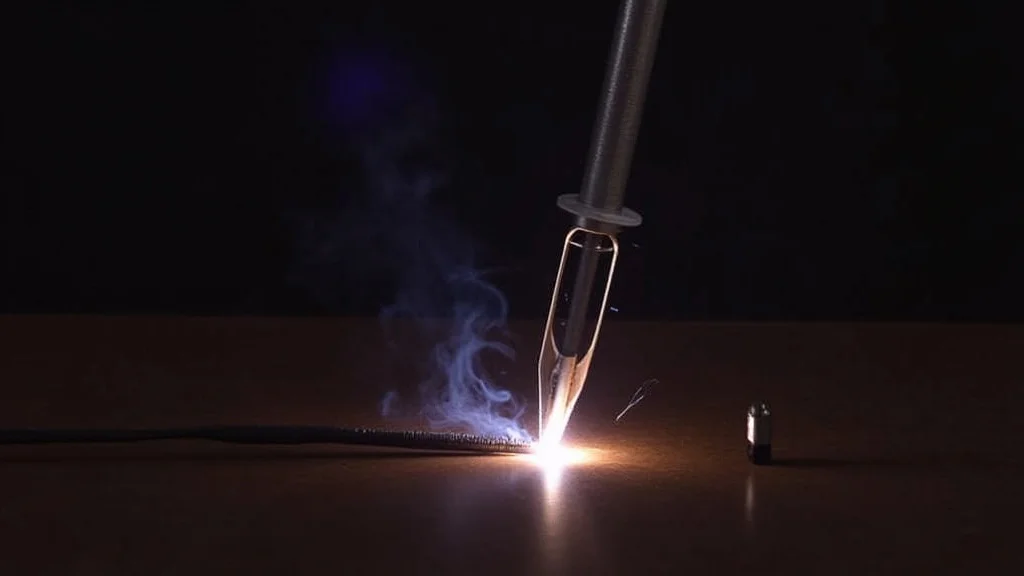
The TIG arc is the heart of your welding process. It’s a controlled stream of electricity that melts the base metal and filler rod. When this arc is stable, you get a clean, strong weld.
But sometimes, it acts up. It might flicker, weaken, or just go out completely. This can happen for many reasons, and most of them are quite simple to fix.
When an arc falls out, it means the electrical connection between the tungsten electrode and the workpiece is broken. This stops the welding process. For someone new to TIG welding, this can be a real head-scratcher.
You might think you’re doing something wrong, or that your machine is broken. But usually, it’s just a small adjustment needed.
The good news is that TIG Welder Arc Falling Out? Easy Fix is a common problem with straightforward solutions. We’ll explore these solutions so you can get back to making great welds.
Keeping your arc steady is one of the most important skills in TIG welding.
Common Culprits Behind an Unstable Arc
Several factors can cause your TIG arc to behave poorly. Let’s break them down into categories so you can pinpoint the issue.
1. Issues with the Tungsten Electrode
Your tungsten electrode is a critical part of the arc. If it’s not in good shape, your arc won’t be either.
Dirty Tungsten
If your tungsten gets contaminated, it can make the arc unstable. This contamination often happens if you touch the tungsten to the workpiece or filler rod accidentally. It can also happen if you have poor gas coverage and weld fumes land on it.
When tungsten gets dirty, it forms a ball or a glob at the tip. This changes the shape of the arc. Instead of a focused, pointed arc, you get a wider, less predictable one that can sputter and fall out.
To fix this, you need to regrind or
Wrong Tungsten Type or Grind
Not all tungsten is the same. Different metals require different types of tungsten. For example, pure tungsten is okay for AC welding aluminum, but it balls up easily.
Thoriated or Ceriated tungsten is better for DC welding steel and stainless steel because it holds a point better and provides a more stable arc.
The way you grind the tungsten matters too. For DC welding, you want a sharp, conical point. This focuses the arc.
For AC welding aluminum, you might want a slightly balled or rounded tip, but it still needs to be consistent. An improperly ground tungsten will create an inconsistent arc.
Worn-Out Tungsten
Tungsten electrodes wear down over time, especially at high amperages. If your tungsten is too short or has been used extensively, it might not be able to maintain a stable arc. It’s best to replace it when it gets significantly worn.
2. Problems with Shielding Gas
Shielding gas is vital for protecting the molten weld pool and the tungsten from the air. If the gas isn’t flowing correctly, the arc will suffer.
Insufficient Gas Flow
If you don’t have enough shielding gas, the air will get to your tungsten and weld pool. This causes contamination and makes the arc unstable and sputtery. You might see a bright orange or yellow color in your arc, which is a sign of contamination.
Check your gas regulator and flow meter. Make sure the cylinder has enough gas. For most DC welding, a flow rate of 15-25 cubic feet per hour (CFH) is common.
For aluminum, it might be higher, around 20-30 CFH.
Gas Leaks
Leaks in your gas hose, connections, or torch can also reduce the amount of gas reaching your weld. Even a small leak can be enough to cause problems. Inspect all your gas connections regularly.
Drafts and Air Currents
Even if your gas flow is set correctly, strong drafts can blow the shielding gas away from the weld. This is a common issue when welding outdoors or near fans. Try to shield your welding area from wind and strong air currents.
3. Torch and Consumable Issues
The torch itself and the parts inside it play a big role in arc stability.
Incorrect Collet or Collet Body
The collet holds the tungsten in the torch. It needs to match the diameter of your tungsten electrode. If the collet is too large, the tungsten will wobble, leading to an unstable arc.
If it’s too small, you won’t be able to insert the tungsten properly.
The collet body also needs to be the correct size for your torch. If the collet doesn’t fit snugly, it can cause issues. Always use the correct collet size for your tungsten and the correct collet body for your torch head.
Loose or Damaged Gas Nozzle
The gas nozzle directs the shielding gas. If it’s loose, cracked, or the wrong size for your torch, the gas flow can be disrupted. Ensure the nozzle is securely attached and in good condition.
A larger nozzle can sometimes help with gas coverage, especially when welding out of position or in breezy conditions.
Worn or Damaged Torch Liner
The liner inside the torch provides a channel for the tungsten. If it’s damaged or worn, it can cause the tungsten to stick or move erratically, affecting the arc. This is less common but can happen over time.
4. Power Source and Settings
Your welding machine settings are crucial for a stable arc.
Incorrect Amperage Setting
If your amperage is too low for the material thickness, you won’t get enough heat to maintain a consistent puddle, and the arc might fall out. If it’s too high, you risk blowing holes in the metal, which also disrupts the arc.
Always set your amperage based on the thickness of the metal you’re welding. There are many charts available online to help you determine the correct amperage range.
Arc Start Issues
Some TIG welders have different arc start methods, like lift-arc or high-frequency (HF) start. If the HF start isn’t set correctly or the arc start current is too low, you might struggle to get a consistent arc to begin with. The arc might start weakly and then fall out.
If you’re using lift-arc, make sure you’re lifting the torch straight up with a smooth motion. Don’t drag it across the metal.
Duty Cycle Limitations
Welding machines have a duty cycle, which is the percentage of time they can operate at a given amperage within a 10-minute period. If you’re welding for extended periods at high amperages, your machine might overheat and shut down. This will obviously interrupt your arc.
Make sure you’re not exceeding your machine’s duty cycle.
5. Technique and Operator Error
Sometimes, the problem is how you’re welding.
Incorrect Torch Angle
Holding the torch at too steep an angle can disrupt the shielding gas flow and cause arc instability. Try to keep the torch as vertical as possible, especially when starting out.
Touching the Tungsten to the Workpiece
This is a very common mistake for beginners. If the tungsten touches the metal, it can contaminate the tungsten tip, cause a short circuit, and make the arc fall out. This requires you to stop, regrind or replace the tungsten, and restart.
Inconsistent Distance from the Workpiece
Maintaining a consistent arc length is important. If you move the torch too far away, the arc becomes long and weak. If you bring it too close, you risk touching the tungsten or causing the arc to become unstable.
For most DC welding, a good starting arc length is about the same as the diameter of your tungsten. For AC welding aluminum, it might be a bit longer.
Incorrect Filler Rod Angle and Placement
While not directly causing the arc to fall out, improper filler rod technique can indirectly affect arc stability. If you’re constantly dipping the filler rod into the arc, you can contaminate the tungsten. Make sure you’re feeding the filler rod into the leading edge of the puddle.
Troubleshooting Steps: The TIG Welder Arc Falling Out? Easy Fix Guide
When your arc starts acting up, don’t panic. Follow these steps to diagnose and fix the problem.
Step 1: Check Your Tungsten
The first thing to look at is your tungsten electrode. Is it dirty, balled up, or worn out?
- If it’s dirty or balled, stop welding and grind a fresh point.
- If it looks too short or severely worn,
- Make sure you’re using the correct type and grind for your material.
Step 2: Verify Shielding Gas
Next, check your gas supply. Is the flow rate correct? Are there any leaks?
- Ensure your gas cylinder valve is fully open.
- Check the regulator and flow meter settings. A good starting point for steel is 20 CFH.
- Listen for any hissing sounds that might indicate a leak in the hose or connections.
- If you’re welding outside, try to create a windbreak.
Step 3: Inspect Your Torch and Consumables
Look at your torch. Are the consumables in good shape?
- Make sure the collet and collet body are the correct size for your tungsten.
- Ensure the gas nozzle is clean, undamaged, and securely attached.
- Check if the tungsten is centered in the nozzle.
Step 4: Review Machine Settings
Double-check your welding machine settings.
- Is the amperage appropriate for the material thickness?
- If you’re using HF start, is it set to a moderate level?
- Ensure your machine is not overheating and has not exceeded its duty cycle.
Step 5: Assess Your Technique
Think about how you were welding when the arc fell out.
- Were you holding the torch too far or too close?
- Did you accidentally touch the tungsten to the workpiece or filler rod?
- Is your torch angle consistent and close to vertical?
Specific Scenarios and Solutions
Scenario: Arc sputtering and yellow/orange glow
Answer: This almost always means you have a lack of shielding gas. Check your flow rate, look for leaks, and shield from drafts.
Scenario: Arc starts weakly then dies
Answer: This could be a low arc start current setting, a dirty tungsten that won’t form a good point, or the tungsten might be too far from the workpiece to establish a strong arc initially.
Scenario: Arc falls out suddenly without explanation
Answer: This is often due to touching the tungsten to the workpiece or filler rod. It could also be a momentary loss of gas flow or a loose connection somewhere. Check your tungsten first.
Scenario: Arc is broad and fuzzy, not a sharp point
Answer: Your tungsten is likely dirty or improperly ground. Grind it to a sharp point in line with the electrode.
Scenario: Arc seems to “wander” or is unstable
Answer: This could be a loose collet, a warped collet body, or issues with your gas nozzle. Make sure all torch parts are snug and the correct size.
Frequently Asked Questions
Question: How often should I regrind my TIG tungsten?
Answer: You should regrind your tungsten whenever it gets contaminated, starts to ball up, or if you notice the arc becoming unstable or sputtering. For general DC welding, a sharp point held for a consistent arc is best.
Question: Can I use just any metal wire for my tungsten?
Answer: No, you should not. TIG welding requires special tungsten electrodes made from specific alloys. Using regular wire can be dangerous and will not produce a stable arc.
Question: What is the difference between AC and DC TIG welding for arc stability?
Answer: DC welding generally offers a more stable and focused arc compared to AC. AC welding for aluminum has a cleaning action that can sometimes make the arc appear less stable, but proper settings and tungsten preparation help.
Question: How do I know if my shielding gas flow is too high?
Answer: If your gas flow is too high, it can create turbulence around the arc, blowing away the shielding gas and causing porosity or contamination. The weld puddle might look disturbed by the gas stream.
Question: Is it normal for the TIG arc to make a buzzing sound?
Answer: A slight, consistent buzzing sound is normal for a stable TIG arc. However, if the sound becomes erratic, crackling, or sputtering, it indicates a problem with your arc or shielding gas.
Final Thoughts
Mastering the TIG arc is a key skill for any welder. When your TIG welder arc falls out, remember it’s usually a simple fix. Focus on keeping your tungsten clean and pointed.
Ensure your shielding gas flows properly and without leaks. Check that your torch parts fit correctly. By systematically checking these common areas, you can quickly get your arc back and running smoothly.
This practical approach builds confidence and leads to better welds every time.