Ever wondered why your stick welder acts a bit funny sometimes, making your welds not quite right? Lots of folks, especially when they’re just starting out, find that the Stick Welder Voltage Drop? Easy Fix can be a puzzle.
It might seem tricky at first, but don’t worry! We’ll walk through it step-by-step, and you’ll see it’s simpler than you think. Get ready to learn how to spot and solve this common issue so you can get back to making great welds.
Key Takeaways
- You will learn what causes voltage drop in stick welding.
- We will show you how to identify the signs of a voltage drop.
- You will discover simple ways to fix voltage drop problems.
- This guide will help you make better welds by avoiding voltage drop issues.
- You will gain confidence in troubleshooting your stick welding setup.
What is Stick Welder Voltage Drop?
Voltage drop is a common issue when you’re using a stick welder. It happens when the electrical voltage going to your welding machine isn’t as high as it should be. Think of it like water pressure in a hose.
If the pressure drops, the water doesn’t spray as far or as hard. In welding, low voltage means your arc might be weak and unstable.
This can make your welds look messy and not strong. It’s a real head-scratcher for beginners because they might not know why their welds aren’t turning out right. They might blame their skill or the machine, but often, it’s just a simple voltage drop problem.
Why Does Voltage Drop Happen?
Several things can cause the voltage to drop in your stick welding setup. Knowing these reasons is the first step to fixing it. It’s not usually one big thing, but a few smaller things adding up.
1. Thin or Long Extension Cords
This is one of the most common culprits. Electrical wires have something called resistance. The longer and thinner the wire, the higher its resistance.
When electricity flows through a wire with high resistance, some of the energy is lost as heat. This loss of energy is what causes the voltage to drop.
If you’re using an extension cord that’s too long for the job or too thin (small gauge) for the amount of power your welder needs, you’ll experience voltage drop. The power has to travel further through a less efficient path.
2. Loose Connections
Anywhere electricity needs to flow, there are points where connections are made. These can be at the wall outlet, where the extension cord plugs in, where the electrode cable connects to the welder, or where the ground clamp attaches to your workpiece.
If these connections are loose, dirty, or corroded, they create extra resistance. This extra resistance acts like a bottleneck for the electricity, causing the voltage to sag.
3. Undersized Welding Cables
Your welding machine comes with cables that carry the electricity to your electrode holder and ground clamp. These cables need to be thick enough (have a large enough gauge) to handle the current your welder draws.
If your cables are too small for the amperage you’re using, they will heat up and cause a significant voltage drop. This is especially true if the cables are also very long.
4. Problems with the Power Source
Sometimes, the issue isn’t with your cords or cables, but with the power coming into your welding area. If the main power supply to your outlet or breaker is weak, or if the circuit breaker is faulty, it can’t deliver enough voltage to your welder.
This is less common but can happen, especially in older buildings or if the electrical system isn’t up to code for heavy-duty tools like welders.
5. Poor Grounding
A good ground connection is vital for a stable welding arc. The ground clamp needs to be attached to a clean, bare metal surface on your workpiece. If the clamp is on rusty metal, paint, or a loose part, the connection will be poor.
A bad ground connection creates high resistance, which directly leads to voltage drop. It’s like trying to get a strong signal through a bad antenna.
Signs of Voltage Drop
How do you know if you’re dealing with a voltage drop? There are a few telltale signs:
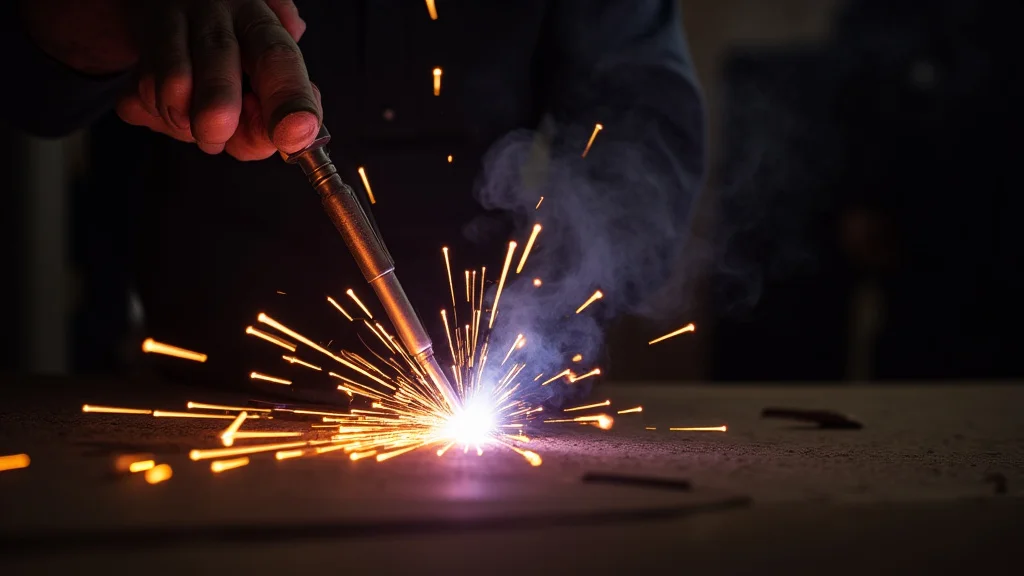
- Weak or Unstable Arc: The arc might seem to flicker, sputter, or not be as hot as it should be. It can be hard to maintain.
- Poor Puddle Formation: The molten metal puddle might not flow well. It could look too thin, or it might not spread out properly, making it difficult to control.
- Difficulty Striking an Arc: It might take several tries to get the arc started when you touch the electrode to the workpiece.
- Spatter: While some spatter is normal, excessive spatter can be a sign of an unstable arc caused by low voltage.
- Weak Welds: The finished weld might not be as strong as it should be, with possible issues like lack of fusion or porosity.
- Electrode Sticking: The electrode might stick to the workpiece more often than it should, especially when you’re trying to get the arc started.
Fixing Stick Welder Voltage Drop: Simple Steps
The good news is that most voltage drop issues are quite easy to fix. Let’s go through the common solutions:
1. Use the Right Extension Cord
This is your first line of defense. Always use an extension cord that is:
- Appropriately Gauged: The thicker the wire (lower the gauge number), the less resistance it has. For welding, you generally need heavier-duty cords. A 12-gauge cord is a minimum for shorter runs, but for longer runs or higher amperage, a 10-gauge or even an 8-gauge cord is much better. Check your welder’s manual for recommendations.
- Short Enough: The shorter the extension cord, the less voltage drop you’ll have. Try to keep your extension cords as short as possible for the job.
If you can, hardwiring your welder directly to a suitable outlet is the best option for minimizing voltage drop. Avoid using standard household extension cords.
2. Clean and Tighten Connections
This is a quick win. Regularly check and clean all electrical connections:
- At the Wall Outlet: Make sure the plug is seated firmly and the outlet isn’t damaged.
- At the Welder: Ensure the power cord is plugged in securely.
- Electrode Cable: The connection point where the cable plugs into your welder should be clean and tight.
- Ground Clamp: This is super important. Use a wire brush to remove any rust, paint, or debris from both the clamp and the workpiece where it will attach. Ensure the clamp is fastened tightly to the metal.
A good, clean connection means electricity can flow freely without resistance.
3. Check Your Welding Cables
Make sure your welding cables are the right size for the amperage you are using and the distance you are working from the welder.
- Cable Gauge: The thicker the cable, the better. For most common stick welding jobs, 1/0 or 2/0 gauge cables are often recommended. If your cables are old, look for signs of damage like fraying or melted insulation.
- Cable Length: Keep welding cables as short as practical. If you need to extend them, use appropriate gauge welding cable extensions.
Damaged cables should be replaced immediately. They are a safety hazard and a source of voltage drop.
4. Inspect Your Power Supply
If you’ve checked your cords, connections, and cables, and still have issues, it might be time to look at the power source.
- Circuit Breaker: Ensure the circuit breaker for your welder isn’t frequently tripping. If it is, the circuit might be overloaded or faulty.
- Outlet Condition: A worn-out or loose wall outlet can also contribute to voltage problems.
- Consult an Electrician: If you suspect a deeper electrical issue with your building’s wiring, it’s best to have a qualified electrician inspect it.
5. Ensure a Solid Ground Clamp Connection
We mentioned this under connections, but it’s worth repeating because it’s so critical.
- Clean Metal: Always connect your ground clamp to clean, bare metal. Grind away paint, rust, or any coating if necessary.
- Firm Grip: Make sure the clamp has a firm grip on the workpiece.
- Direct Connection: Avoid clamping onto thin sheet metal that might vibrate loose or a piece that isn’t part of the main structure you’re welding.
A good ground is essential for a consistent arc and proper welding performance.
Troubleshooting Table
Here’s a quick way to think about what to check:
| Problem Area | Common Causes | Simple Fixes |
|---|---|---|
| Extension Cord | Too long, too thin (small gauge) | Use shorter cord, use thicker gauge cord (lower number) |
| Connections (Wall, Welder, Ground) | Loose, dirty, corroded | Clean with wire brush, tighten firmly |
| Welding Cables | Too thin (small gauge), too long, damaged | Use thicker gauge cables, shorten length, replace damaged cables |
| Power Source | Weak supply, faulty breaker/outlet | Check breaker, inspect outlet, consult electrician if needed |
| Ground Clamp | Poor contact, dirty surface | Clean metal surface, clamp firmly, ensure good contact |
Maintaining Your Equipment
Just like any tool, your welding equipment needs a little care. Regularly inspecting your cables for wear and tear, keeping your connections clean, and making sure you’re using the right accessories will go a long way.
Taking a few minutes before you start welding to check these things can save you a lot of frustration later. A well-maintained setup is a reliable setup. It helps ensure you’re getting the full power from your welder, leading to better welds every time.
Frequently Asked Questions
Question: Can a bad extension cord really affect my welds that much?
Answer: Yes, absolutely. A bad extension cord, especially one that’s too long or too thin, can significantly reduce the voltage reaching your welder. This leads to a weaker arc and can make your welds look poor.
Question: How do I know what gauge extension cord to use?
Answer: The thicker the wire, the lower the gauge number (e.g., 10-gauge is thicker than 12-gauge). For welding, you generally need a heavier-duty cord. Always check your welder’s manual or the cord’s packaging for recommendations based on amperage and length.
Question: Is it okay to weld on a painted surface if the ground clamp touches it?
Answer: No, it’s not recommended. Paint, rust, and other coatings act as insulators. You need to connect the ground clamp directly to clean, bare metal for a good electrical connection.
This ensures a strong arc and prevents voltage drop.
Question: I have a long welding cable, and it seems to get hot. Is that normal?
Answer: If your welding cable is getting excessively hot, it’s a strong sign of high resistance, which means voltage drop. This could be due to the cable being too thin for the amperage, the cable being too long, or a poor connection somewhere along the line. You should investigate this issue.
Question: How often should I clean my ground clamp and connection points?
Answer: It’s a good practice to clean them before each welding session, especially if you’re working in a dusty or dirty environment. Keeping connections clean is a simple but very effective way to prevent voltage drop and ensure good welding performance.
Final Thoughts
Dealing with a Stick Welder Voltage Drop? Easy Fix is all about checking the basics. A weak arc, poor puddle, or difficulty starting often points to issues with your power cords, cable thickness, and clean connections.
By using the right gauge and length of cords and cables, and ensuring all your connections, especially the ground, are clean and tight, you’ll solve most voltage drop problems. This simple care keeps your welder working its best, leading to stronger, cleaner welds and a smoother welding experience.