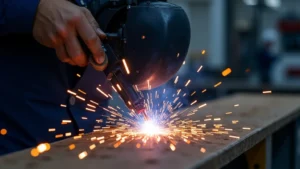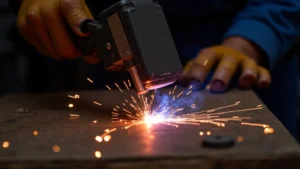
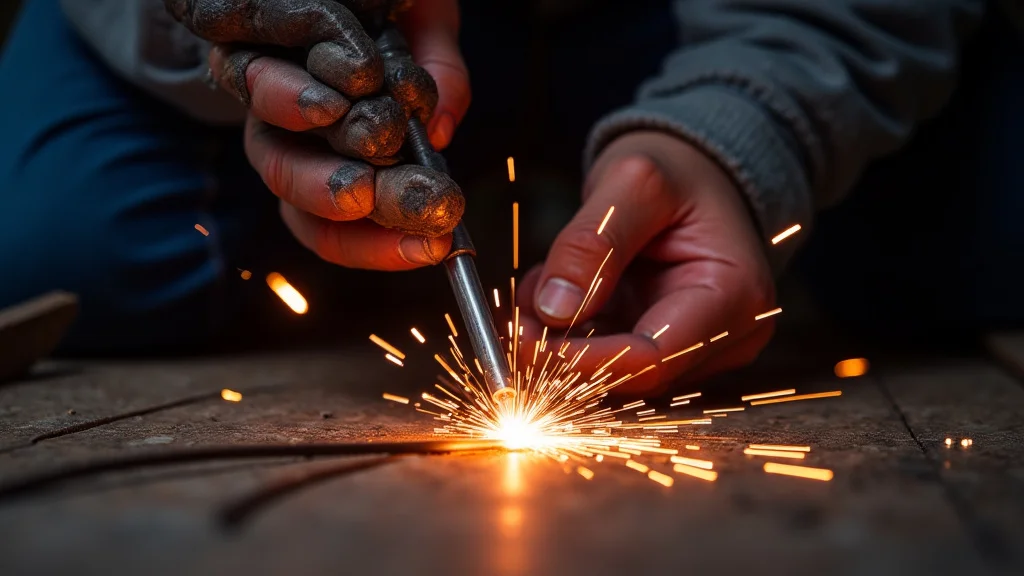
Got a stick welder that just won’t put out heat? It’s a common puzzle for new welders, leaving them scratching their heads. You expect sparks and molten metal, not a cold stick.
Don’t worry, this problem has simple fixes. We’ll break down exactly why this happens and how to get your welder running hot again, fast. Keep reading to see how we solve this common issue.
Key Takeaways
- You’ll learn the most likely reasons your stick welder isn’t producing heat.
- Discover simple checks you can do yourself to troubleshoot the problem.
- Find out how to adjust settings for better heat output.
- Understand the role of amperage and voltage in heat generation.
- Learn about common consumables that affect welding heat.
- Get quick tips to get your stick welder producing the necessary heat.
Why Your Stick Welder Might Not Be Hot Enough
When your stick welder seems to have no heat, it can be frustrating. You’re ready to join two pieces of metal, but the welding rod just sits there, not melting properly. This situation, often described as “Stick Welder No Heat?
Fast Solutions,” is a frequent hurdle for those just starting out with welding. It’s not complicated, but it does require knowing a few key things about how your welder works.
The good news is that most of the time, this issue isn’t a sign of a broken machine. It’s usually something simple that’s overlooked. We’ll walk through the most common culprits step-by-step, making it easy to pinpoint the problem and get back to welding.
Understanding Basic Stick Welding Principles
Stick welding, also known as Shielded Metal Arc Welding (SMAW), relies on an electric arc to melt both the welding rod (electrode) and the base metal. The heat generated by this arc is crucial for creating a strong weld. Several factors influence how much heat your stick welder produces.
These include the amperage setting, the type of electrode you’re using, the condition of your welding leads, and even the power source itself.
Think of it like a campfire. If you don’t have enough wood or the right kind of wood, the fire won’t get very hot. In stick welding, the “wood” is your electricity and your welding consumables.
Common Causes for a Cold Stick Welder
Let’s get straight to the most likely reasons you’re not getting enough heat. We’ll cover each one so you can check your setup.
Incorrect Amperage Settings
This is by far the most common reason for a lack of heat. The amperage dial on your welder controls the amount of electrical current flowing through the welding arc. Too little amperage means not enough heat.
Too much amperage can burn through your material or create a messy weld, but for “no heat,” it’s usually too low.
Tip: Always consult the packaging of your welding electrodes. It will recommend a specific amperage range for the rod diameter and type you are using. Start at the lower end of the recommended range and increase it gradually until you get the desired arc and melting.
Wrong Electrode Type or Size
Welding electrodes come in many different types and diameters. Each is designed for specific metals and welding positions, and each requires a certain amount of amperage to work correctly. Using a rod that’s too large for the amperage setting, or a rod that requires higher heat than your machine can deliver at that setting, will result in a cold weld.
For example, a 1/8-inch 6013 rod might need 70-120 amps, while a 3/32-inch 7018 rod might need 50-90 amps. If you set your welder to 50 amps and try to run a 1/8-inch rod that needs at least 70 amps, you won’t get much heat.
Poor Connection at the Electrode Holder or Ground Clamp
A solid electrical connection is vital for welding. If the electrode holder isn’t clamped securely onto the welding rod, or if the ground clamp isn’t making good contact with the workpiece or the welding table, the electrical circuit will be incomplete or have high resistance. This high resistance acts like a bottleneck, preventing sufficient current from flowing, leading to a weak arc and minimal heat.
Check: Make sure the electrode is firmly seated in the holder. For the ground clamp, ensure the metal surfaces are clean and free of rust, paint, or dirt. A loose ground clamp is a frequent offender.
Damaged or Worn Welding Cables
Your welding cables carry the electrical current from the welder to your work. If these cables are old, frayed, kinked, or have damaged insulation, they can increase electrical resistance. Just like a faulty connection, this resistance saps the power, reducing the amperage that actually reaches the arc.
The longer and thinner the cable, the more resistance it will have.
Inspection: Look for any signs of damage. If you notice exposed wires or severe wear, the cable might need to be replaced. Ensure your cables are the correct gauge for the amperage your welder is capable of producing.
Power Source Issues (Less Common)
While less frequent, there could be an issue with the power source itself. If you’re using a generator, it might not be providing enough stable amperage. If you’re plugged into an outlet, ensure the circuit breaker isn’t tripping or that the outlet is wired correctly to handle the welder’s demand.
Some welders also have internal issues, but these are usually more complex to diagnose and may require professional service.
On the Outlet: If you’re welding on an extension cord, make sure it’s a heavy-duty cord specifically rated for welding. A standard household extension cord will likely cause voltage drop and insufficient power.
Incorrect Polarity
Most stick welders can run on either Direct Current Electrode Positive (DCEP), Direct Current Electrode Negative (DCEN), or Alternating Current (AC). The type of electrode and the material you’re welding will dictate the correct polarity. If you have the wrong polarity set, you might get a weak arc and insufficient heat, or the arc might be unstable.
Reference: Electrode packaging usually specifies the recommended polarity. For instance, 6013 rods often run well on AC or DCEP, while 7018 rods typically perform best on DCEP.
Quick Troubleshooting Steps for “Stick Welder No Heat? Fast Solutions”
Let’s put this into action. Here’s a quick checklist to get your welder hot again.
- Check Amperage: Is it set too low for your electrode? Consult the electrode packaging and turn it up.
- Verify Electrode: Are you using the correct type and size of electrode for your job? Try a different, recommended rod.
- Inspect Connections: Ensure the electrode is firmly in the holder and the ground clamp is clean and tight on the metal.
- Examine Cables: Look for any damage or wear on your welding cables. Make sure they are the right gauge.
- Confirm Polarity: Double-check that the welder is set to the correct polarity for your electrode.
- Test Power Source: If on an extension cord, ensure it’s heavy-duty. If using a generator, verify its output.
Adjusting Your Welder for Optimal Heat
Once you’ve identified the likely cause, making adjustments is straightforward. The primary adjustment you’ll make is the amperage. As mentioned, electrode manufacturers provide a recommended amperage range.
It’s always best to start in the middle of this range and then fine-tune.
If you’re still not getting enough heat after increasing amperage, consider if your electrode might be old or contaminated. Moisture absorption can also affect electrode performance and heat output.
Understanding Amperage vs. Voltage
Amperage is the flow of electrical current. More amperage generally means more heat. Voltage is the electrical pressure.
In stick welding, the arc length is closely related to voltage. A longer arc (higher voltage) can feel “cooler” and be less stable, while a shorter arc (lower voltage) is more concentrated and hotter.
Most common stick welders have amperage control. Voltage is often a byproduct of the arc length you maintain. For beginners, focusing on the correct amperage setting is the most critical factor for achieving adequate heat.
Common Electrode Issues Affecting Heat
The welding electrode itself plays a huge role. Older electrodes might absorb moisture from the air. This moisture can interfere with the flux coating, which is designed to create a protective atmosphere and add alloying elements to the weld.
Damp electrodes can lead to poor arc stability and reduced heat.
If you suspect your electrodes are old or have been exposed to humidity, you can often recondition them by baking them in a special electrode oven. However, for most home users, it’s simpler and more effective to buy fresh, properly stored electrodes.
Frequently Asked Questions
Question: My stick welder is set to high amps, but the rod still doesn’t melt well. What else could it be?
Answer: Check your ground clamp connection. If it’s loose or on dirty metal, it can drastically reduce the available current and heat, even with high amperage settings.
Question: Can the length of my welding cables affect the heat?
Answer: Yes. Longer or smaller gauge cables have more resistance, which can cause a voltage drop and reduce the amperage reaching the arc, leading to less heat.
Question: I’m using a new pack of welding rods, but still no heat. What’s wrong?
Answer: Make sure you’re using the correct type and diameter of electrode for your welder’s output capabilities and the material you’re welding. Also, confirm the recommended amperage range for that specific rod.
Question: Is AC or DC better for getting more heat with a stick welder?
Answer: It depends on the electrode. Many common electrodes are designed for DC, often DCEP (Electrode Positive), which generally provides a hotter, more forceful arc than AC for many applications.
Question: My stick welder is humming but not producing an arc. Is it broken?
Answer: This could indicate a problem with the output circuit or a protection feature being engaged. Ensure all connections are good and check your power source. If it persists, the welder may need professional inspection.
Final Thoughts
When your stick welder seems to lack heat, remember the simple things first. The most common fixes involve adjusting the amperage, checking your electrode type and condition, and ensuring all connections are clean and tight. Don’t overlook the ground clamp or the welding cables.
These components are crucial for good electrical flow. By systematically checking these points, you can solve most “Stick Welder No Heat? Fast Solutions” issues quickly.
Get back to creating strong welds with a hot, stable arc.