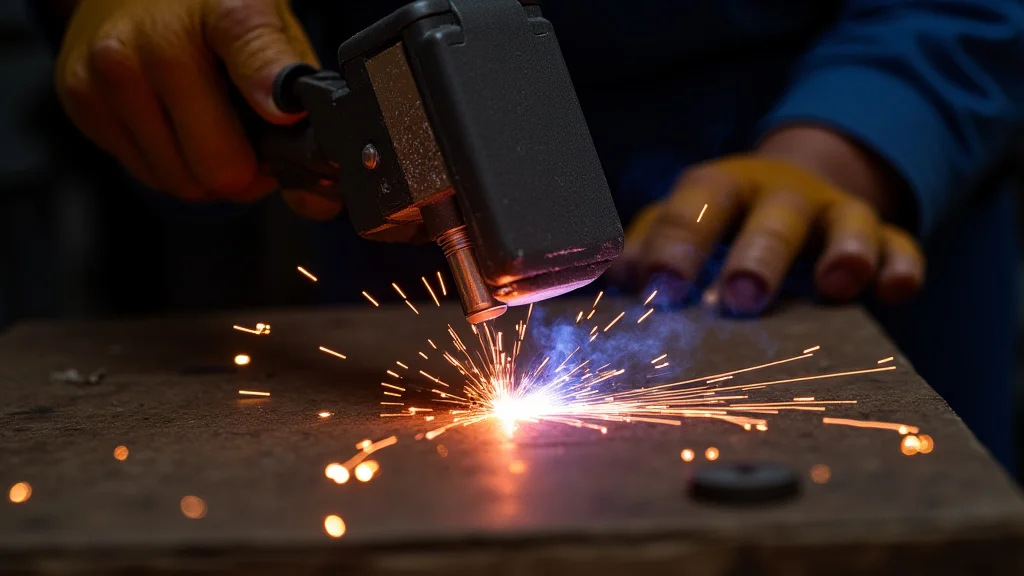
Many folks wonder about a Stick Welder Faulty Switch? Easy Fix. Sometimes, you just can’t get your welder to start, and a bad switch is often the culprit.
It sounds tricky, but fixing it is usually much simpler than you think. This guide will show you exactly what to do, step-by-step. We’ll get your welder back to work in no time.
Let’s find out how to spot and fix that switch issue.
Key Takeaways
- You’ll learn how to identify if your stick welder’s switch is the problem.
- This post will guide you through safely checking and testing the switch.
- You’ll discover the simple tools needed for this fix.
- We’ll show you the steps to replace a faulty switch yourself.
- You’ll understand how to prevent switch issues in the future.
Troubleshooting Your Stick Welder’s Power Switch
When your stick welder won’t turn on, a faulty power switch is a common reason. This issue is often quite straightforward to fix for beginners. You don’t need to be a master electrician to get your machine running again. The goal here is to make it easy for you to identify the problem and fix it yourself.
Why Welder Switches Fail
Power switches on tools like stick welders go through a lot of use. They turn on and off many times. This constant use can cause wear and tear. Dust, dirt, and moisture can also get inside the switch. Over time, this can make the electrical contacts inside dirty or corroded. Sometimes, the internal parts just break from age or use.
Common Signs of a Bad Switch
You might notice a few things if your welder’s switch is failing. The welder might not turn on at all. Or, it might turn on sometimes but not always. You could also hear strange noises when you try to flip the switch. Sometimes, the switch feels loose or wobbly. It might not click into place properly. If your welder suddenly stops working mid-weld, that could also point to a switch problem, especially if it won’t turn back on.
Safety First: Preparing for the Fix
Before you do anything, safety is the most important thing. Welding equipment uses a lot of power. You need to make sure the welder is completely off and unplugged.
Unplugging Your Welder
Always disconnect the power cord from the wall outlet. Double-check that it’s unplugged. Do not skip this step. Working with live electrical current can be very dangerous.
Discharging Stored Power
Some welders can store electrical energy even when unplugged. It’s a good idea to wait a few minutes after unplugging before you start. You can also press the power switch a few times to help discharge any leftover power.
Gathering Your Tools
You won’t need a lot of special tools for this job. Most of the time, you’ll need a screwdriver set. A Phillips head and a flathead screwdriver are usually enough. You might also need some pliers, a wire stripper, and a multimeter if you want to test the switch. Having a clean rag and some electrical contact cleaner can also be helpful.
Accessing the Welder’s Switch
To get to the switch, you’ll need to open up the welder’s case. Each welder is a little different, but the process is generally similar.
Removing the Welder’s Casing
Look for screws on the outside of your welder. These screws hold the metal casing together. They are usually on the sides, back, or top. Carefully remove these screws with your screwdriver. Keep them in a safe place so you don’t lose them. Once the screws are out, you should be able to gently lift or slide the casing off. Some casings might have clips as well as screws.
Locating the Power Switch
Once the casing is off, you’ll see the internal parts of your welder. The power switch is usually located near where the power cord enters the machine. It will be the component that the main power button or lever controls. It often has wires connected to it.
Testing the Power Switch
You can test the switch to see if it’s working correctly. This is where a multimeter comes in handy.
Using a Multimeter (Optional but Recommended)
If you have a multimeter, set it to measure continuity (often shown with a symbol like a sound wave or speaker). Touch the two probes of the multimeter to the two main terminals of the power switch.
Checking for Continuity
When the switch is in the “ON” position, the multimeter should beep or show a very low resistance reading. This means electricity can flow through the switch. When you flip the switch to the “OFF” position, the multimeter should show no continuity (no beep, very high resistance). If the switch doesn’t show continuity when it’s supposed to be on, or shows continuity when it’s supposed to be off, it’s likely faulty.
Visual Inspection
Even without a multimeter, you can often spot problems. Look for any signs of burning, melting, or broken parts on the switch. Check if the wires connected to the switch are loose or damaged. Sometimes, a simple loose connection can be the issue.
Replacing the Faulty Switch
If you’ve determined the switch is bad, it’s time to replace it.
Getting the Right Replacement Switch
You’ll need to find an exact or compatible replacement switch. Look for a part number on the old switch. If you can’t find one, take a picture of the switch and its connections to a local electronics store or search online. You need a switch that can handle the same amperage and voltage as your welder. The type of switch (toggle, rocker, push-button) should also match.
Disconnecting the Old Switch
The wires connect to the switch terminals. They might be push-on connectors or screw terminals. Gently pull off the connectors or unscrew them. Make sure to note which wire goes to which terminal. Taking a picture before you disconnect them is a great idea.
Installing the New Switch
Connect the wires to the new switch in the same way they were connected to the old one. Ensure all connections are secure. If the new switch mounts differently, you might need to adapt the mounting hole slightly.
Reassembling Your Welder
Once the new switch is in place and wired up, it’s time to put the welder back together.
Putting the Casing Back On
Carefully slide or place the casing back onto the welder. Make sure no wires are pinched. Reinsert and tighten all the screws you removed earlier.
Testing the Welder
Plug in your welder and flip the new power switch. If everything is connected correctly, your welder should now turn on. You can then test it with a small welding job.
Maintaining Your Welder’s Switch
A little bit of care can help your welder’s switch last longer.
Keeping it Clean
Try to keep your welder in a clean environment, free from excessive dust and moisture. If the switch area gets dirty, gently clean it with a dry cloth.
Gentle Operation
Avoid slamming the power switch on or off. Use smooth, deliberate movements. This reduces stress on the internal components.
Frequently Asked Questions
Question: My stick welder won’t turn on, but the lights come on briefly. Is it still the switch?
Answer: If lights come on briefly and then go out, it could be the switch, but it might also indicate an issue with the main power supply components inside the welder or a problem with the arc start circuit. A faulty switch usually results in no power at all.
Question: Can I use a multimeter to check for a bad power cord instead of the switch?
Answer: Yes, you absolutely can. You would test the continuity of the power cord itself by touching the multimeter probes to the prongs of the plug and the corresponding terminals where the cord enters the welder. This helps isolate whether the cord or the switch is the failure point.
Question: What kind of wire connectors should I use if I need to splice wires?
Answer: For most electrical connections inside a welder, you’ll want to use insulated butt connectors or spade connectors that match the gauge of the wire. Make sure they are rated for the amperage your welder uses. Crimping them securely is important.
Question: How do I know if the replacement switch is the right amperage rating?
Answer: Check the old switch for a label or imprinted number indicating its amperage rating. If you can’t find it, you can look up the specifications for your welder model online, or choose a replacement switch that is rated for at least the maximum amperage your welder can draw, plus a safety margin.
Question: My new switch feels a bit stiff. Is that normal?
Answer: A new switch might feel a little stiffer than an old, worn-out one. This is often normal as the internal mechanisms are fresh. However, if it feels excessively stiff, grinds, or is hard to move, double-check that it’s mounted correctly and not binding against the welder’s casing or other components.
Final Thoughts
Fixing a faulty stick welder switch is a common repair that most people can handle. You learned how to spot the signs of a bad switch, safely access it, and test it. Replacing the switch is a simple process with the right steps.
With a little care, you can get your welder back to working order and continue your projects. Don’t let a small switch problem stop you from welding.