Many folks find that MIG Welder Voltage Drop? Step Solutions can be a bit tricky at first. It’s easy to get confused when your welds don’t look quite right, and you’re not sure why.
Don’t worry, though! This guide is here to help you figure it out easily. We’ll break it down step by step so you can get back to making great welds.
Let’s look at what might be causing it and how to fix it.
Key Takeaways
- You will learn what voltage drop is in MIG welding.
- Discover the common causes of voltage drop in your MIG setup.
- Understand how to identify if voltage drop is affecting your welds.
- Find simple, practical steps to fix voltage drop issues.
- Learn how to keep your welding equipment in good shape to prevent future problems.
- Gain confidence in troubleshooting your MIG welder.
What is MIG Welder Voltage Drop?
Why it Matters for Your Welds
When you weld with a MIG (Metal Inert Gas) welder, electricity flows from your machine to the wire and then to the metal you are joining. This electricity is what creates the heat to melt the metal and form a strong bond. Voltage is like the pressure pushing that electricity along.
A voltage drop happens when the amount of voltage that reaches the welding gun is less than what your machine is set to. It’s like a garden hose where the water pressure drops the farther the nozzle is from the tap.
This reduction in voltage can cause problems. Too much voltage drop means you don’t have enough “push” for the electricity. This can lead to weak welds, poor penetration (the weld doesn’t go deep enough into the metal), and a spray that sputters instead of flowing smoothly.
For beginners, seeing these weld defects can be frustrating, making them wonder if they are doing something wrong with their technique when the issue might be with the setup.
Common Causes of Voltage Drop
1. Cable Length and Size
The wires that carry electricity from your welder to the gun are called welding cables. Just like any wire, they have resistance. The longer the cable, the more resistance there is.
Also, thinner cables have more resistance than thicker ones. If your welding cables are too long or too small for the amperage (the amount of electrical current) you are using, they can cause a significant voltage drop. This means the voltage at the end of the cable, where you need it, is much lower than it should be.
Think about trying to power a big appliance with a tiny, long extension cord. The cord can’t handle the power, and the appliance won’t work right. The same idea applies to welding.
You need cables that are appropriately sized and not excessively long for the job. For higher amperage welding, you’ll need thicker cables and keep them as short as practical to avoid losing too much voltage.
2. Poor Connections
Electricity needs a clean path to flow. Any loose or dirty connection anywhere in the welding circuit can create resistance and cause voltage drop. This includes:
- The connection between the welding cable and the welder.
- The connection of the ground clamp to the workpiece or the welding table.
- The connection of the power cord to the electrical outlet.
- The connection of the welding wire to the output terminal inside your welder.
Corrosion, dirt, grease, or even just a slightly loose clamp can act like a roadblock for electricity. These small issues add up and can lead to a noticeable drop in voltage at your welding gun. It’s like having a kink in your garden hose; it slows down the water.
3. Welder Ground Clamp Issues
The ground clamp is a critical part of the welding circuit. It provides the return path for the electricity from the workpiece back to the welder. If the ground clamp is not making good, solid contact with the metal you are welding, or if the clamp itself is damaged or dirty, it will create high resistance.
This is one of the most frequent culprits for voltage drop, especially for beginners who might not realize how important a clean, tight ground is.
A poor ground connection is like trying to complete an electrical circuit with a broken wire. The electricity struggles to get back, and you lose voltage. Always ensure the ground clamp is attached to clean, bare metal.
Remove any paint, rust, or coatings. A strong, secure connection is essential for consistent welding performance.
4. Extension Cord Problems
If you need to use an extension cord to plug in your MIG welder, its quality and size are extremely important. Cheap, thin, or very long extension cords can cause a significant voltage drop before the power even gets to your welder. This means your welder is not receiving the full voltage it needs from the wall, leading to lower output voltage and a weaker welding arc.
Always use heavy-duty extension cords specifically designed for the amperage rating of your welder. Shorter cords are always better. If you are experiencing issues and using an extension cord, try plugging the welder directly into the wall outlet (if possible) to see if the problem goes away.
This can quickly tell you if the extension cord is part of the issue.
5. Duty Cycle and Overheating
Welders have a “duty cycle,” which tells you how long you can weld continuously within a 10-minute period at a certain amperage before the machine needs to cool down. If you are welding for too long at high amperages, the welder can overheat. When a welder overheats, its internal components can become less efficient, and this can sometimes lead to a drop in output voltage.
The machine might even have thermal protection that reduces power to prevent damage.
While not a direct cause of resistance like a cable, overheating affects the welder’s ability to maintain its set voltage. Pay attention to your welder’s duty cycle and give it breaks when it gets hot. Most machines have an indicator light to show when they are overheating or have shut down for thermal protection.
How to Spot Voltage Drop
1. Visual Inspection of the Arc
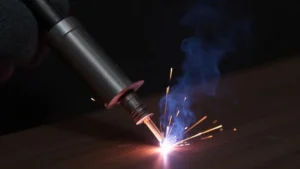
When you start welding, the arc is the bright light and heat you see between the welding wire and the workpiece. If you have significant voltage drop, the arc might look different. It could be shorter, more unstable, or “spitty” rather than a smooth, consistent spray.
The molten puddle might seem cooler or harder to control. This visual cue is often the first sign that something is not right with the electrical supply to your gun.
2. Weld Quality and Appearance
The most obvious sign of voltage drop is the resulting weld. You might see:
- Poor Penetration: The weld bead sits on top of the metal instead of fusing deeply into it.
- Undercut: The weld melts away the edges of the base metal, creating a notch.
- Porosity: Small holes or bubbles within the weld bead, indicating gas bubbles trapped as the metal cooled.
- Rough or Uneven Bead: The weld bead is not smooth and consistent.
- Lack of Fusion: The weld metal doesn’t properly bond to the base metal.
If your welds consistently show these signs, especially when you’re sure your technique is correct, voltage drop is a likely suspect.
3. Using a Multimeter (For the More Adventurous)
If you have a multimeter (an electrical testing tool), you can actually measure the voltage. With the MIG welder set up for welding, but not yet striking an arc, you can set your multimeter to DC voltage and place the probes between the welding wire (or contact tip) and the ground clamp. Compare this reading to the voltage setting on your machine.
A significant difference indicates voltage drop. Be very careful when doing this and ensure you understand how to use your multimeter safely around live electrical equipment.
Step Solutions for MIG Welder Voltage Drop
Step 1: Check Your Cables and Connections
This is the first and most important step.
- Inspect Welding Cables: Look for any damage, kinks, or cuts in your welding cables. Ensure they are the correct gauge (thickness) for your welder’s amperage rating.
If they are too long, consider using shorter ones or upgrading to thicker cables.
- Clean and Tighten Connections: Go through every connection point in your welding circuit. Disconnect the welding cable from the welder, clean the terminal and the cable connector with a wire brush or electrical contact cleaner. Do the same for the ground clamp – ensure it’s attached to clean, bare metal and the clamp itself is clean and tight.
Check the power cord connection to the outlet and to the welder.
Step 2: Optimize Your Ground Clamp
A good ground is non-negotiable.
- Clean the Surface: Always clamp your ground to a piece of clean, bare metal on the workpiece or welding table. Grind away any paint, rust, grease, or other coatings where the clamp will attach.
- Ensure Solid Contact: Make sure the clamp has a firm grip.
Wiggle it a bit to ensure it’s making full contact. If your clamp is old or damaged, consider replacing it with a new, heavy-duty one.
Step 3: Evaluate Your Extension Cord
If you use an extension cord, make sure it’s up to the task.
- Use Heavy-Duty Cords: Ensure the extension cord is rated for the amperage of your MIG welder. Use the shortest cord possible that meets your needs.
- Test Without It: If possible, try plugging your welder directly into the wall outlet to see if the welding performance improves.
If it does, the extension cord is definitely contributing to the problem.
Step 4: Verify Wire Feed and Contact Tip
While not directly voltage drop, issues here can mimic its symptoms.
- Check Contact Tip: The contact tip in your welding gun carries the electricity to the welding wire. If it’s worn, dirty, or the wrong size for your wire, it can impede electrical flow and cause a poor arc.
Replace worn or dirty contact tips.
- Wire Feed Issues: Ensure your wire feeder is working correctly and the drive rollers are clean and properly tensioned. A feeding problem can make the arc unstable and seem like a voltage issue.
Step 5: Consider Welder Maintenance
Regular maintenance helps prevent problems.
- Keep It Clean: Dust and dirt inside the welder can cause heat buildup and electrical issues. Follow the manufacturer’s recommendations for cleaning the inside of your machine.
- Cooling: Ensure the welder’s cooling fans are not blocked and are working properly.
If the machine feels excessively hot, give it a break.
Frequently Asked Questions
Question: Will a longer welding cable always cause voltage drop?
Answer: Yes, longer welding cables have more electrical resistance, which leads to a voltage drop. The longer the cable, the greater the potential for voltage loss.
Question: How can I tell if my ground clamp is bad?
Answer: A bad ground clamp might be visibly damaged, dirty, or corroded. If you notice inconsistent welds, especially if the ground connection feels loose or the clamp is hot after a short welding period, it could be the culprit.
Question: Can I use a regular household extension cord with my MIG welder?
Answer: No, it’s generally not recommended. Household extension cords are usually too thin (have too small a gauge) and not rated for the high amperage a MIG welder requires. Using one can cause significant voltage drop and potentially be a fire hazard.
Question: What is the ideal cable size for a MIG welder?
Answer: The ideal cable size depends on the amperage of your welder and the length of the cable. Higher amperages and longer cables require thicker (lower gauge number) cables to minimize voltage drop.
Question: If my welds are shallow, is it always voltage drop?
Answer: Shallow welds can be caused by several things, including voltage drop, but also by using the wrong welding parameters (voltage/amperage), travel speed being too fast, or the contact tip being too far from the workpiece. However, voltage drop is a common reason for poor penetration.
Final Thoughts
Figuring out MIG Welder Voltage Drop? Step Solutions can seem tough, but it’s mostly about checking the basics. Your cables, connections, and ground clamp are key.
When they’re all in good shape, your welder works much better. Keep your gear clean and make sure your connections are tight. This will help you get strong, good-looking welds every time.
Don’t get discouraged; simple checks solve most problems.