
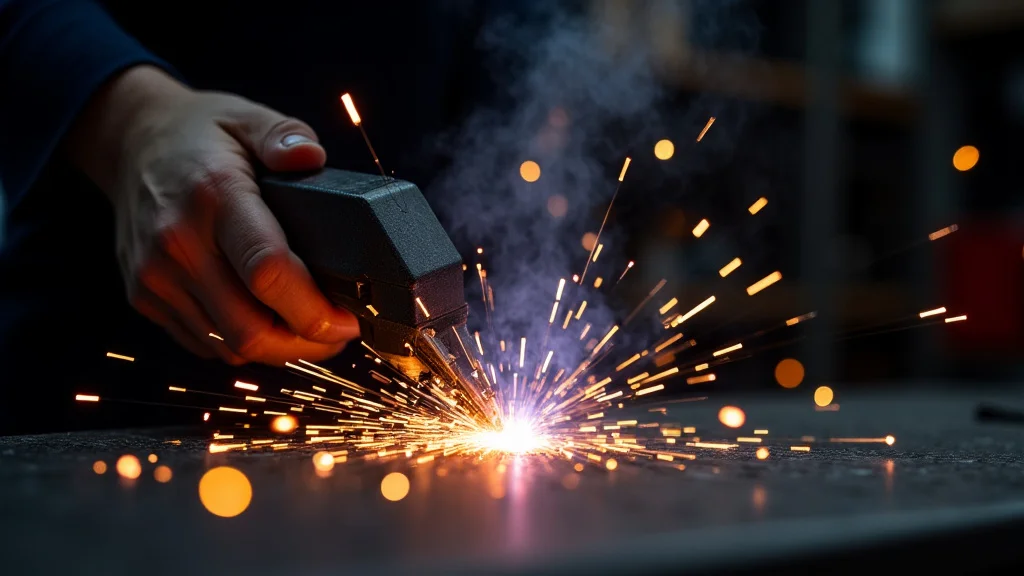
It’s frustrating when your MIG welder acts up, especially when the gas flow seems all over the place. For beginners, figuring out why the MIG Welder Gas Flow Uneven? Step Solutions is a common puzzle.
It can make your welds messy and weak. But don’t worry! We’ll walk through this step by step.
You’ll get your gas flow working right so you can make good welds. Let’s get your welder behaving properly.
Key Takeaways
- Learn the most common reasons for uneven MIG welder gas flow.
- Understand how to check your gas cylinder and regulator.
- Discover simple fixes for kinks in your gas hose.
- Find out how to adjust your flow rate correctly.
- Know how to identify and solve issues with your MIG gun consumables.
- Gain confidence in troubleshooting your MIG welding gas setup.
Why Your MIG Welder Gas Flow Might Be Uneven
Getting your MIG welder to lay down smooth, strong welds is the goal. A big part of that is having the right amount of shielding gas. This gas protects your hot weld pool from the air.
If the gas flow isn’t steady, it’s like trying to paint with a sprayer that keeps sputtering. You get gaps, weak spots, and a messy finish. This is why troubleshooting MIG Welder Gas Flow Uneven?
Step Solutions is so important for anyone using a MIG welder.
For newcomers to welding, this issue can be particularly confusing. You’re focused on getting the arc right, the wire feed steady, and the travel speed correct. Then, suddenly, you notice the weld looks wrong, and you wonder if it’s the gas.
It’s easy to feel lost when the problem isn’t obvious. The good news is that most gas flow problems are simple to fix. You just need to know where to look.
Understanding Shielding Gas
Before we fix problems, let’s quickly cover why shielding gas is vital in MIG welding. MIG stands for Metal Inert Gas (though often it’s Metal Active Gas these days). The gas you use—like Argon, CO2, or a mix—forms a protective bubble around the welding arc and the molten metal.
This bubble pushes away oxygen and nitrogen from the air.
If oxygen gets into the weld, it can cause porosity. Porosity looks like tiny holes or bubbles in your weld. If nitrogen gets in, it can make the weld brittle.
Both are bad for weld strength. A steady, consistent flow of the right gas is like a gentle but firm guardian for your weld.
Common Causes of Uneven Gas Flow
When your gas flow seems off, several things could be the culprit. Let’s break them down into easy-to-check categories.
Gas Cylinder Issues
The gas cylinder is the source of your shielding gas. If there’s a problem here, the gas won’t reach your welder properly.
Low Gas Pressure
The most basic reason for low gas flow is that your cylinder is running out of gas. When the pressure inside the cylinder drops significantly, the regulator can’t push gas out at a steady rate. It might seem like the flow is uneven because it’s weak and inconsistent.
What to check: Look at the pressure gauge on your gas regulator. If it’s near empty, it’s time for a refill or a new cylinder. Some regulators have two gauges: one for the cylinder pressure and one for the output pressure.
Ensure both are in the acceptable range.
Leaking Cylinder Valve
If the valve on the top of your gas cylinder isn’t completely closed when not in use, or if it has a slight leak, gas can escape. You might not hear a loud hiss, but a slow leak can still affect the pressure over time. When you open the valve, the flow might be erratic as pressure fluctuates.
What to check: With the cylinder valve fully open, use a soapy water solution around the valve stem and connections. If you see bubbles forming, there’s a leak. You may need to tighten the connection or replace a faulty valve seal.
Regulator Problems
The gas regulator attaches to your cylinder and controls the pressure. It’s a critical piece of equipment.
Faulty Regulator
Regulators can wear out or get damaged. If the internal diaphragm or seals are bad, they can’t maintain a steady output pressure. This will lead to fluctuating gas flow, making your welds unpredictable.
What to check: If you have another known-good regulator, try swapping it out to see if the problem persists. Listen for any hissing sounds that aren’t from the normal operation of the regulator. A hissing sound usually indicates a leak.
Incorrect Regulator Setting
Many regulators have an adjustment knob to set the desired flow rate in cubic feet per hour (CFH) or liters per minute (LPM). If this knob is loose or set too low, the gas flow will be insufficient.
What to check: Ensure the regulator is set to the recommended flow rate for your welding application. Refer to your welder’s manual or the wire manufacturer’s recommendations. For most common MIG welding jobs, a flow rate of 20-30 CFH is a good starting point.
Gas Hose and Connections
The hose carries the gas from the regulator to the welder. Any issue along this path can disrupt the flow.
Kinked or Damaged Hose
A bent or kinked gas hose is one of the most common and easily overlooked causes of uneven flow. A severe kink can completely block the gas, while a slight one can restrict it, leading to an inconsistent delivery. Over time, hoses can also develop cracks or wear, causing leaks.
What to check: Visually inspect the entire length of the gas hose. Lay it out straight and look for any sharp bends, twists, or flattened sections. Feel along the hose for any leaks or damage.
If you find any, replace the hose.
Loose Connections
The fittings where the gas hose connects to the regulator and to the back of the MIG welder can become loose. Even a small leak at a connection point can cause gas to escape before it reaches the gun, resulting in lower and potentially inconsistent flow. You might hear a faint hissing sound at the connection.
What to check: Use the soapy water trick again. Apply it to both ends of the gas hose connection. If you see bubbles, tighten the fittings.
Be careful not to overtighten, as this can damage the threads.
MIG Gun and Consumables
The MIG gun is where the gas is actually directed onto the weld. Problems here are very common.
Clogged Gas Nozzle
During welding, spatter (small droplets of molten metal) can build up inside the gas nozzle. This buildup can restrict the flow of gas, especially around the edges. If the nozzle is significantly blocked, the gas won’t spread out evenly to cover the weld pool.
What to check: Remove the nozzle from your MIG gun. Inspect the inside for any spatter. Clean it out with a wire brush or a nozzle reamer.
It’s good practice to clean the nozzle regularly, especially between welds.
Worn Contact Tip
The contact tip is what the welding wire passes through. It also carries the electrical current. If the hole in the tip becomes enlarged, irregular, or clogged with spatter, it can affect the gas flow pattern.
A worn tip can also cause poor wire feeding, which can indirectly affect the arc and gas usage.
What to check: Look at your contact tip. If the opening is significantly larger than it should be, or if it looks misshapen, it’s time to replace it. Always ensure the new tip is the correct size for your welding wire diameter.
Loose Gas Diffuser
The gas diffuser is a small part located between the contact tip and the MIG gun body. It helps distribute the gas evenly to the nozzle. If the diffuser is loose, damaged, or has spatter buildup, it can disrupt the gas flow.
A cracked diffuser will definitely cause problems.
What to check: Unscrew the nozzle and then unscrew the contact tip. You’ll see the gas diffuser. Check it for any signs of damage, cracks, or heavy spatter.
Make sure it’s seated correctly and not loose.
Incorrect Gas Cap/Shield Assembly
Some MIG guns have a separate gas cap or shield that fits over the nozzle. If this is missing, damaged, or incorrectly installed, it can cause gas to escape in the wrong direction, leading to poor coverage and uneven flow.
What to check: Ensure all parts of your MIG gun’s gas shield assembly are present, intact, and properly attached. Consult your welder’s manual if you’re unsure about the correct assembly.
Environmental Factors
Sometimes, the problem isn’t with your equipment, but with where you’re welding.
Drafts and Air Movement
Shielding gas is easily blown away by even light air currents. Welding outdoors, near open doors or windows, or with fans blowing can disrupt the gas shield. This doesn’t make the gas flow uneven from the welder’s perspective, but it makes the effective shielding of your weld very poor and inconsistent.
What to check: Pay attention to your surroundings. Try to weld in a well-ventilated area, but avoid direct drafts. If you’re welding outdoors, consider using a windbreak.
You’ll often see the weld puddle acting erratically, or you’ll get a lot of spatter if the gas is being blown away.
Troubleshooting Steps: A Practical Guide
Here’s a straightforward way to tackle your MIG Welder Gas Flow Uneven? Step Solutions.
-
Check the Gas Cylinder:
- Ensure the cylinder valve is fully open.
- Check the pressure gauge. If it’s low, get a refill.
- Listen for leaks around the valve.
-
Inspect the Regulator:
- Make sure the regulator is securely attached to the cylinder.
- Confirm the output pressure is set correctly (e.g., 20-30 CFH).
- If you suspect it’s faulty, test with a known good regulator.
-
Examine the Gas Hose:
- Lay the hose out straight and check for kinks or damage.
- Inspect all connections for leaks using soapy water.
- Replace any damaged hose or leaking fittings.
-
Clean and Check MIG Gun Consumables:
- Remove the nozzle and clean out any spatter.
- Inspect the contact tip for wear or blockage. Replace if needed.
- Check the gas diffuser for damage or buildup. Ensure it’s seated properly.
- Verify the gas cap or shield is in place and undamaged.
-
Test the Flow:
- Briefly squeeze the trigger on your MIG gun (without welding).
- You should hear a steady hiss of gas.
- If the flow sounds weak or inconsistent, go back through the steps.
-
Consider Environmental Factors:
- Minimize drafts and air movement around your welding area.
When to Call a Professional
Most gas flow issues can be resolved with these simple checks. However, if you’ve gone through all these steps and are still experiencing problems, it might be time to seek professional help. There could be an internal issue with your MIG welder’s gas solenoid or control board that requires specialized knowledge to diagnose and repair.
Frequently Asked Questions
Question: How do I know if my MIG gas flow is too high or too low?
Answer: If the gas flow is too low, you’ll likely see excessive spatter, a burnt or oxidized weld appearance, and porosity. If it’s too high, the gas stream can actually blow away the shielding gas, causing similar porosity and a “whipped” appearance to the weld. You might also hear a loud, turbulent sound from the nozzle.
A good starting point for most MIG welding is around 20-30 cubic feet per hour (CFH).
Question: Can I use a CO2 cylinder with my MIG welder if it’s designed for Argon or a mix?
Answer: You can use pure CO2, but it requires a specific regulator designed for CO2. Also, CO2 creates a hotter, wider arc with more spatter compared to Argon. Argon and Argon/CO2 mixes are generally preferred for cleaner welds and better control.
Always check your welder’s specifications for compatible gas types.
Question: How often should I clean my MIG gun nozzle and tip?
Answer: It’s a good practice to clean your nozzle and tip regularly, ideally after every few minutes of welding, or whenever you notice spatter buildup or a change in your weld quality. Keeping them clean prevents gas flow issues and ensures good electrical contact for the wire.
Question: My gas bottle is full, but the flow seems weak. What else could it be?
Answer: If the bottle is full and the regulator is set correctly, the problem is likely further down the line. Check for kinks in the gas hose, leaks at the connections, or blockages in the MIG gun’s nozzle, diffuser, or contact tip. A faulty regulator could also be the cause.
Question: Do I need a special type of gas for welding aluminum with a MIG welder?
Answer: Yes. For aluminum, pure Argon is generally recommended. Due to aluminum’s tendency to oxidize quickly, a good shielding gas is critical.
You might also need a specialized spool gun or a U-groove drive roll for your wire feeder, but the gas is a key component for a good aluminum weld.
Final Thoughts
Troubleshooting MIG Welder Gas Flow Uneven? Step Solutions doesn’t have to be a headache. By systematically checking your gas cylinder, regulator, hose, and gun, you can pinpoint most issues.
Simple problems like kinks or spatter buildup are easy to fix. Taking a few minutes to inspect and clean your equipment regularly will save you a lot of frustration and help you create better welds every time. Keep these steps in mind, and you’ll be welding with steady gas flow in no time.

Leave a Reply